
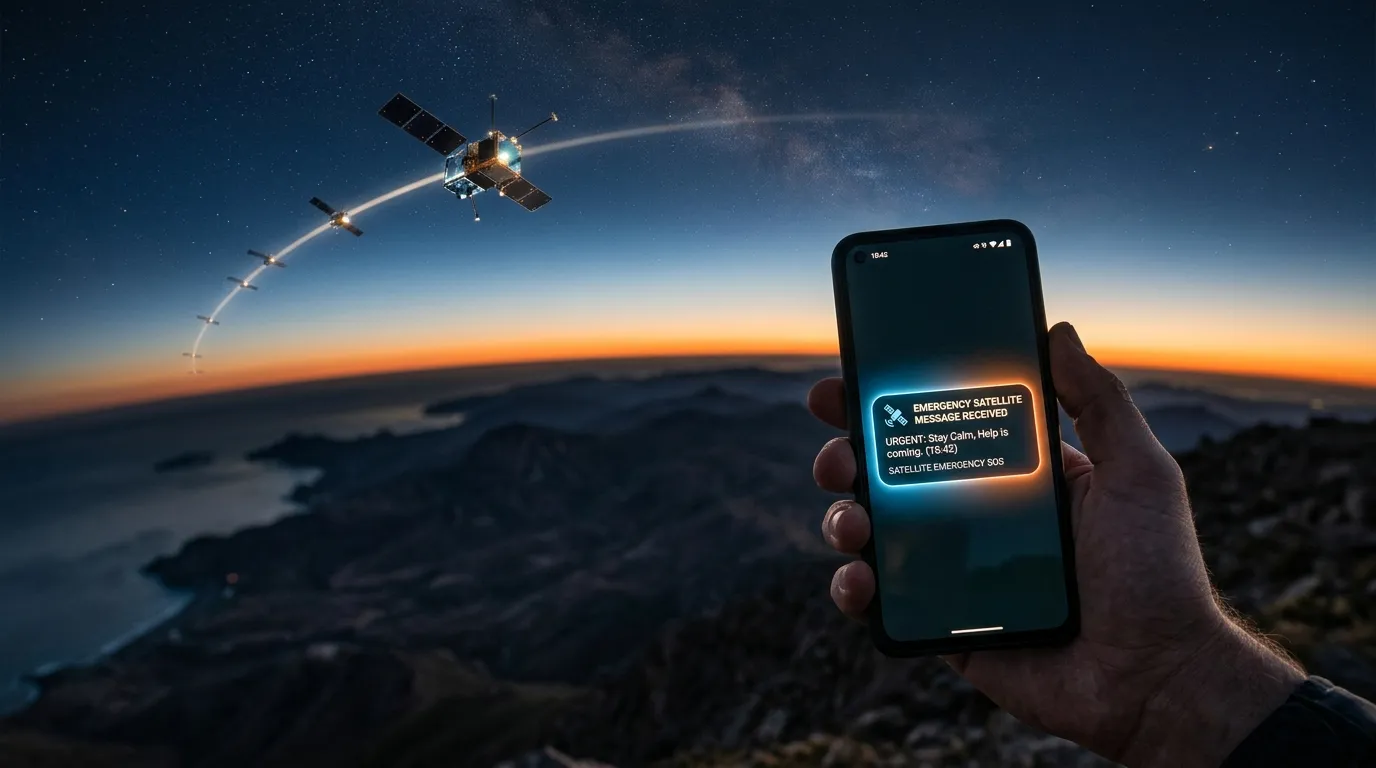
Amazon is buying Globalstar for $11.57 billion, and the part of the deal nobody is quite saying out loud is that Amazon just became the company keeping Emergency SOS alive on your iPhone. The agreement, announced Tuesday, hands Amazon a 24-satellite constellation, a rare slice of globally licensed spectrum, and the contract that has powered Apple's satellite features since 2022. It also quietly rearranges the chessboard in the accelerating fight with Elon Musk's Starlink.
Globalstar shareholders will receive $90 per share in cash or 0.3210 Amazon shares, with a cap that keeps cash at no more than 40% of the transaction, according to Amazon's acquisition announcement. Holders representing 58% of voting power have already signed off by written consent. Regulators now get the final say, and the companies expect the deal to close in 2027.
For Amazon, this is the biggest bet yet on the business Andy Jassy has called one of the three "seminal opportunities" of the decade, alongside AI and robotics. For Apple, it is a vote of confidence that the lifeline feature marketed across every iPhone keynote since the iPhone 14 will keep working. For SpaceX, it is a closing door.
What Amazon Actually Gets
Globalstar operates 24 low Earth orbit satellites today, with contracts already signed for more than 50 additional satellites, and it has been running commercial satellite services for more than 30 years. That is the smallest part of the value. The larger prize is Band 53/n53, a 2.4 GHz spectrum slice that is licensed for mobile satellite services across dozens of jurisdictions, a global authorization that is, in the words of one 24/7 Wall St. analysis, "nearly impossible to replicate."
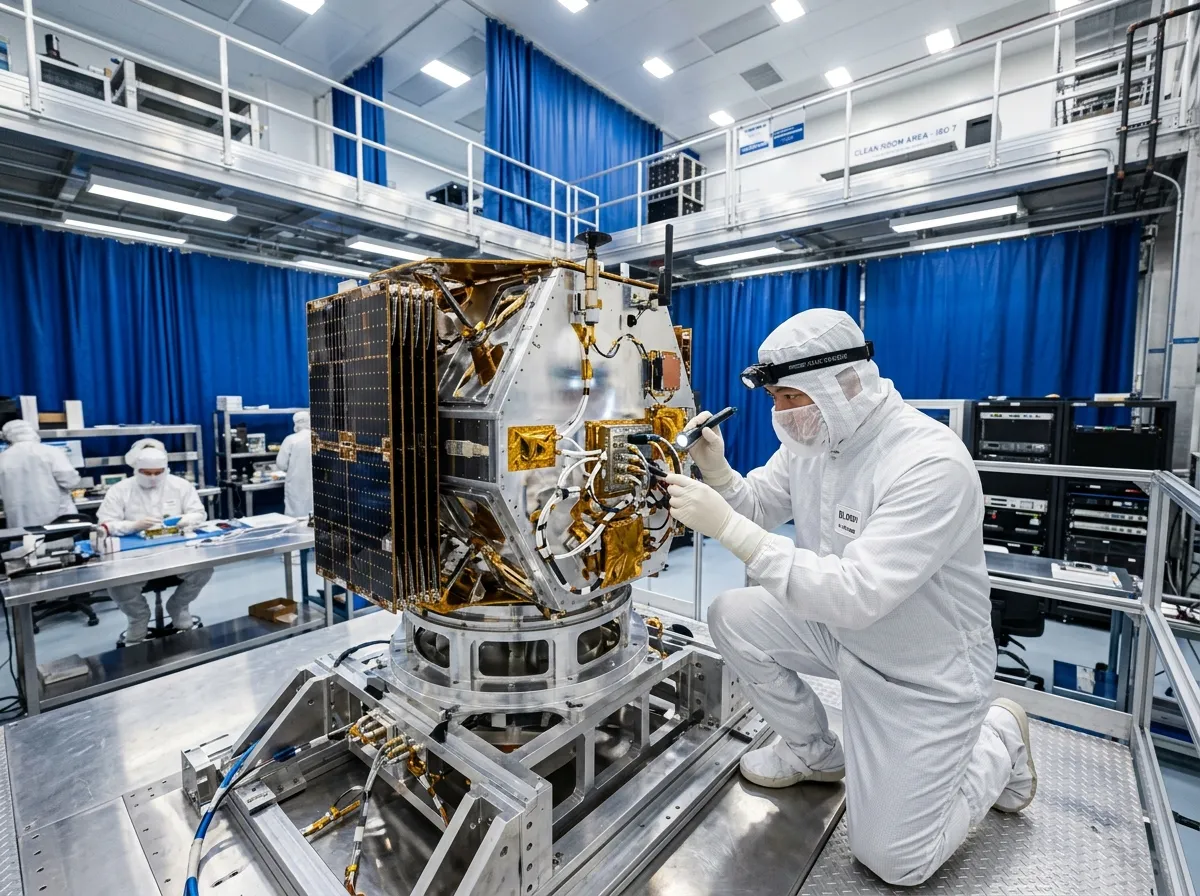
Amazon has been trying to close that gap with Project Kuiper, since rebranded as Amazon Leo. The service launched its first operational satellites last year and has roughly 200 in orbit, against a target of 3,200. Starlink, for reference, already operates more than 10,000 satellites in about 150 countries, per TechCrunch. The constellations are not comparable, and Amazon's next-generation direct-to-device system is not expected to begin deployment until 2028.
Globalstar closes two gaps at once. It gives Amazon Leo working direct-to-device infrastructure today, not in three years, and it unlocks the permissions to beam signals into smartphones almost anywhere in the world on day one.
The Apple Piece Is Bigger Than It Looks
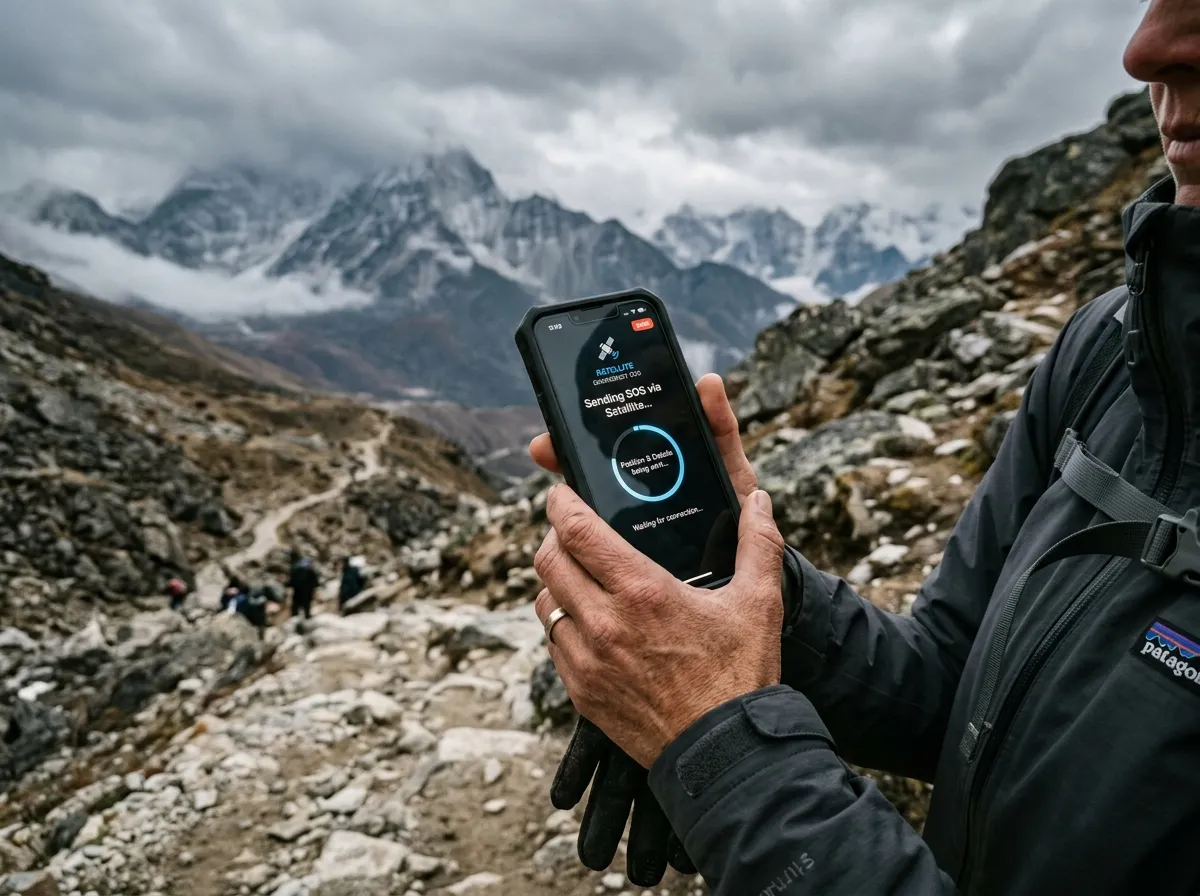
A separate agreement, signed at the same moment as the acquisition, requires Amazon Leo to keep providing satellite service to current and future iPhone and Apple Watch users. Globalstar currently carries Emergency SOS, Messages via Satellite, Find My, and Roadside Assistance for iPhone 14 and newer devices and the Apple Watch Ultra 3.
"This ensures our users will continue to have access to the vital satellite features they have come to rely on," said Greg Joswiak, Apple's senior vice president of worldwide product marketing, in a statement released through Amazon.
What the statement skips over: Apple owns roughly 20% of Globalstar and, according to 24/7 Wall St., consumes about 85% of the network's capacity. Apple is effectively selling one of its strategic stakes, while locking in a long-term replacement supplier and almost certainly collecting a meaningful payout in the process. It is also now dependent on a direct AWS rival for a feature that advertising copy has treated as a core iPhone capability for four product cycles.
Panos Panay, senior vice president of devices and services at Amazon, framed the rationale in consumer terms. "There are billions of customers out there living, traveling, and operating in places beyond the reach of existing networks," he said in the announcement. Globalstar CEO Paul Jacobs echoed the line, saying the tie-up "will advance innovations in digital connectivity that will benefit our customers." Both statements politely decline to mention SpaceX.
Why This Is About Starlink
SpaceX explored acquiring Globalstar in November 2025, a bid that did not close. That detail, flagged in 24/7 Wall St.'s deal breakdown, reframes Amazon's offer less as opportunism and more as a defensive move. If SpaceX had acquired Band 53 spectrum, it would have added global direct-to-device capability to a constellation that already dominates the sky. Amazon's $11.57 billion is, in that light, the price of keeping the strongest spectrum asset in the market out of Musk's hands.
Starlink's lead in raw capacity is genuine. Its direct-to-cell service, launched commercially in 2024 with T-Mobile, is already routing text messages in the United States, and international rollouts are underway. It does not, however, have spectrum cleared for direct-to-device service in anywhere near as many countries as Globalstar does.
Wall Street read the announcement as a win for Amazon. Its shares climbed 5% on the news, to roughly $252, and Globalstar jumped 10% to $80, extending a 12-month run of more than 270%. Amazon's 2026 capital expenditure plan already sits near $200 billion, driven primarily by AI data center buildout, so absorbing an $11.57 billion purchase does not meaningfully strain the balance sheet. In related infrastructure news, ASML raised its 2026 forecast on AI-driven chip demand, a reminder that every layer of the stack is consolidating at once.
The Regulatory Obstacle Course
Clearing the deal by 2027 is not automatic. Apple's 20% stake and its outsize share of network capacity create a genuinely novel antitrust question: is the combined entity an AWS subsidiary, an Apple supplier, or something else? The Federal Communications Commission will have to reassign Globalstar's spectrum licenses, which is routinely contentious, and international regulators in the dozens of countries where Band 53 is authorized will each need to sign off.
There are also national security reviews to clear. Globalstar's network carries emergency communications, and its satellites and ground stations are considered critical infrastructure. Acquisitions of that kind of capability typically go through the Committee on Foreign Investment in the United States, even for domestic buyers, because regulators want visibility into any downstream foreign ownership or contract exposure. None of these hurdles is fatal, but together they explain the 2027 closing target.
Employees also get a say. Under the agreement, Globalstar can, subject to a $110 million downward adjustment, renegotiate operational milestones. The provision is unusual enough that deal lawyers will be chewing on it for weeks.
Why It Matters
For consumers, very little changes in the short run. Emergency SOS still works. Find My via Satellite still works. The difference is that, over the next several years, those features quietly migrate from Globalstar's network to Amazon Leo, and Apple becomes a customer of a company that competes with it in devices, services, and cloud. In the long run, the agreement also sketches Amazon's likely play: satellite connectivity bundled with AWS, Prime, and potentially a future Amazon-branded direct-to-device offering that runs on the same constellation your iPhone already trusts.
For the broader industry, the deal narrows the field. There were three serious independent direct-to-device spectrum holders at the start of the year. There are now two. SpaceX remains the dominant constellation. AST SpaceMobile is still betting on its large-aperture satellites and partnerships with terrestrial carriers. Everyone else is playing in a smaller pool. The AI infrastructure buildout and the satellite buildout are increasingly the same story, drawn on the same balance sheets, by the same handful of companies.
The question Amazon has not answered is what it plans to do with direct-to-device access to hundreds of millions of phones once Apple's contract is no longer the dominant use case on the network. Nothing in the announcement commits Amazon to staying a silent utility. That is the part of this deal worth watching.
Sources
- Amazon to acquire Globalstar and expand Amazon Leo, Amazon corporate announcement
- Amazon to buy Globalstar for $11.57B in bid to flesh out its satellite biz, TechCrunch
- Amazon Rises 5%, Globalstar Jumps 10% as $11.57 Billion Acquisition Ignites a Satellite War With SpaceX, 24/7 Wall St.
- Amazon to buy Globalstar to bolster Leo satellite business in deal worth about $11.6 billion, CNBC
- Amazon to Buy Satellite Company Globalstar for $11.6 Billion, Bloomberg