
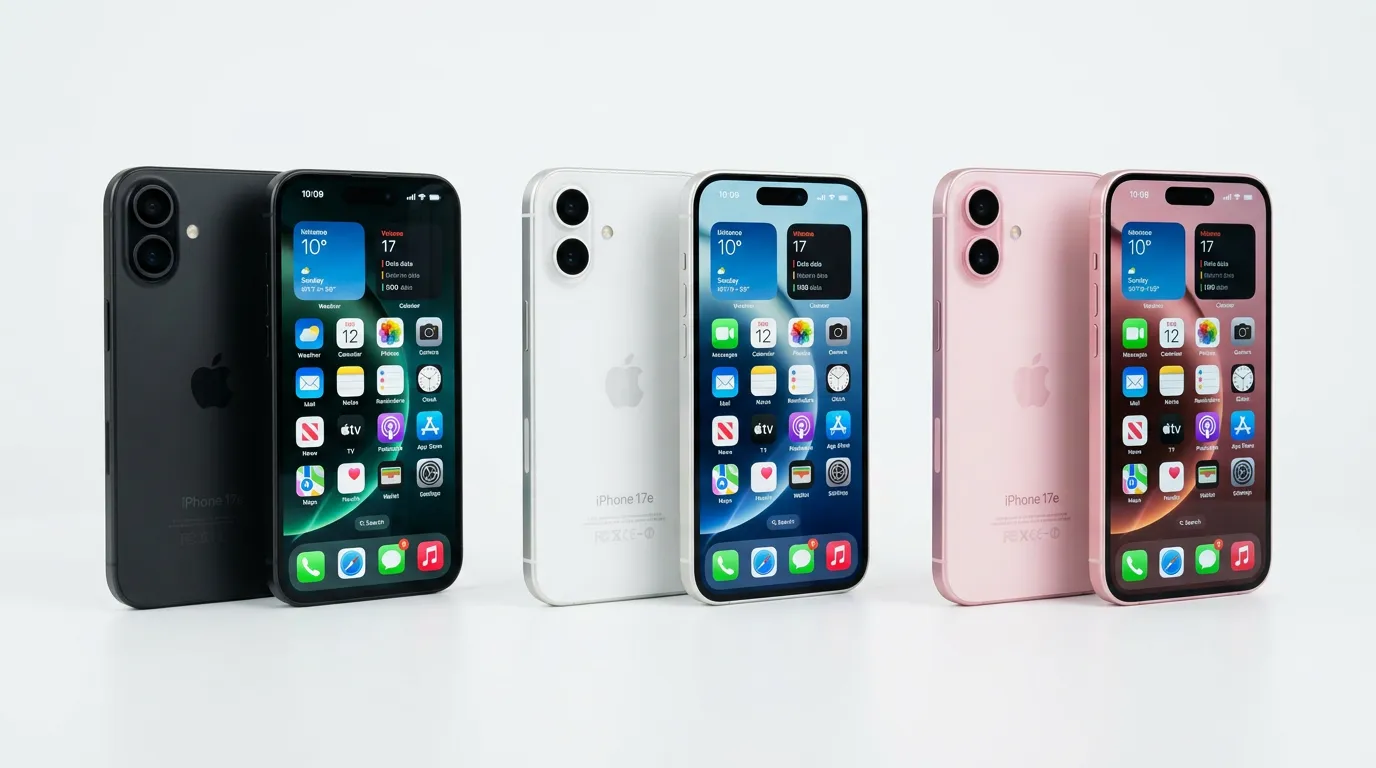
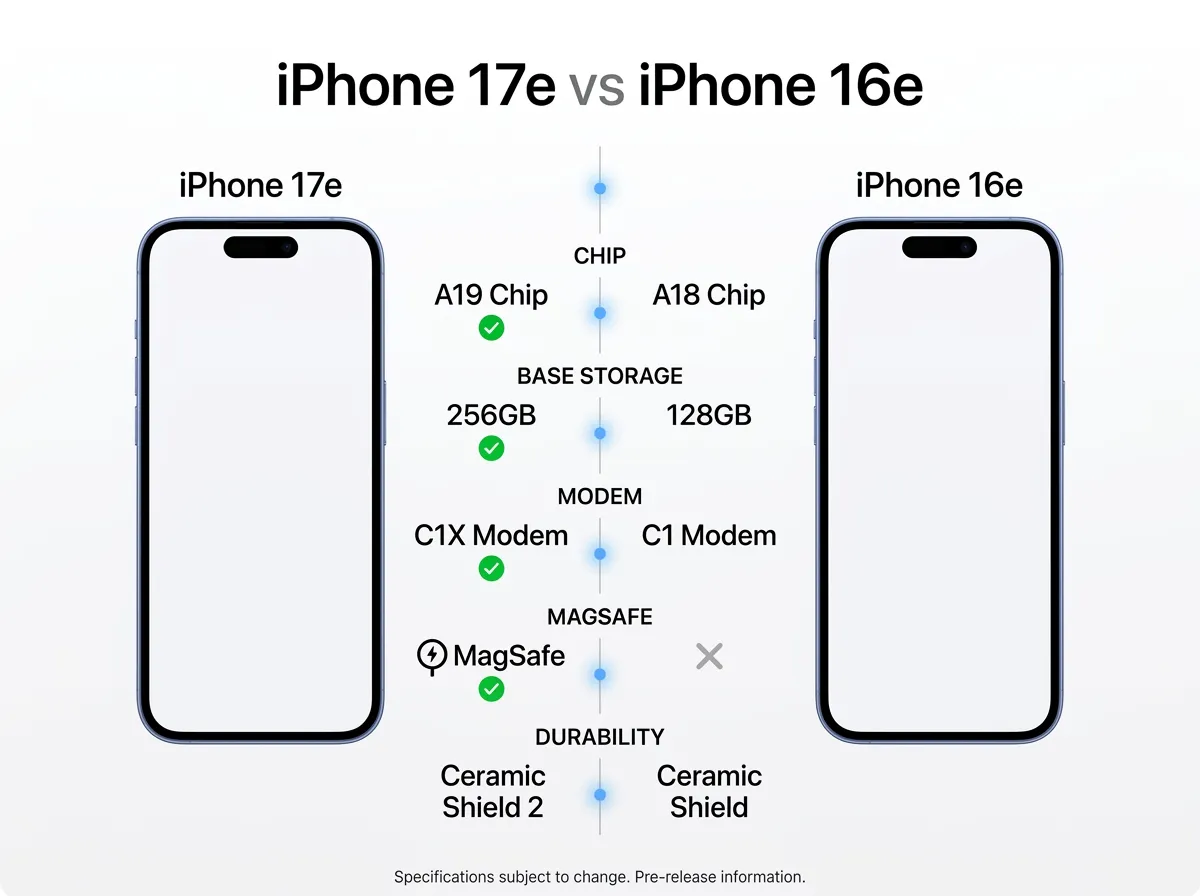
Apple's iPhone 17e went on sale today in more than 70 countries, and if you're wondering whether Apple's budget phone has finally closed the gap with its more expensive siblings, the answer is: it depends on what gap you're measuring. The $599 device ships with Apple's A19 chip (the same one in the standard iPhone 17), a brand-new C1X cellular modem that Apple claims is twice as fast as last year's C1, 256GB of base storage (double the iPhone 16e), and MagSafe support for the first time in the "e" lineup. Those are real upgrades. Whether they're enough to justify a purchase depends entirely on which phone you're upgrading from and how much you care about the things Apple left out.
The iPhone 17e is Apple's play for the massive middle of the smartphone market, the people who don't need a $1,199 Pro Max but want something newer than the iPhone 12 they've been holding onto since the pandemic. With carrier trade-in credits reaching up to $599 for an iPhone 13, Apple is making the math easy: trade in your old phone, walk out with a new one, pay nothing or close to it. That's the pitch. Here's what you're actually getting.
What's Actually New
The headline upgrade is the C1X modem, Apple's second-generation custom cellular chip. The first Apple-designed modem, the C1 in last year's iPhone 16e, was widely viewed as a compromise: it worked, but it didn't match Qualcomm's modems in raw speed or signal acquisition. The C1X addresses that gap. Apple says it delivers up to 2x faster cellular speeds compared to the C1, while consuming 30% less energy than the Qualcomm modem in the iPhone 16 Pro. If those numbers hold up in real-world testing, it would mark the first time Apple's in-house modem has matched the competition on performance while beating it on efficiency.
The A19 chip, built on TSMC's 3-nanometer process, is the same silicon that powers the standard iPhone 17. Its 6-core CPU is up to 2x faster than the iPhone 11, which is the comparison Apple keeps making, and its 16-core Neural Engine handles on-device AI tasks like Live Translation, Visual Intelligence, and the new Call Screening feature. The inclusion of Apple's top-tier processor in the budget model is a deliberate departure from Apple's usual strategy of reserving the best chips for its most expensive phones.
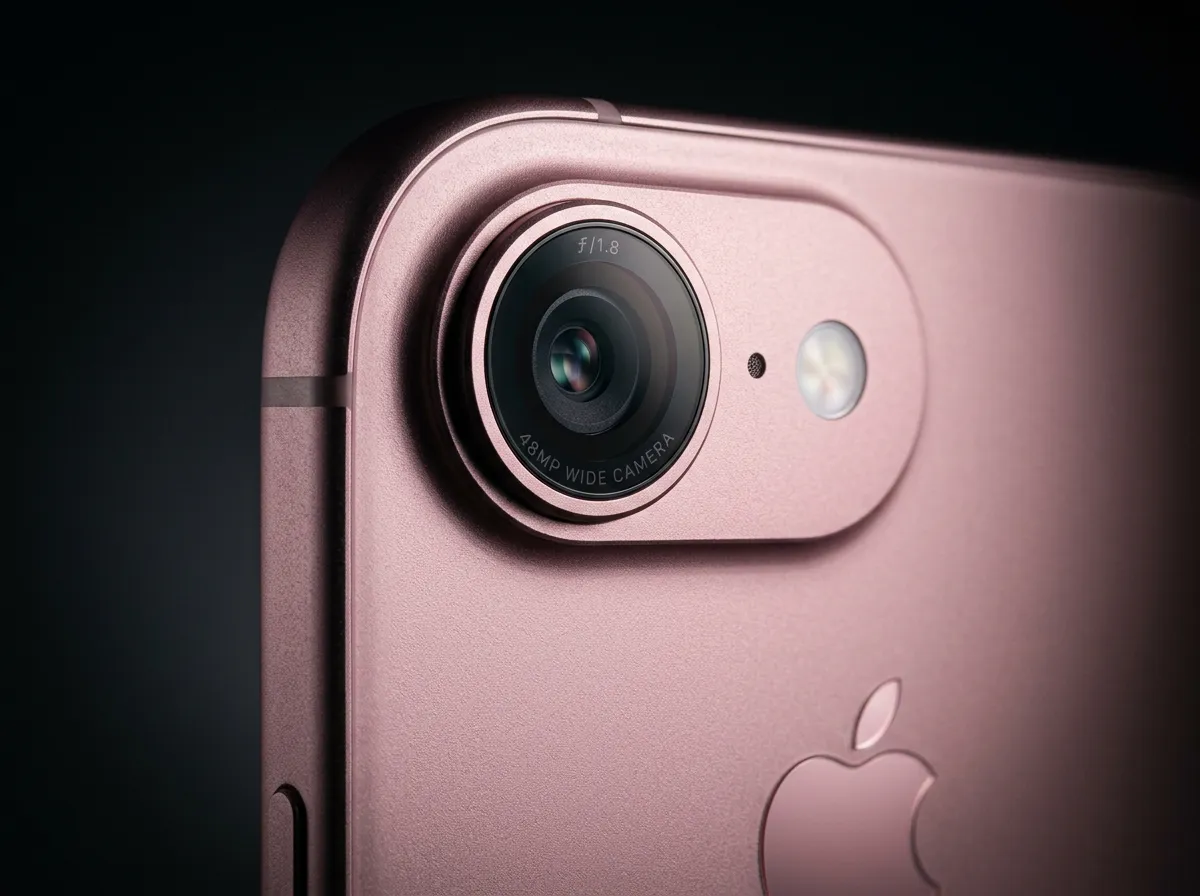
Storage has doubled across the board. The base configuration is now 256GB, up from 128GB on the iPhone 16e, at the same $599 starting price. A 512GB option is available for $799. The camera system uses a 48MP Fusion sensor that outputs 24MP images by default and offers an optical-quality 2x telephoto capability, giving you what Apple describes as two cameras in one. And MagSafe, previously absent from the "e" line, is now standard, enabling 15W wireless charging and compatibility with Apple's ecosystem of magnetic accessories.
The Modem Is the Real Story
Here's the thing most reviews won't tell you: the iPhone 17e's most important feature isn't visible and doesn't show up in benchmark scores. It's the modem. Apple spent roughly $1 billion acquiring Intel's modem division in 2019 and has been working for seven years to eliminate its dependence on Qualcomm, which has supplied cellular modems for every iPhone since the original. The C1X is the second step in that process, and its performance relative to Qualcomm's Snapdragon X80 will determine how quickly Apple can cut Qualcomm out of the iPhone supply chain entirely.
Why does this matter for you? In the short term, it probably doesn't. You'll get fast cellular speeds and good battery life. In the medium term, though, Apple's ability to design its own modem enables deeper integration between the cellular radio, the processor, and the rest of the system. This is the same playbook Apple ran with its A-series chips: bring the design in-house, optimize the integration, and gradually build advantages that competitors can't match because they're buying off-the-shelf components. The C1X is not yet at the level where you'd call it a competitive advantage over Qualcomm. But it's the kind of foundational technology that Apple tends to improve rapidly once the first version ships. The iPhone 16e's C1 was the proof of concept. The C1X is the refinement. By the time the C2 or C3 arrives, Apple could have a meaningful modem lead, and the 17e buyers will have been the early adopters who funded the journey.
The significance here connects to Apple's broader silicon strategy, which has reshaped how the entire industry thinks about custom chips. When Apple transitioned the Mac from Intel to its own M-series processors, competitors initially dismissed the move. Three years later, Qualcomm and Intel are both scrambling to match Apple's power efficiency. The modem transition is following the same arc.
What's Missing (and Whether It Matters)
Let's be direct about what $599 doesn't buy you. The iPhone 17e has a single rear camera, no telephoto lens beyond the computational 2x crop, and no LiDAR scanner. The display, while sharp and bright at 1200 nits peak HDR, lacks the ProMotion 120Hz refresh rate that the Pro models offer. There's no Action Button and no always-on display. The phone is IP68 water-resistant but uses Ceramic Shield 2 (3x scratch resistance over the 16e) rather than the ceramic-titanium construction of the Pro Max. And while battery life is rated at 26 hours of video playback, heavy users will likely find themselves reaching for a charger by evening.
For the target buyer, someone upgrading from an iPhone 11, 12, or 13, none of these omissions will feel like sacrifices. They're moving from a phone with a slower chip, less storage, no MagSafe, and an aging modem to one that addresses every one of those limitations. The iPhone 17e is not designed to compete with the iPhone 17 Pro. It's designed to make the iPhone 12 feel obsolete, and at that, it succeeds.
Who Should Buy This Phone
The iPhone 17e makes sense for three groups of people. First, anyone still using an iPhone 12 or older. These phones are losing software support, their batteries are degraded, and the generational leap in performance, camera quality, and connectivity is substantial. The trade-in math works: Apple offers up to $100 directly for an iPhone 11, and carrier credits can push the effective cost to zero.
Second, first-time iPhone buyers or people switching from Android. The 17e is the least expensive way to enter the Apple ecosystem with a current-generation chip, full Apple Intelligence support, and the MagSafe accessory system. For someone whose purchasing decision comes down to price, the 17e is a stronger proposition than the standard iPhone 17, which starts at $799, unless you specifically need the better camera system or ProMotion display.
Third, people who keep their phones for three to five years. The A19 chip and 256GB storage ensure that the 17e will remain capable through at least 2030 or 2031. Apple typically supports iPhones with software updates for six to seven years, meaning the 17e should receive iOS updates through approximately 2032. If your phone purchasing strategy is "buy it and forget it," the 17e is built for you.
Who shouldn't buy it? iPhone 16e owners. As MacRumors and 9to5Mac have noted, the year-over-year improvements, while meaningful in isolation, don't justify a one-year upgrade cycle. The A18 to A19 jump is incremental, and while MagSafe is nice to have, it's not a necessity. If you bought the 16e last year, you're fine for at least another two years.
The Verdict
The iPhone 17e is a good phone that solves a real problem: Apple's budget option has historically felt like a significant compromise. The 17e narrows that gap meaningfully. The A19 chip, C1X modem, doubled storage, and MagSafe support add up to a device that handles everything most people need a phone to do, without the $1,199 sticker shock of the Pro Max. Apple's VP of iPhone Product Marketing called it a phone that "combines powerful performance and features our users love at an exceptional value." Marketing hyperbole aside, the claim is closer to accurate than it usually is.
The real test comes over the next twelve months as third-party benchmarks, real-world modem tests, and battery endurance data accumulate. Apple's track record with first-generation hardware (the original Apple Watch, the first M1 MacBook Air, the C1 modem) suggests that the 17e will be good enough now and better in retrospect. At $599, with carrier deals that can bring the effective cost to zero, the math is hard to argue with for anyone in Apple's ecosystem.
Sources
- Apple introduces iPhone 17e - Apple Newsroom
- iPhone 17e vs iPhone 16e: Five key upgrades - 9to5Mac
- iPhone 16e vs. iPhone 17e Buyer's Guide: All Upgrades Compared - MacRumors
- iPhone 17e complete guide: Release date, price, specs, features - Macworld