
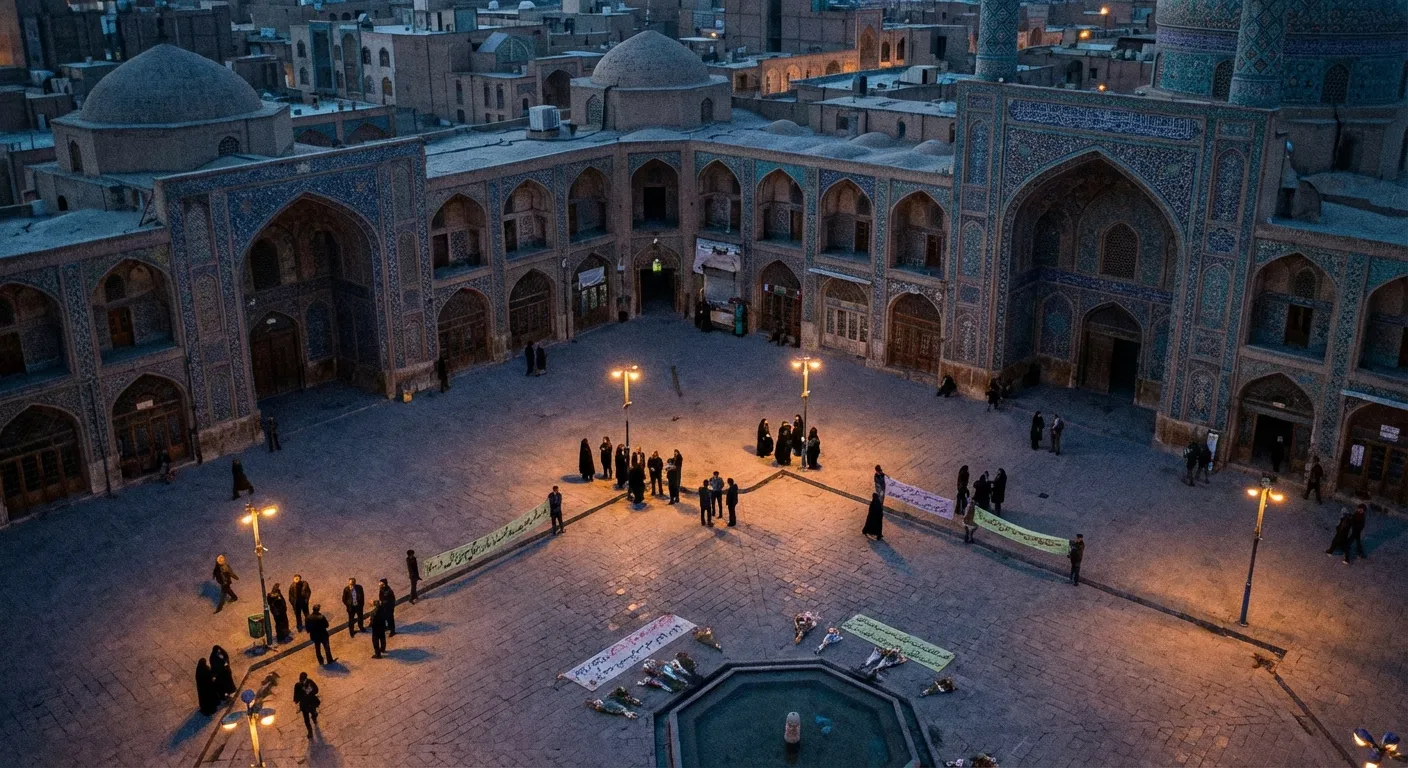
Iran's President Masoud Pezeshkian stood before cameras on Tuesday, the 47th anniversary of the Islamic Revolution, and did something no Iranian leader has done in the republic's history: he apologized for killing his own people.
"We are ashamed before the people, and we are obligated to assist all those who were harmed in these incidents," Pezeshkian said during a nationally televised address. "We are not seeking confrontation with the people."
The words landed in a country still reeling from the bloodiest government crackdown since the revolution itself. Beginning on December 28, when shopkeepers in Tehran's Grand Bazaar shuttered their doors in protest over a collapsing economy, demonstrations spread to every major Iranian city within days. By January 8, security forces had escalated to live ammunition. And then the internet went dark.
What happened during that blackout is still being pieced together. But the numbers that have emerged are staggering, and they explain why a president known for his reformist leanings felt compelled to break with decades of regime silence.
The Scale of What Happened
The death toll from Iran's protest crackdown depends entirely on who you ask, and the gap between official figures and independent estimates is enormous.
The Iranian government has acknowledged 3,117 deaths, claiming that 2,447 were "civilians and security forces" and the remainder were "terrorists." That framing alone tells you how the regime wants this remembered. But the US-based Human Rights Activists News Agency, known as HRANA, has documented 6,964 confirmed deaths as of February 5. And an investigation by Iran International's editorial board, based on leaked government documents, puts the figure at more than 36,500 killed during just the January 8-9 crackdown, which would make it the deadliest two-day protest massacre in modern history.
Those numbers are difficult to verify independently because authorities severed all internet access starting January 8, a now-familiar playbook for regimes trying to control the narrative. Raha Bahreini of Amnesty International said authorities "opened fire unlawfully" at mostly peaceful protesters, including families and children. Bahar Saba of Human Rights Watch added that Iranian authorities have shown "no answers other than bullets and brutal repression" to street demonstrations.
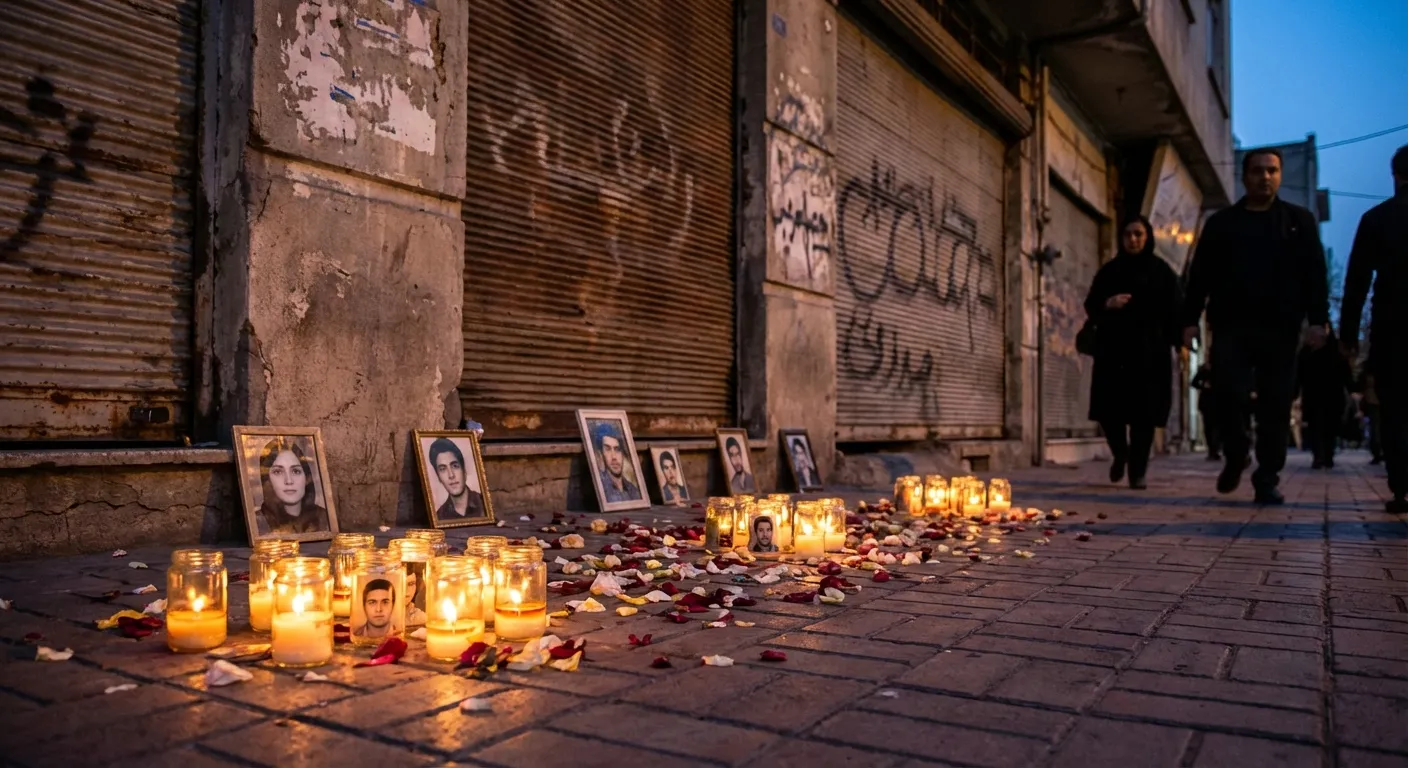
What Sparked the Protests
The December uprising didn't materialize out of nowhere. Iran's economy has been under mounting pressure for years, squeezed between Western sanctions, corruption, and mismanagement. But the trigger was tangible and immediate: the rial had plunged to record lows, basic goods prices had spiked, and for millions of working-class Iranians, the math of daily survival simply stopped working.
On December 28, shopkeepers in Tehran's Grand Bazaar, a bellwether for popular discontent since the 1979 revolution, closed their doors. Within 48 hours, strikes and protests had spread to cities across the country. By early January, what began as economic frustration had morphed into broader political demands: accountability, reform, and for some, an end to theocratic rule entirely.
Afshon Ostovar, a professor at the Naval Postgraduate School who studies Iranian security forces, told reporters the regime viewed the protests as an existential threat. "They chose lethal suppression rather than allowing escalation," he said. The pattern echoed the 2022 Mahsa Amini protests, when demonstrations over a young woman's death in morality police custody swept across the country, but this time the government response was faster and far more lethal.
Why Pezeshkian Spoke Now
The timing of the apology is no accident. Pezeshkian is caught between domestic fury and international pressure that's closing in from multiple directions.
On the domestic front, the protests may have been suppressed through force, but the anger hasn't dissipated. Iranian cities remain tense. Reports of smaller demonstrations and work stoppages have continued through February, and the regime's legitimacy, already eroded after years of broken promises, has taken another severe hit.
Internationally, the pressure is intensifying. The UN Human Rights Council adopted a resolution in late January extending the mandates of its fact-finding mission and special rapporteur on Iran, specifically calling for an urgent investigation into the December-January crackdown. Human Rights Watch published a detailed report on February 4 documenting what it called a "spiral deeper into crisis."
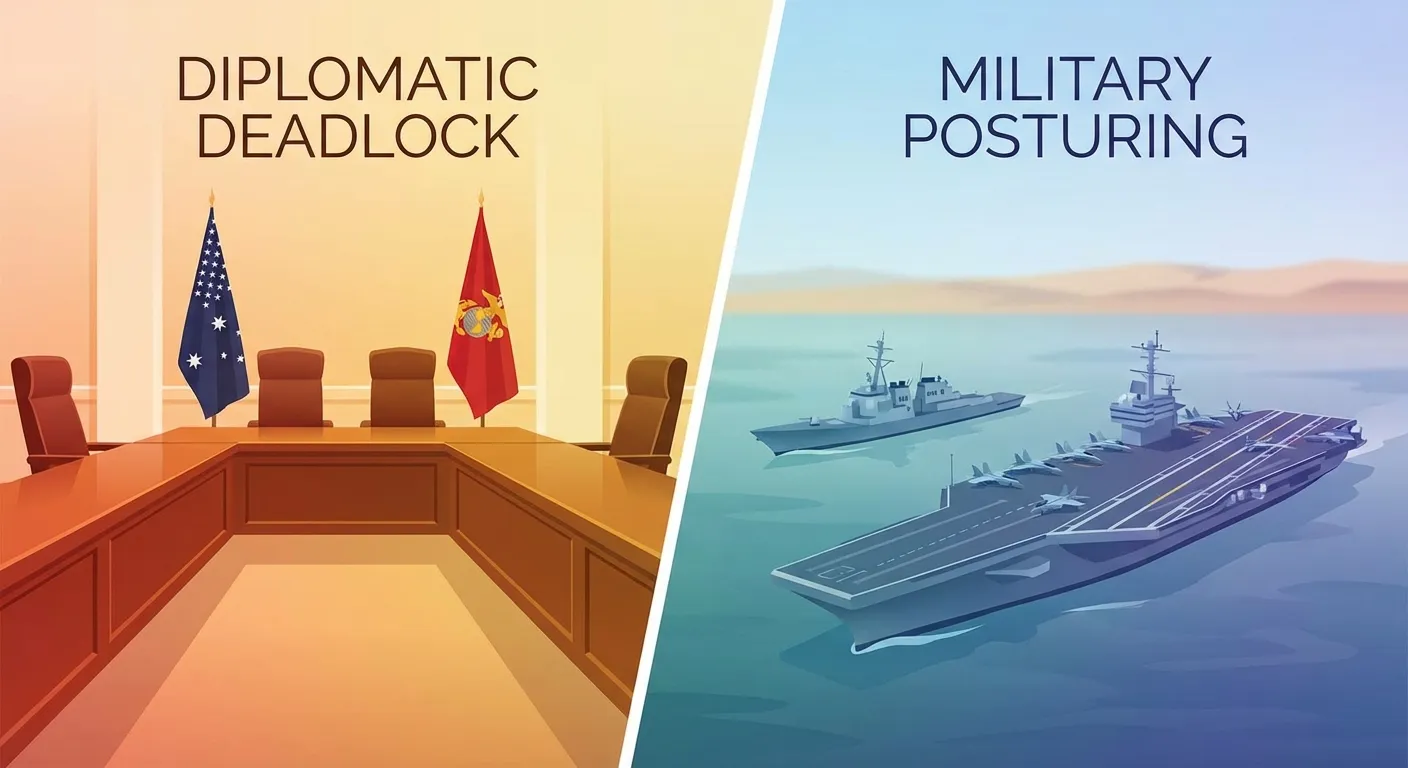
Then there's the United States. President Trump hosted Israeli Prime Minister Benjamin Netanyahu at the White House on Tuesday, with Iran's nuclear program squarely on the agenda. Trump has suggested deploying a second aircraft carrier group to the region, and the administration has made clear it views the protest crackdown as leverage in nuclear negotiations. Pezeshkian used his anniversary speech to insist Iran is "not seeking nuclear weapons" and is "ready for any kind of verification," a direct signal to Washington.
But even that olive branch came with a caveat. Senior adviser Ali Shamkhani countered within hours that Iran's missile capabilities remain "non-negotiable," underscoring the internal divisions within the regime about how far to bend.
What the Apology Actually Said (and Didn't)
The language of Pezeshkian's apology matters. He expressed shame. He acknowledged "great sorrow." He committed to assisting those who were harmed. What he did not do, notably, was acknowledge the role of Iranian security forces in the killings. He did not name any commanders responsible for ordering live fire. He did not promise accountability, investigations, or prosecutions.
That omission is the reason the apology has landed with a thud among many Iranians, particularly those who lost family members. Protest movements in Iran have long demanded not just acknowledgment but structural change: independent courts, press freedom, an end to the morality police, and genuine electoral choice. An expression of shame without any mechanism for accountability reads, to many, as a public relations exercise designed to ease international pressure while changing nothing domestically.
The reaction from human rights organizations has been cautiously worded but pointed. Amnesty International acknowledged the unprecedented nature of a sitting Iranian president expressing remorse but emphasized that "words without accountability are insufficient." The organization renewed its call for an independent international investigation with cooperation from Tehran.
The Bigger Picture for the Region
Iran's internal crisis is reshaping the geopolitical dynamics of the entire Middle East at a moment when multiple pressure points are converging simultaneously.
The Trump administration sees an opportunity. A weakened Iran, dealing with domestic legitimacy problems and a fractured security establishment, is more likely to make concessions on its nuclear program. That calculus drove the decision to float additional carrier deployments and to publicly link the protest crackdown to the nuclear negotiations. For Washington, the apology is evidence that the pressure campaign is working.
For Israel, the moment is equally significant. Netanyahu's visit to Washington coinciding with Pezeshkian's anniversary speech was not a coincidence. Israeli officials have argued for years that Iran's domestic instability is the most reliable check on its regional ambitions, and the current crisis vindicates that view. The question is whether diplomatic progress can be made before the window closes, because Iranian hardliners have historically used external threats to consolidate domestic support.
For ordinary Iranians, the geopolitics matter far less than the daily reality. Prices are still rising. The internet remains heavily restricted. Thousands of people arrested during the protests are still in detention without charge. And the security forces who carried out the crackdown remain in their positions.
What to Watch
Pezeshkian's apology was historically unprecedented, but it was also carefully calibrated. The real test comes in the weeks ahead: whether the regime follows words with any concrete action, whether detained protesters are released, whether any form of independent investigation is permitted, and whether the economic grievances that sparked the uprising receive serious policy attention.
The international community has its own decisions to make. The UN fact-finding mission will be gathering evidence. The Trump administration will weigh whether to pursue diplomacy or escalation. And Iran's hardliners, who hold the real power behind Pezeshkian's elected office, will decide how much they're willing to concede.
What's already clear is that the old playbook, suppress, deny, wait for the world to move on, isn't working the way it used to. Six thousand confirmed dead is a number that doesn't fade quietly. And a president who felt compelled to say "we are ashamed" on national television has, at minimum, admitted that the regime knows it.
Sources
- Iran's president apologises to 'all those affected' by protests, crackdown - Business Standard
- Iran's president apologises for brutal protests crackdown that left thousands dead - Yahoo News / AFP
- Iran: Growing Evidence of Countrywide Massacres - Human Rights Watch
- Iran: Human Rights Situation Spirals Deeper into Crisis - Human Rights Watch
- What Happened at the Protests in Iran? - Amnesty International