
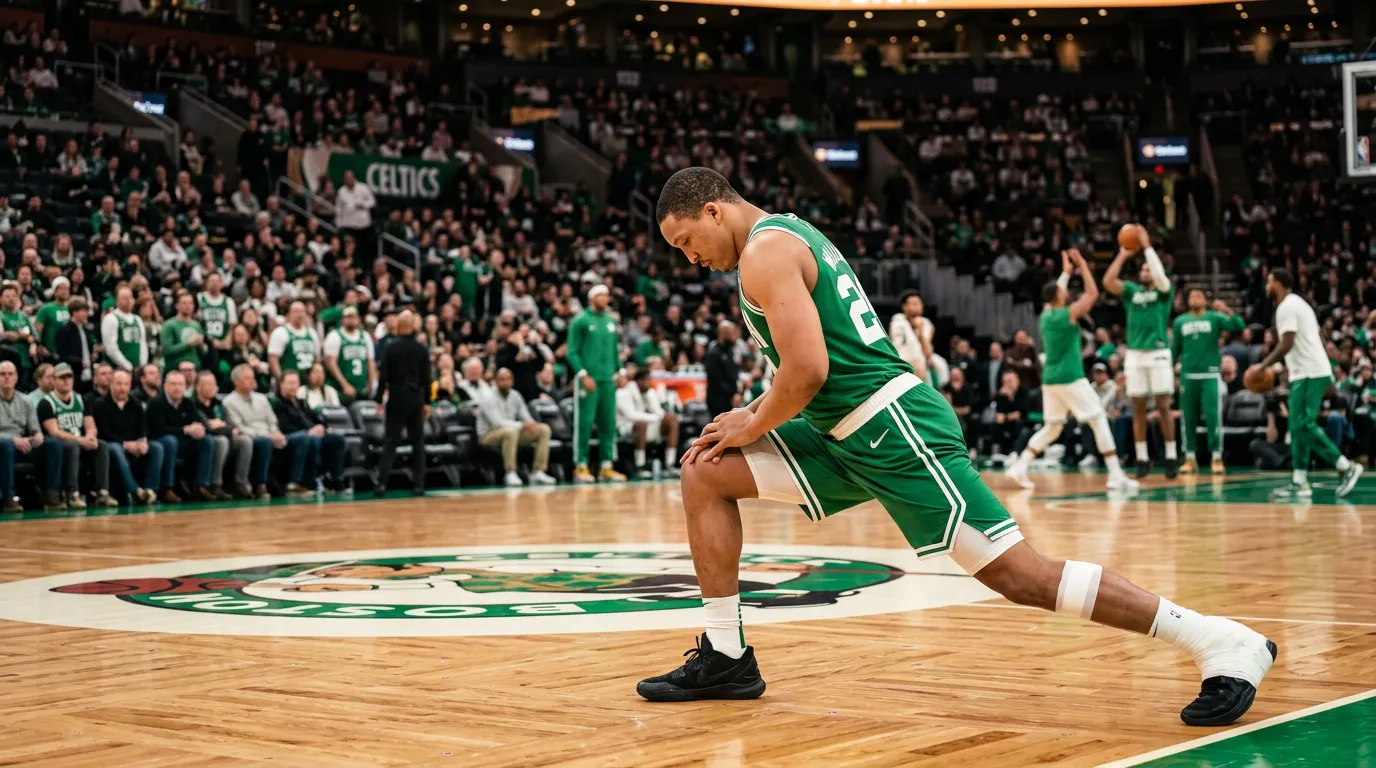
Ten months ago, Jayson Tatum crumpled to the floor at Madison Square Garden, clutching his right ankle in Game 4 of the Celtics' second-round playoff series against the Knicks. The diagnosis, a complete Achilles tendon tear, was the injury that every basketball player fears more than any other. It ended Kobe Bryant's run as an elite player. It kept Kevin Durant off the court for 18 months. The typical recovery timeline for NBA players is 12 to 18 months, with significant performance decline the norm rather than the exception. On Friday night at TD Garden, Tatum is expected to walk onto the floor for warm-ups against Cooper Flagg and the Dallas Mavericks and attempt something that the historical data says he should not yet be capable of doing.
ESPN's Adrian Wojnarowski reported Thursday evening that Tatum has been cleared for full contact and will make his 2025-26 season debut against Dallas, pending a final pre-game evaluation. The Celtics, who have gone 41-21 without their franchise player, enter the game as the second seed in the Eastern Conference, a testament to the depth and system that head coach Joe Mazzulla has built. But the question facing Boston is not whether the team can survive without Tatum. It has already answered that. The question is whether the version of Tatum who returns can elevate a good team into a championship-level one over the final 20 games of the regular season and into the playoffs.
The Timeline That Defies Precedent
A 10-month return from a complete Achilles tear would be the fastest by any NBA player at Tatum's level of production. The historical comparisons are sobering. Kobe Bryant tore his Achilles in April 2013 and returned in December, roughly eight months later, but he was never the same player. Bryant's scoring efficiency dropped from 46.3% true shooting to 37.3% in his abbreviated return season, and injuries plagued him for the remaining three years of his career. Kevin Durant's Achilles tear in the 2019 Finals kept him out for 18 full months. When he returned with the Nets in January 2021, he was excellent, but Durant was playing at a lower physical intensity than his pre-injury peak, relying more on his shooting and less on the explosive drives that had been part of his arsenal.
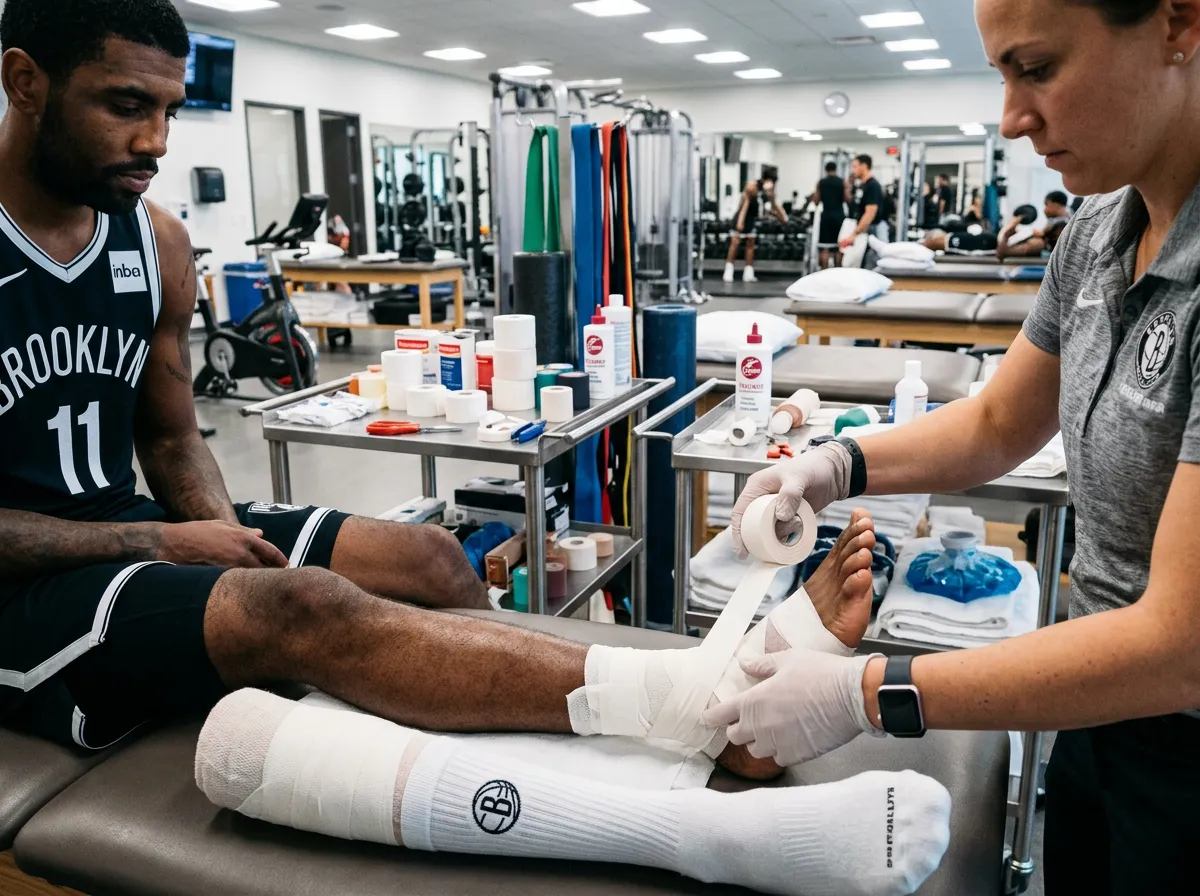
The medical advances since those injuries are real and worth acknowledging. Surgical techniques have improved, rehabilitation protocols are more aggressive, and Tatum reportedly had access to biologic treatments and specialized equipment that accelerate tissue healing. His surgeon, Dr. Martin O'Malley, used a minimally invasive technique that reduces recovery time by preserving more of the surrounding tissue. Still, ten months is ten months. The tendon may be structurally sound, but the neuromuscular patterns, the explosive first step, the ability to absorb contact on drives to the basket, and the confidence to push off that foot in game situations are elements that cannot be fully tested in practice.
"We knew coming into this that the timeline was aggressive," Celtics head coach Joe Mazzulla said at Thursday's practice. "But JT's work has been incredible. He's passed every test we've put in front of him. At some point you have to let him play."
What the Celtics Built While Tatum Was Gone
The most remarkable subplot of this story is what did not happen in Tatum's absence. The Celtics did not collapse. They did not trade away assets to tread water. They adapted. Jaylen Brown has been the best version of himself this season, averaging 28.9 points, 7.2 rebounds, and 5.0 assists per game. Derrick White has emerged as a legitimate All-Star caliber player, not just a complementary piece. And the team's defensive rating, which ranked sixth in the league before Tatum's injury, has remained in the top ten all season.
Mazzulla's system, which emphasizes spacing, switching, and collective decision-making over isolation-heavy sets, proved resilient enough to absorb the loss of its best player without a fundamental redesign. Boston's 41-21 record is only three games behind the first-place Cleveland Cavaliers in the East, and the Celtics have won 11 of their last 15, suggesting they are hitting their stride at exactly the moment Tatum returns.
This is both good news and a complication. Good news because Tatum is returning to a team that does not need him to save it, which reduces the pressure to rush into heavy minutes and high-usage possessions. A complication because the Celtics have developed rotations, habits, and a rhythm that did not include him. Integrating a player of Tatum's caliber into a functioning system is not as simple as inserting him into the starting lineup and resuming normal operations. The minutes distribution, the shot hierarchy, and the defensive assignments all need to be recalibrated, ideally before the playoffs begin in mid-April.
The Achilles Comeback Data That Should Make Boston Cautious
Beyond Bryant and Durant, the broader dataset on Achilles returns in the NBA tells a consistent story. A 2023 study published in the American Journal of Sports Medicine examined 18 NBA players who suffered complete Achilles tears between 2010 and 2022. The average return time was 11.4 months. Of the 18 players, 14 returned to NBA action. Of those 14, only five ever matched their pre-injury Player Efficiency Rating. The average PER decline was 4.2 points, roughly the difference between an All-Star and a solid starter.
The data gets worse when you look at specific performance metrics. Post-Achilles players showed an average decline of 11% in points per game, 8% in field goal percentage, and 14% in drives to the basket per game. The drives statistic is the most telling because it measures the explosive, change-of-direction movements that the Achilles tendon is most critical for. Players who returned from Achilles tears overwhelmingly became more perimeter-oriented, relying on pull-up jumpers and catch-and-shoot opportunities rather than attacking the rim.
Tatum's pre-injury game was already more perimeter-oriented than Bryant's or Durant's, which may actually work in his favor. His three-point shooting, mid-range pull-up game, and playmaking from the wing are less dependent on the explosive first step than a player like Zion Williamson, for example. If Tatum can shoot and pass at his pre-injury level, even with reduced athleticism, he projects as a high-level player. But the difference between "high-level player" and "franchise player who can carry a team through four playoff rounds" may come down to exactly the physical tools that Achilles injuries compromise.
Friday Night's Matchup and What to Watch For
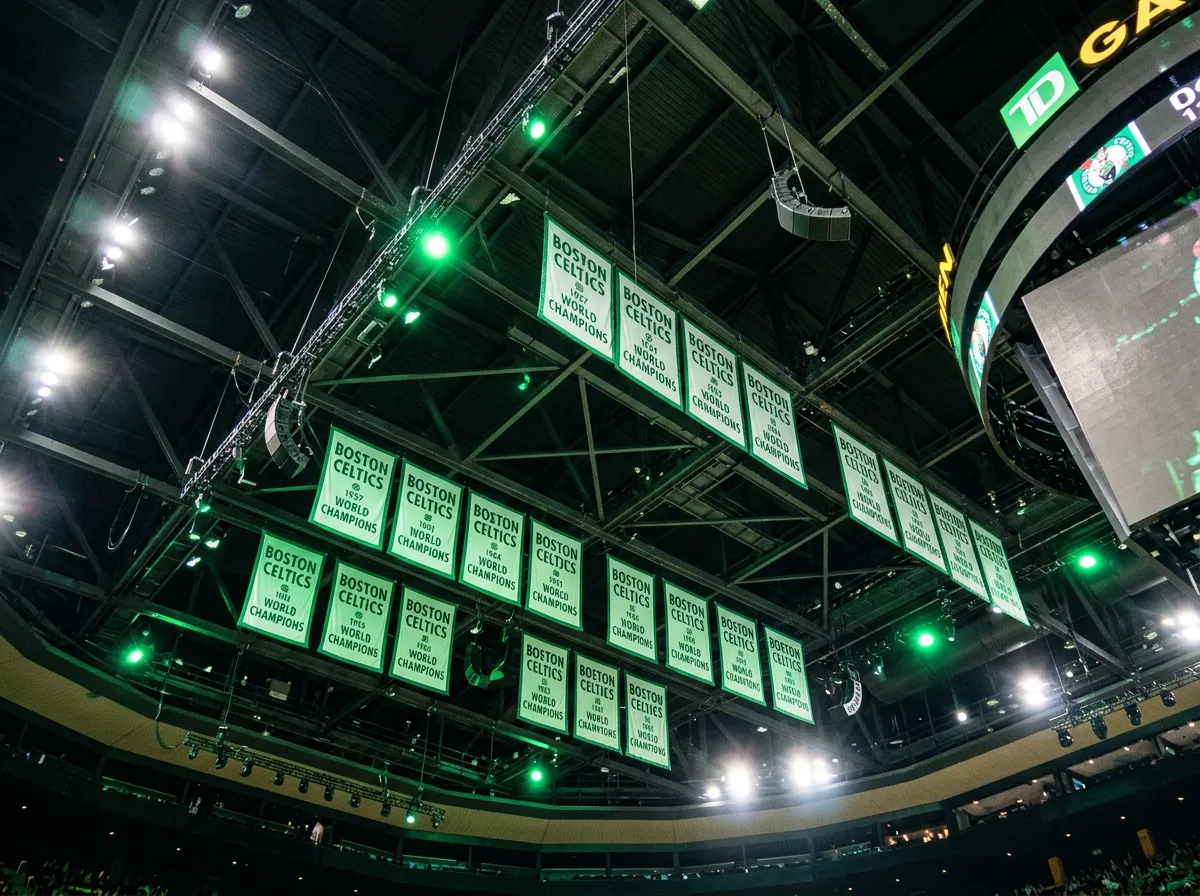
The Mavericks game is a useful first test precisely because it is not a must-win. Dallas, led by rookie Cooper Flagg and a rebuilding roster, is 28-34 and out of playoff contention. The low stakes give Mazzulla the freedom to manage Tatum's minutes without worrying about the consequences of a loss. Reports suggest Tatum will play between 18 and 22 minutes, well below his pre-injury average of 36.4, with planned rest periods built into the rotation.
The minutes total matters less than the movement patterns. Watch for three specific things. First, how Tatum decelerates after drives. The Achilles tendon absorbs enormous force during deceleration, and players returning from tears often show hesitancy in their stopping mechanics, taking shorter, choppier steps instead of the fluid deceleration of a healthy player. Second, watch his defensive closeouts. Tatum was a switchable, aggressive perimeter defender before the injury, and closing out on shooters requires the kind of explosive lateral push that tests a repaired Achilles. Third, and most importantly, watch his reaction after contact. Post-Achilles players often pull up or alter their shot when they absorb a bump on drives, protecting the leg instinctively even when the tendon is structurally sound.
"He looks like JT in practice," Brown said Thursday. "Same moves, same confidence. But practice and games are different. We'll see how it goes and we'll be there for him either way."
How This Plays Out
Jayson Tatum returning 10 months after a complete Achilles tear is a medical achievement regardless of what happens Friday night. The question is whether it translates into a basketball achievement. The Celtics need Tatum not just to play but to play at a level that makes them a genuine championship contender, because Cleveland, Milwaukee, and the Spurs behind Wembanyama's emergence are all built to compete for a title.
The most likely outcome, based on the historical data and the Celtics' current construction, is that Tatum contributes meaningfully but does not reach his pre-injury peak this season. If he can average 20 points on reasonable efficiency over the final 20 games while playing 28 to 30 minutes per night, that gives Boston a second scoring option that transforms their ceiling in a playoff series. If the Achilles limits him to 15 points on lower efficiency, the Celtics are a second-round team, talented but not equipped to beat Cleveland or Milwaukee in a seven-game series. The first 10 games will tell us which trajectory Tatum is on. Friday night is the beginning of an answer, not the answer itself.