
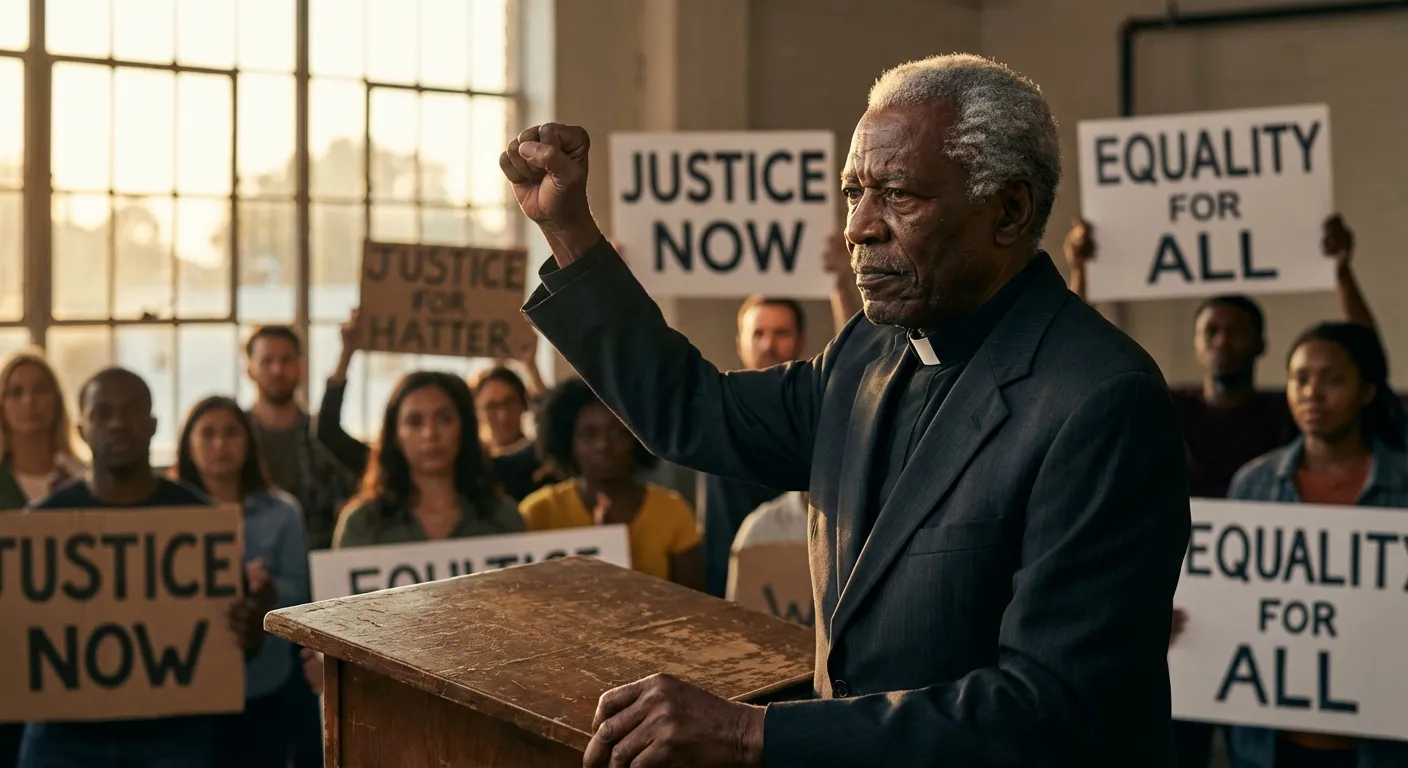
Jesse Jackson, the Baptist minister from South Carolina who stood beside Martin Luther King Jr. on a Memphis balcony in 1968, ran for president twice, negotiated hostage releases in war zones, and spent six decades pushing America closer to its stated ideals, died Tuesday morning. He was 84.
His family confirmed that Jackson died peacefully, surrounded by loved ones. He had been diagnosed with progressive supranuclear palsy, a rare degenerative neurological condition, in November 2024, compounding a Parkinson's disease diagnosis he first disclosed in 2017.
"Our father was a servant leader, not only to our family, but to the oppressed, the voiceless, and the overlooked around the world," the Jackson family said in a statement. "We ask the public to honor his memory by continuing the fight for the values he lived by."
The tributes arrived swiftly and from every corner of American political life. Rev. Al Sharpton, Jackson's longtime ally, called him "a consequential and transformative leader who changed this nation and the world." President Donald Trump described Jackson as "a good man, with lots of personality, grit, and 'street smarts,'" noting that the two had worked together on criminal justice reform and support for historically Black colleges and universities.
From Greenville to the Movement's Front Lines
Born Jesse Burns on October 8, 1941, in Greenville, South Carolina, to a 16-year-old unmarried mother, Jackson adopted his stepfather's surname during his teenage years. He was an honors student and a gifted athlete, earning a football scholarship to the University of Illinois before transferring to North Carolina Agricultural and Technical State University, where he graduated in 1964.
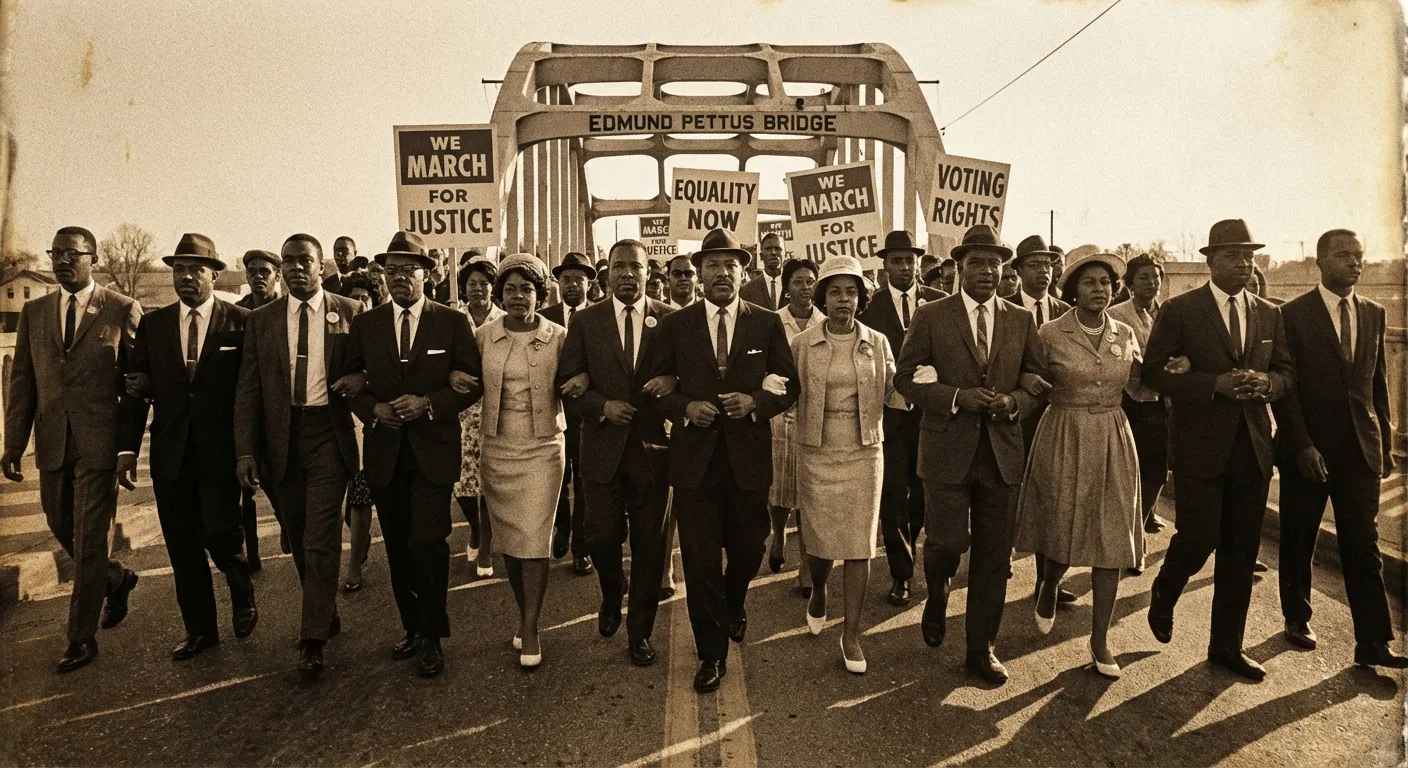
It was at North Carolina A&T that Jackson found his calling. He participated in sit-ins during the 1960 library desegregation campaign and soon joined the inner circle of Dr. Martin Luther King Jr.'s Southern Christian Leadership Conference. By 1967, King had appointed him to lead Operation Breadbasket, the SCLC's economic empowerment initiative in Chicago.
Jackson was present on the balcony of the Lorraine Motel in Memphis on April 4, 1968, when King was assassinated. That moment became both a personal trauma and a turning point. In the decades that followed, Jackson carried King's message forward while building his own distinct political identity, one that blended moral urgency with pragmatic coalition-building and an instinct for the dramatic gesture.
Building the Rainbow Coalition
After King's death, Jackson founded People United to Save Humanity (PUSH) in Chicago in 1971, an organization focused on economic empowerment and educational opportunity for Black Americans. In 1984, he launched the National Rainbow Coalition, a multiracial political organization designed to unite African Americans, Latinos, women, LGBTQ Americans, and working-class whites under a shared progressive banner.
The two organizations merged in 1996 to form the Rainbow PUSH Coalition, which became Jackson's institutional base for the rest of his career. What made the Rainbow Coalition historically significant was its ambition: Jackson argued that marginalized communities shared more common ground than they realized, and that a unified political front could reshape American politics from the ground up.

That thesis received its most dramatic test when Jackson ran for the Democratic presidential nomination in 1984. His candidacy was considered a long shot, but Jackson's voter registration drives brought over one million new voters to the rolls. He won 3.5 million primary votes, placed third overall, and won primaries in South Carolina, Louisiana, and Washington, D.C. His speech at the Democratic National Convention in San Francisco, where he called on the nation to address hunger, homelessness, and joblessness, remains one of the most electrifying convention addresses in modern political history.
Jackson ran again in 1988 with an even stronger showing, winning primaries in multiple states and finishing second to Michael Dukakis. He captured nearly 7 million votes, demonstrating that a Black candidate could build a genuinely multiracial coalition at the national level. Until Barack Obama's election in 2008, Jackson remained the most successful Black presidential candidate in American history.
The Diplomat Without a Title
What distinguished Jackson from many civil rights leaders was his willingness to operate on the world stage. Without ever holding elected office, he became an unofficial American diplomat, leveraging his moral authority and media savvy to negotiate in places where official channels had failed.
In 1984, Jackson traveled to Syria and secured the release of Navy Lt. Robert Goodman, who had been shot down over Lebanon. In 1990, he negotiated the release of hundreds of American hostages held in Iraq and Kuwait before the Gulf War. In 1999, during the Kosovo conflict, he persuaded Serbian President Slobodan Milosevic to release three captured American soldiers.
These missions drew both praise and criticism. Supporters saw Jackson as a courageous peacemaker willing to go where politicians wouldn't. Critics argued he was freelancing on the world stage, complicating official diplomacy for personal glory. The truth, as with much of Jackson's career, likely fell somewhere between the two: a man who genuinely believed in the power of personal engagement, and who also understood that bold gestures kept him at the center of the national conversation.
Complications and Contradictions
Jackson's legacy is not uncomplicated. His 1984 campaign was shadowed by his off-the-record use of a slur to refer to New York's Jewish community and his association with Nation of Islam leader Louis Farrakhan. In 2001, a scandal revealed that he had fathered a daughter with a former staff member during a period when he was counseling President Bill Clinton during the Monica Lewinsky affair. "This is no time for evasions, denials, or alibis," Jackson said at the time.
His eldest son, Jesse Jackson Jr., served in Congress from 1995 to 2012 before being sentenced to 30 months in prison for misusing $750,000 in campaign funds.
These controversies coexisted with genuine accomplishments. Jackson received the Presidential Medal of Freedom from President Clinton in 2000, the highest civilian honor in the United States. He accumulated more than 40 honorary doctorate degrees. And even as Parkinson's disease limited his mobility, he continued showing up: at the protests following the shooting of Jacob Blake in Kenosha, Wisconsin in 2020, and at demonstrations after the murder of George Floyd.
What Jesse Jackson Built
The most direct measure of Jackson's impact may be what happened after him. His 1984 and 1988 campaigns proved that a Black candidate could compete seriously at the presidential level, assembling multiracial coalitions and winning millions of votes. Obama acknowledged as much, saying that Jackson's campaigns "broke ground" that made his own 2008 victory possible. When Obama won, cameras caught Jackson in the crowd at Grant Park in Chicago, tears streaming down his face.
Jackson's voter registration drives fundamentally changed the American electorate. His insistence that marginalized communities could build political power through coalition, rather than working separately, anticipated the multiracial progressive movements of the 2010s and 2020s.
But Jackson also represented something harder to quantify: the moral voice in American politics, the figure who showed up in crisis after crisis to insist that the country confront its failures. He was imperfect, as he was the first to acknowledge. But for six decades, he kept pushing, kept marching, kept demanding that America live up to the promises it made on paper.
"Keep hope alive" was his signature phrase. On Tuesday morning, the man who said it went quiet. The challenge he left behind, building a more just and equitable country, has not.
Public observances will be held in Chicago. Final arrangements will be announced by the Rainbow PUSH Coalition.
Sources
- Rev. Jesse Jackson, civil rights icon and longtime King protege, has died at 84 - WJLA/ABC News
- Jesse Jackson, civil rights leader who ran for president, dies at age 84 - CBS News
- Longtime civil rights leader Rev. Jesse Jackson dies at 84 - NPR
- Leaders honor Rev. Jesse Jackson after civil rights icon's death - FOX 5 DC