
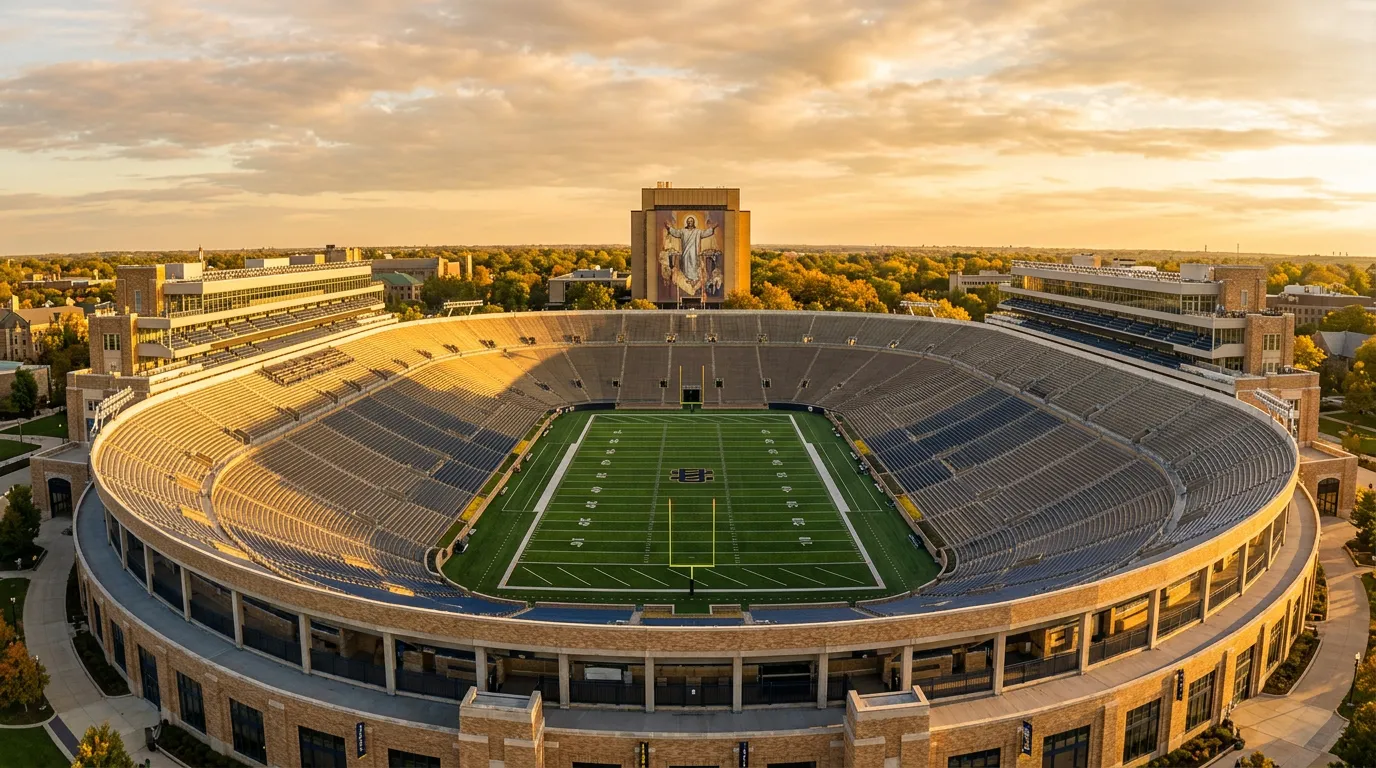
Lou Holtz died Wednesday morning in Orlando, Florida, surrounded by his family. He was 89 years old. The College Football Hall of Fame coach, ESPN commentator, motivational speaker, and Notre Dame legend leaves behind 249 career collegiate victories, one national championship, and a legacy that cannot be captured by numbers alone. When Holtz arrived at Notre Dame in 1986, the Fighting Irish were a fading brand. When he left in 1996, they were the most compelling program in college football again. No coach in the sport's modern history accomplished a transformation that dramatic, that fast, or that rooted in sheer force of personality.
The family did not disclose a cause of death. Notre Dame announced the passing Wednesday morning with a statement from university president Father Robert Dowd, who called Holtz "one of the great figures in the history of Notre Dame and in the history of college football." The tributes that followed came from every corner of the sport, from current head coaches who played under Holtz to rival coaches who built their careers trying to beat him. The universal theme was not his X's and O's, though those were formidable, but his ability to make players believe they could accomplish things that logic said they could not.
The Follansbee Kid Who Coached Everywhere
Born January 6, 1937, in Follansbee, West Virginia, Holtz grew up in a steel mill town during the tail end of the Depression. He was small, bespectacled, and spoke with a lisp that became one of the most recognizable voices in American sports. His coaching career was a tour of the sport's geography: William & Mary, North Carolina State, the New York Jets (for one miserable season in 1976), Arkansas, Minnesota, and finally Notre Dame. At each stop except the Jets, he won. At NC State, he took a program on NCAA probation and produced consecutive winning seasons. At Arkansas, he went 60-21-2 in six years, including a 1978 Orange Bowl victory over Oklahoma. At Minnesota, he inherited a program mired in scandal and went 10-1 in his second season.
But it was Notre Dame that made Holtz a national figure, and it was Holtz who made Notre Dame relevant again. When he was hired in November 1985, the program had not won a national championship since 1977 and had cycled through Gerry Faust's five disappointing seasons. The Irish were 5-6 in Faust's final year. The mystique that Knute Rockne built and Ara Parseghian sustained was evaporating. Holtz's mandate was to stop the bleeding. What he delivered instead was a resurrection.
Twelve and Zero: The 1988 Season That Defined an Era
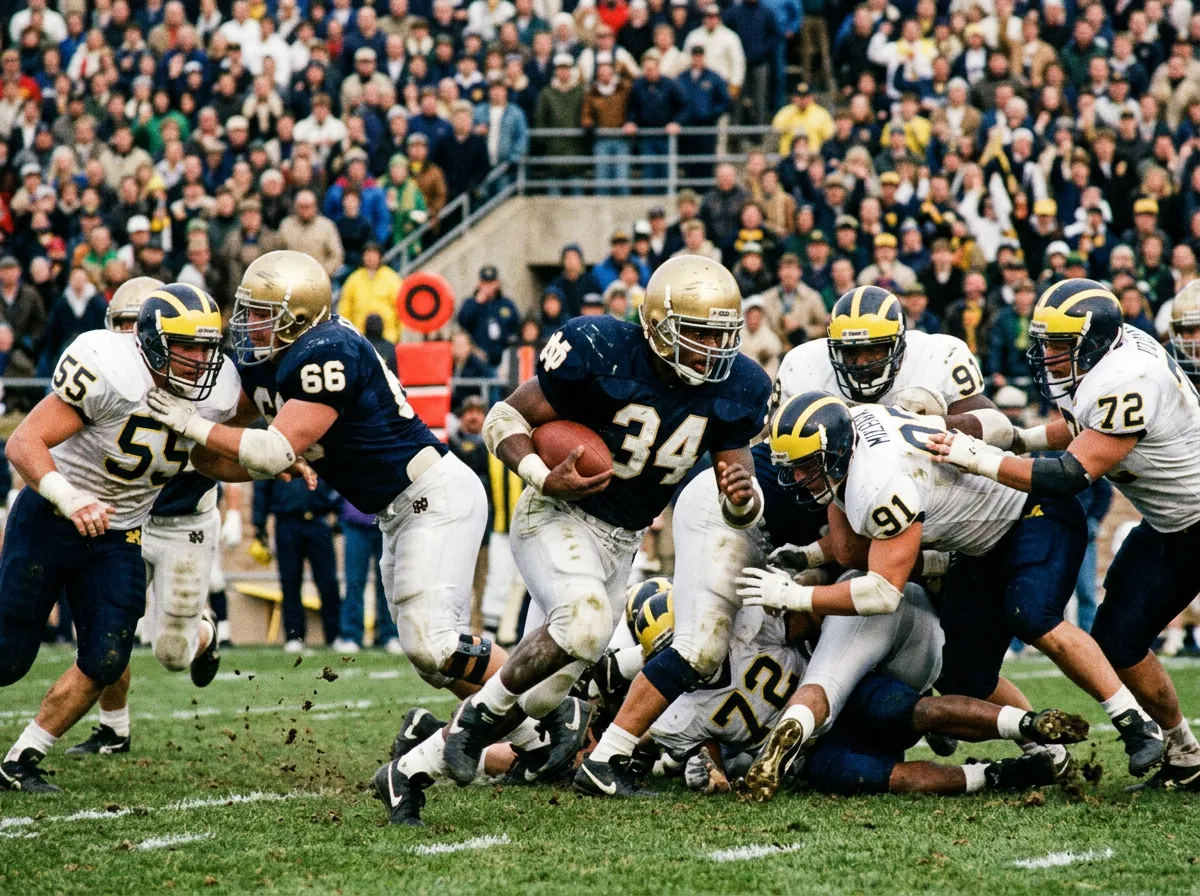
Holtz's first season at Notre Dame produced a 5-6 record, the same as Faust's last. His second went 8-4. Then came 1988, and everything changed. The Fighting Irish went 12-0, beating every opponent by an average margin of 21 points. They defeated Michigan, Miami (then the No. 1 team in the country), USC, and West Virginia in the Fiesta Bowl to claim the national championship. The Miami victory, a 31-30 classic in which Notre Dame overcame a seven-point fourth-quarter deficit, remains one of the most celebrated games in college football history.
What distinguished the 1988 team was not raw talent, though players like Chris Zorich, Raghib "Rocket" Ismail, and Tony Rice were exceptional. It was preparation and belief. Holtz's practice sessions were legendarily demanding, structured around the principle that games should feel easier than the week's preparation. Rice, the option quarterback who was not a natural passer, was drilled so relentlessly on the playbook that his reads became automatic. Zorich, an undersized nose tackle from Chicago's South Side, was coached to use leverage and positioning rather than brute force, turning a physical limitation into a schematic advantage.
The championship kicked off a run that has no modern equivalent in terms of sustained excellence relative to a program's starting point. From 1988 through 1993, Holtz's Notre Dame went 64-9-1, a record that included a 23-game winning streak, back-to-back 12-win seasons (the first in program history), and nine consecutive bowl game appearances, a program record that stood for decades. The Irish finished in the AP top 10 six consecutive years. They did this while playing one of the nation's toughest schedules, as an independent program that could not hide behind a weak conference slate.
Why Holtz's 1988 Blueprint Is Extinct
The 1988 Notre Dame championship was the last time a program won a national title through coaching, scheme, and player development rather than recruiting dominance. That distinction is not nostalgia; it reflects a structural change in college football that makes Holtz's achievement more remarkable with each passing year. The 1988 Irish were not the most talented roster in the country. They were arguably not in the top five in raw recruiting rankings. They won because Holtz extracted more from his players than anyone else could, and because his system, built around an option attack that varied tempo and formation in ways that defenses had not encountered, created advantages that talent alone could not overcome.
Today's championship blueprints look nothing like Holtz's. Alabama under Nick Saban, Clemson under Dabo Swinney, and Georgia under Kirby Smart all built dynasties on a foundation of recruiting classes ranked No. 1 or No. 2 nationally, supplemented in recent years by the transfer portal. The current NFL Combine class features players from programs that stockpile five-star recruits the way Holtz stockpiled walk-ons who became starters. The economics of name, image, and likeness deals have accelerated this trend, making talent concentration even more extreme.
Holtz would have adapted. He always did. But the version of college football that produced his championship, where a great coach with a good roster could consistently beat teams with better players, no longer exists at the sport's highest level. His 1988 team was the last champion built primarily on coaching rather than recruiting, and recognizing that distinction is essential to understanding why Holtz's name carries weight that extends beyond his win-loss record.
The Three Rules and the Man Behind Them
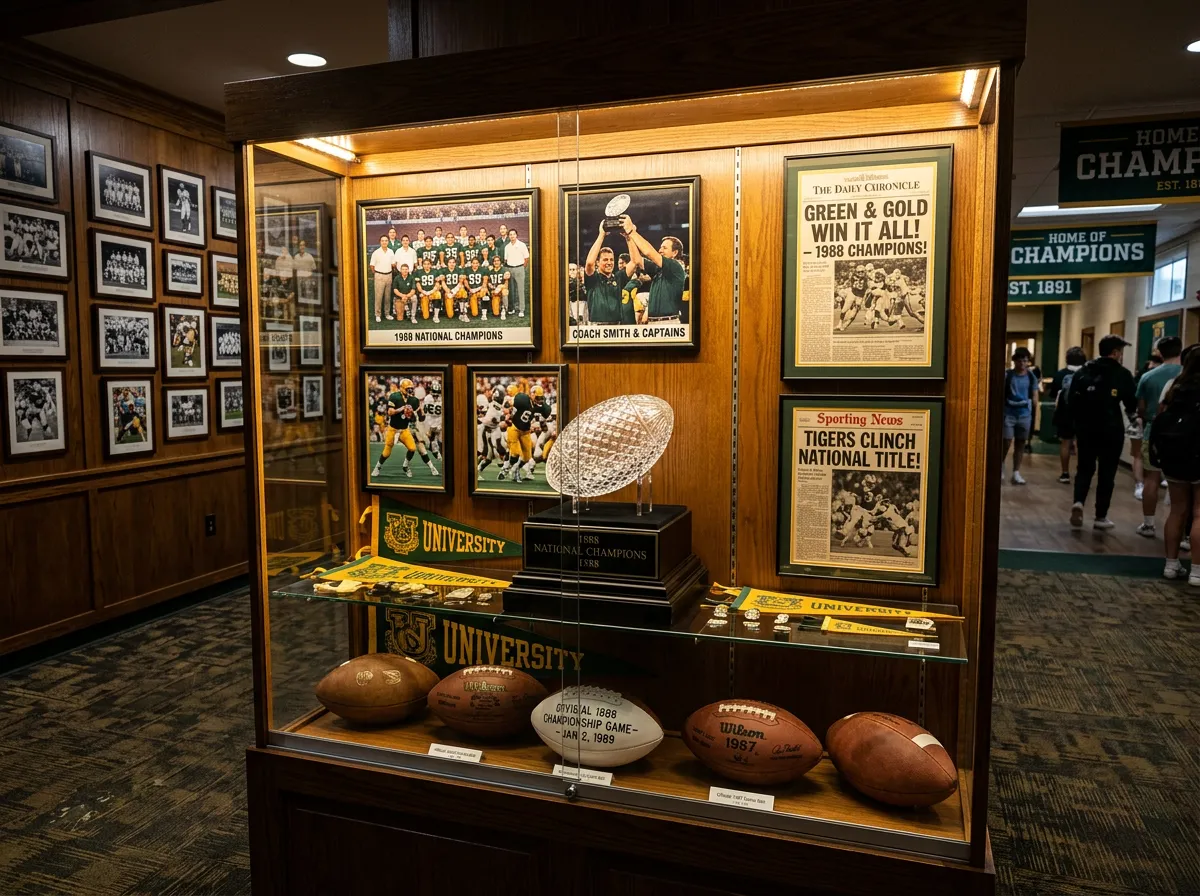
Holtz was as famous for his off-field persona as his coaching. His three rules, "Do Right, Do Your Best, Treat Others the Way You Want to Be Treated," became the foundation of a motivational speaking career that kept him in the public eye long after he left coaching. He published multiple books, appeared on television regularly, and became one of the most requested speakers on the corporate circuit. ESPN hired him as a college football analyst, a role he held for years and used to advocate for Notre Dame with an absence of objectivity that was simultaneously unprofessional and utterly charming.
His political life was more polarizing. Holtz received the Presidential Medal of Freedom from Donald Trump in 2020, spoke at the Republican National Convention, and was openly conservative in an era when most public figures in sports avoided partisan identification. Former players have described a man who could be demanding to the point of cruelty in practice, then deeply compassionate in private conversations about academics, family problems, or personal struggles. Tim Brown, the 1987 Heisman Trophy winner who played for Holtz at Notre Dame, called him "the toughest coach I ever had and the most important person in my life outside my family."
The contradictions were the point. Holtz was small in stature and enormous in presence, a man with a lisp who became one of the great communicators in sports, a coach who demanded perfection while acknowledging, constantly and with self-deprecating humor, that he was far from perfect himself. His postgame press conferences were performances, part coaching analysis, part stand-up comedy, part moral instruction. He could break down a fourth-quarter defensive adjustment and then pivot to a story about his grandmother's kitchen without losing the audience for a second.
What History Tells Us
Lou Holtz's legacy at Notre Dame is sometimes reduced to the 1988 championship, but that undersells what he actually accomplished. He took a program that had lost its identity and gave it back a reason to believe it was special. That belief, maintained through 11 seasons, 100 victories, and a stretch of excellence that included the most dominant run in modern Notre Dame history, outlasted Holtz's tenure and continues to shape how the program sees itself. When Fernando Mendoza led his team to a championship-caliber season this winter, the comparisons to 1988 were inevitable, because Holtz established the benchmark against which every subsequent Notre Dame achievement is measured.
The coaching profession has changed so dramatically since Holtz's era that direct comparisons to current coaches are misleading. He coached in a world without the transfer portal, without NIL deals, without the College Football Playoff's expanded format, and without the recruiting infrastructure that allows modern programs to assemble rosters worth of NFL practice squads. What has not changed is the fundamental challenge of coaching: convincing a group of young people that they can achieve something extraordinary together. Holtz was among the best who ever lived at that specific task.
He is survived by his wife Beth, four children, and a legacy that will be debated, celebrated, and studied for as long as college football exists. At Notre Dame, where legacies are measured against Rockne, Leahy, and Parseghian, Holtz earned his place in that conversation. The kid from Follansbee, West Virginia, who was too small, too quiet, and too unlikely to become one of the sport's immortals, did it anyway. That was always his message: the odds do not care about your limitations, and neither should you.
Sources
- Lou Holtz, Coaching Legend Who Led Notre Dame to Title, Dies - ESPN
- Legendary National Championship Coach Lou Holtz Passes Away - Notre Dame Fighting Irish (Official)
- Legendary College Football Coach Lou Holtz Dead at Age 89 - NBC News
- Lou Holtz, College Football Staple Who Coached Notre Dame to 1988 National Title, Dies at 89 - Associated Press