
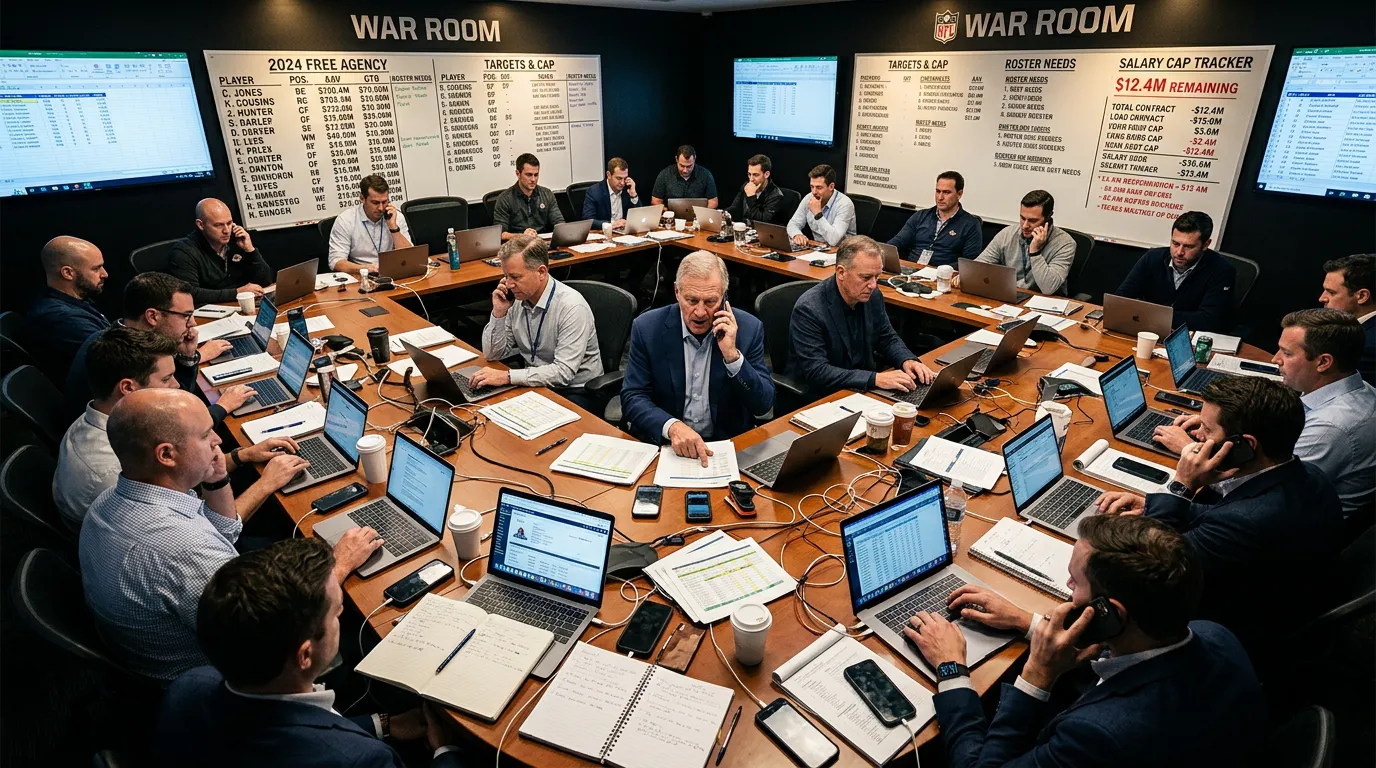
The legal tampering period opened at noon Eastern on Monday, and within hours the NFL looked fundamentally different. The Raiders sent Maxx Crosby to Baltimore for two first-round picks. The Rams made Trent McDuffie the highest-paid cornerback in league history. The Dolphins announced they are releasing Tua Tagovailoa, absorbing a record $99.2 million dead cap hit in the process. And across the league, front offices began spending against a salary cap that crossed $300 million for the first time in NFL history.
This is not a normal offseason. The cap jumped $22 million to $301.2 million per club, a 40% increase over the pandemic-era low just five years ago. That growth has changed the math on every transaction, making deals that would have been impossible two years ago suddenly routine. Monday's activity was the first real test of what the NFL's new economic era looks like in practice, and the results suggest a league where the gap between aggressive spenders and cautious rebuilders is wider than ever.
Two First-Rounders for Maxx Crosby: Baltimore's Calculated Gamble
The biggest move of the day was also the simplest to explain. The Baltimore Ravens had the NFL's 30th-ranked pass defense last season. They collected just 30 sacks, third-fewest in the league. They traded the 14th overall pick in the 2026 draft and their 2027 first-rounder to Las Vegas for Maxx Crosby, a two-time All-Pro edge rusher with 69.5 career sacks across seven seasons.
The price is steep. Two first-round picks for a player who turns 29 in August and missed the final two games of 2025 with a meniscus injury is the kind of deal that looks brilliant if Crosby stays healthy and disastrous if he doesn't. But the Ravens' logic is clear: Lamar Jackson's championship window is open now, and Baltimore's inability to pressure opposing quarterbacks was the single biggest factor that separated them from a Super Bowl appearance. Per PFF, the Ravens' defensive line generated pressure on just 24% of opponent dropbacks last season, ranking 29th in the league.
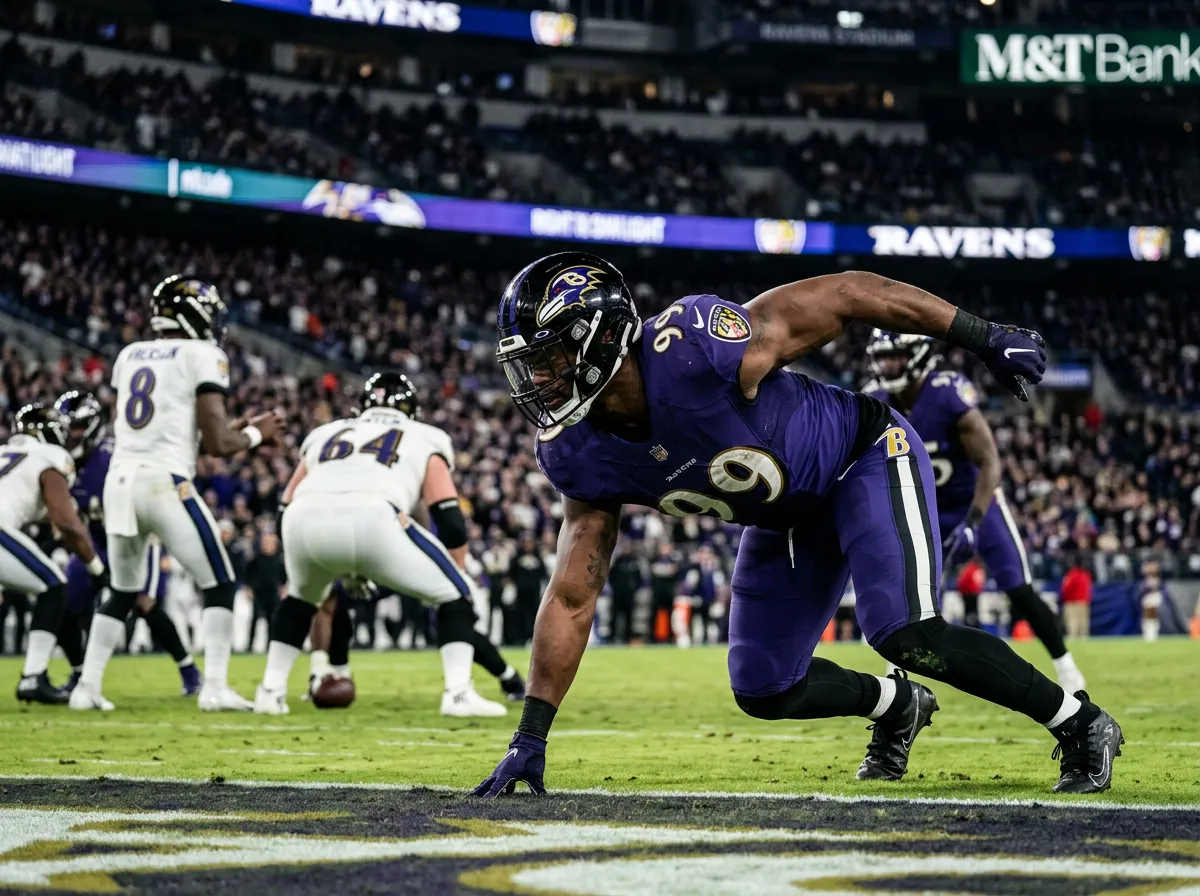
Cincinnati Bengals wide receiver Ja'Marr Chase captured the AFC North's reaction perfectly, going on an expletive-filled livestream rant about facing yet another elite pass rusher in the division. His frustration is warranted. The AFC North already featured the Steelers' T.J. Watt and the Browns' Myles Garrett. Adding Crosby gives the division three of the NFL's top ten edge rushers, per PFF career grades, making it the most dangerous pass-rushing division in football. For any quarterback in the division without elite protection, the margin for error just disappeared.
ESPN's Adam Schefter reported that the Raiders had been fielding calls about Crosby since the combine, but Baltimore's willingness to include the 14th overall pick sealed the deal. Las Vegas, sitting on $111.9 million in cap space (the most in the league), now holds four picks in the first two rounds of the 2026 draft. The Raiders are rebuilding from the foundation up, and two additional first-rounders give them the ammunition to do it aggressively.
The $99 Million Ghost on Miami's Cap Sheet
The Dolphins' decision to release Tua Tagovailoa is the most financially painful roster move in NFL history. Miami designated it as a post-June 1 release, spreading the NFL-record $99.2 million in dead money across two seasons: $67.4 million in 2026 and $31.8 million in 2027. Both numbers shatter previous records. Tua is still owed $54 million in guaranteed money for 2026, which he will collect regardless of where he plays next.
The move signals the end of a six-year tenure defined as much by what happened off the field as on it. Tua's concussion history, which included multiple documented incidents and growing medical concern, ultimately made the relationship untenable. The Dolphins concluded that the risk-reward calculation no longer justified the financial commitment, even at the cost of absorbing the largest dead cap hit the league has ever seen.
NBC Sports' Mike Florio identified the Atlanta Falcons, New York Jets, Minnesota Vikings, and Pittsburgh Steelers as potential landing spots. Tua becomes an official free agent when the new league year begins on March 12, and any team that signs him will only need to pay the veteran minimum, since Miami is on the hook for the guaranteed money. For a quarterback-needy team with a win-now roster, that is extraordinary value, assuming the medical concerns can be managed.
The broader lesson from Miami's situation is a cautionary tale about the NFL's guaranteed money era. The Dolphins signed Tua's extension believing they were locking in a franchise quarterback. Instead, they are paying nearly $100 million for a player who will suit up for someone else. As guaranteed contracts become more common across the league, more teams will face versions of this dilemma, where the sunk cost of a failed commitment constrains their ability to build around new players.
Trent McDuffie and the New Cornerback Market
The Rams' acquisition of Trent McDuffie from Kansas City may have been overshadowed by the Crosby and Tua headlines, but it might be the most consequential move for the league's contract market. Los Angeles sent the 29th overall pick to the Chiefs and immediately signed McDuffie to a four-year, $121 million extension, making him the highest-paid cornerback in NFL history at roughly $31 million per year with $100 million guaranteed.
McDuffie earned the deal. The 25-year-old was a Pro Bowler in 2025 and graded as PFF's third-best outside cornerback in the league over the past two seasons. Kansas City's decision to trade him, rather than match the Rams' offer, reflects the Chiefs' ongoing strategy of cycling through defensive talent rather than paying premium prices at any single position. It also reflects a front office that believes it can replace individual performance through schematic creativity, a bet that has worked historically under Steve Spagnuolo but faces increasing pressure as the AFC's quarterback arms race intensifies.
For the rest of the NFL, the McDuffie deal resets the entire cornerback market. Jalen Ramsey's previous record of $25 million per year now looks like a bargain. Every elite corner entering negotiations this offseason, and every agent representing one, just got a new ceiling to point toward. The ripple effect will be felt across upcoming extensions and free agent signings for years.
The $301 Million Cap Era Changes the Math on Everything
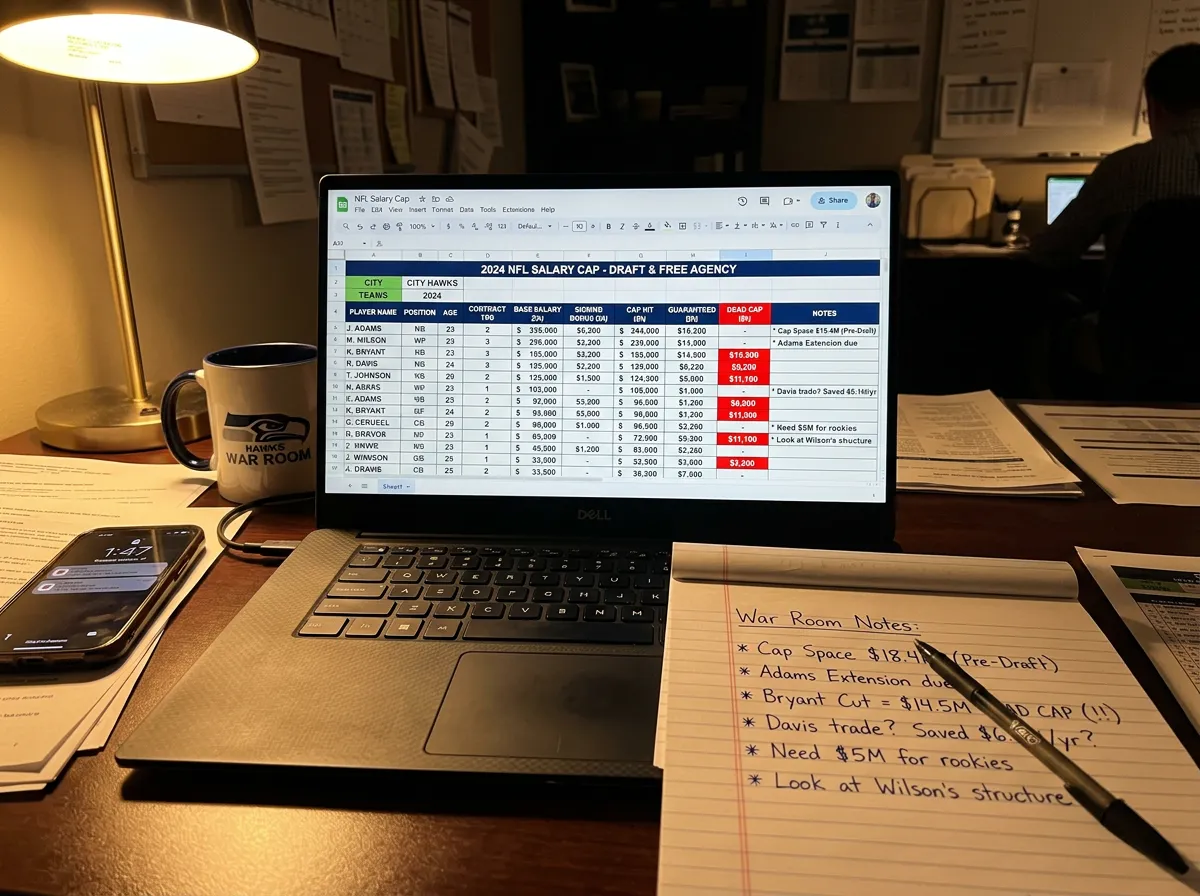
The surface-level transactions of Day 1 are dramatic, but the structural shift underneath them is the real story. The NFL's salary cap crossed $300 million for the first time this year, reaching $301.2 million per club. Five years ago, the cap sat at $208.2 million. The league's total cap across all 32 teams now exceeds $9.6 billion, a number that would have been unthinkable a decade ago.
That growth rate, roughly 8.5% annually over the past five years, has fundamentally altered how front offices approach roster construction. When the cap was growing at 3-4% per year, teams treated every dollar as scarce. Extensions were structured to push money into future years, and dead cap hits from failed contracts could cripple a franchise for multiple seasons. At 8.5% annual growth, the calculus changes. A $99 million dead cap hit is catastrophic under a $208 million cap; it is merely painful under a $301 million cap. Miami's willingness to absorb the Tua hit only makes sense in a world where next year's cap will likely push past $325 million, shrinking the relative burden with each passing season.
This dynamic explains why the Raiders can afford to sit on $111.9 million in cap space without urgency. It explains why the Rams can trade a first-round pick and immediately commit $121 million to a cornerback. And it explains the new rule change that allows teams to directly contact up to five free agents during the tampering window for the first time in league history. The NFL is generating more revenue than ever, and the spending infrastructure is expanding to match.
The historical comparison that matters is not to previous free agency periods but to the NBA's 2016 cap spike, when the basketball salary cap jumped 34% in a single year and produced Kevin Durant's move to Golden State. The NFL's growth has been more gradual, but the cumulative effect is similar: teams with aggressive ownership and smart cap management can now assemble talent at a pace that slower-moving organizations cannot match. The gap between the league's haves and have-nots is not shrinking. It is accelerating.
The Verdict
Day 1 of the 2026 NFL free agency period produced more consequential moves than most entire offseasons. Baltimore addressed its pass-rush crisis with a franchise-altering trade. Miami ended the Tua era at historic financial cost. The Rams reset the cornerback market. And across the league, the first $301 million cap proved that the NFL's economic growth is not just making contracts bigger; it is changing how teams calculate risk and reward in ways that will define the next decade of competitive balance.
The legal tampering period runs through 3:59 p.m. Eastern on Wednesday, with official signings beginning at 4 p.m. when the new league year starts. Based on Monday's pace, the most significant moves may already be done, but the Raiders' $111.9 million war chest and Tua's availability as a veteran-minimum quarterback suggest the biggest dominoes have not yet finished falling. The teams that moved fastest on Day 1 understood something essential about the new cap era: in a league where the financial ceiling rises every year, the cost of hesitation is measured not in dollars but in championships.
Sources
- NFL free agency 2026 live updates: Tracking all rumors, signings and trades on Day 1 - CBS Sports
- NFL salary cap hits milestone at $301.2 million for 2026 - ESPN
- Dolphins to release Tua Tagovailoa, take on record cap hit - ESPN
- Maxx Crosby reportedly traded to Ravens for two first-round picks - Fox Sports
- NFL free agency tracker: Each team's notable departing free agents, signings, trades - Yahoo Sports