
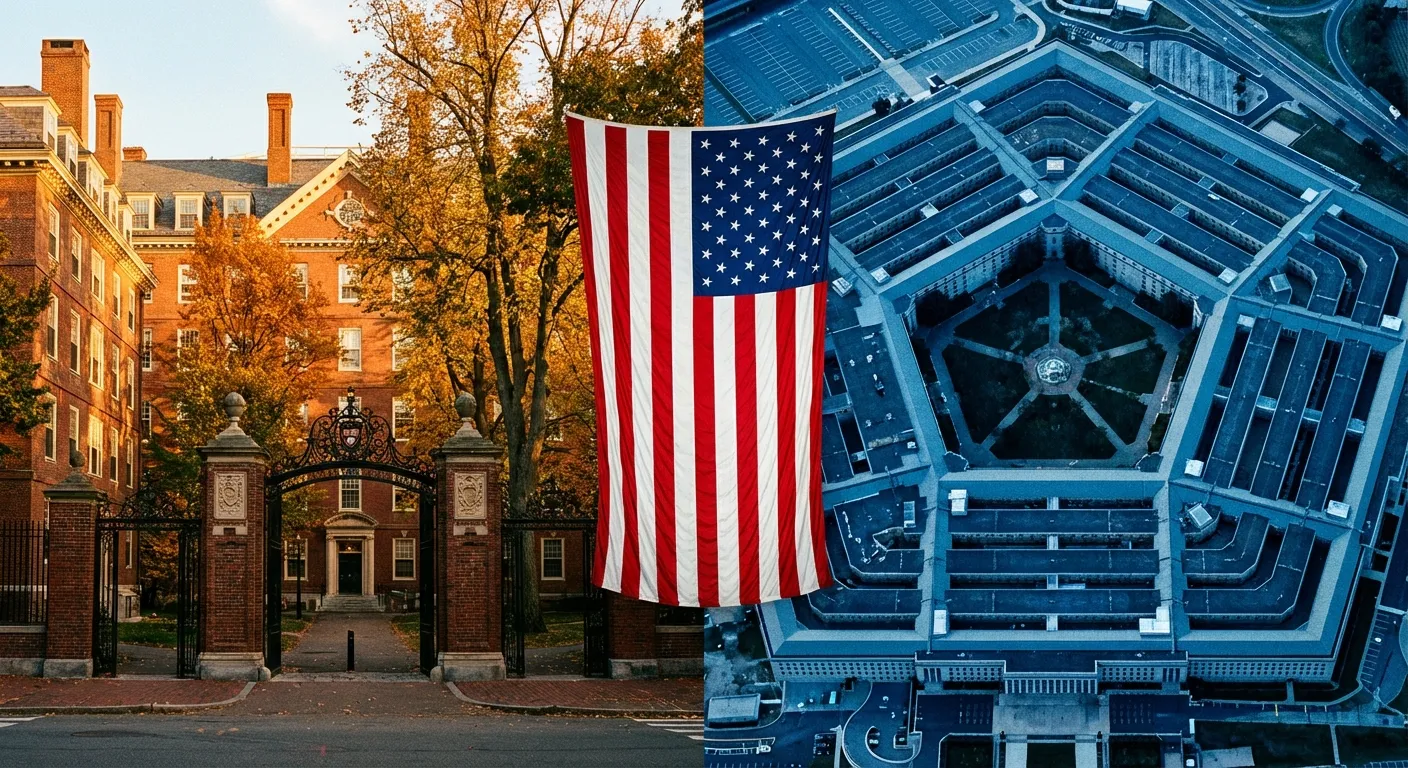
Defense Secretary Pete Hegseth dropped a rhetorical bomb on Friday that landed squarely in Harvard Yard. In a video announcement, the former Fox News host turned Pentagon chief declared that the Department of Defense would sever all academic ties with Harvard University, ending professional military education programs, fellowships, and certificate programs beginning with the 2026-27 academic year. His reasoning was blunt: "Harvard is woke; the War Department is not."
The move represents the most dramatic escalation yet in the Trump administration's year-long campaign against America's oldest university. It builds on a pattern that has already included freezing $2.2 billion in federal grants, blocking foreign student enrollment, demanding $1 billion in settlements over policy disputes, and attempting to cut $100 million from Harvard's federal contracts. But severing military-academic partnerships hits differently, because these programs have produced some of the nation's most distinguished military leaders for generations.
Hegseth, who holds degrees from Princeton and Harvard's Kennedy School of Government, attacked his own alma mater with personal conviction. "We sent our best and brightest officers to Harvard, hoping the university would better understand and appreciate our warrior class," he said. "Too many of our officers came back looking too much like Harvard, heads full of globalist and radical ideologies that do not improve our fighting ranks."
"We Train Warriors, Not Wokesters"
The specific programs being eliminated include fellowships that allowed active-duty military officers to study national security policy, international relations, and public administration at Harvard's Kennedy School. These programs have been feeding the senior military leadership pipeline for decades, producing generals, admirals, and senior defense officials who brought academic rigor to strategic thinking.
Hegseth's framing of the decision was deliberately provocative. "We train warriors, not wokesters," he declared, a line that immediately became a rallying cry for conservative media and a flashpoint for critics. He took aim at the broader Ivy League, accusing elite institutions of harboring "pervasive institutional bias" and a lack of viewpoint diversity, including what he called the "coddling of toxic ideologies" that undermine the military's mission.
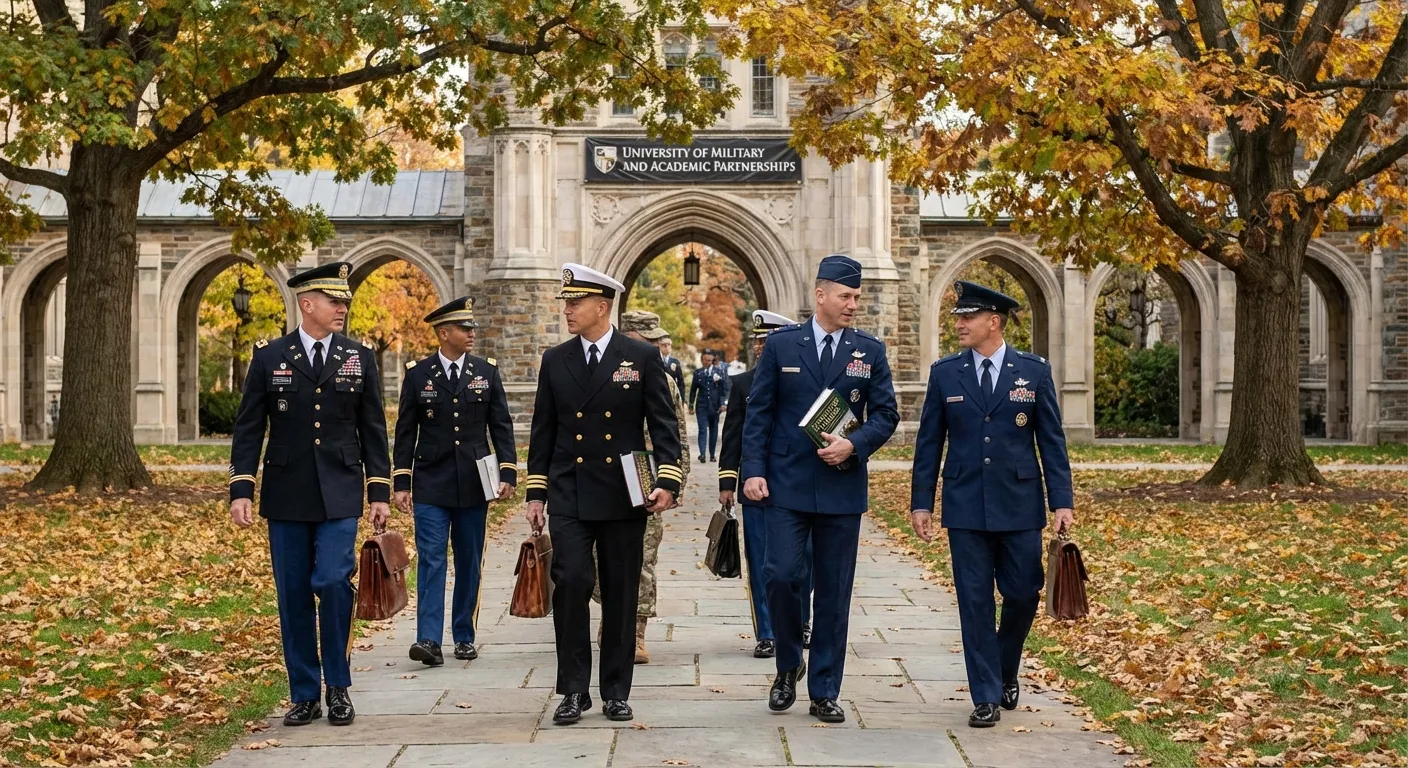
The Pentagon's statement specified that the changes affect training, fellowships, and graduate-level professional military education for active-duty personnel. Defense Department civilian employees who attend Harvard on their own time aren't affected by the order. The distinction suggests the move is as much about messaging as about policy, controlling which institutions shape military thinking rather than banning individual educational choices.
Harvard responded with measured but pointed pushback. The university issued a statement defending its academic programs and emphasizing their contribution to national security. A senior Pentagon official, speaking on background to The Hill, went further: cutting off the Harvard partnership "endangers national security" by limiting the intellectual resources available to military leaders navigating increasingly complex global challenges.
The Broader War on Higher Education
The Harvard decision doesn't exist in isolation. The Trump administration has been waging a systematic campaign against elite universities, particularly those that resisted demands related to pro-Palestinian protests, diversity programs, transgender policies, and climate research initiatives. Harvard became the highest-profile target after the campus rebuffed a series of government demands last April.
The financial pressure has been staggering. According to reporting by Harvard's T.H. Chan School of Public Health, the administration froze $2.2 billion in grants across the university's research enterprise. President Trump personally directed agencies to cut $100 million from Harvard's federal contracts, according to PBS News. The administration then sought $1 billion from Harvard to settle various probes into school policies, a demand the university rejected.
Higher Ed Dive tracked the cumulative impact of the first year of Trump's higher education policies, documenting billions of dollars in frozen or redirected funding across dozens of institutions. Harvard, with its $50 billion endowment and outsized symbolic importance, has borne the most visible brunt of the campaign. But smaller universities with less financial cushion have felt the effects more acutely, as frozen grants disrupted ongoing research and threatened faculty positions.
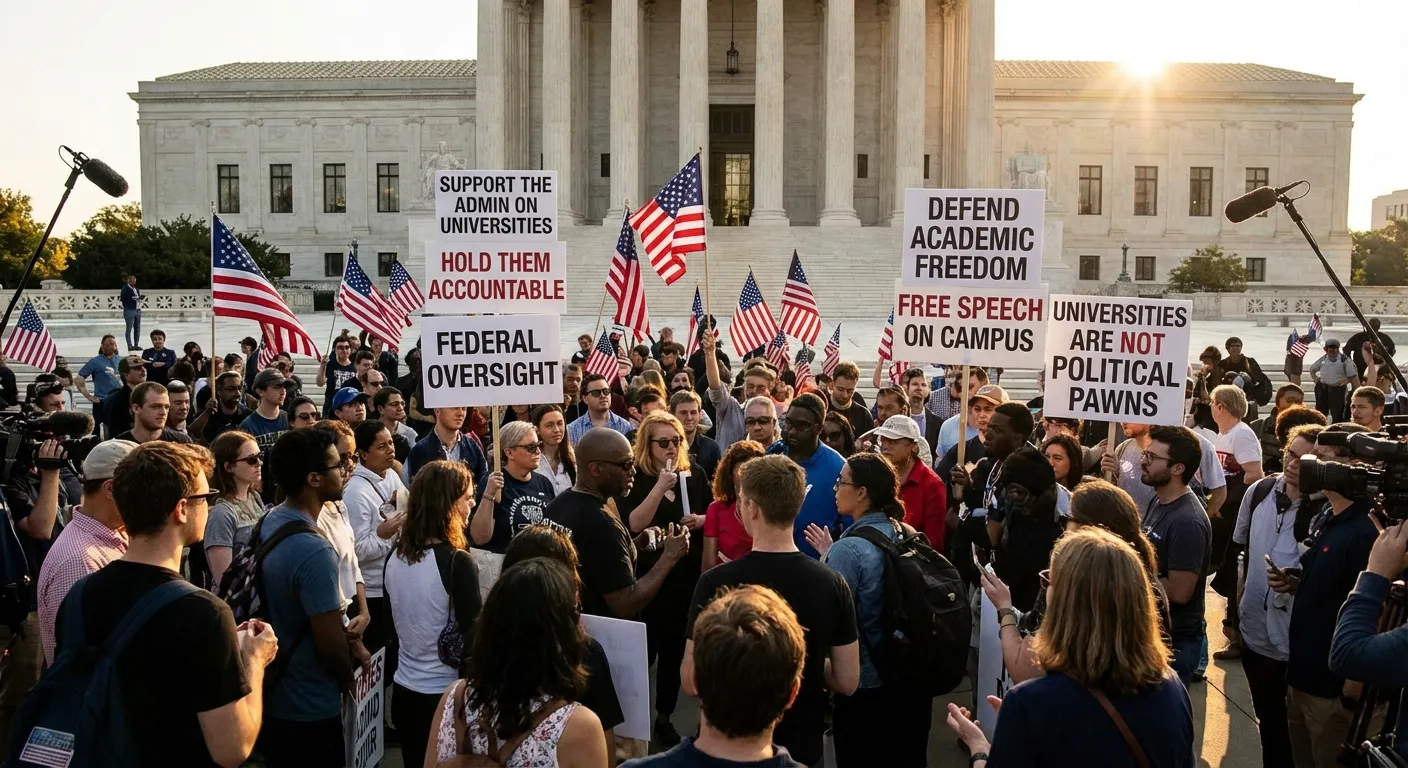
The legal landscape remains contested. Harvard has challenged several of the administration's actions in court, with mixed results. Some funding freezes have been temporarily blocked by judges, while others have proceeded. The two sides have failed to reach a negotiated settlement, and the adversarial posture shows no signs of softening.
National Security Implications
The national security dimension of cutting Pentagon-Harvard ties deserves scrutiny beyond the culture war framing. Military officers who attended Harvard's Kennedy School programs studied alongside diplomats, intelligence professionals, and policy experts from around the world. These connections created networks that proved valuable during crises, from counterterrorism operations to multilateral negotiations.
The programs also exposed military leaders to perspectives outside the Pentagon bubble. Officers learned about international humanitarian law, the economics of conflict, and diplomatic alternatives to force, knowledge that informed better military decision-making in complex environments. Eliminating these programs doesn't just change where officers study; it changes what they learn and who they learn alongside.
Former defense officials from both parties have expressed concern. The Pentagon official who spoke to The Hill about national security risks wasn't alone in that assessment. Retired military leaders have noted that peer competitors like China invest heavily in sending their military officers to elite academic institutions precisely because the cross-pollination between military and academic thinking produces better strategists.
Hegseth's counterargument is that military officers should receive their advanced education at institutions that share the military's values and mission focus. He has pointed to the National Defense University, the service war colleges, and other military-affiliated institutions as superior alternatives. Critics counter that insulating military thinking from civilian academic discourse is precisely the kind of echo chamber that leads to strategic failures.
The Political Calculus
The Harvard decision plays differently depending on the audience. For Trump's base, which views elite universities as bastions of progressive indoctrination, cutting ties with Harvard reads as accountability. For the academic community and many defense professionals, it reads as anti-intellectualism masquerading as reform. For Hegseth personally, targeting his own alma mater adds credibility to the conservative critique of elite education, a "I've seen it from the inside" authority that strengthens the message.
The timing aligns with broader administration messaging about reshaping federal institutions. The departure of 700 federal agents from Minnesota, ongoing restructuring of federal agencies, and confrontations with universities all reflect an administration executing a coherent strategy to realign government institutions with its ideological priorities.
Whether this strategy serves the nation's long-term interests is the central question. Military readiness depends on both physical capability and intellectual preparation. Reducing the diversity of educational experiences available to future military leaders, in the name of ideological alignment, is a trade-off that will take years to fully evaluate.
The Impact
The Pentagon's break with Harvard marks a new phase in the administration's relationship with higher education, one that extends beyond funding disputes into the realm of military readiness and national security infrastructure. If the policy holds through the 2026-27 academic year, it will end a partnership that has shaped American military thinking for generations.
Harvard isn't going to close, and military officers will continue to receive advanced education somewhere. The question is whether "somewhere" will provide the same quality of strategic thinking, global perspective, and civilian-military connectivity that elite university programs offered. Hegseth has made a bet that the military is better off without Harvard's influence. The consequences of that bet won't be clear for years, but they'll matter long after the current political moment has passed.
The Pentagon chose ideology over institutional partnership. Whether that's a correction or a mistake depends entirely on what kind of military leaders the next decade produces.
Sources
- Pentagon Says It Will Cut Academic Ties With Harvard University - U.S. News
- Pentagon says it's cutting ties with "woke" Harvard, ending military training - NPR
- Pentagon official: Cutting off Harvard project endangers national security - The Hill
- Trump administration freezes $2.2 billion in grants to Harvard - Harvard T.H. Chan School of Public Health
- Trump 2.0's impact on higher ed: The first year in 8 numbers - Higher Ed Dive