
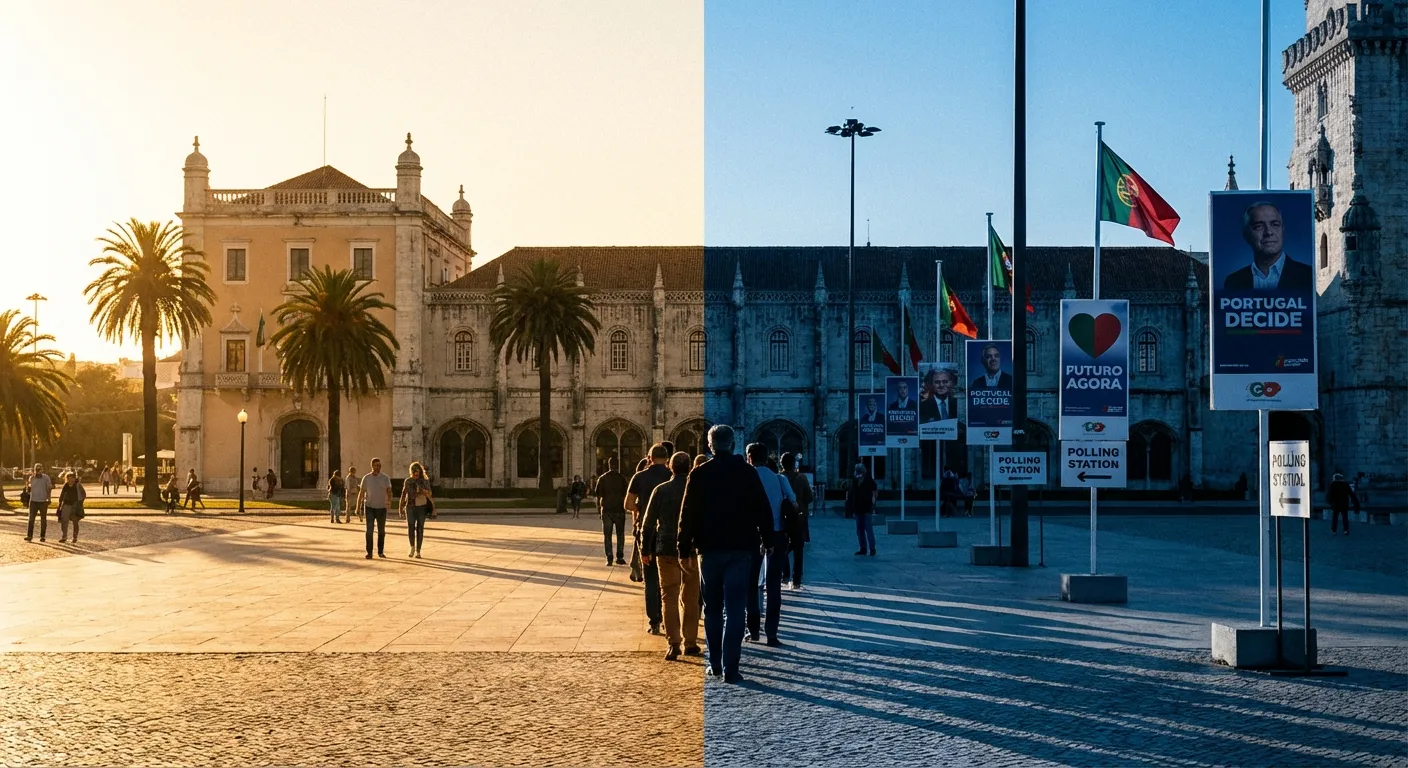
Portugal is about to hold a presidential runoff election for the first time in four decades, and the stakes extend well beyond Lisbon. On February 8, center-left Socialist António José Seguro will face far-right populist André Ventura in a second-round vote that has become a referendum on whether Portugal follows the populist drift consuming much of Europe or charts its own course. The last time Portugal needed a runoff was 1986, when the country was still a young democracy recovering from decades of dictatorship.
In the first round on January 18, Seguro took 31% of the vote while Ventura captured 24%, according to official results with nearly 98% of ballots counted. Neither candidate cleared the 50% threshold required for an outright win, triggering the February 8 runoff. What makes this contest particularly revealing is that Ventura's Chega party, which translates to "Enough," didn't even exist seven years ago. Its leader is now one vote away from the presidency of a country that spent 48 years under authoritarian rule and has historically been resistant to far-right politics.
The campaign has crystallized divisions that mirror broader European tensions: immigration policy, economic inequality, institutional trust, and the role of populist movements in democratic governance. Portugal's answer will send a signal across a continent where far-right parties have been steadily gaining ground.
A Country That Wasn't Supposed to Go This Way
Portugal has long been considered an outlier in the European populist surge. While France, Italy, the Netherlands, and Sweden saw far-right parties surge in recent years, Portugal maintained what political scientists called a "cordon sanitaire" against extremism. The Carnation Revolution of 1974, which ended nearly five decades of authoritarian rule, left a deep cultural imprint. Anti-fascism wasn't just a political position in Portugal; it was part of the national identity.
That consensus has eroded faster than almost anyone predicted. In the 2024 parliamentary elections, Chega grew to become the main opposition force to the center-right government of Prime Minister Luís Montenegro. Ventura, a former television commentator with a law degree, built his base by channeling frustration over corruption scandals, housing costs, and immigration, particularly from former Portuguese colonies in Africa.
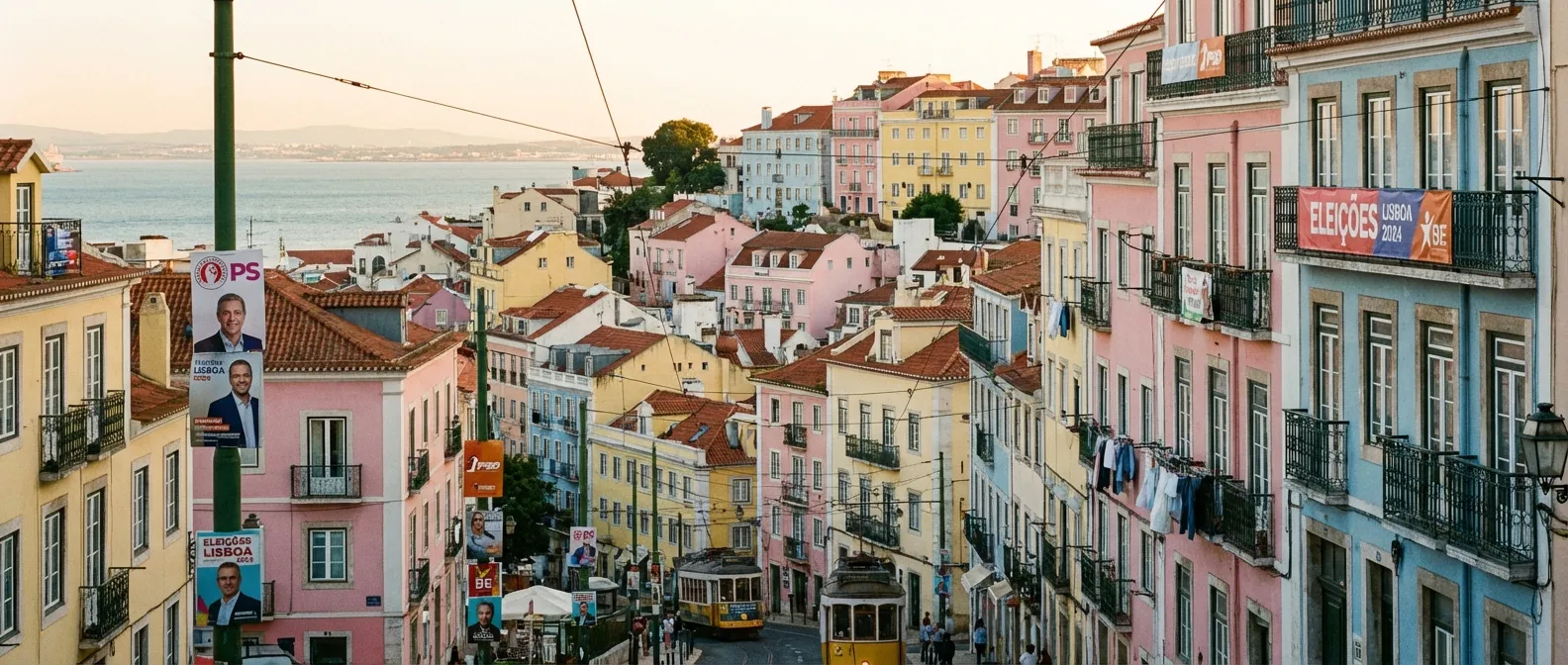
Marina Costa Lobo, a political scientist at the University of Lisbon's Institute of Social Sciences, told Al Jazeera that Ventura's rise reflects "a structural change in Portuguese politics that has been building for years." She noted that Portugal's traditional party system has fragmented, creating space for outsiders who can channel dissatisfaction with the status quo. The housing crisis, which has seen Lisbon rents nearly double since 2018, has been a particularly potent recruitment tool for Chega.
Seguro, for his part, is a former leader of the Socialist Party who served as a member of the European Parliament. He represents the institutional center-left that has dominated Portuguese politics since democratization. His campaign has focused on stability, democratic values, and what he calls "responsible governance" at a time of global uncertainty.
The Candidates and Their Visions
Seguro has positioned himself as a unifying figure. In his first-round victory speech, he invited "all democrats, progressives, and humanists" to join his candidacy and together "defeat extremism." He promised to be "the President of all Portuguese people," framing the runoff as a choice between democratic stability and populist disruption.
His platform emphasizes institutional cooperation with Montenegro's center-right government, economic modernization, and Portugal's continued integration within the European Union. Seguro has been careful to distinguish himself from the current government while avoiding the kind of oppositional rhetoric that might destabilize the political system. In a country where the president holds significant but largely symbolic powers, including the ability to veto legislation and dissolve parliament, his promise of "loyalty and institutional cooperation" carries real weight.
Ventura offers a fundamentally different vision. He has campaigned on cracking down on corruption, restricting immigration, and challenging what he describes as a political establishment that has failed ordinary Portuguese citizens. His rhetoric draws from the same populist playbook that has propelled figures like Marine Le Pen in France and Geert Wilders in the Netherlands, but with distinctly Portuguese inflections, particularly around the legacy of colonialism and the Roma community.
Despite losing the overseas vote in the first round, Ventura carried strong support in rural areas and smaller cities where economic anxiety runs highest. His base skews younger and more male than traditional Portuguese voting patterns suggest, indicating a generational shift in political alignment that could persist regardless of the runoff outcome.
Europe's Far-Right Landscape Going Into the Vote
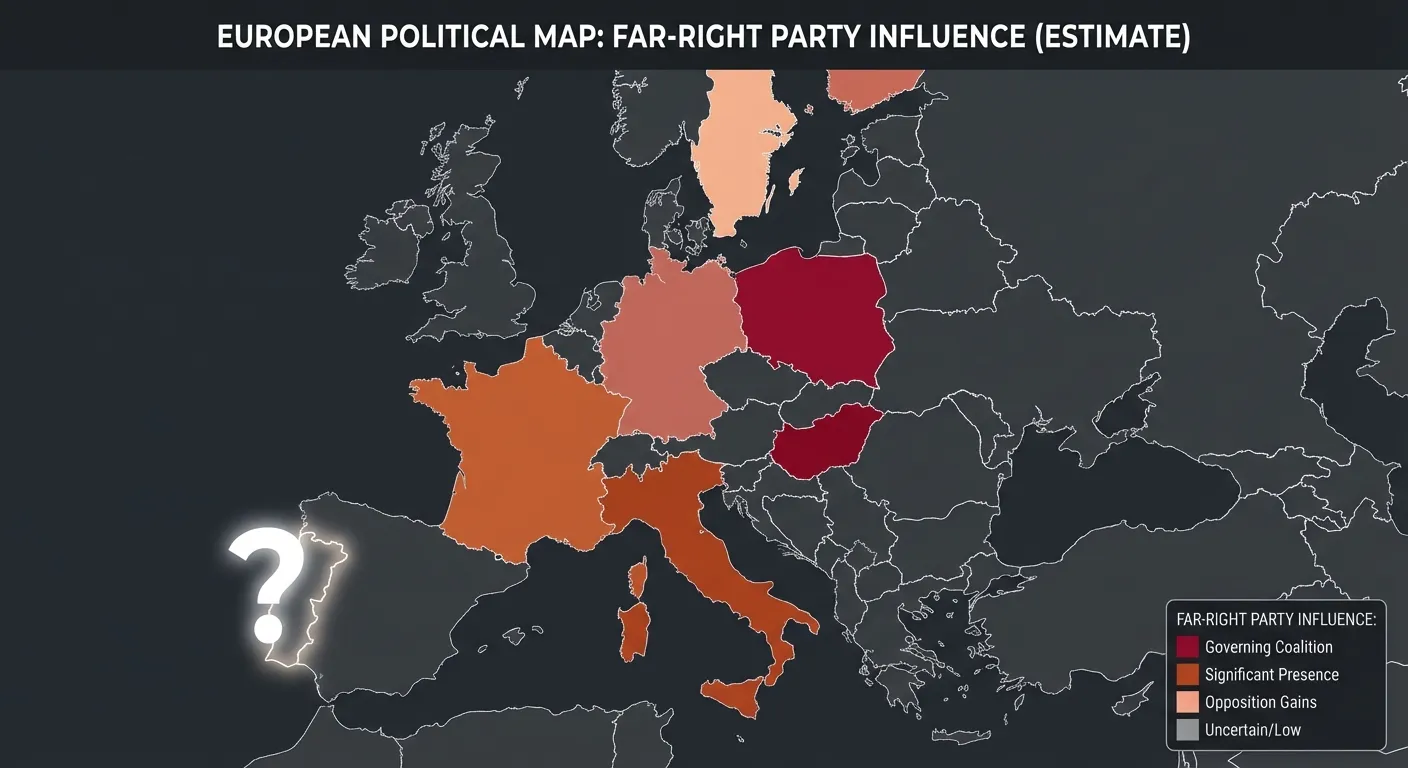
Portugal's election doesn't exist in a vacuum. Across Europe, far-right and populist parties have been gaining influence, though the pattern is uneven. In Romania, centrist opposition candidate Nicusor Dan narrowly defeated far-right candidate George Simion in the presidential race, but Simion's party emerged as Romania's second-largest political force with far-right legislators occupying roughly a third of parliamentary seats. In Poland, the Law and Justice-backed Karol Nawrocki won the presidency by razor-thin margins. In the Czech Republic, Andrej Babis secured a landslide victory in the October 2025 general election.
The Balkans and Institutional Research Network published a trends report in early February titled "Populism in Central Europe: A Reprise," documenting how populist forces have regained momentum across the Visegrad Group countries. All four, Hungary, Poland, the Czech Republic, and Slovakia, now have populist leaders in office.
Yet the far-right's electoral ceiling has proven real in several contests. The Carnegie Endowment for International Peace noted that radical-right parties currently participate in government in five EU member states: Croatia, Finland, Hungary, Italy, and Slovakia. That number hasn't changed in over a year despite continued electoral gains, suggesting that populist parties are "making only modest progress in gaining executive power at the national level."
Portugal's result will test whether the democratic center can hold in Southern Europe specifically. Spain, Greece, and Italy have all experienced populist surges of varying intensity. A Seguro victory would reinforce the narrative that voters, when forced into binary choices, tend to rally behind moderate candidates. A Ventura win would represent the most dramatic far-right breakthrough in Southern Europe since Giorgia Meloni became Italy's prime minister in 2022.
What the Polls and Analysts Are Saying
Pre-runoff polling has consistently favored Seguro, with most surveys showing him between 58% and 65% support. The mechanics of a two-candidate race tend to favor the moderate option, as voters who supported eliminated candidates in the first round typically consolidate behind the establishment choice rather than the populist alternative. France demonstrated this pattern repeatedly in presidential elections, though Marine Le Pen's vote share grew with each attempt.
Rui Tavares, a Portuguese historian and former member of the European Parliament, wrote that the runoff represents "the most consequential Portuguese vote since EU accession" in 1986. He argued that a Ventura victory wouldn't just change Portugal's presidency; it would fundamentally alter the country's relationship with European institutions and its self-understanding as a tolerant, outward-looking democracy.
The international attention on this race underscores its significance. European leaders from Emmanuel Macron to Olaf Scholz have been watching Portugal closely, not because the country's presidency carries enormous geopolitical weight, but because the result will be read as a barometer of whether the populist wave has crested or continues to build.
What Happens After February 8
Regardless of who wins, the runoff will reshape Portuguese politics for years to come. If Seguro prevails, he'll take office on March 9 as the first Socialist president in two decades, inheriting a complex relationship with Montenegro's center-right government. The cohabitation between a Socialist president and a center-right prime minister will test Portugal's institutional maturity.
If Ventura wins, the implications would be profound. A far-right president would hold veto power over legislation, the authority to dissolve parliament, and significant symbolic influence over national discourse. Even with the presidency's constitutional limitations, a Ventura presidency would represent a seismic shift in Portuguese democracy.
The more likely scenario, based on polling, is a Seguro victory by a comfortable margin. But the story won't end there. Ventura has already signaled that reaching the runoff validates his movement's trajectory. Chega's growth from a fringe party to the second force in Portuguese politics has been remarkably rapid, and a strong showing in the runoff, even in defeat, could position Ventura for a parliamentary election challenge.
What to Watch
Portugal's February 8 runoff matters beyond its borders because it tests a question facing democracies across Europe: can the political center hold when populist challengers force a direct confrontation? The answer has implications for upcoming elections in Germany, Hungary, and beyond. Portugal's voters aren't just choosing a president. They're contributing to a continent-wide conversation about the direction of democratic governance. When the results come in next Sunday evening, the rest of Europe will be listening carefully.
Sources
- Portugal elects Socialist Party's Seguro as president in landslide - Al Jazeera
- Center-left Socialist candidate wins over populist in Portugal's presidential runoff - NPR
- BIRN Publishes 2026 Trends Report: Populism in Central Europe - Balkan Insight
- The European Radical Right in the Age of Trump 2.0 - Carnegie Endowment for International Peace
- Portugal presidential election: Far-right Ventura heads for runoff - Euronews