
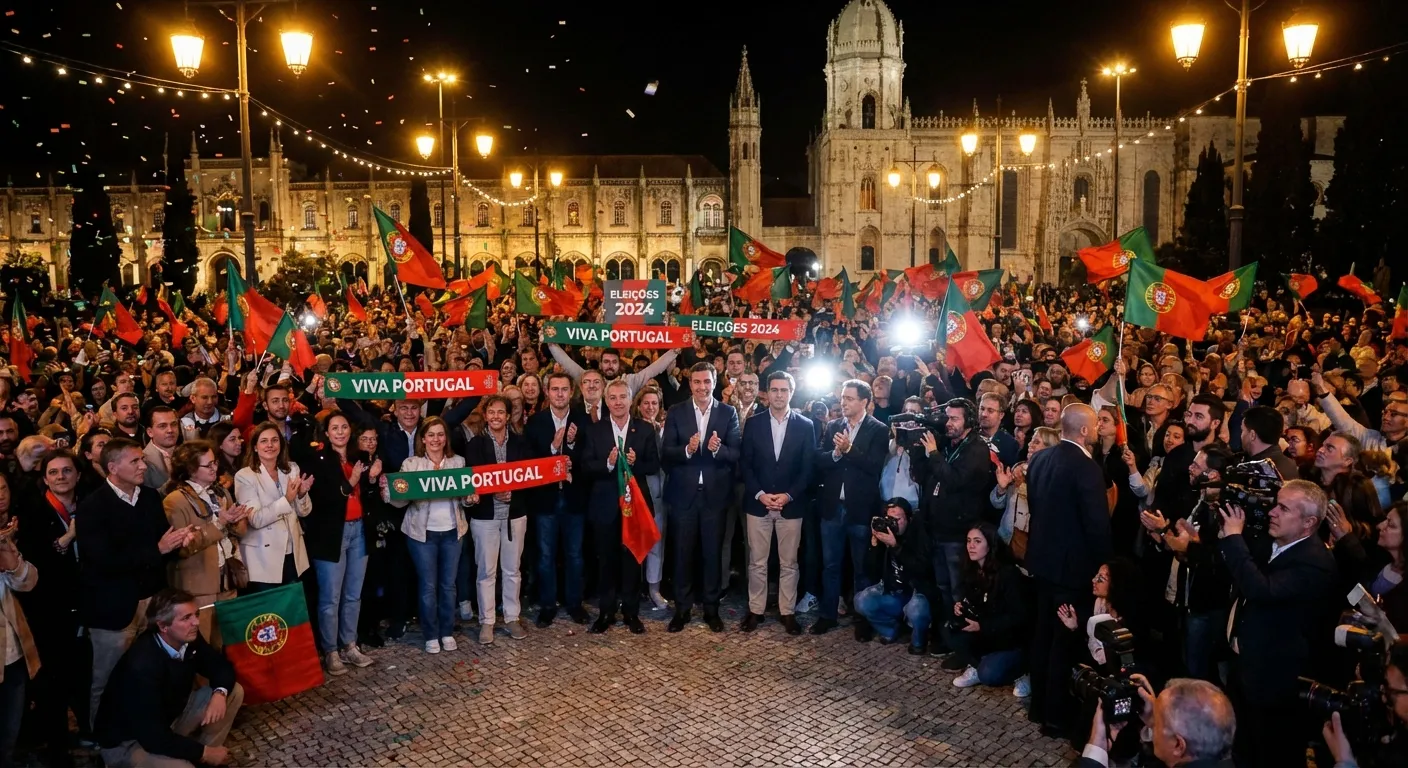
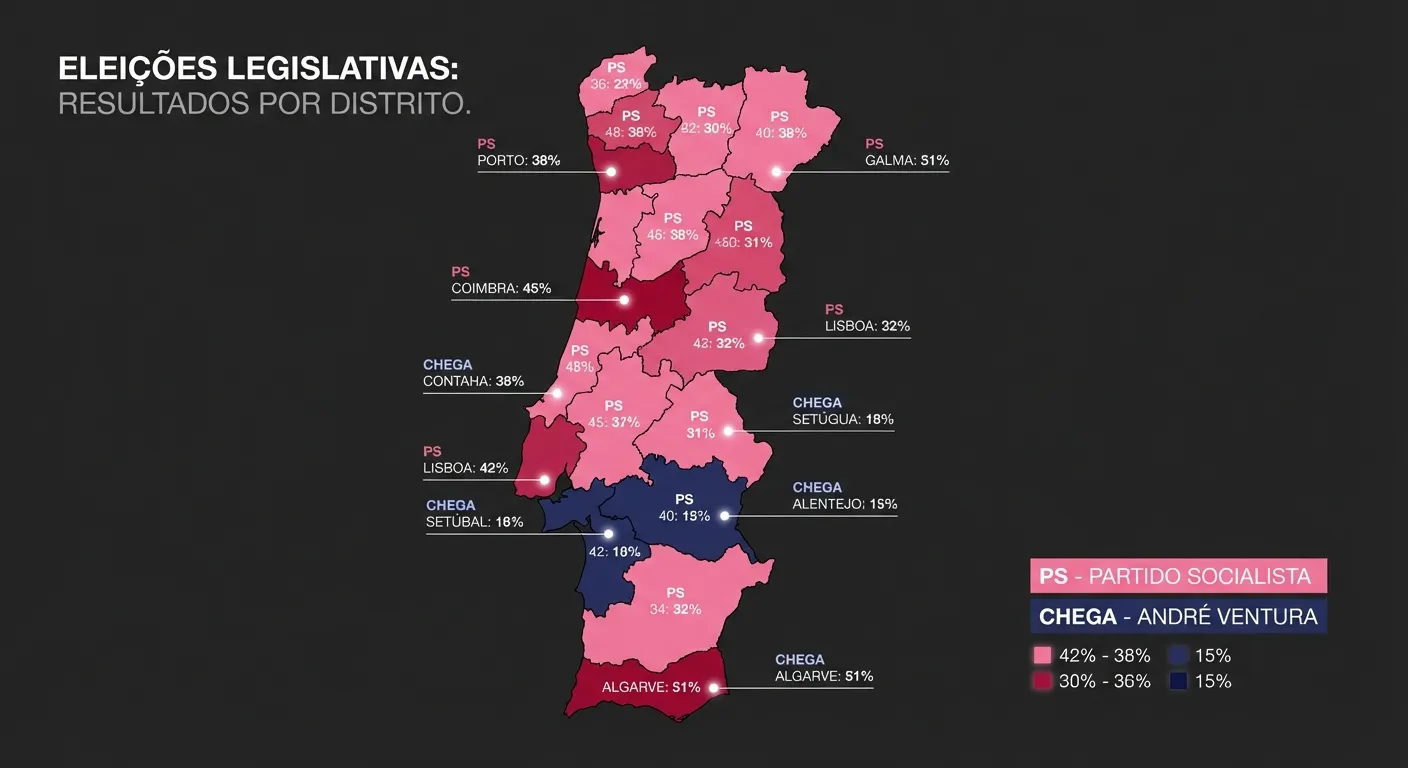
António José Seguro won Portugal's presidential runoff on Sunday night with a margin that wasn't just comfortable, it was decisive. The center-left Socialist captured 66.7% of the vote against far-right challenger André Ventura's 33.3%, according to official results with 99% of ballots counted. Seguro carried 303 of Portugal's 308 municipalities, swept all 20 districts, and won every demographic except the overseas vote. It was the clearest rejection of a far-right presidential candidate that any European country has delivered in years.
The result arrives at a moment when populist and nationalist movements have been steadily accumulating power across the continent. From Poland's presidential race to the Czech Republic's elections to Hungary's Fidesz party, European far-right movements have been winning or consolidating power with striking regularity. Portugal just said no, loudly and unambiguously, in what analysts are calling a "cordon sanitaire" built by voters rather than political parties.
Seguro addressed supporters in Lisbon with language calibrated for the moment: "I'm ready to be the President of the new times. It's time to defeat fear and raise hope." He will take office on March 9 as the first Socialist president in two decades, stepping into the riverside "pink palace" at Belem with a mandate that extends beyond partisan politics. His victory speech promised "loyalty and institutional cooperation" with Prime Minister Luis Montenegro's center-right government, positioning himself as a stabilizing force rather than an opposition figure.
How the Center Held
The mechanics of Seguro's victory reveal something important about how democratic systems can resist populist challenges when forced into binary choices. In the first round on January 18, the field was fragmented among five major candidates. Seguro led with just 31%, while Ventura secured 24%. The remaining 45% of voters chose candidates who were eliminated.
When those voters had to pick between Seguro and Ventura in the runoff, the consolidation was overwhelming. Supporters of the eliminated center-right, liberal, and left-wing candidates broke heavily toward Seguro, creating the two-thirds majority that made the final result lopsided. This pattern, where the anti-populist vote unifies in a direct confrontation, has historical precedent. France has seen similar dynamics in presidential runoffs, though Marine Le Pen's share has grown with each attempt.
Marina Costa Lobo, a political scientist at the University of Lisbon's Institute of Social Sciences, noted that Portugal's democratic reflexes proved stronger than many analysts expected. The country's experience with dictatorship under António de Oliveira Salazar, whose regime lasted from 1933 to 1974, has left a deep cultural resistance to authoritarian politics that persists even as economic anxieties create openings for populist messaging.
The Essential Business publication described the result as Portugal's voters creating a "cordon sanitaire against far right in presidentials," a term borrowed from the strategy European parties have traditionally used to exclude far-right forces from governing coalitions. In this case, it wasn't parties that built the firewall; it was citizens voting across traditional party lines to prevent Ventura from reaching the presidency.
What Ventura's 33% Actually Means
The landslide shouldn't obscure an important fact: André Ventura received roughly a third of the vote in a country where his party, Chega, didn't exist seven years ago. That's not a defeat in any meaningful strategic sense. It's a foundation.
Ventura's concession carried more confidence than resignation. He pointed to the results as a "path" to eventually governing Portugal, claiming that "we lead the right in Portugal, we lead the right-wing space in Portugal, and we will soon govern this country." His public statement after the loss was brief but forward-looking, congratulating Seguro while framing the result as a stepping stone rather than a setback.
The numbers support Ventura's interpretation. Chega has gone from a protest movement to the main opposition party in parliament, from zero presidential candidates to a runoff contender, in less than a decade. Each election cycle has expanded the party's base and normalized its presence in Portuguese political life. The 33% presidential vote gives Ventura a benchmark to build from in future parliamentary and local elections.
The Al Jazeera reporter's notebook on Portugal's election noted that despite Ventura's loss, his candidacy represents "another milestone in Europe's shift to the far-right, as populist parties have got their hands on, or edged closer to, the levers of power in recent years." The article positioned Portugal within a continental trend that continues regardless of individual election outcomes.
The age and gender dynamics of Ventura's support base add a longer-term dimension. His voters skew younger and more male than Portugal's traditional electorate, suggesting a generational shift that could strengthen over time as these voters move through their political lives. Older Portuguese citizens, many with personal or family memories of the Salazar era, remain disproportionately resistant to far-right messaging. As that generation ages out of the electorate, the political landscape could shift further.
The Continental Scorecard
Portugal's result is one data point in a complex European picture. The far right's trajectory across the continent is uneven, with victories and setbacks occurring simultaneously in different countries.
In Poland, the Law and Justice-backed Karol Nawrocki won the presidency by narrow margins, extending conservative influence despite the centrist government of Donald Tusk. In the Czech Republic, Andrej Babis secured power in a landslide. Hungary's Viktor Orban continues to govern with Fidesz, though the party faces its first serious electoral challenge in April 2026 from a resurgent opposition. Romania narrowly avoided a far-right presidency but saw nationalist forces capture a third of parliamentary seats.
The Carnegie Endowment for International Peace found that radical-right parties currently participate in government in five EU member states: Croatia, Finland, Hungary, Italy, and Slovakia. That number hasn't changed in over a year, suggesting that far-right parties struggle to translate electoral gains into durable governing power. They win votes more easily than they win ministries.
The Balkans and Institutional Research Network's 2026 trends report, "Populism in Central Europe: A Reprise," documented that all four Visegrad Group countries now have populist leaders in office. But the report also noted significant variation in what "populist" means across these contexts, ranging from Orban's illiberal governance model to Babis's technocratic populism.
What This Means for European Democracy
Portugal's election offers cautious encouragement to defenders of liberal democracy in Europe, but it doesn't resolve the underlying tensions driving populist support. The housing crisis, immigration pressures, institutional distrust, and economic inequality that fueled Ventura's rise haven't been addressed by Seguro's victory. They'll still be there when Portugal holds its next parliamentary elections.
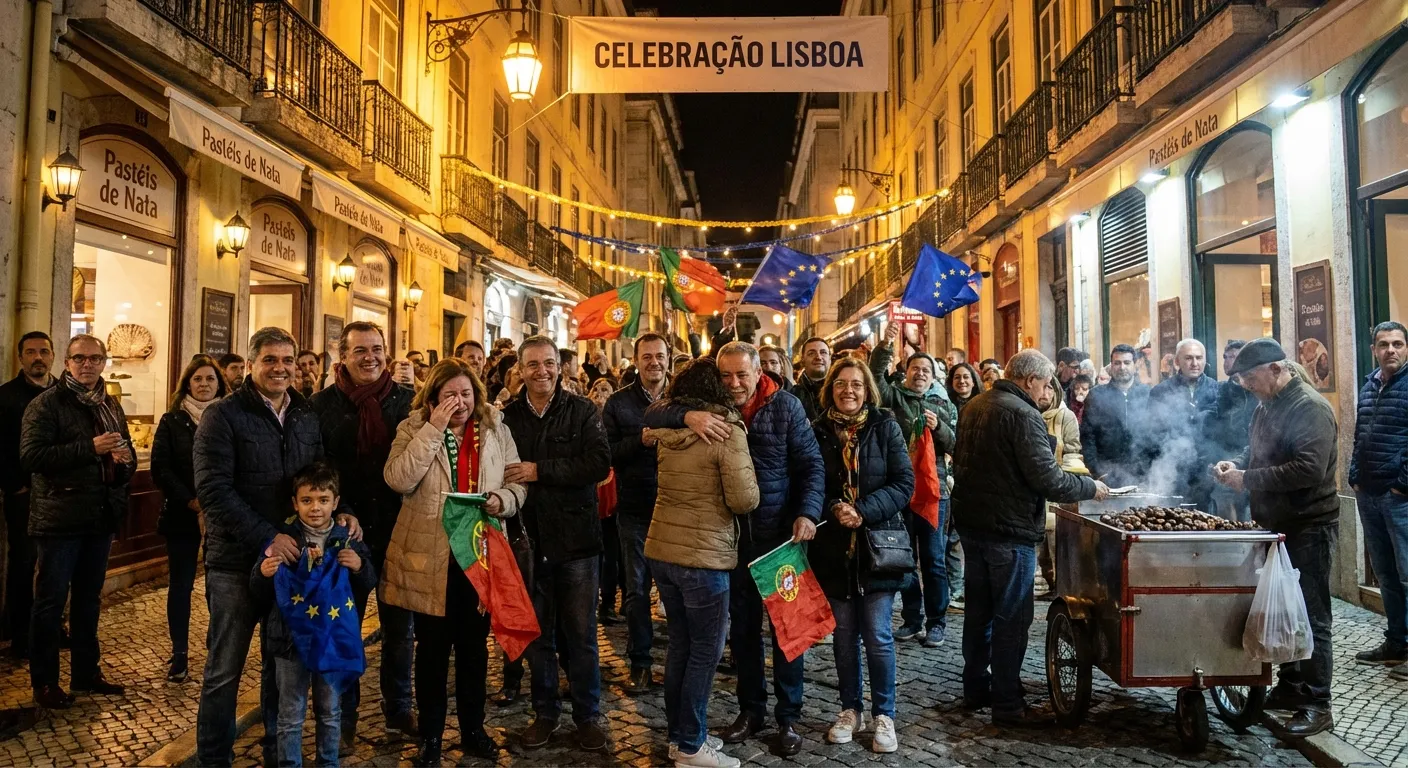
Rui Tavares, the Portuguese historian and former European Parliament member, had called the runoff "the most consequential Portuguese vote since EU accession." With results now in, the consequence is clear: Portugal chose continuity, stability, and European integration over populist disruption. But the 33% who chose Ventura aren't going away, and their concerns about corruption, housing costs, and national identity will continue shaping Portuguese politics regardless of who sits in the pink palace.
The broader European lesson may be that the far right's ceiling in presidential-style elections remains lower than its growing influence might suggest. When voters are forced to choose between a mainstream candidate and a populist challenger in a direct contest, they still tend to consolidate around the center. The danger for established parties isn't the head-to-head matchup, where they usually win, but the gradual normalization of far-right positions that shifts the entire political spectrum over time.
What Happens Next
Seguro's presidency begins March 9. His most immediate challenge will be managing the cohabitation with Montenegro's center-right government, where cooperation rather than confrontation is essential for governance. Portugal's president holds significant constitutional powers, including the ability to veto legislation and dissolve parliament, but these tools work best when wielded sparingly.
For Ventura and Chega, the presidential loss is a chapter, not an ending. The party will use its 33% showing as proof of concept for future campaigns, building organizational capacity and expanding beyond its current base. Parliamentary elections offer a more favorable terrain for Chega's growth, where proportional representation rewards smaller parties more generously than presidential runoffs.
For Europe as a whole, Portugal has provided a temporary answer to the question that has dominated continental politics for years: can the democratic center hold? The answer, at least in Lisbon on February 8, was yes. Whether it holds in Budapest in April, or in the next unexpected election that tests the continent's democratic resilience, is the question that keeps European leaders awake at night. Portugal's voters have done their part. The rest of the continent is still writing its answer.
Sources
- Portugal elects Socialist Party's Seguro as president in landslide - Al Jazeera
- Center-left Socialist candidate wins over populist in Portugal's presidential runoff - NPR
- Centre-left António José Seguro beats far-right rival to Portuguese presidency - Euronews
- Portugal's voters create 'cordon sanitaire' against far right in presidentials - Essential Business
- Seguro wins Portugal presidency with 66.2% of vote: official results - TRT World