
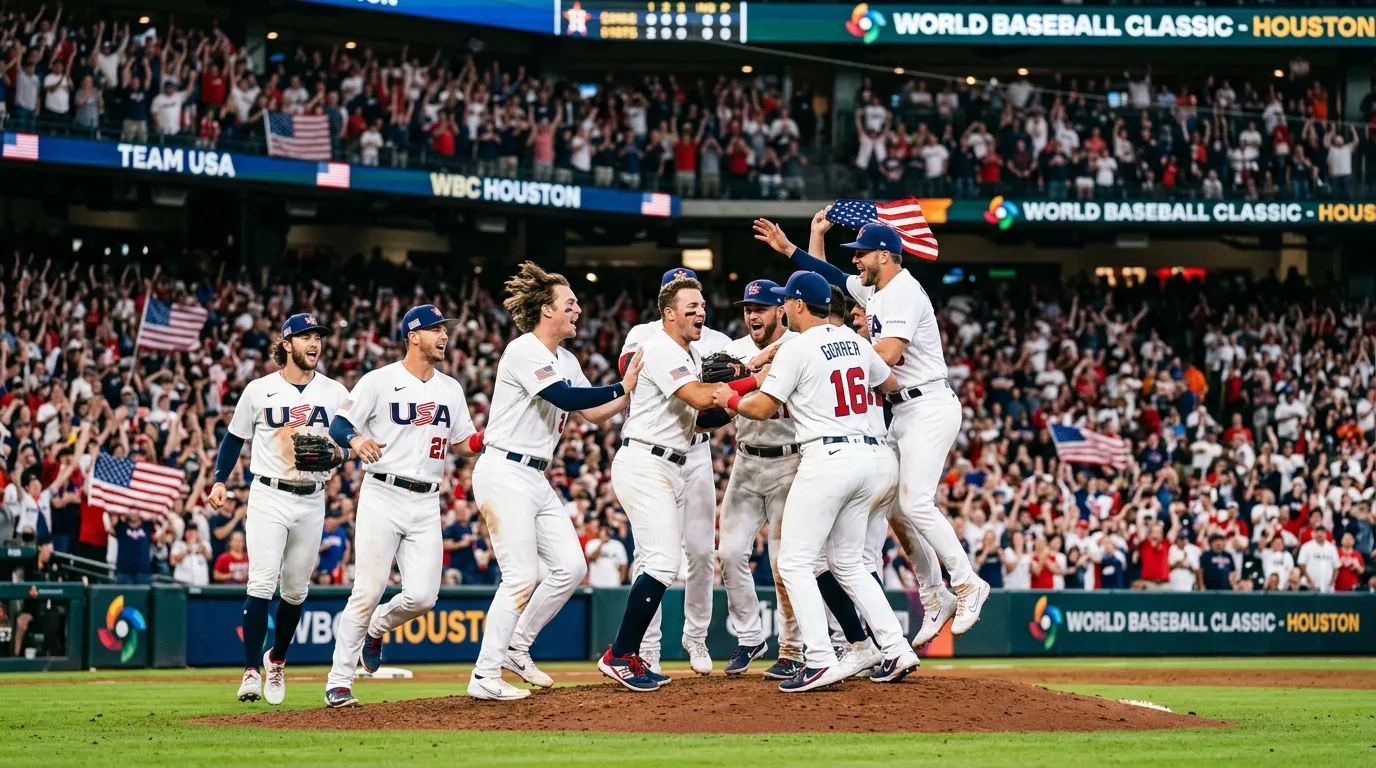
The numbers are staggering. Thirty players. Twenty-two MLB All-Stars. Sixty-five combined All-Star selections. Both reigning Cy Young Award winners. A three-time American League MVP wearing the captain's armband. When manager Mark DeRosa was asked whether this Team USA squad qualifies as "baseball's version of a Dream Team," he did not hesitate: "I think absolutely." And yet, for all the firepower crammed into that Houston clubhouse, the Americans carry a burden that no amount of individual talent can erase on its own. In 2023, Team USA fielded a loaded roster, too. They reached the World Baseball Classic final. And then Shohei Ohtani struck out Mike Trout to end it, sending Japan home with the trophy while the Americans were left wondering what went wrong. This time, the mission is singular: redemption.
Team USA opened the 2026 WBC with a 15-5 rout of Brazil on Thursday night at Houston's Daikin Park, with Aaron Judge launching a two-run homer in the first inning to set the tone. Tonight at 8 PM ET, the Americans face Great Britain in Pool B play, with AL Cy Young winner Tarik Skubal scheduled to take the mound in what will be his only WBC appearance. But the real test looms later: Mexico on March 9, Italy on March 10, and a potential collision course with Japan, who opened the tournament with a 13-0 demolition of Chinese Taipei behind Ohtani's grand slam.
A Roster Built by Design, Not by Celebrity
The distinction between this Team USA roster and previous iterations begins with how it was constructed. Mark DeRosa did not assemble a collection of famous names and hope chemistry would develop organically. He built a team with intentional architecture. "I didn't want to just throw an All-Star team together," DeRosa said during the team's pre-tournament camp in Phoenix. "I wanted to build a true team, one where the other countries look at it and see no weakness."
That philosophy manifests in several specific roster decisions. The 30-man squad carries 16 pitchers, an unusually large staff designed to account for WBC pitch-count restrictions that limit starters to approximately 65 pitches in pool play and 80 in later rounds. The position-player group blends power hitters like Judge, Bryce Harper, and Kyle Schwarber with defensive specialists and versatile athletes like Pete Crow-Armstrong and Byron Buxton. Unlike the 2023 squad, which leaned on aging veterans in certain positions, this roster skews toward players in their competitive primes. Bobby Witt Jr. is 25. Gunnar Henderson is 24. Roman Anthony, the Red Sox outfield prospect, is still developing his MLB resume but brings elite athleticism and defensive range off the bench.
The pitching staff is where DeRosa's roster construction is most aggressive. The rotation features the reigning NL Cy Young winner Paul Skenes and AL Cy Young winner Tarik Skubal, alongside Logan Webb, who started the pool-play opener against Brazil. Clayton Kershaw, who retired at the end of the 2025 season, came out of retirement specifically for this tournament. "It's a bucket-list thing for me," Kershaw told Yahoo Sports. "I've wanted to do this for a while. There are not many things that would make me come back, except for this." The bullpen is anchored by Mason Miller, whose triple-digit fastball is ideally suited to the short-outing format of WBC relief work, and Nolan McLean, the Mets rookie whose electric arm adds another high-leverage weapon.
Judge as Captain: Why the Leadership Structure Matters More Than the Lineup
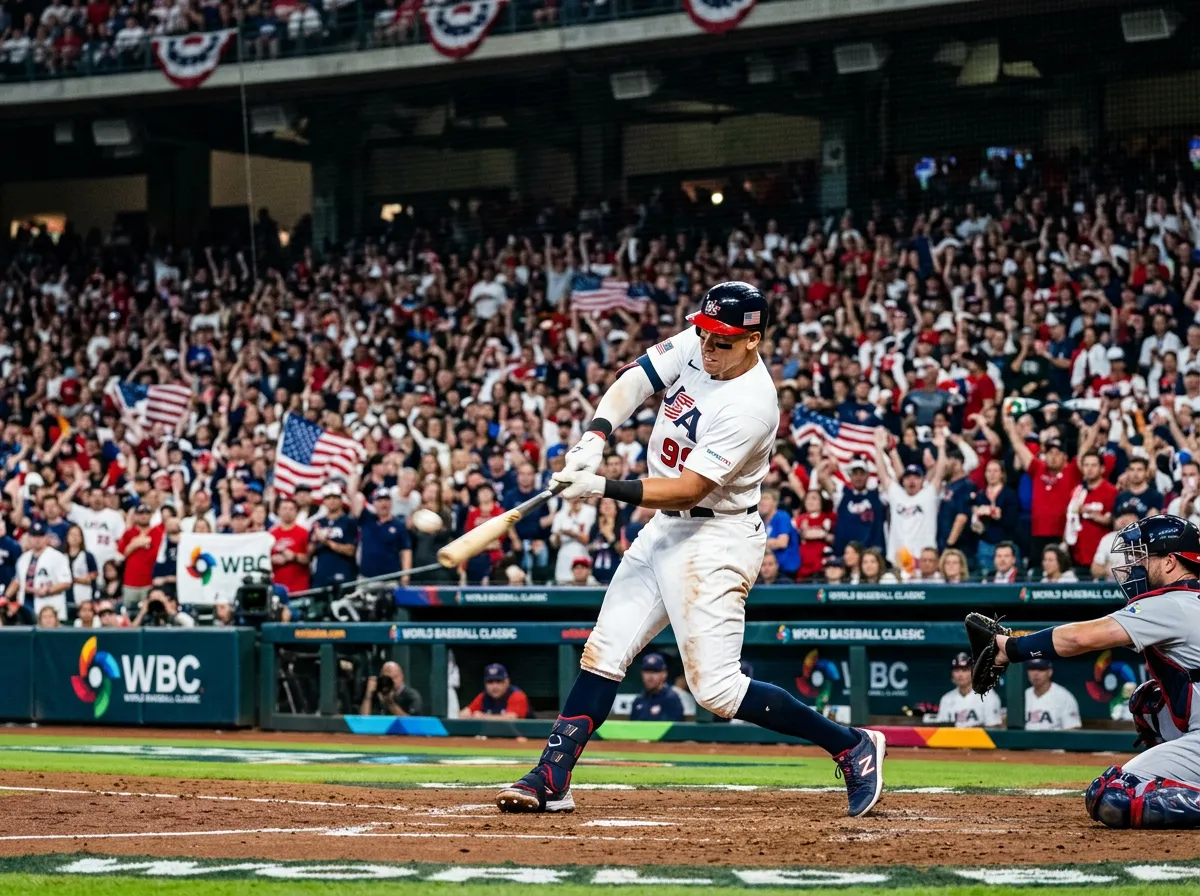
Aaron Judge declined to participate in the 2023 World Baseball Classic. He has not publicly elaborated on the reasons, but the timing coincided with the Yankees' struggles and his own desire to focus on the regular season. This time, he was the first player to commit, and DeRosa hand-selected him as team captain, a designation that carries more weight in the WBC format than it might in a 162-game MLB season. These players come from 20 different organizations. They have three days of camp and four pool-play games to forge a cohesive unit before elimination rounds begin. The captain's job is to accelerate that process.
Before the team's lone workout at Phoenix's Papago Sports Complex, Judge stood in front of the full roster and coaching staff with a message about connection. "The biggest thing I said was, 'Dive into everybody.' Get to know them. Ask questions," Judge explained to ESPN's Jesse Rogers. "That's the quickest way, especially when it gets real on the field. We're down, tough situation. We have to have each other's backs." DeRosa noticed the effect immediately. "I turned to Judge and all the coaches and go, 'This has a different feel than 2023,'" DeRosa said. "It just did. Not a single guy left."
Relief pitcher Brad Keller offered a window into how that chemistry has developed off the field. "Dinner was supposed to be done at 9:30," Keller said. "We stayed until 11:45 telling stories." That level of bonding may sound trivial compared to the gap between a 102-mph fastball and a hanging slider, but the WBC's short-tournament format amplifies the importance of trust. When Skubal is handing the ball to a bullpen full of pitchers he barely knows, or when Judge is relying on defensive alignments called by teammates from rival organizations, chemistry is not a luxury. It is a competitive variable.
The Talent Trap: Why Loaded Rosters Have Failed Before
Here is the uncomfortable truth that every breathless roster breakdown conveniently ignores: the United States has never won the WBC because of superior talent. They won it once, in 2017, and lost it every other time, often with rosters that on paper should have dominated. In the inaugural 2006 tournament, Team USA featured Roger Clemens, Derek Jeter, and Ken Griffey Jr. They went 3-3 and were eliminated in the second round, losing to Mexico and South Korea. In 2023, a roster headlined by Mike Trout, Mookie Betts, and Trea Turner reached the final but fell 3-2 to Japan in a game where the Americans managed just five hits.
The pattern is consistent across all four previous WBC tournaments. The countries that have won (Japan three times, the Dominican Republic once, the United States once) have not always had the most talented rosters. They have had the most prepared teams. Japan's WBC program operates like a national campaign. Players report to training camp weeks in advance. The coaching staff develops game plans tailored to specific opponents. The cultural weight of the tournament in Japan, where WBC games draw television ratings that dwarf the World Series, creates a level of intensity that MLB players accustomed to the rhythm of spring training simply do not replicate.
The United States' structural disadvantage is not talent. It is preparation time and motivation calibration. MLB players arrive at the WBC in early-March form, still ramping up their arms and timing after the offseason. Japanese players, many of whom play in the NPB where the cultural expectation around the WBC is far more intense, arrive ready to compete at peak effort from the first pitch. Skubal will throw roughly 65 pitches tonight against Great Britain. In a regular-season start, he would throw 95 to 100. That gap matters more than the name on the back of the jersey.
Skenes, Skubal, and the Pitching Equation That Will Define the Tournament
The rotation's construction reveals DeRosa's understanding of WBC pitching economics. Logan Webb started Game 1 against Brazil, a low-stakes assignment designed to give the veteran right-hander a feel for the international baseball and WBC mound specifications. Skubal gets Great Britain tonight in his only scheduled appearance, a calculated decision to deploy the AL Cy Young winner against a beatable opponent and preserve him for potential later rounds. Skenes draws Mexico on March 9 in what will be his WBC debut, a matchup against a significantly stronger lineup that will test him in ways that a spring training outing against minor leaguers never could.
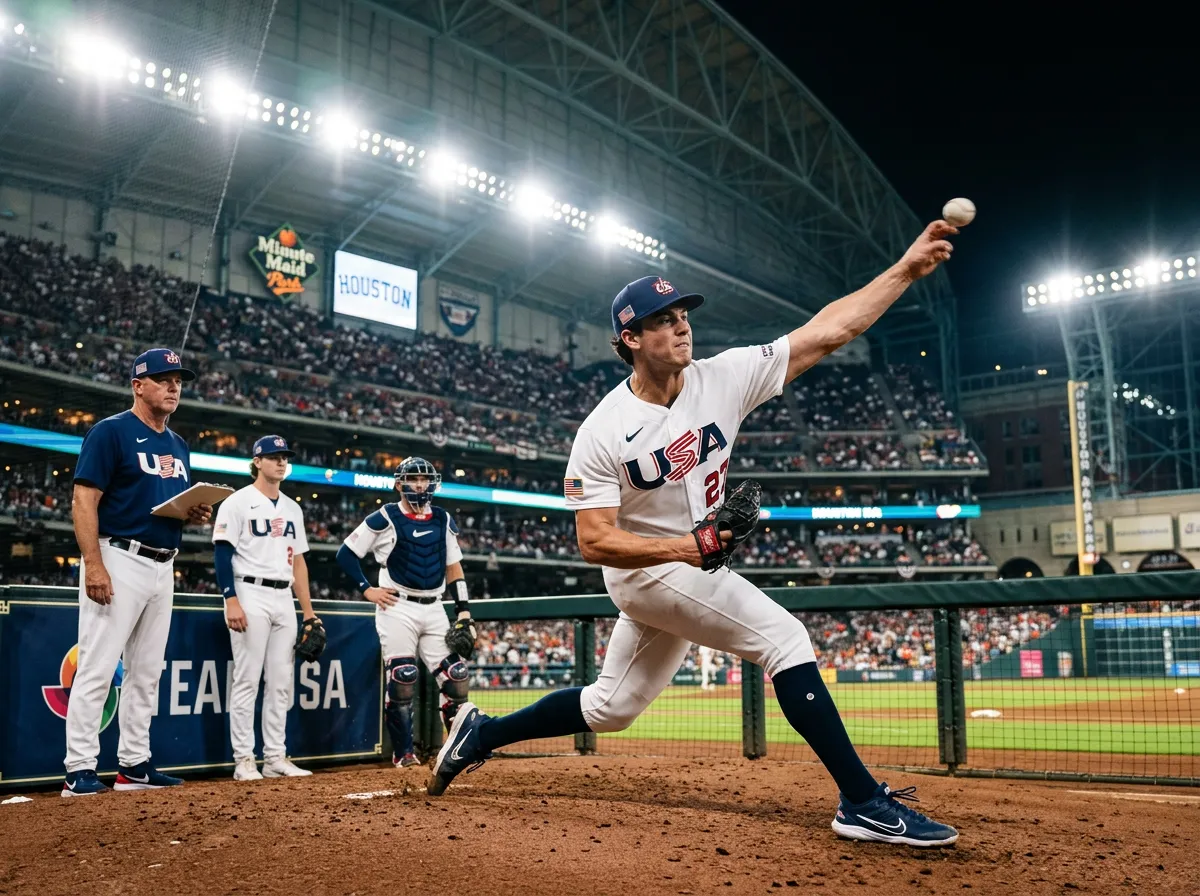
Skenes brings more than his 100-mph fastball and devastating splinker to the tournament. The former Air Force Academy cadet carries a motivation that transcends baseball competition. When DeRosa recruited Skenes for the roster, the pitcher's response was immediate and revealing. "I want to do this for every serviceman and servicewoman that protects our freedom," Skenes told DeRosa, per ESPN. "At the end of the day, that's all that needs to be said. There's something very special about representing your country." That military background, shared with reliever Griffin Jax (another Air Force Academy product), adds a layer of genuine patriotic intensity that cannot be manufactured through team-building exercises.
The bullpen is where Team USA may hold its most significant advantage over the rest of the field. Mason Miller's fastball velocity (averaging 103.1 mph in 2025, per Baseball Reference) is a weapon uniquely suited to the WBC's short-relief format, where pitchers face two or three batters rather than working through a full inning on 20-plus pitches. If DeRosa deploys Miller in the eighth inning and has Skenes or another high-leverage arm available for the ninth, the Americans could effectively shorten games to six innings for opposing lineups. That is a structural advantage, not just a talent advantage, and it is the kind of edge that wins short tournaments.
The Ghost in the Room: Japan and the 2023 Final
No conversation about Team USA's redemption arc is complete without acknowledging the opponent waiting at the end of the bracket. Japan opened the 2026 WBC with a 13-0 rout of Chinese Taipei that included Ohtani's grand slam, a 10-run second inning, and pitching that held the Taiwanese scoreless through nine innings. They followed it with another dominant win over South Korea. Japan has won three of the five WBC titles ever contested. They have Ohtani, who views the WBC as a personal stage and has performed accordingly in every appearance. They have Yoshinobu Yamamoto, who threw nearly three scoreless innings against Chinese Taipei. And they have the institutional advantage of a program that treats the WBC with the seriousness of an Olympic final.
The 2023 championship game between the U.S. and Japan was decided by a single run, 3-2, in a game that came down to Ohtani facing Trout with the tying run at the plate. That game was not lost because the Americans lacked talent. It was lost because Japan executed better in critical moments and because Ohtani, in the highest-pressure at-bat of the tournament, was the better player. The question for 2026 is not whether Team USA has enough stars. It is whether DeRosa's emphasis on team-building, chemistry, and preparation can close the execution gap that has historically separated the Americans from the Japanese in this tournament.
The expanded 20-team field (up from the 2023 format) and the four-venue structure, with pool play split between Miami, Houston, San Juan, and Tokyo before the quarterfinals and elimination rounds converge at Miami's loanDepot Park, create additional logistical variables. Team USA plays all its pool games in Houston, avoiding the travel that some other pools require. That is a minor but meaningful advantage in a tournament where rest and routine matter as much as raw ability.
The Verdict
Team USA's 2026 World Baseball Classic roster is, by every measurable standard, the most talented collection of American baseball players ever assembled for international competition. The 22 All-Stars, 65 combined All-Star selections, both Cy Young winners, a three-time MVP captain, and a future Hall of Famer coming out of retirement to fulfill a bucket-list dream all create a roster that, on paper, should win this tournament without serious resistance. But the WBC has never been won on paper. The 2006 roster had Clemens and Jeter and lost in the second round. The 2023 roster had Trout and Betts and lost in the final. Talent is the entry fee, not the differentiator.
What separates this Team USA from its predecessors is the intentionality behind the roster construction and the leadership infrastructure DeRosa has built around Judge. The emphasis on team dinners, on players staying late to bond, on a captain who demands that teammates "dive into everybody" rather than retreat to their established cliques, these are the details that determine outcomes in short-format tournaments. Whether those details are enough to overcome Japan's institutional advantages and Ohtani's WBC brilliance is the question that will be answered over the next 10 days. The Americans have the arms, the bats, and the motivation. Now they need the execution, and that has always been the part that talent alone cannot guarantee.
Sources
- ESPN: Inside Team USA's 2026 World Baseball Classic arrival - Jesse Rogers
- MLB.com: Will USA's star-studded World Baseball Classic roster be enough to avenge '23 defeat? - Anthony Castrovince
- SI.com: USA WBC Manager Had Definitive Answer About Whether or Not This is a 'Dream Team' - Ryan Phillips
- Yahoo Sports: Clayton Kershaw 'at peace' in retirement, calls WBC a 'one-off' - Dylan Hernandez
- ESPN: Aaron Judge, U.S. start World Baseball Classic with Brazil rout