

Tiger Woods has walked away from car crashes before. He's walked away from scandal, from surgery, from the kind of physical damage that would have ended most careers three times over. On Friday, March 27, the 50-year-old walked away from a rolled Land Rover on a quiet residential road near his Jupiter Island, Florida home, climbing out through the passenger window after his SUV flipped while passing a truck in a 30 mph zone.
This time, though, walking away from the crash might not be the hardest part. Walking away from golf could be.
Woods pleaded not guilty Tuesday to two misdemeanor charges: driving under the influence with property damage and refusal to submit to a lawful test. Hours later, he released a statement announcing he would step away from the sport "for a period of time" to seek treatment and "focus on health." The Masters, which he'd been weighing a return to on April 9, is off the table. Everything is off the table.
What Happened on South Beach Road
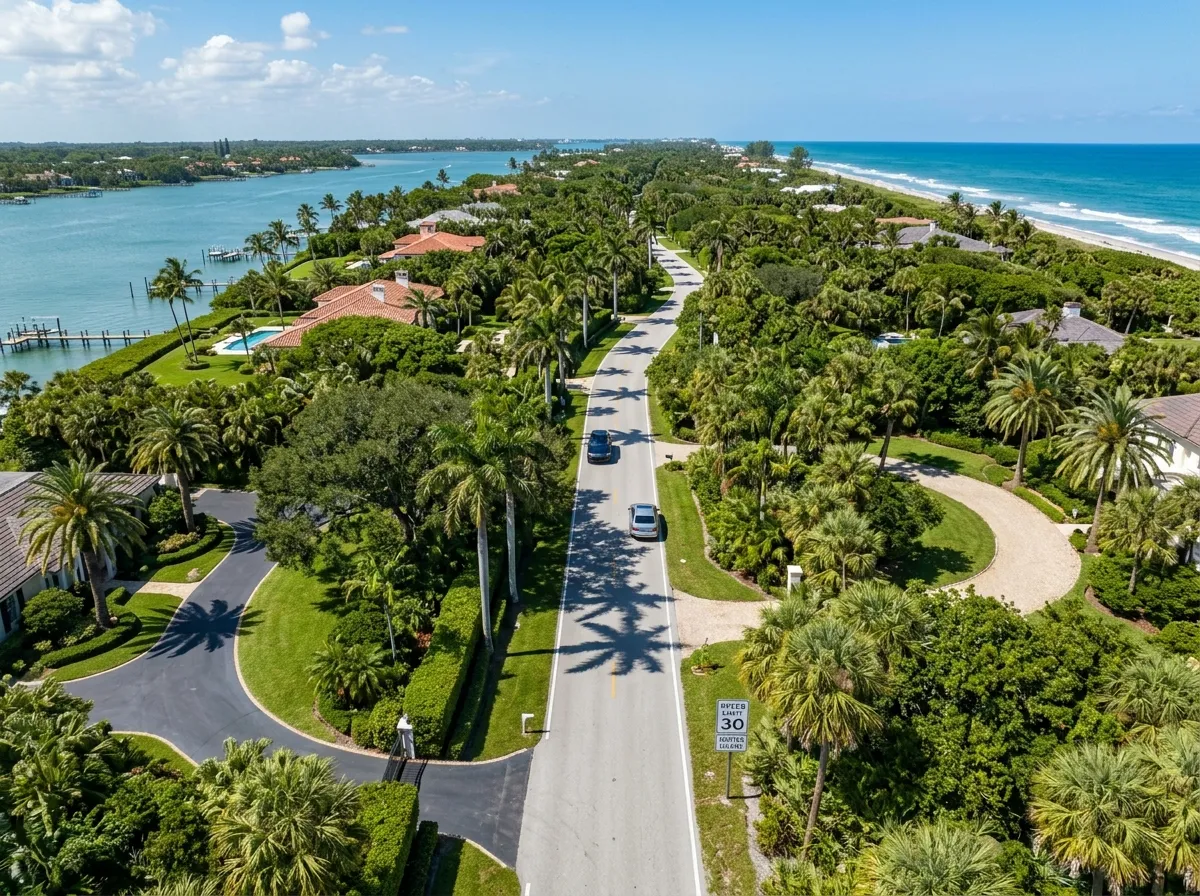
The Martin County Sheriff's Office report paints a straightforward picture of a bad decision. At approximately 2 p.m. ET on Friday, Woods was driving northbound on South Beach Road when he attempted to pass a truck hauling a pressure cleaner. The truck had slowed to turn into a driveway. Woods' Land Rover swerved to get around it but clipped the back of the trailer, causing the SUV to flip and slide down the road.
Neither Woods nor the truck driver was seriously injured. A sheriff's deputy arrived at the scene and administered field sobriety tests. According to Sheriff William Budensiek, investigators determined Woods showed signs of impairment and suspected medication or drug use.
Here's where the details get complicated. Woods' breathalyzer results came back at 0.000 on both samples, meaning zero alcohol was detected. But a search conducted after his arrest turned up two hydrocodone pills, a prescription opioid, in his pocket. Woods refused to submit to a urine test that would have confirmed whether the drug was in his system. That refusal is itself a misdemeanor charge in Florida.
"They did several tests on him. They did do some in-depth roadside tests," Budensiek told reporters. He described Woods as cooperative but noted he "was not trying to incriminate himself."
Woods was booked at 3 p.m. and released on bail after serving the mandatory eight-hour detention period.
The Pattern Nobody Can Ignore
If this were the first time, or even the second, the story would be different. But this is Tiger Woods' fourth major car crash and his second DUI arrest, and the pattern tells a story that no amount of competitive brilliance can overshadow.
In May 2017, police found Woods asleep at the wheel of his running Mercedes on a Jupiter road at 3 a.m. The tires were flat and both bumpers were damaged. Woods told officers he'd taken "a bad mix of painkillers," including Vicodin, and was disoriented. A toxicology report later revealed a cocktail of prescription drugs in his system: hydrocodone, hydromorphone, alprazolam, zolpidem, and THC. He pleaded guilty to reckless driving and entered a diversion program.
In February 2021, Woods was driving an SUV at between 84 and 87 mph in a 45 mph zone near Los Angeles when he crossed the center divider, hit a curb, and rolled several times down an embankment. The crash shattered his right leg so severely that doctors inserted a rod, screws, and pins to rebuild it. An NTSB investigation concluded Woods was likely unconscious at the wheel due to fatigue or medication, but no criminal charges were filed because officers didn't witness him driving and couldn't prove impairment at the time of the crash.
Each incident has been followed by the same cycle: public concern, a vague statement about health, a period of absence, and then an attempted comeback that generates enormous media attention and renewed speculation about whether the greatest golfer of his generation can still compete. The 2021 crash alone required months of rehabilitation before Woods could even walk again, let alone swing a club.
What This Means for the Masters and Beyond
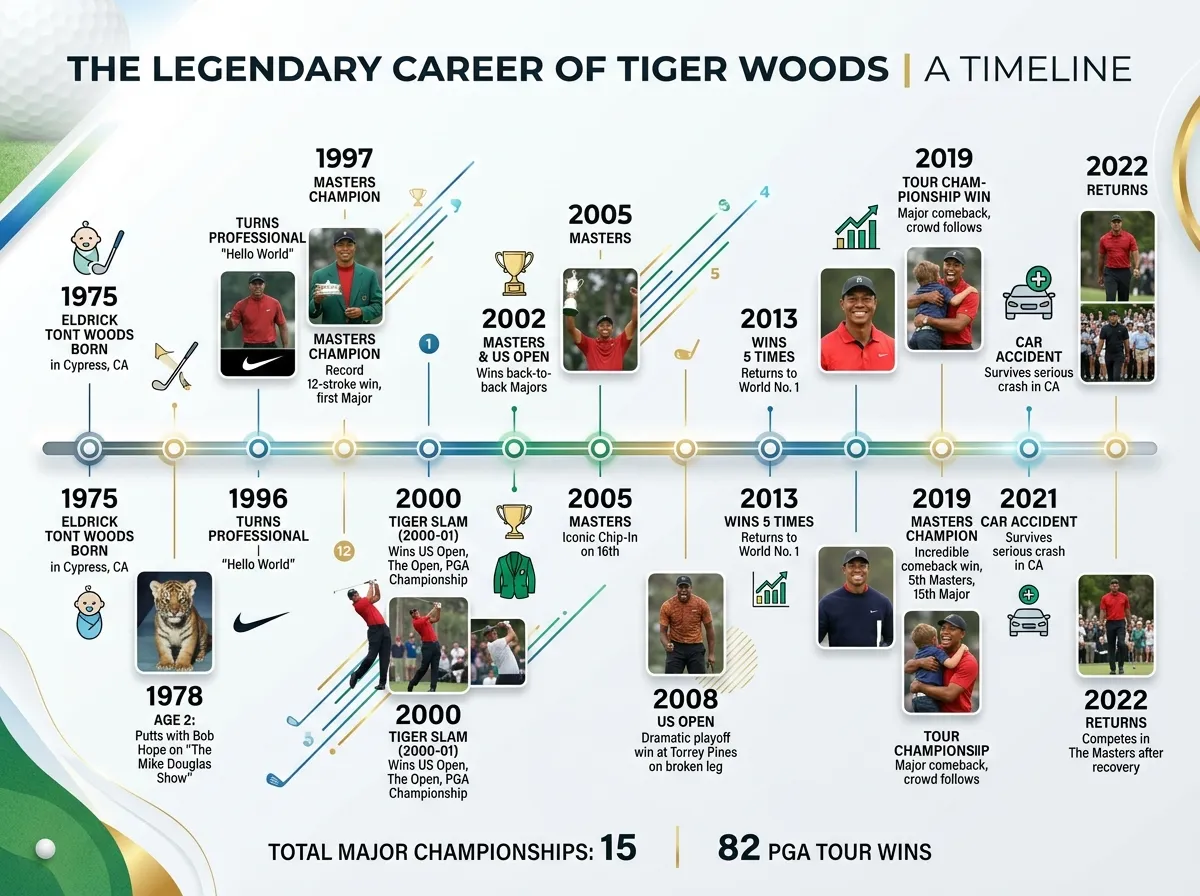
Woods' withdrawal from the Masters removes what would have been the tournament's biggest storyline. He has won five green jackets, the most recent in 2019 in what is widely considered one of the greatest comebacks in sports history. That victory came after four back surgeries, including a spinal fusion, and more than a decade of declining results.
His competitive record since the 2021 crash has been limited. Woods' last PGA Tour event was in July 2024. He had been competing in the TGL, a tech-forward indoor golf league he co-founded, and recently appeared in the league's finals after recovering from a ruptured Achilles tendon and October back surgery. The TGL appearances had fueled speculation that he was testing his body for a return to traditional tournament play.
That speculation is now irrelevant. The question is no longer whether Woods can physically compete at Augusta. The question is whether the cycle of crashes, substances, recovery, and return has reached a point where competitive golf is no longer the priority it needs to be.
The PGA Tour issued a brief statement acknowledging Woods' announcement without commenting on the legal situation. Fellow players have been cautious in their public remarks. President Trump, who has golfed frequently with Woods and whose daughter-in-law Vanessa has been reported as romantically linked to the golfer, called Woods "a close friend" and said he felt "so badly" about the situation.
The Treatment Question
Woods' statement said he would seek treatment, echoing the language he used after the 2017 arrest when he entered a program that included drug testing and regular check-ins with the court. But the specifics of what treatment means this time remain unclear. His legal team will likely argue that the hydrocodone was prescribed for legitimate pain management, a plausible claim given Woods' extensive surgical history. The man has had five knee surgeries, five back surgeries, and reconstructive work on his right leg that included a rod running from knee to ankle.
The legal case itself may be relatively contained. Both charges are misdemeanors. Florida DUI law for a second offense within five years of a prior carries up to nine months in jail, but Woods' 2017 conviction was for reckless driving, not DUI, and the incidents are nine years apart. A plea deal is likely. The reputational and competitive consequences, though, are another matter entirely.
Woods turns 51 in December. Every professional athlete faces the question of when to stop, but few have had the question forced on them by circumstances this stark. His legacy as the most dominant golfer of his era, and arguably in the sport's history, with 82 PGA Tour wins and 15 major championships, is secure regardless of what happens next. But legacies are complicated things, and this latest chapter adds weight to the parts of his story that have nothing to do with golf.
After the Buzzer
Tiger Woods' career has been defined by an almost supernatural ability to come back from situations that would end anyone else's story. A destroyed marriage. A broken back. A shattered leg. Every time, he returned to competition, and every time, we watched as if witnessing something that shouldn't be possible.
But there's a difference between a comeback and a pattern. Four major crashes. Two DUI arrests. Hydrocodone in his pocket on a residential road in the middle of the afternoon. At some point, the conversation shifts from "can he come back?" to "should he?"
Woods' own statement suggests he's at least asking that question. Stepping away to seek treatment is the right call, and it's worth noting that he made it quickly, within days of the arrest rather than after months of deflection. Whether the treatment addresses the underlying issues, and whether the golf world sees Tiger Woods on a competitive course again, are questions that don't need answers today. The only thing that matters right now is that he walked away from another crash alive, and this time, he's choosing to walk toward help instead of back toward the first tee.
Sources
- ESPN: Tiger Woods Arrested at Crash Scene on Suspicion of DUI - Crash details, arrest report, and Sheriff Budensiek quotes
- Sky Sports: Tiger Woods 'Stepping Away' From Golf to Seek Treatment - Treatment announcement and career timeline
- CNN: Tiger Woods Car Crash DUI What We Know - Legal charges, plea, and crash circumstances
- PGA Tour: Tiger Woods Arrested on Suspicion of DUI - Official PGA Tour reporting and timeline