
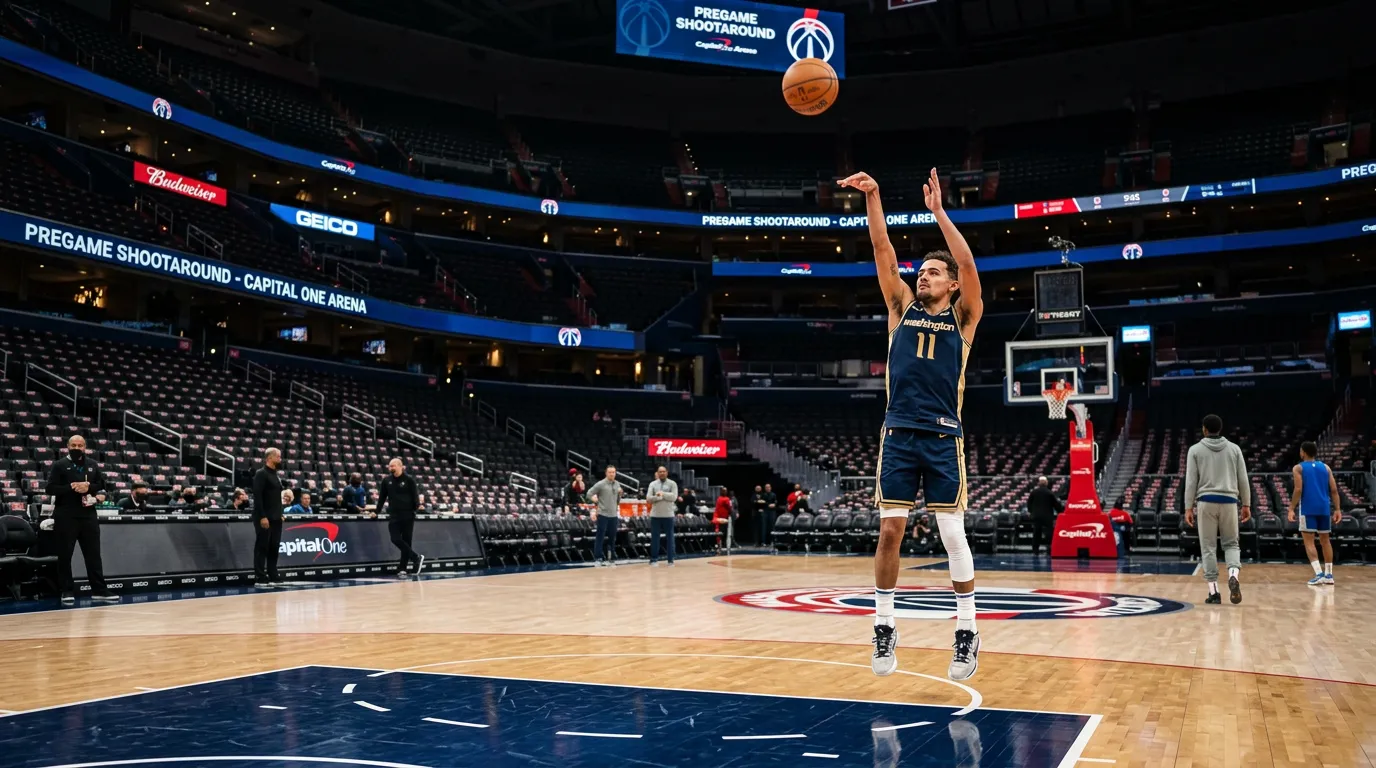
Trae Young has been a Washington Wizard for six weeks. He has attended team meetings, participated in practices when his body allowed it, and even gotten himself ejected from the bench during Monday's loss to Houston for stepping onto the court to contest a call. What he has not done is play a single minute in a Wizards uniform. That changes tonight against the Utah Jazz at Capital One Arena, and the significance of this debut extends well beyond one game for a team sitting in the Eastern Conference basement.
Young, the four-time All-Star who was traded from Atlanta in January for CJ McCollum and Corey Kispert, has been sidelined by a combination of knee and quadriceps injuries that limited him to just 10 games with the Hawks this season. In those 10 games, he averaged 19.3 points and 8.9 assists, numbers that reflect both his elite passing and the fact that he was clearly not at full health. Coach Brian Keefe has said Young will be restricted to roughly 17 to 20 minutes tonight, mostly in the first half. The limited workload is designed to protect a player who represents the cornerstone of a franchise-altering strategy.
The Ejection That Told Washington Everything It Needed to Know
Monday's ejection was, in one sense, meaningless. Young left the bench during a stoppage, argued with officials, and was tossed from a game he was not playing in. In another sense, it was the most encouraging thing the Wizards' front office has seen since the trade. Players who do not care about outcomes do not get ejected from games they are watching in street clothes. Young's frustration was visible and visceral, the reaction of someone who has spent six weeks absorbing an organizational culture and decided he wants to change it, not coast through it.
ESPN's Tim Bontemps reported that Keefe addressed the ejection privately with Young but told reporters he was "not concerned" about the incident, describing it as evidence of competitive fire rather than a discipline problem. Several Wizards players echoed the sentiment in postgame interviews, with one unnamed player telling the Washington Times that Young's intensity "has changed the energy in the building, and he hasn't even played yet."
That kind of cultural impact is exactly what Washington is betting on. The Wizards' front office has constructed a roster around the idea that acquiring star talent, even when injured, even when the timing is imperfect, beats the slow accumulation of draft picks and role players that characterizes traditional rebuilds.
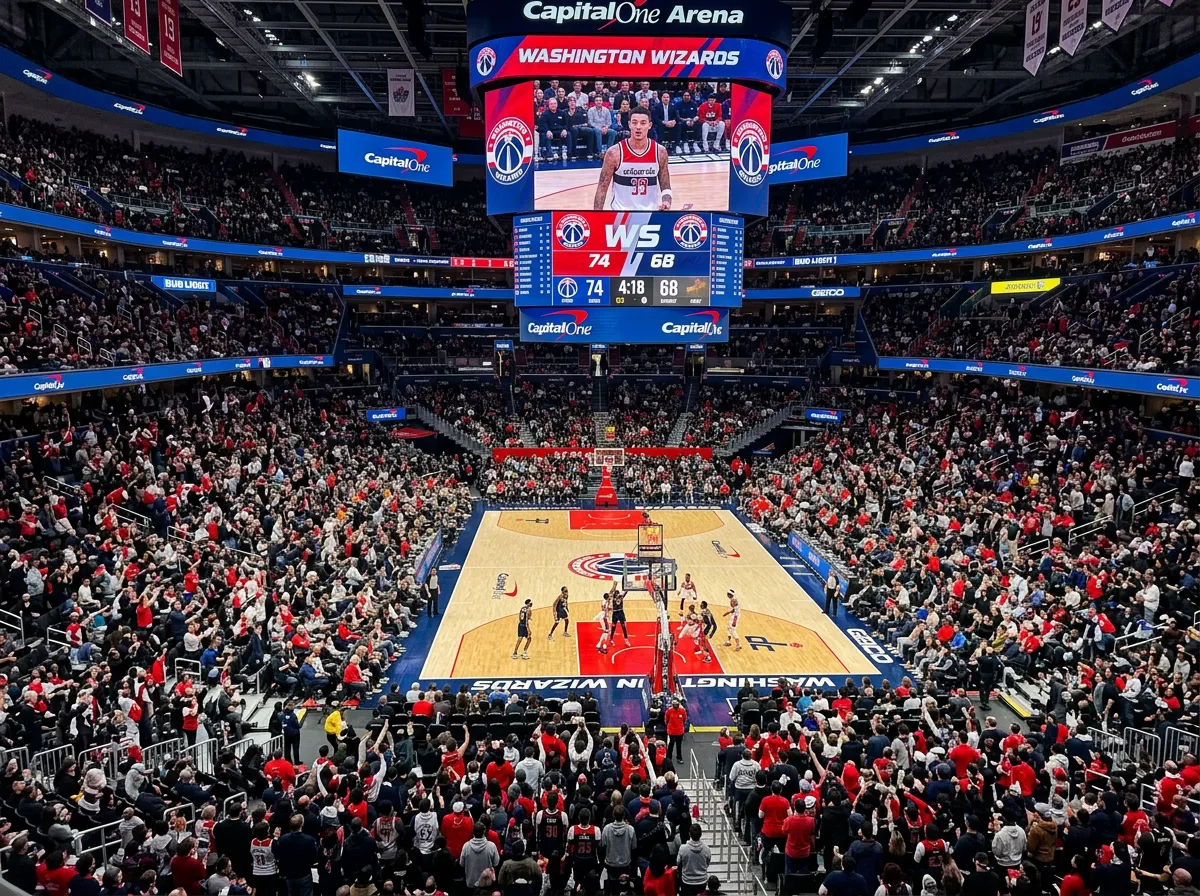
The Phantom Stars Gamble Enters Its Live Phase
We examined the logic behind Washington's strategy when neither Young nor Anthony Davis, acquired from Dallas in a separate blockbuster trade, had played a minute for the team. The thesis was provocative: the Wizards were deliberately collecting injured All-Stars at reduced trade costs, betting that their eventual return would instantly elevate a roster that had been designed to tank. Davis, at $58 million per year, came with significant financial risk but represented the kind of two-way anchor Washington has not had since the brief Kristaps Porzingis era.
Tonight, that thesis begins its first real test. Young's 17-to-20-minute window against the Jazz is not going to produce a definitive verdict on the strategy. What it will reveal is how Young's playmaking meshes with a roster built around young, athletic players who have spent most of the season running without a point guard who can consistently create advantages. Washington's per-possession efficiency has ranked 28th in the NBA this season, per NBA.com. Young's career average of 9.1 assists per game suggests the offensive infrastructure is about to get a significant upgrade, but translating individual brilliance into team function takes time, especially with limited minutes.
The historical precedent for All-Star mid-season debuts with a new team is not particularly encouraging for immediate results. When James Harden debuted with the Brooklyn Nets in January 2021, the Nets went 2-3 in his first five games as the team worked through integration issues. When Paul George first played for the Clippers in 2019, the team lost his debut game. The common thread is that star acquisitions create a temporary regression before the improvement kicks in, usually over a window of 10 to 15 games.
Young vs. Jazz: What the Matchup Actually Tests
Utah presents an interesting first opponent for Young's debut. The Jazz are 22-39, a rebuilding team in their own right, which should theoretically provide a gentler landing. But Utah's defense, while not elite, has been effective against point guard-driven offenses this season. Lauri Markkanen's length at the four creates problems for teams that rely on pick-and-roll spacing, and Walker Kessler's rim protection (2.3 blocks per game, per Basketball Reference) will test how Young adjusts to finishing in traffic after six weeks of inactivity.
The more meaningful evaluation will be Young's decision-making speed. Half-court playmakers lose their timing before they lose their physical tools during extended absences. A player of Young's caliber is not going to forget how to thread a bounce pass through traffic, but the split-second reads that distinguish elite point guards, knowing when the window is open versus when it is closing, take live reps to recalibrate. Keefe's minute restriction is as much about game-speed reps as it is about physical load management.
Why This Debut Is Different from Past Wizard Arrivals
Washington has acquired star players before, and the results have ranged from disappointing to disastrous. The Russell Westbrook trade in 2020 lasted one season before Westbrook was shipped to the Lakers. The John Wall max contract became an anchor that took years to escape. The Bradley Beal era ended with a trade to Phoenix and no playoff series wins to show for it. Each of those acquisitions shared a common flaw: the star arrived to complement an existing core that was never quite good enough, creating a team that was too good to tank and not good enough to contend.
The Young acquisition is structurally different in a way that deserves recognition. Washington is not trying to complement an existing core. It is trying to build one from scratch, using Young and Davis as the foundation rather than the finishing touch. The Wizards' young players, including Bilal Coulibaly, Alex Sarr, and AJ Johnson, acquired in the Davis trade, are developmental pieces who are expected to grow into their roles alongside the stars rather than fill gaps around them. The timeline is longer, the ambition is higher, and the risk is correspondingly greater.
When Young was first traded to Washington, the immediate reaction focused on what Atlanta received. The longer-term question, which tonight begins to answer, is whether Young at 27 can be the kind of franchise-defining point guard that Washington has been searching for since the Gilbert Arenas era ended in controversy nearly two decades ago. Young's skill set, elite playmaking combined with deep shooting range, is theoretically perfect for a team that needs someone to make everyone else better. The question is health, fit, and whether six weeks of watching from the bench created the kind of hunger that translates to on-court performance.
What It Means
Trae Young's debut tonight will produce a box score that matters far less than the context surrounding it. Whether he scores 25 points or 8, the real evaluation begins over the next three weeks as Young's minutes ramp up and the coaching staff integrates him into an offense that has operated without a true lead guard all season. The specific benchmark to watch is Washington's assist-to-turnover ratio over Young's first ten games. His career mark of 2.1 assists per turnover is strong but was achieved with Atlanta rosters built around his tendencies. A ratio above 1.8 with his new teammates would signal that the integration is working; below 1.5 would suggest the fit needs more time or schematic adjustment.
The broader significance is this: the Wizards have bet their entire franchise trajectory on the proposition that acquiring star talent through trades, rather than drafting and developing it, can accelerate a rebuild by three to five years. If Young looks like an All-Star tonight, even in limited minutes, the narrative around Washington's rebuild shifts immediately from curiosity to cautious optimism. If the injuries have taken more than expected, the front office will face uncomfortable questions about whether they traded valuable assets for a version of Young that no longer matches the player they targeted. Tonight is not the final exam, but it is the first quiz, and Washington has been studying for weeks.