
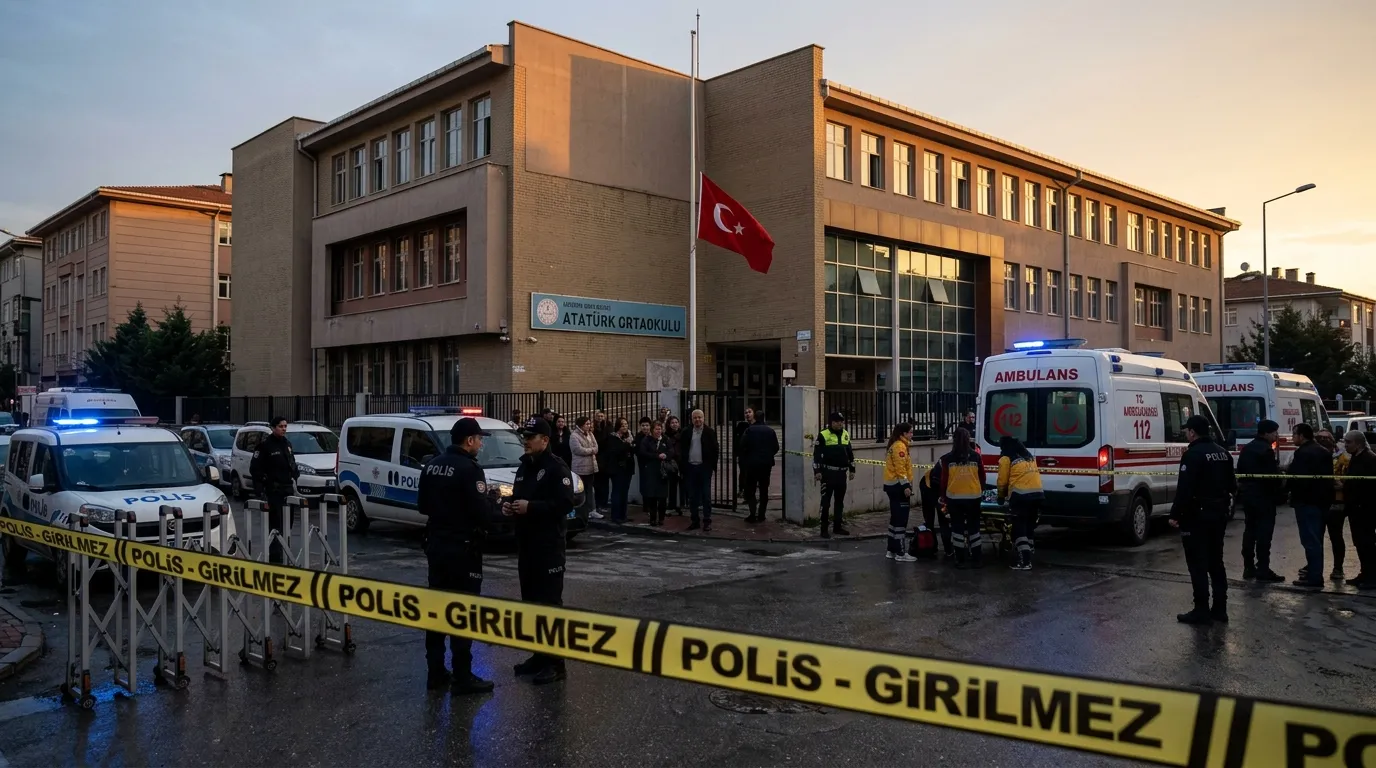
An eighth-grade student walked into Ayser Calik Middle School in the Onikisubat district of Kahramanmaras province, southeastern Turkey, on Wednesday morning and opened fire with two handguns he had hidden in his backpack. By the time police reached the building, nine people were dead. Eight students and a teacher. At least 13 more were wounded. The attacker was among the dead.
It was the second school shooting in Turkey in two days. On Tuesday, a gunman had opened fire at a high school in Sanliurfa, another southeastern province roughly 200 kilometers away, killing four. The two attacks, in a country that records almost none of the mass-shooting events that dominate American news cycles, have left the Turkish public stunned and the government scrambling for an explanation.
According to a statement from Turkish Interior Minister Ali Yerlikaya, the weapons used in the Kahramanmaras attack belonged to the student's father, a former police officer. Preliminary investigation indicates the guns were stored at home without secure lockup.
What Happened at Ayser Calik Middle School
The attack unfolded shortly after the school day began. The 14-year-old student, whose name has not been released by Turkish authorities pending family notification, entered the school through its main gate carrying a backpack. Inside were two semiautomatic pistols registered to his father, along with extra magazines of ammunition.
The student walked to the second-floor corridor and entered two consecutive classrooms, opening fire "randomly" according to accounts relayed by the Kahramanmaras governor's office. Students who survived described him moving methodically, not speaking, and reloading at least once before moving between rooms. A teacher who attempted to intervene was shot at close range. Police arrived within minutes, and by the time armed officers reached the upper floor, the attacker had died of a self-inflicted gunshot wound.
Yerlikaya confirmed in a press conference held later Wednesday that the shooter had no prior criminal record and had not been flagged by school counselors. Classmates interviewed by Turkish broadcaster TRT described him as "quiet" and "withdrawn" but said they had not observed warning signs that preceded the attack.
The Tuesday Attack That Preceded It
The Kahramanmaras shooting came a day after a similar attack at Mehmet Akif Ersoy Anadolu High School in the city of Sanliurfa, approximately two hours south by car. In that incident, a 17-year-old student shot and killed four people, including two fellow students, a vice principal, and a security guard before being subdued by school staff. Authorities have not publicly linked the two events, and officials said there is no current evidence of coordination between the attackers.
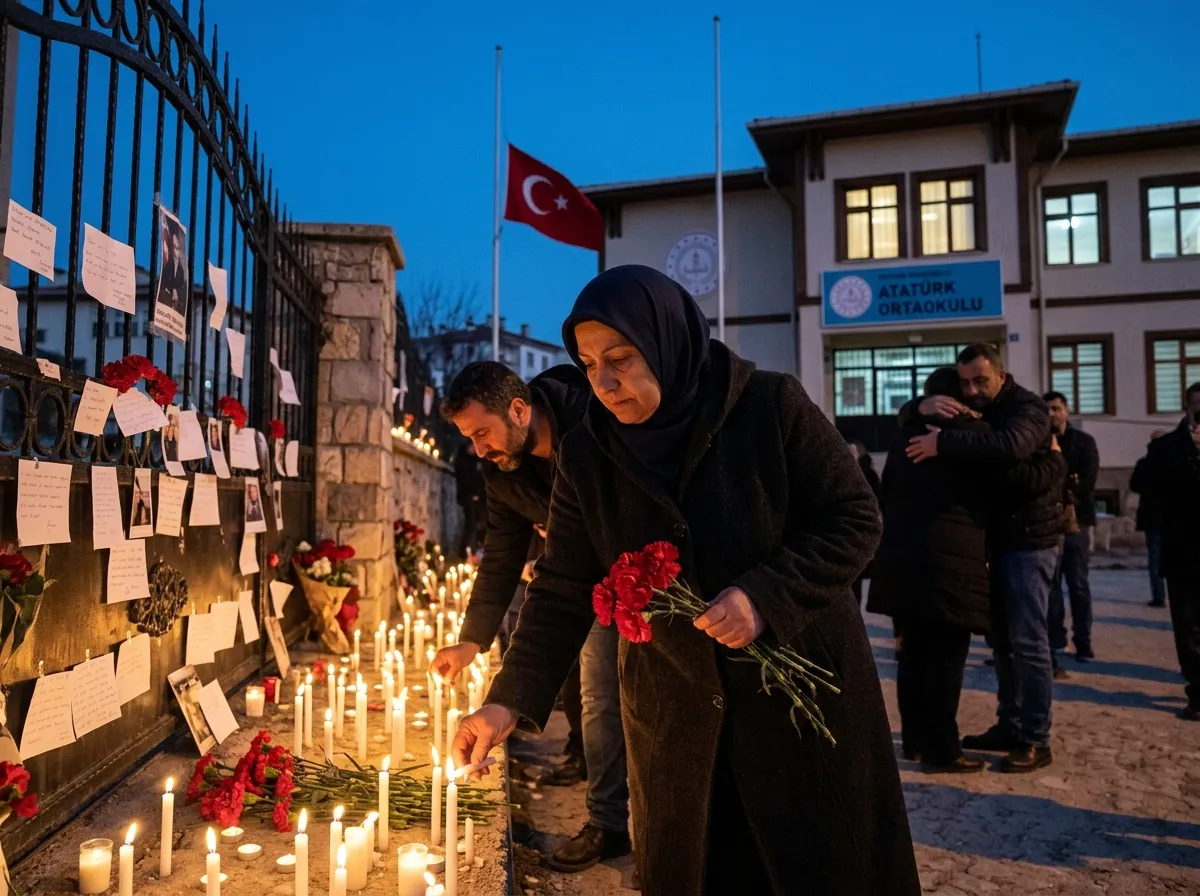
But the pattern is unusual enough that Turkish Minister of Education Yusuf Tekin acknowledged in Wednesday's press conference that the ministry is "examining whether the events are independent or whether some form of social contagion may be at work." Contagion, in mass-shooting research, refers to the well-documented phenomenon in which attackers are inspired by recent events they consume through media coverage.
Two shootings in two days are, by any measure, an extreme statistical anomaly for Turkey. The country's firearm homicide rate is roughly one-fifth of the United States' rate, and school shootings of the scale seen this week were, until this week, essentially unknown.
How the Guns Were Obtained
The detail that has drawn the most immediate political attention is the reported source of the Kahramanmaras weapons. Under Turkish law, former police officers are permitted to retain a personal firearm after leaving the force, subject to annual licensing renewal. Reports from Turkish state broadcaster TRT indicate the attacker's father held two such licenses, one for a 9mm pistol used operationally during his active service and one acquired after retirement.
Both guns were reportedly stored in a home safe that the son had access to, either through a combination he had observed or because the safe had been left unlocked. Yerlikaya declined to confirm the specific circumstances but said the investigation into household weapons storage is "active and serious."
Opposition politicians, led by Republican People's Party (CHP) leader Ozgur Ozel, called Wednesday for immediate changes to firearm storage requirements for active and retired law enforcement. "A weapon in a home with children must be locked in a way those children cannot access," Ozel said during a parliamentary session. "The evidence from this week is sufficient."
The Political Reaction
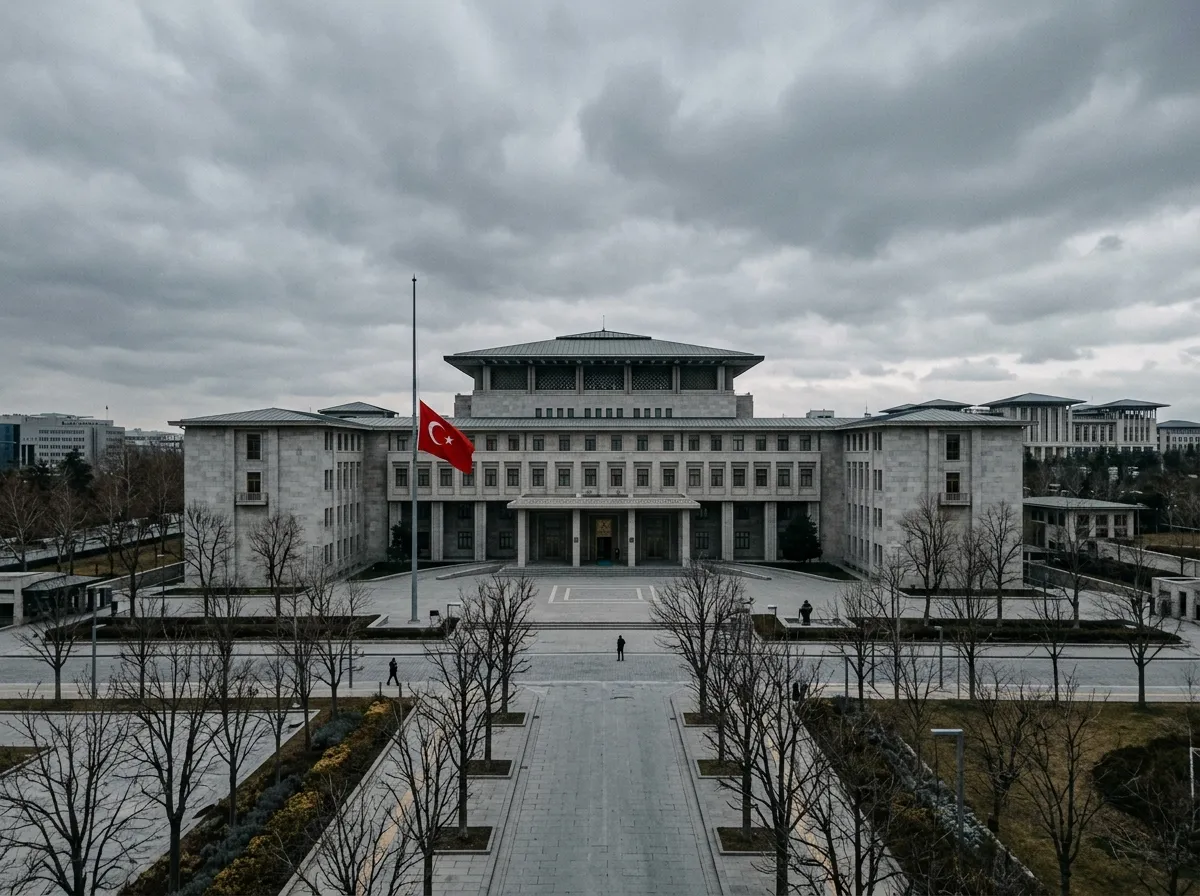
President Recep Tayyip Erdogan canceled a scheduled economic address and addressed the nation from Ankara Wednesday afternoon. Erdogan declared three days of official mourning and announced the formation of a task force, led by Interior Minister Yerlikaya and Education Minister Tekin, to conduct a national review of school security and firearm storage laws within 60 days.
"We will not allow our children to feel unsafe in their classrooms," Erdogan said. "Every avenue of policy will be examined. Nothing is off the table." He stopped short of announcing specific legislation but indicated the government would support "significant revisions" to laws governing firearm storage in households with minors.
Ahmet Insel, a political analyst and columnist at the Turkish daily Cumhuriyet, said the political dynamics in Ankara are shifting rapidly. "Turkish political culture has historically treated gun violence as a peripheral issue, because the absolute numbers are low by regional standards," Insel said by phone Wednesday evening. "Two school shootings in 48 hours changes the conversation in a way that statistics alone cannot."
The Security Questions Schools Now Face
Turkey's education ministry runs approximately 70,000 schools serving more than 18 million students, with security arrangements that vary significantly between urban and rural districts. Most public schools rely on a single assigned security guard, ID-based gate checks for visitors during school hours, and no routine bag screening. Metal detectors are present in roughly 5 percent of schools, concentrated in larger cities.
By contrast, the two schools attacked this week were both in mid-sized southeastern cities, and both lacked metal detectors. The security guard at Mehmet Akif Ersoy in Sanliurfa was killed in Tuesday's attack before he could call for backup. The Ayser Calik attack occurred without any armed security present on the school grounds.
Tekin said the education ministry will expedite a security review focused on three areas: physical screening at school entrances, training for teachers and staff on identifying at-risk students, and improved mental health resources embedded in schools. He acknowledged that Turkey's school counselor staffing levels, averaging one counselor per roughly 600 students, are "well below what the evidence would support."
What to Watch Next
The investigation into both attacks will continue over the coming weeks. Turkish police are examining the digital footprints of both shooters, looking for connections, online radicalization, or shared inspirations. In the Kahramanmaras case, investigators told state media they are reviewing the attacker's laptop and phone for any evidence he had consumed coverage of the Tuesday attack.
Parliament is expected to convene an emergency session on firearm storage legislation early next week. Multiple opposition parties have indicated they will support tightening the rules governing how retired law enforcement store personal weapons, which would represent the most significant change to Turkish gun policy in more than a decade.
International reaction has been swift. The United Nations Secretary-General issued a statement Wednesday expressing condolences and calling for "immediate action" to protect schoolchildren. The European Union, of which Turkey is a longtime candidate member, said it would offer technical assistance on school security if requested.
The Key Takeaway
Two school shootings in two days is not, in any country, a coincidence easily dismissed. Whether Turkey is witnessing a contagion effect, a policy gap exposed by a tragic pairing of events, or the beginning of a new pattern of attacks, the political and social response over the next several weeks will shape how the country treats gun violence, school security, and mental health support for years to come.
For the families of the nine people killed on Wednesday, and the four killed on Tuesday, those debates are academic. The immediate reality is the funerals that begin tomorrow, in two cities, with flags still at half-staff across a country that had not, until this week, seen itself as the kind of place where schoolchildren get shot at their desks.
Sources
- NBC News, "Student kills nine in Turkey's second school shooting in two days"
- Al Jazeera, "At least nine people killed in Turkiye's second school shooting in two days"
- Bloomberg, "Turkey Rocked by Second School Shooting in as Many Days"
- UPI, "Turkey sees second school shooting in two days, this time killing 9"
- Al-Monitor, "Four dead after Turkey's second school shooting in two days"