
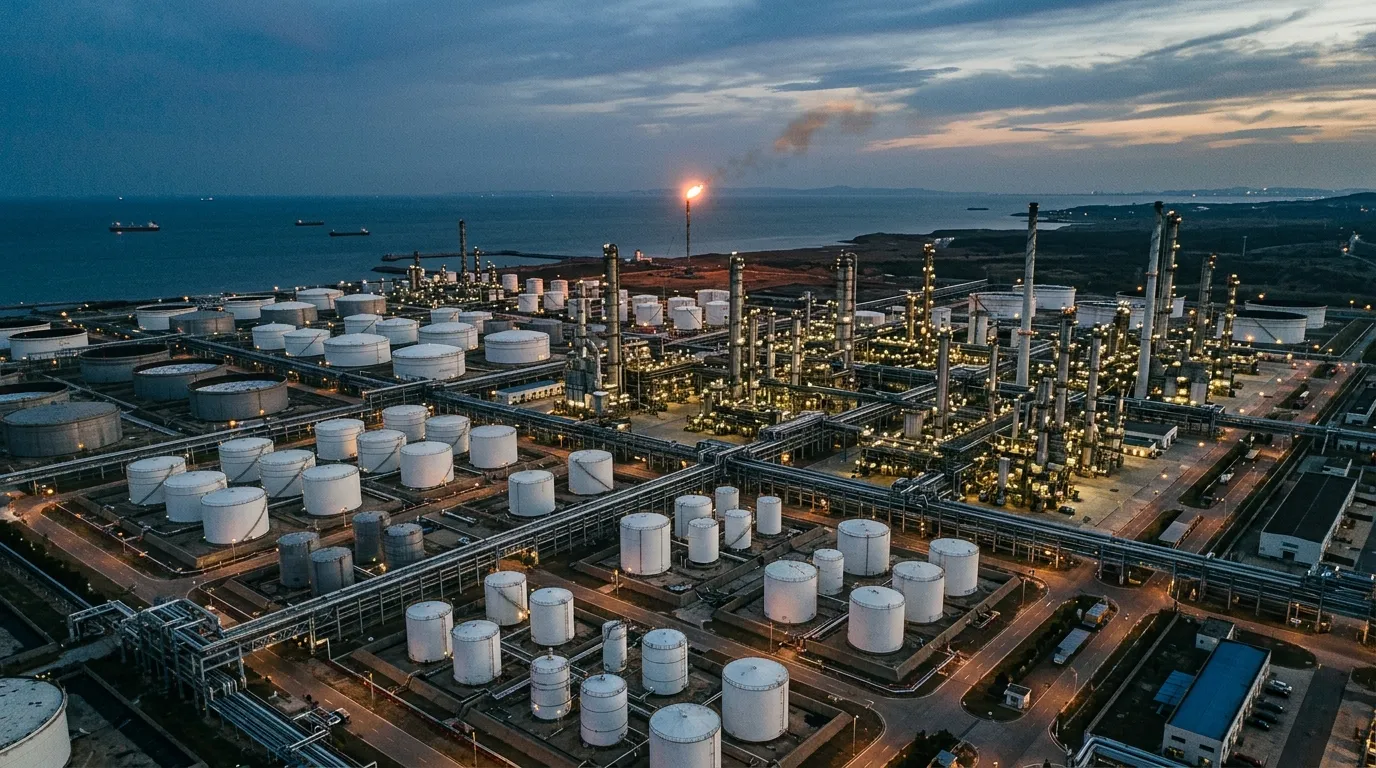
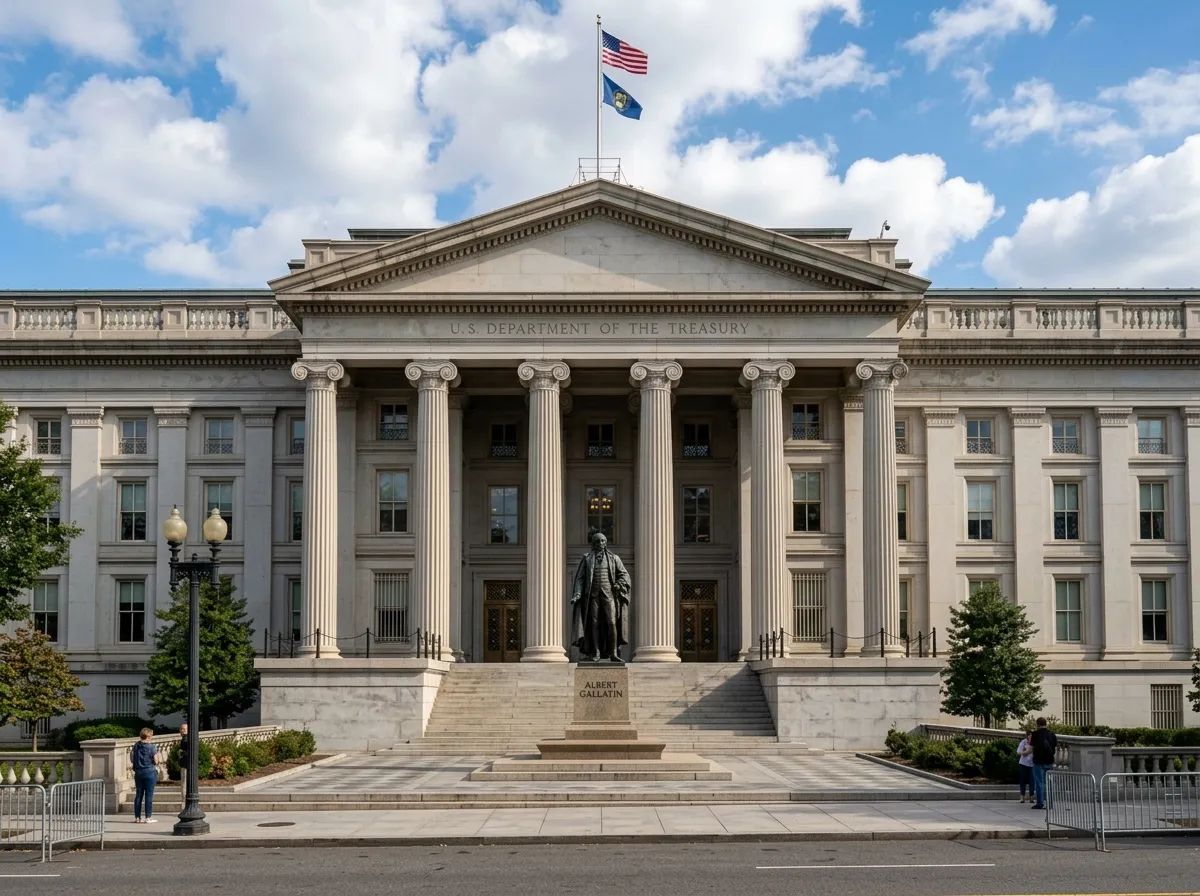
The Treasury Department on Friday sanctioned Hengli Petrochemical (Dalian) Refinery Co., one of China's largest independent "teapot" refineries, along with 40 shipping firms and vessels tied to what U.S. officials describe as Iran's "shadow fleet." It is the most aggressive direct strike at a Chinese oil buyer the administration has made under its "Economic Fury" campaign, and it lands roughly two weeks before President Trump and Chinese leader Xi Jinping are expected to meet for a long-scheduled summit.
Hengli, based in Liaoning province, has been one of Iran's biggest crude customers since at least 2023, according to the Treasury Department's Office of Foreign Assets Control. OFAC's Friday designation document says the refinery has received over five million barrels of Iranian crude through cargoes overseen by Sepehr Energy Jahan Nama Pars Company, the oil sales arm of Iran's Armed Forces General Staff. Treasury describes the resulting revenue as "hundreds of millions of dollars" flowing back to the Iranian military.
"Economic Fury is imposing a financial stranglehold on the Iranian regime, hampering its aggression in the Middle East and helping to curtail its nuclear ambitions," Treasury Secretary Scott Bessent said in the announcement.
Why Treasury Picked This Refinery
Hengli is not a state-owned giant like Sinopec or PetroChina. It is a privately controlled "teapot" refinery, the industry term for the smaller, independent processors clustered along China's east coast that have spent the past decade buying discounted barrels from Iran, Russia, and Venezuela. Teapots run on thinner margins than the majors and are willing to accept oil that comes through the back door. That is exactly what made Hengli a target. Treasury's case is that the refinery's operations represent a structural revenue channel for the Iranian military, not an incidental commercial relationship.
The numbers in the OFAC release are unusually specific. Five million barrels of Iranian crude is a meaningful slice of Iran's clandestine seaborne exports, which independent tracking firms have estimated at roughly 1.5 million barrels per day for most of 2025 and 2026. Hengli, on its own, has been absorbing the equivalent of several days of that output every quarter. Designating the refinery, and not just its shipping intermediaries, is meant to signal that the United States is now willing to reach inside China's domestic refining sector when the link to Tehran is documented.
Sanctions specialists have raised an obvious caveat. Independent Chinese refineries are somewhat insulated from U.S. measures because they have limited direct exposure to the dollar-based financial system. They settle in yuan, refine for the domestic market, and rarely touch correspondent banks in New York. A senior compliance attorney quoted by Reuters earlier this month argued that targeting the Chinese banks that clear payments for Iranian oil would put more real pressure on the trade than designating the refineries that consume the cargoes. OFAC has not crossed that line yet, and Friday's announcement notably did not.
The Shadow Fleet Side of the Action
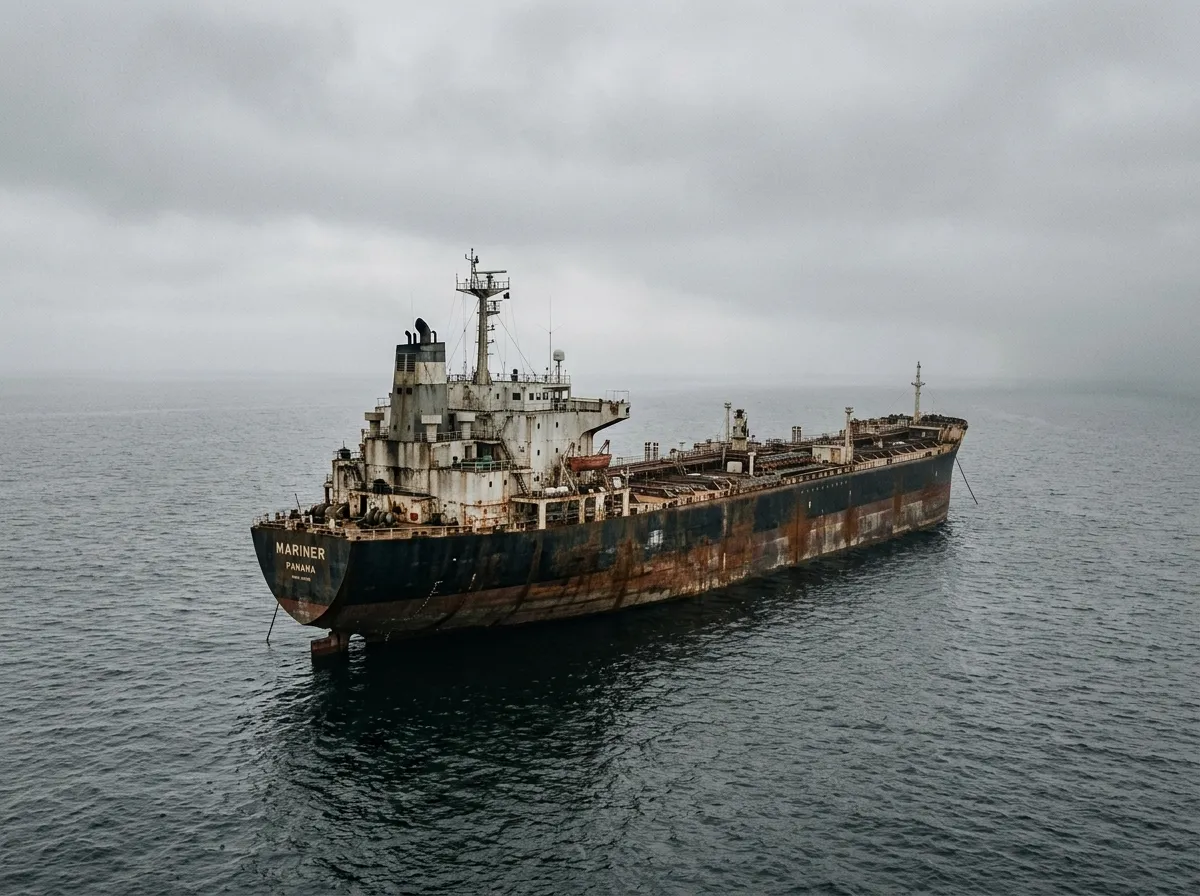
Alongside the Hengli designation, Treasury named approximately 40 shipping firms and vessels operating as part of what it calls Iran's shadow fleet. These are the aging tankers, ship-to-ship transfer specialists, and one-vessel front companies that move sanctioned crude across the Persian Gulf, through the Strait of Malacca, and into Chinese ports. Many sail under flags of convenience from Panama, the Marshall Islands, and small Caribbean states. Several have switched ownership and registration multiple times since 2024.
The shadow fleet is the part of the sanctions architecture that has been hardest to police. Cargoes are typically transferred at sea in international waters, often with ship transponders disabled. Ownership chains run through Hong Kong shells and Gulf-based intermediaries that disband and re-form within months of being designated. Each round of OFAC action peels off a layer, and a new layer grows back. Industry trackers at firms like Kpler and Vortexa have spent the past year publishing regular reports on the churn, and their data is increasingly being cited inside Treasury's case files.
What is new in Friday's action is the scale of the simultaneous designation. Hitting 40 vessels in a single day raises the cost of replacing the affected capacity, at least temporarily. Brokers and insurers will refuse to touch a newly sanctioned hull until ownership is restructured, and restructuring takes weeks. In the short term, Iran's seaborne exports are likely to slip. Whether the dip persists past the next round of paper reorganization is a different question.
The China Calculation
The geopolitics are the part of this announcement that everyone in Beijing, Washington, and Tehran is reading most carefully. The sanctions arrived just days before Steve Witkoff and Jared Kushner traveled to Islamabad to advance a possible nuclear deal with Iran, and weeks before Trump is scheduled to meet Xi at a leaders' summit that has been on the calendar for months. The timing was almost certainly deliberate.
China's embassy in Washington responded within hours, calling the move "illegal" unilateral pressure and demanding that the United States stop "abusing sanctions" and "politicizing trade and sci-tech issues and using them as a weapon." The phrasing is the standard formula Beijing has used through 2025 and into 2026, but the target this time is more sensitive. Hengli is a politically connected company in a province with deep Communist Party ties, and the optics of an American agency reaching into Liaoning to designate a domestic refiner will not play quietly inside China's leadership.
The bet from the Trump administration appears to be that Beijing wants the summit to go forward enough that it will absorb the Hengli action without retaliating in kind. That is a real bet. China has its own escalation tools, including export controls on rare earth elements, restrictions on U.S. investment in Chinese tech firms (which it announced earlier this week in response to Meta's Manus acquisition), and the leverage of sitting on $760 billion in U.S. Treasury debt. None of these tools has been deployed in direct response to Friday's sanctions yet. They are all on the table.
What This Costs Iran in the Near Term
For Tehran, the immediate financial impact is real but bounded. Hengli was one of several Chinese teapots buying Iranian crude, and the others, including Shandong-based refineries that have not been designated, are positioned to absorb some of the redirected supply at lower prices. That price discount is the mechanism through which sanctions actually bite. Every additional layer of compliance risk that buyers have to price in widens the discount Iran has to accept on each barrel.
Independent estimates from the Energy Information Administration and from private trackers had Iranian oil revenue running between $40 billion and $50 billion per year in 2025, down from earlier highs but still the regime's central source of foreign exchange. Anything that pushes the discount wider eats directly into that number. A meaningful run of Hengli-style designations, if Treasury sustains them, could compress Iranian revenue by a single-digit percentage. A targeted designation of a Chinese bank that clears the trade would compress it considerably more, which is why the threat of doing so has more strategic weight than the action itself.
The political effect is harder to quantify and probably more important. The Iranian negotiating team in Pakistan is being asked to accept concessions on uranium enrichment, on missile programs, and on regional militia support. Every fresh sanctions designation gives Iran's hardliners ammunition to argue that the United States is not negotiating in good faith, that pressure will continue regardless of any deal, and that concessions will not be reciprocated. Witkoff and Kushner now have to talk past Friday's headline before they can talk about anything else.
Where the Talks Go From Here
The next two weeks are the window. The Iran negotiation in Islamabad is on a tight clock, with the summer ceasefire framework expiring in the coming days and pressure on both sides to either extend it or let it lapse. The Trump-Xi summit is the larger backdrop, and any Chinese retaliation that materializes will most likely surface there or in the run-up.
Three things are worth watching. First, whether OFAC follows the Hengli designation with action against a Chinese bank. That would be a substantively larger escalation, and the absence of it on Friday was conspicuous. Second, whether Iran's seaborne crude exports actually fall in the May tracking data, or whether the shadow fleet rebuilds within a single tanker turnaround. Third, whether China lets the summit calendar carry forward unchanged. A delay or a downgrade would be a signal that Beijing is not willing to absorb this round quietly.
The administration's underlying theory is that sanctions, talks, and military pressure all reinforce each other when sequenced correctly. Friday's announcement is a test of that theory at the inflection point where it matters most. If the talks survive, the maximum-pressure campaign will look vindicated. If they collapse, the case for a more conciliatory approach will get louder. Either way, the events of the next fourteen days are now the story.
Sources
- Treasury sanctions Chinese refinery Hengli over Iran oil purchases, Fox News
- Trump just sanctioned a major Chinese oil refinery over Iranian oil weeks before he meets Xi Jinping, Fortune
- US sanctions China's 'teapot' refinery for buying Iranian oil, Al Jazeera
- US sanctions China-based oil refinery and 40 shippers over Iran oil, South China Morning Post
- U.S. imposes sanctions on a China-based oil refinery and 40 shippers over Iran oil, The Washington Times