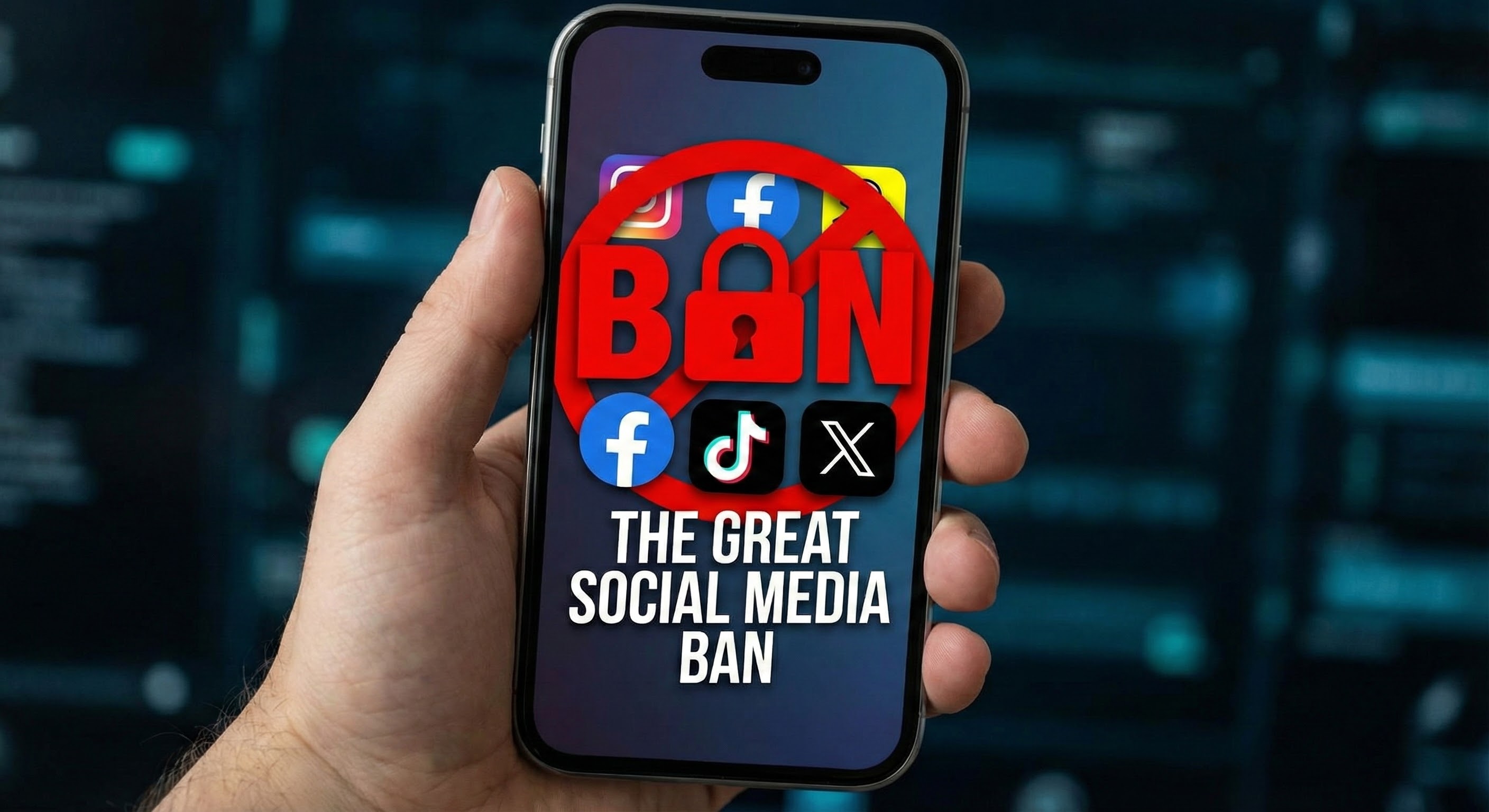
In March 2024, Pakistan went dark. The government shut down access to Facebook, Twitter, Instagram, TikTok, and YouTube for 30 consecutive days. The official reason was curbing political unrest and misinformation ahead of elections. The real reason was trying to control a narrative the government was losing online. Either way, it was one of the largest social media blackouts in modern history, affecting 240 million people.
What happened during that month was a messy, uncontrolled experiment in what a society looks like when you suddenly disconnect it from platforms that had become essential infrastructure. The results were chaotic, economically damaging, and politically instructive. And governments around the world, from authoritarian regimes to democracies considering “child safety” restrictions like Australia’s under-16 ban, are studying Pakistan’s experience closely.
The lesson from Pakistan’s blackout is clear: you can turn off social media, but you can’t control what happens when you do. And the collateral damage is far greater than governments anticipate.
The Month Everything Stopped
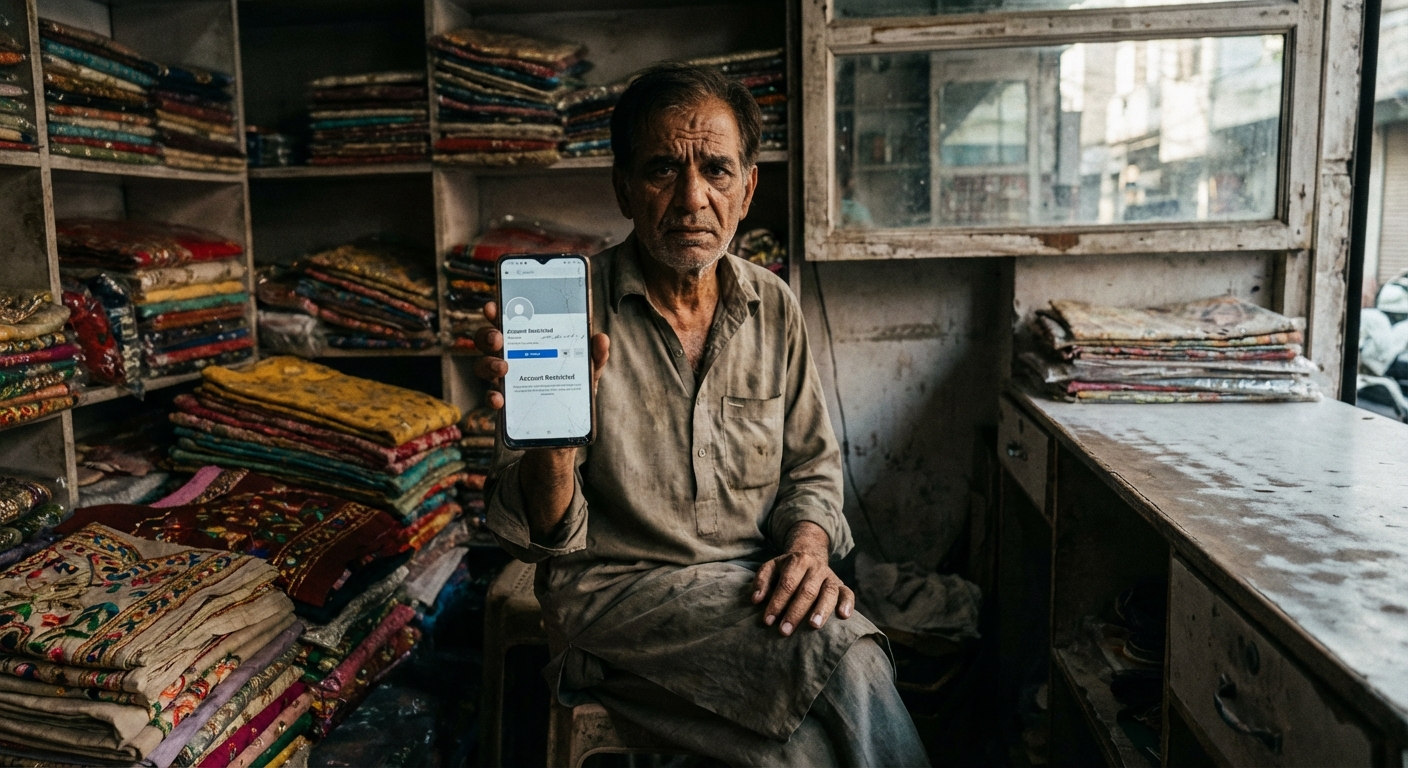
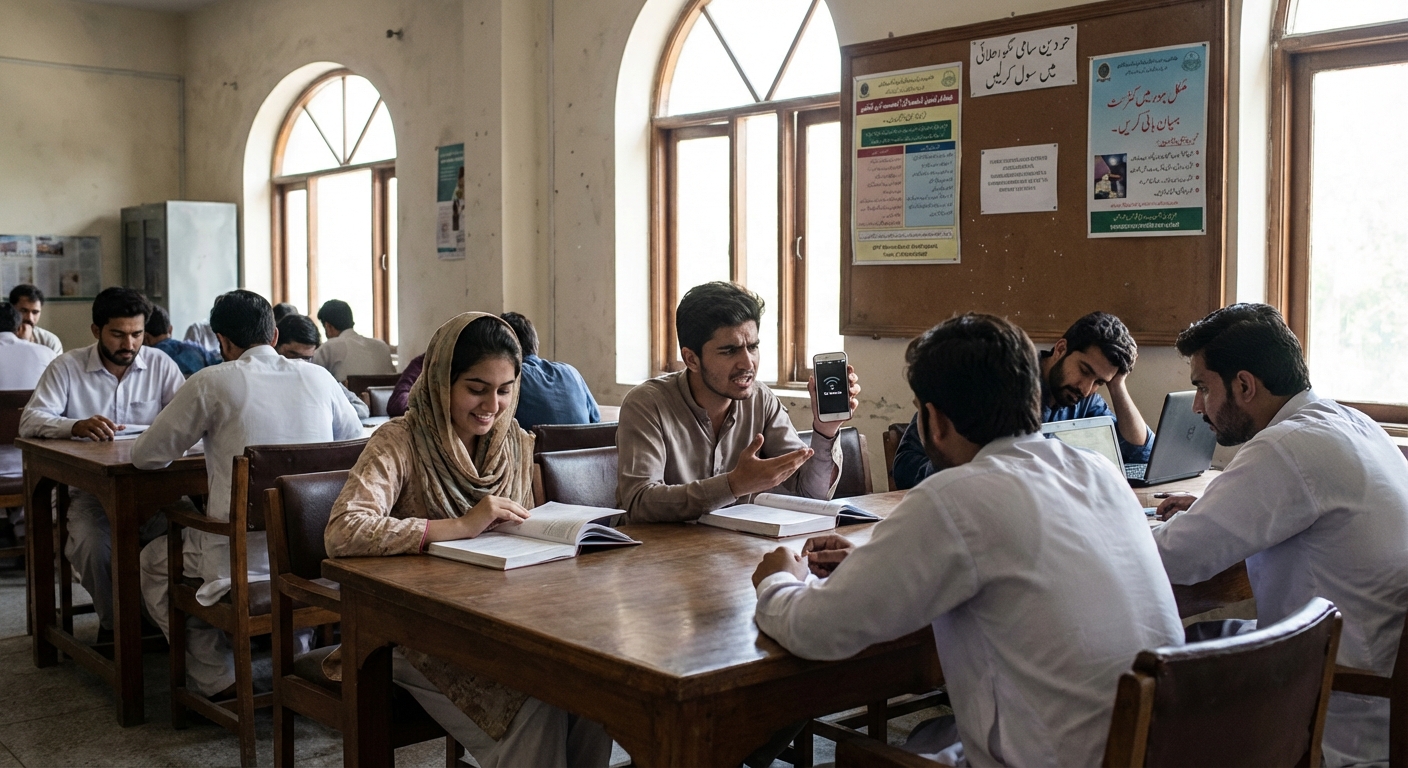
When the platforms went dark, information infrastructure collapsed overnight. People couldn’t coordinate basic social activities. Family WhatsApp groups stopped functioning. News spread through rumor and speculation instead of verifiable sources. The information vacuum created by the ban was quickly filled with misinformation, exactly the opposite of what the government intended.
But people adapted, quickly and creatively. VPN downloads surged by 5,300% within hours of the ban taking effect. Anyone with technical knowledge or money for a paid VPN service could bypass the restrictions entirely. This created a stark digital class divide: wealthy, educated urbanites stayed connected, while poor and rural populations were cut off completely. The ban didn’t create equality, it created information inequality.
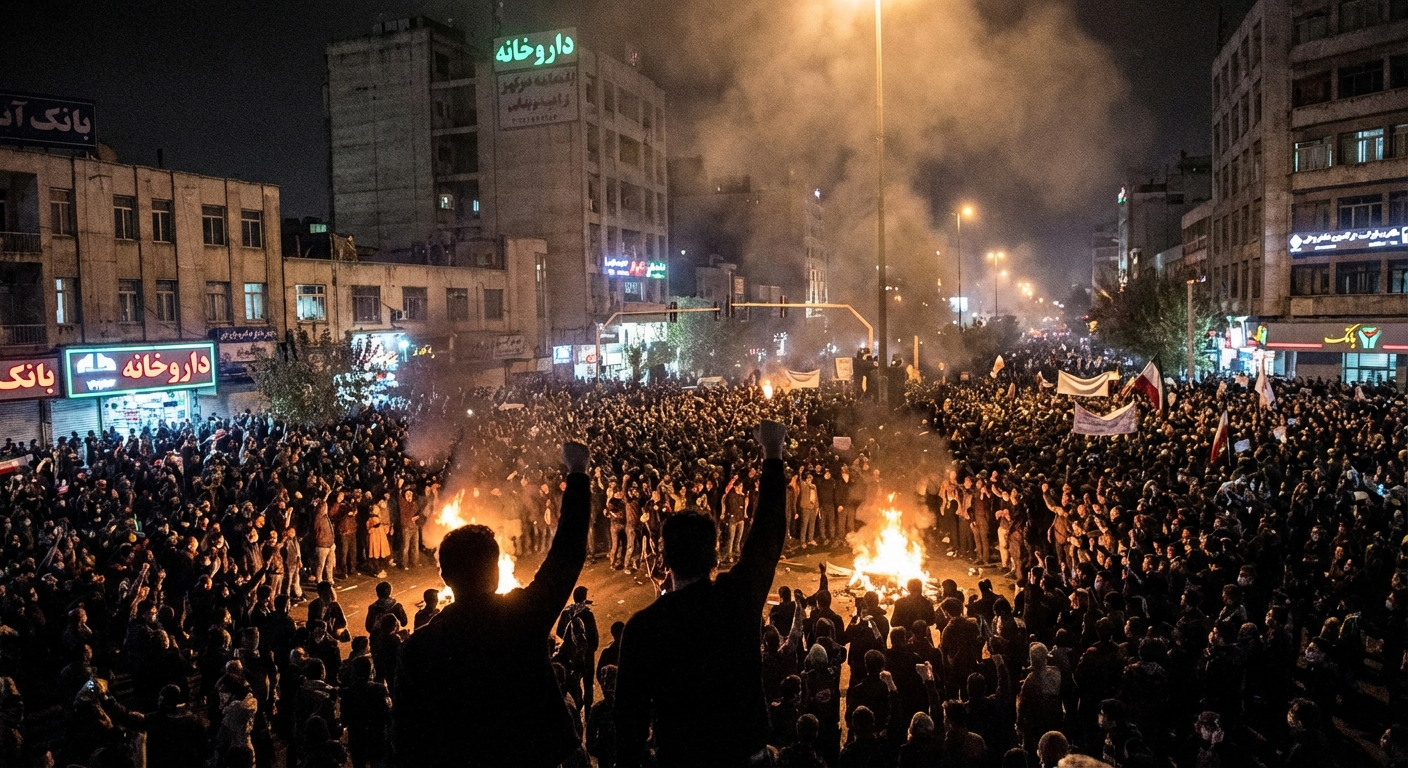
Street protests, which the government hoped to prevent, actually intensified because people couldn’t coordinate online and resorted to old-fashioned physical organizing. The blackout also destroyed trust. Citizens understood the ban for what it was: authoritarian censorship dressed up as public safety, and they responded with anger and resistance.
The Economic Collapse
The economic damage was immediate and severe. Pakistan’s digital economy, which had been growing rapidly, lost approximately $1 billion over 30 days. The IT sector, a key growth area employing hundreds of thousands, saw business evaporate overnight. Freelancers who depended on international clients through social platforms lost income entirely. Small businesses that ran primarily through WhatsApp and Instagram had their customer connections severed.
The tourism industry took a hit as international travelers, unable to access familiar platforms and communication tools, avoided Pakistan entirely. Even sectors tangentially connected to digital communication, advertising, media, logistics, felt the disruption. The government’s attempt to control political messaging cost the economy far more than any political protest could have.
The Unexpected Mental Health Experiment
Interestingly, the mental health data from the blackout was mixed and complicated. About 40% of people surveyed during and after the ban reported reduced anxiety, better sleep, and relief from the constant pressure of social media. They described the break as unexpectedly positive, a forced digital detox that improved their well-being.
But the other 60% reported increased stress, isolation, and anxiety from being cut off from their social networks and information sources. For young people especially, social media isn’t just entertainment, it’s how they maintain friendships, organize their lives, and stay informed. Removing it didn’t free them, it isolated them. The burnout epidemic among TikTok creators shows the platform has real problems, but cutting access entirely creates different ones.
The ban proved that social media is neither purely good nor purely bad. It’s infrastructure. Like electricity or running water, it creates dependencies. And suddenly cutting it off causes disruption regardless of whether the underlying technology is healthy or harmful.
Lessons Governments Don’t Want to Learn
Pakistan’s ban achieved its political goals in the very short term. Opposition organizing was disrupted during the critical election period. But the long-term costs were enormous: economic damage, international condemnation, destroyed trust, and proof that determined citizens can circumvent censorship with basic technical tools.
For other nations considering social media restrictions, whether for authoritarian control or democratic “child protection,” Pakistan’s experience offers crucial lessons. Internet censorship is expensive, it creates digital inequality, it damages your economy, and it doesn’t work as well as governments think it will. The people you want to control most, tech-savvy young people and political organizers, are exactly the people most able to bypass your restrictions.
The Bottom Line
Pakistan proved you can turn off social media. You just can’t control what happens when you do. The platforms we love to criticize, Facebook, TikTok, Instagram, have become critical infrastructure for modern life. Removing them creates chaos that extends far beyond politics or mental health into economics, social coordination, and basic communication.
For governments considering bans, the lesson is clear: the collateral damage is higher than you anticipate, the effectiveness is lower than you hope, and the people you’re trying to protect or control will find ways around your restrictions that make the whole exercise pointless. Social media has problems, real ones. But mass censorship creates more problems than it solves.
This analysis draws on Pakistan Telecommunication Authority data, economic impact assessments from business groups, VPN usage statistics from major providers, mental health surveys conducted by Pakistani universities, freelancer and business disruption reports, and political analysis of the ban’s effectiveness and consequences.
Sources: Pakistan Telecommunication Authority, NetBlocks, Reuters.