
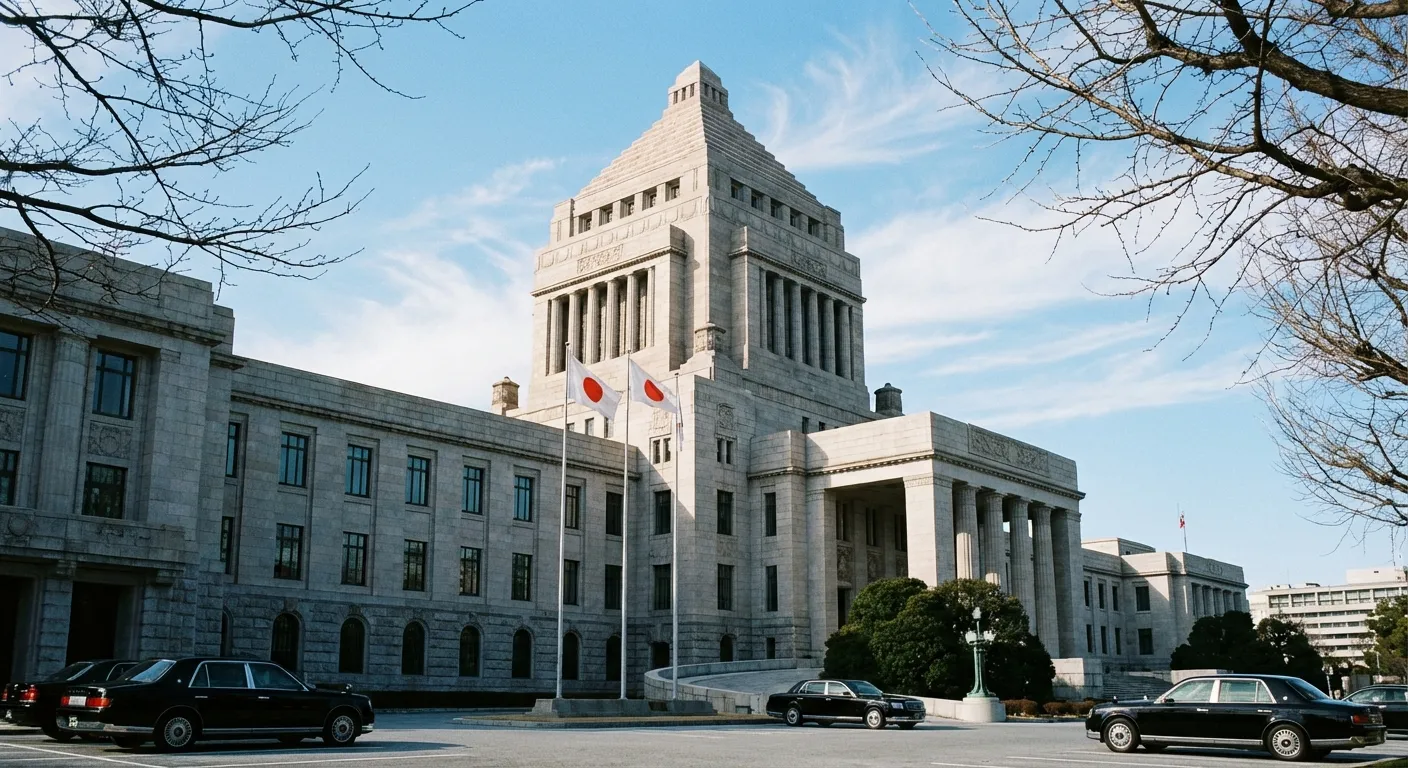
Sanae Takaichi walked into the Japanese parliament on Tuesday morning as a prime minister who had won a gamble. She walked out as one who now has to deliver on it.
Japan's parliament formally re-elected Takaichi as prime minister on February 18, a procedural step following her Liberal Democratic Party's landslide victory in the February 8 snap election. The vote was a formality, the kind of thing parliamentary democracies do to confirm what voters have already decided. But what voters decided was extraordinary. The LDP alone captured 316 seats in the 465-seat Lower House, clearing the two-thirds supermajority threshold of 310 seats and delivering the biggest single-party win since the LDP's founding in 1955.
That's not a mandate. That's a blank check. And the way Takaichi uses it over the coming months will reshape Japanese domestic policy, the U.S.-Japan alliance, and the regional security architecture in East Asia.
The Scale of the Victory
To understand what happened on February 8, you need to understand how badly it could have gone. When Takaichi called a snap election in January, she was governing with a fragile coalition of just 230 seats, a bare majority that left her dependent on the Japan Innovation Party and vulnerable to defections. Her predecessor, Shigeru Ishiba, had resigned after the LDP's worst showing in decades, and the party was still dealing with the fallout from a slush fund scandal that had driven away its longtime coalition partner, Komeito.
Takaichi bet on her 78% approval ratings and an opposition that couldn't get organized. She was right on both counts. The Centrist Reform Alliance, a hurried merger between the Constitutional Democratic Party and Komeito, collapsed spectacularly, retaining just 49 of its previous 167 combined seats. Voters were confused by the merger and unconvinced by its hastily assembled platform. The LDP, by contrast, ran a disciplined campaign emphasizing cost-of-living relief, national security, and Takaichi's personal popularity as Japan's first female prime minister.
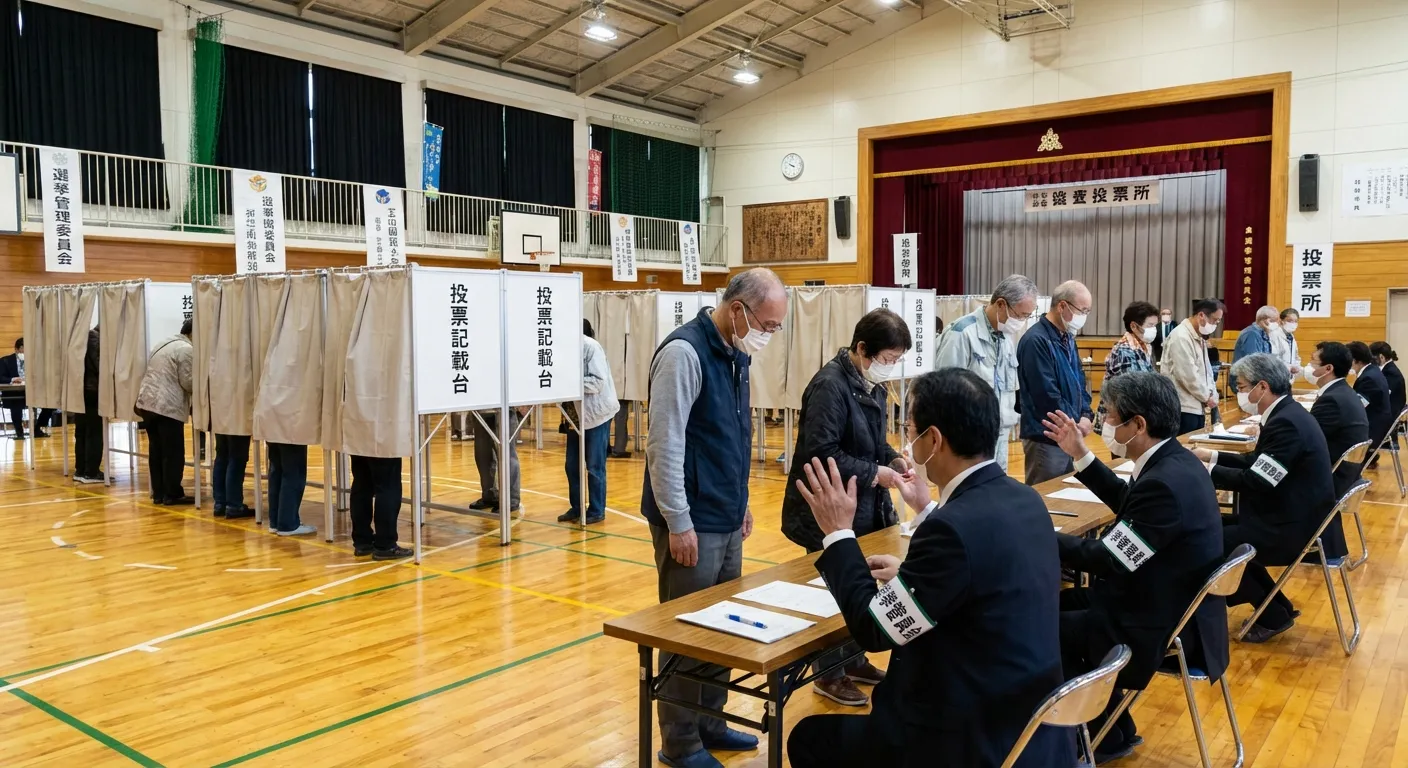
The combined LDP-Ishin coalition now holds 352 of 465 seats. With that kind of majority, Takaichi doesn't just control the legislative agenda. She can override the upper house, dominate committee positions, and, most significantly, propose amendments to Japan's constitution. That last point is the one that makes her neighbors nervous.
A Conservative Agenda With Real Teeth
Takaichi retained her entire cabinet on Tuesday, signaling continuity and confidence. But the policy agenda she's pursuing is anything but status quo. Her government has outlined an ambitious program that touches nearly every dimension of Japanese governance.
On defense and security, Takaichi has pledged to revise Japan's national security and defense policies by December, with an emphasis on strengthening military capabilities that would have been unthinkable a decade ago. The agenda includes lifting the ban on lethal weapons exports, developing nuclear-powered submarines, establishing a new intelligence agency to coordinate with the United States, Australia, and Britain, and supporting legislation targeting espionage. Japan's defense spending has been trending upward since 2022, when the government set a target of 2% of GDP, but Takaichi's supermajority removes the legislative friction that previously slowed these initiatives.
In November, Takaichi went further than any postwar Japanese leader on the Taiwan question, suggesting that Japan could take military action if China moved against the island. Beijing responded with diplomatic protests and economic pressure, but as the Brookings Institution noted in its analysis of the election, Xi Jinping's pre-election campaign to weaken Takaichi "backfired if the intention was to render her a weak leader."

On the economic front, Takaichi is pursuing what analysts have started calling "Sanaenomics," a fiscal spending approach that differs from the austerity impulses of some LDP predecessors. She's proposed a two-year freeze on the consumption tax for food products to address persistent inflation and sluggish wage growth. Economists are divided: the move would provide immediate relief to households struggling with rising prices, but Japan already carries the highest debt-to-GDP ratio in the developed world, and more fiscal stimulus could further weaken the yen and complicate the Bank of Japan's efforts to normalize monetary policy.
Takaichi's social agenda is firmly conservative. She supports maintaining the male-only line of imperial succession, opposes same-sex marriage, and has resisted civil law revisions that would allow married couples to use separate surnames. She's also tightening immigration rules, including stricter enforcement of permanent residency and naturalization requirements. These positions play well with the LDP's conservative base but put Japan at odds with the social liberalization trends in other advanced democracies.
The Trump Factor
Perhaps the most consequential item on Takaichi's near-term calendar is her March 19 summit with President Donald Trump. The meeting comes with high stakes and complex dynamics.
On one hand, Takaichi arrives with leverage that few allied leaders possess: a commanding domestic mandate, strong personal rapport with Trump, and a willingness to increase defense spending that aligns with Washington's longtime requests. Trump publicly endorsed Takaichi on the eve of the election, a rare move that both reflected and reinforced the relationship.
On the other hand, the economic agenda is thorny. Hours before Takaichi's formal reappointment on Tuesday, U.S. Commerce Secretary Howard Lutnick announced that Japan would provide capital for three projects under a $550 billion investment package pledged in October: a natural gas plant in Ohio, a crude oil export facility on the U.S. Gulf Coast, and a synthetic diamond manufacturing site, totaling $36 billion in the first batch. These investments represent the kind of tangible economic commitments that Trump values, but they also highlight the transactional nature of the relationship. Japan is essentially buying goodwill on trade, hoping that strategic investments and defense cooperation will insulate it from the tariff threats that have rattled other allies.

As Brookings analyst Mireya Solis noted, however, Trump's endorsement "provides no guarantee that Trump will have Takaichi's back when he meets with Xi." Trump's tendency to subordinate allied interests to great power negotiations means that Japan's defense investments and economic concessions could buy goodwill in bilateral talks but offer no protection when Washington recalibrates its approach to Beijing. Takaichi is betting that deepening the alliance on Trump's terms, including defense spending, intelligence sharing, and economic investment, will give Japan a seat at the table when the decisions that matter most get made.
What Changes
Takaichi's re-election formalized something that was already clear from the election results: Japan is entering a new political era. The LDP's supermajority removes the coalition compromises and legislative bottlenecks that have characterized Japanese policymaking for decades. For the first time in the postwar period, a single party has the votes to amend the constitution, reshape defense policy, and redirect economic strategy without needing to negotiate with coalition partners or cross-party blocs.
Whether that concentration of power produces bold reform or overreach depends entirely on execution. Japan faces severe demographic headwinds, including an aging population and a shrinking workforce that threaten the pension system, healthcare infrastructure, and long-term economic growth. The country's population challenges are structural, not political, and no supermajority can legislate its way out of a declining birth rate.
The rise of non-traditional parties also signals continuing voter frustration beneath the LDP's headline numbers. Sanseito, a nationalist party, expanded to 15 seats. Mirai, a new party, won 11 seats in its first election. These parties draw from voters who want something more radical than what the LDP offers, a dynamic that could constrain Takaichi if her economic promises don't translate into tangible improvements in daily life.
For Japan's neighbors, the message from February 18 is straightforward: the country's most powerful leader in a generation has the votes, the mandate, and the stated intention to pursue a more assertive foreign and defense policy than anything Japan has attempted since 1945. Whether that assertiveness produces stability or friction in the region will depend on how Takaichi balances ambition with the diplomatic nuance that the current moment demands.
Sources
- Takaichi reelected as Japan's prime minister with a goal of pushing to the right - Associated Press
- Japan's thunderbolt election: Takaichi resets politics, economics, and diplomacy - Brookings Institution
- Japan's Takaichi secures historic supermajority in landslide election victory - CNN
- What's Next for Japan After PM Takaichi's Historic Election Victory - Stanford FSI