
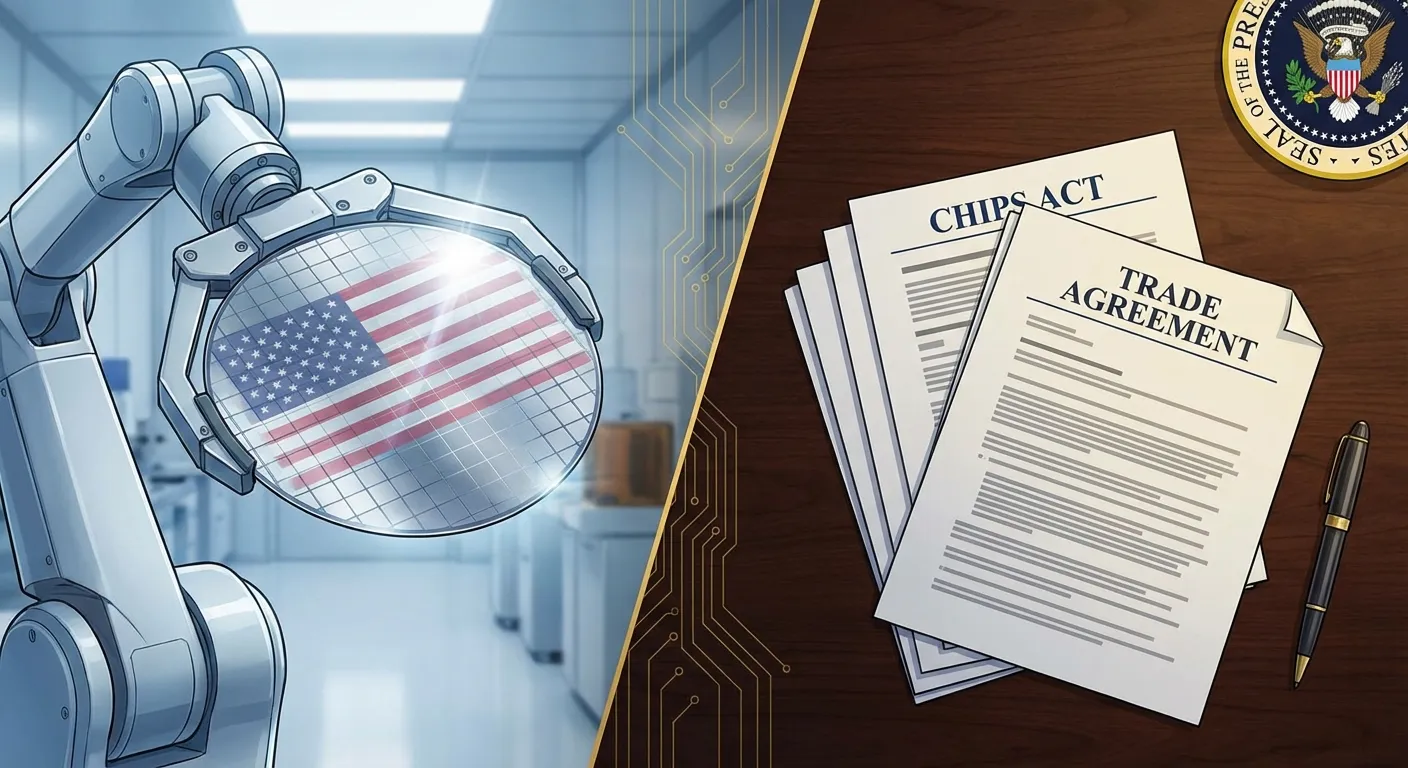
The Trump administration is preparing its next wave of semiconductor tariffs, and they come with a notable exception: Amazon, Google, and Microsoft won't have to pay them.
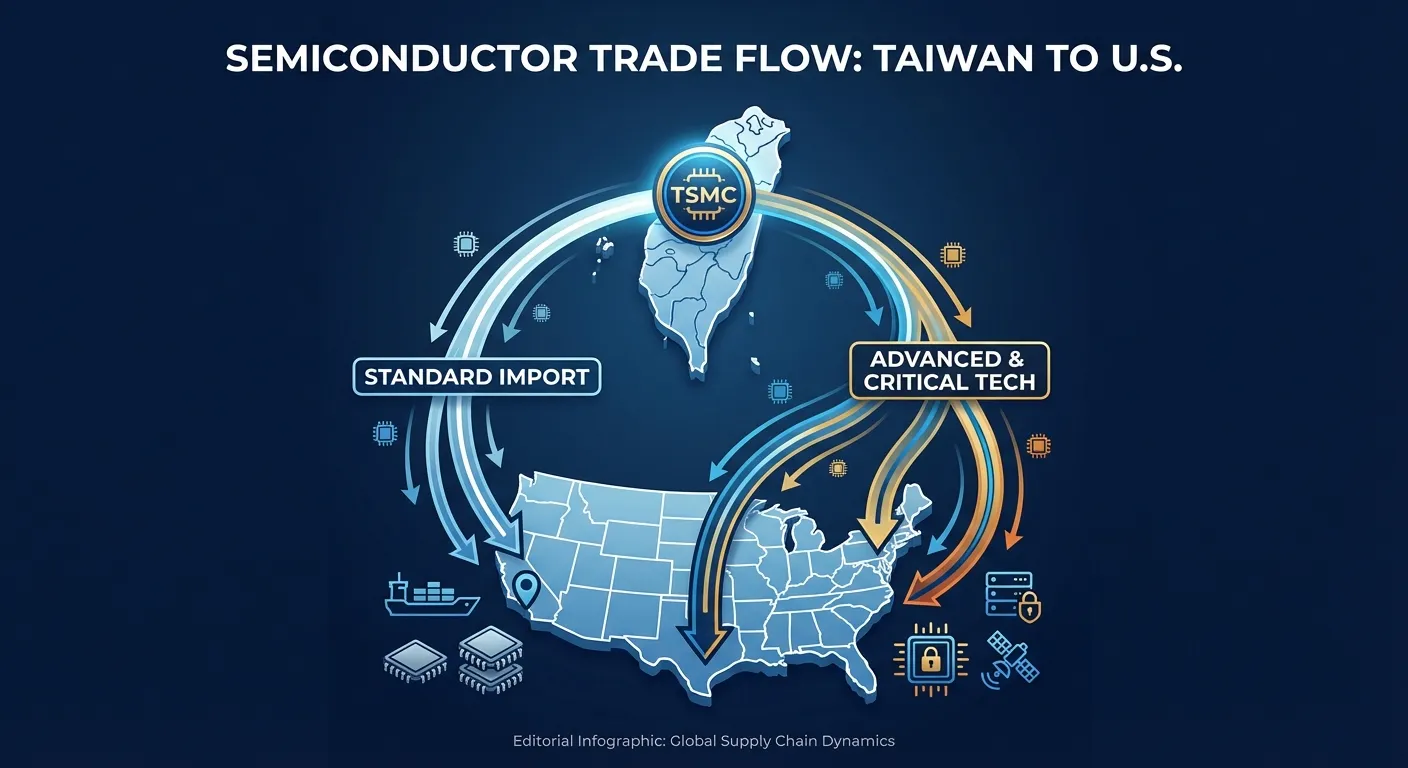
According to a Financial Times report confirmed by multiple outlets, the Commerce Department is building an exemption framework that would shield the country's largest cloud and AI companies from higher chip costs even as tariffs are imposed on the broader semiconductor market. The exemptions are directly tied to Taiwan Semiconductor Manufacturing Company's $165 billion investment in Arizona factories, creating a system where TSMC effectively earns tariff-free import credits by building American manufacturing capacity, then passes those credits to its biggest U.S. customers.
The plans are still evolving. White House officials told the Financial Times that they haven't been signed by the president, and administration insiders say they're scrutinizing the framework to ensure it doesn't become "a giveaway to TSMC." But the contours of the deal reveal a fundamental tension in the administration's trade policy: the desire to use tariffs as economic leverage versus the reality that America's AI ambitions depend on chips made overseas.
How the Exemption Would Work
The mechanism is more sophisticated than a simple carve-out. Under the U.S.-Taiwan trade agreement signed earlier this year, Taiwanese companies investing in American manufacturing receive tariff relief proportional to their planned domestic production capacity.
For TSMC specifically, the math works like this: during the construction phase of new fabrication plants, the company can import up to 2.5 times the planned capacity of those facilities tariff-free. For existing U.S. plants that are already operational, the import allowance drops to 1.5 times current capacity. Those earned exemptions can then be passed through to TSMC's American customers, which happen to be the biggest names in tech.
Amazon, Google, and Microsoft are TSMC's largest U.S. customers for the advanced chips powering their AI data centers. All three companies are designing custom silicon that TSMC manufactures, from Google's Tensor Processing Units to Amazon's Trainium and Graviton chips to Microsoft's Maia accelerators. Under this framework, the chips flowing from TSMC's Taiwan fabs to these hyperscalers would effectively dodge the tariffs that competitors and smaller companies would have to absorb.
The broader U.S.-Taiwan trade deal caps tariffs on Taiwanese goods at 15%, reduced from a proposed 20%, and includes commitments from Taiwanese firms to invest $250 billion directly in U.S. operations across semiconductors, AI, and related sectors. An additional $250 billion in credit guarantees aims to strengthen supply chain resilience. It's the most significant bilateral trade agreement of the Trump administration's second term, and semiconductors are its centerpiece.
Why TSMC's Arizona Bet Is Central to Everything
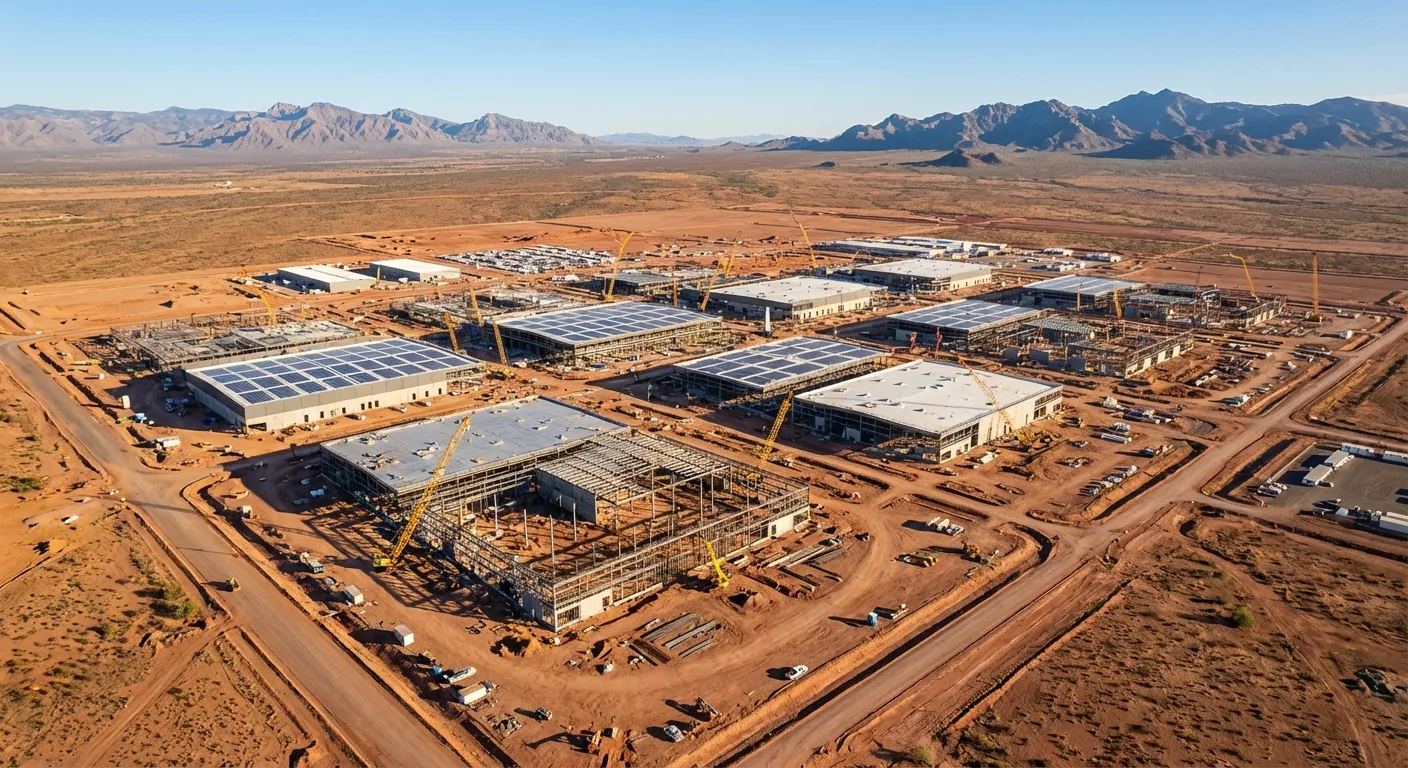
TSMC's $165 billion Arizona commitment, which includes an extra $100 billion announced in March 2025 on top of an earlier $65 billion pledge, is transforming the American semiconductor landscape. The full buildout envisions roughly 11 fabrication plants plus two advanced packaging facilities and a research and development center. It would make Arizona the largest concentration of advanced chipmaking capacity outside of Taiwan and South Korea.
The production timeline has also accelerated. TSMC moved up the start date for its second Arizona plant to the second half of 2027, and construction on a third facility is ramping up this year. The first plant, which produces chips using TSMC's N4 process technology, is already operational and reportedly achieving yield rates competitive with the company's Taiwan operations, a milestone that defied skeptics who questioned whether advanced chipmaking could work on American soil.
For the Trump administration, TSMC's Arizona expansion is both an industrial policy achievement and a political talking point. The original CHIPS Act investment, signed by President Biden, seeded the project, but the current administration has aggressively expanded the incentive framework to accelerate construction and broaden TSMC's U.S. footprint. Tying tariff exemptions to manufacturing investment creates a direct incentive: the more TSMC builds in America, the more tariff-free chips it can import during the transition period.
The Political Contradiction
The exemption plan exposes a contradiction that critics on both sides of the aisle are already flagging. The administration has positioned tariffs as a tool to protect American workers and penalize countries that undercut U.S. manufacturing. But exempting the largest, most profitable companies in the world from those same tariffs while smaller firms pay the full rate sends a different message.
A semiconductor startup designing chips for industrial applications, an automotive company sourcing processors for its vehicles, or a mid-sized data center operator buying networking equipment would all face the full tariff burden. Amazon, with a market capitalization exceeding $2.5 trillion, would not. The optics are uncomfortable regardless of the policy rationale.
Administration officials have defended the approach by arguing that the exemptions are investment-linked, not company-linked. Any firm purchasing chips from TSMC can theoretically benefit from the manufacturer's earned credits. But in practice, the hyperscalers dominate TSMC's advanced node capacity so thoroughly that the exemptions functionally flow to three or four companies. TSMC's most advanced chips, the ones built on its 3-nanometer and 2-nanometer processes, are produced almost exclusively for Apple, Nvidia, AMD, Amazon, Google, and Microsoft.
The January tariff precedent also complicates the narrative. The administration already imposed 25% tariffs on a narrow category of chips that AMD and Nvidia re-export to China. Those tariffs were framed as a national security measure targeting China's AI capabilities. The new exemption framework, by contrast, appears designed primarily as an economic incentive to encourage domestic manufacturing investment, a meaningfully different policy objective that muddies the strategic clarity of the overall semiconductor tariff posture.
What This Means for AI Competition
The practical effect of the exemption framework is that America's largest AI companies will be able to build out their infrastructure at lower cost than virtually any competitor, both domestic and international.
That's not necessarily bad for American AI competitiveness. The hyperscalers are the primary engines of frontier AI development, and keeping their costs manageable during a period of unprecedented infrastructure spending could help maintain the U.S. lead over China in advanced AI capabilities. The tariffs on re-exported chips to China, combined with cost advantages for domestic AI builders, create a two-pronged approach: raise the cost of AI development for adversaries while lowering it for allies.
But the exemptions also entrench the dominance of companies that are already the most powerful players in the technology industry. Smaller AI companies, including the wave of well-funded startups that have raised billions in venture capital over the past two years, would face higher chip costs without the scale or TSMC relationships to access exemptions. The policy could inadvertently consolidate the AI industry further, making it even harder for new entrants to compete with the hyperscalers on infrastructure costs.

What Happens Next
The exemption framework remains unsigned, and several variables could change its final form. Congressional scrutiny is likely, particularly from lawmakers who have championed tariffs as a tool for manufacturing revival and may view Big Tech exemptions as undermining that mission. Industry lobbying is already intensifying, with semiconductor trade groups pushing for broader exemptions and domestic manufacturers arguing for protection.
The timeline for the broader semiconductor tariffs themselves remains unclear. The administration has signaled they're coming but hasn't specified rates or implementation dates for the general tariff schedule. The U.S.-Taiwan trade agreement provides the template for exemptions, but the base tariff rate and the scope of covered products will determine how much the exemptions actually matter.
TSMC's construction timeline in Arizona will also affect the exemption math. As more domestic capacity comes online, the ratio of tariff-free imports to domestic production shifts, eventually reducing the need for exemptions altogether. That's the stated long-term goal: a future where enough advanced chips are made in America that tariffs on imports become less economically significant. Whether that future arrives in five years or fifteen depends on construction schedules, yield rates, and the pace of demand growth, all of which remain uncertain.
For now, the plan tells a clear story about the administration's priorities. AI infrastructure matters more than tariff consistency. Big Tech's role in building that infrastructure gives it leverage that smaller companies don't have. And TSMC, the Taiwanese company that manufactures the vast majority of the world's most advanced chips, has become the single most important variable in American trade policy, industrial strategy, and AI competitiveness simultaneously.
Sources
- Trump Weighs Broad Chip Tariffs But Plans To Shield Big Tech Companies Through TSMC-Linked Exemptions - Benzinga
- US Exempts Big Tech from Upcoming Chip Tariffs: Key Insights - Global Banking & Finance Review
- U.S. government plans tariff exemptions for TSMC - Tom's Hardware
- TSMC is set to expand its $165 billion U.S. investment - CNBC