
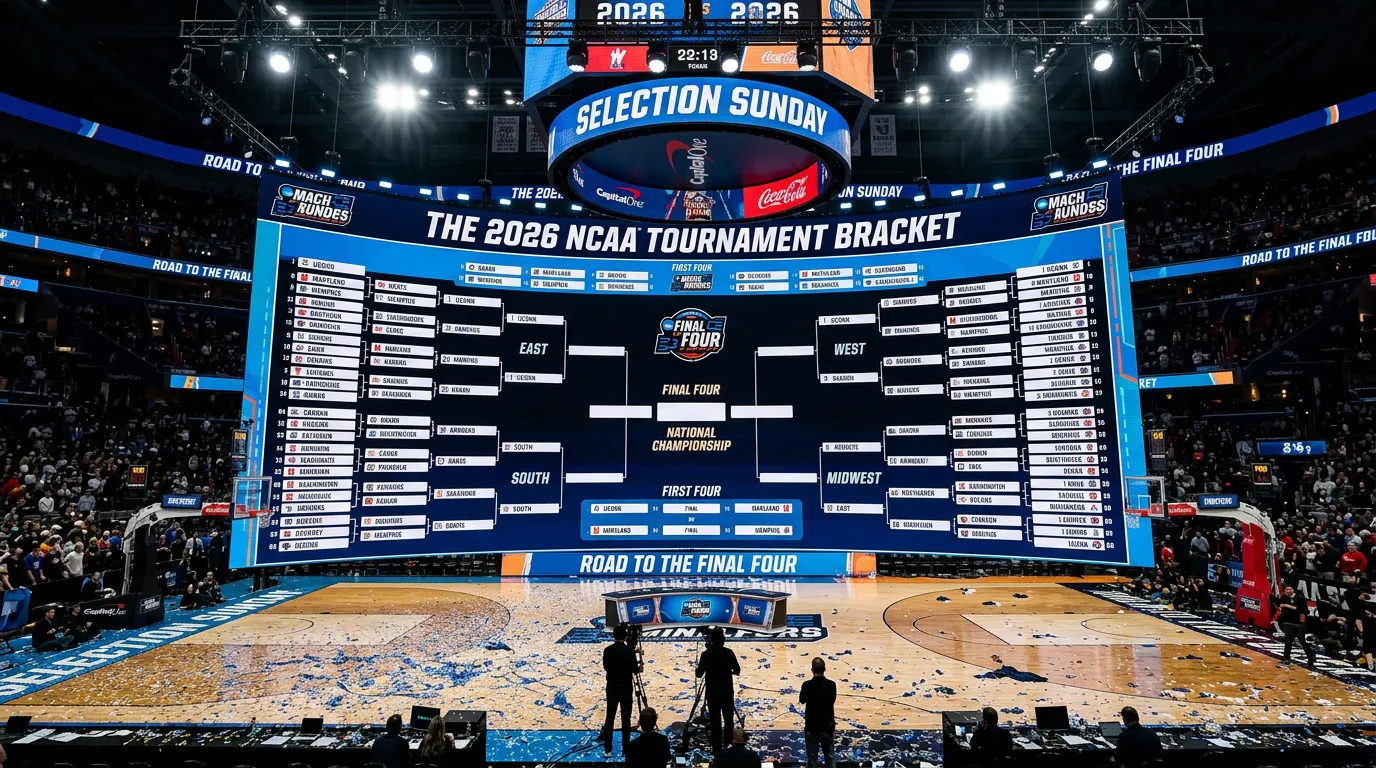
Sixty-eight teams. Four regions. One trophy. The 2026 NCAA Tournament begins tonight in Dayton, Ohio, where four First Four games over the next two evenings will trim the field to 64 before the real carnage starts Thursday. If you filled out your bracket during your lunch break today, you are not alone. An estimated 60 million Americans will submit picks this week, wagering pride, office bragging rights, and (for the growing number who cannot resist the sportsbook apps) real money on a tournament that historically punishes confidence and rewards chaos.
This year's bracket arrived Sunday night with a familiar name at the top: Duke, the No. 1 overall seed, led by Cameron Boozer, the 6-foot-10 freshman who is averaging 22.7 points and 10.2 rebounds per game while shooting 41% from three-point range. The Blue Devils finished 32-2 and won the ACC Tournament, earning the top line in the East Region. But the committee also handed No. 1 seeds to Arizona (32-2, West), Michigan (31-3, Midwest), and defending national champion Florida (26-7, South), setting up a tournament where four legitimate title contenders sit at the top of four stacked regions, and where at least a dozen teams below them believe they can win six games and cut down the nets in Indianapolis on April 6.
The 2026 bracket is deep, dangerous, and unusually balanced. Here is what you need to know before the balls go up tonight.
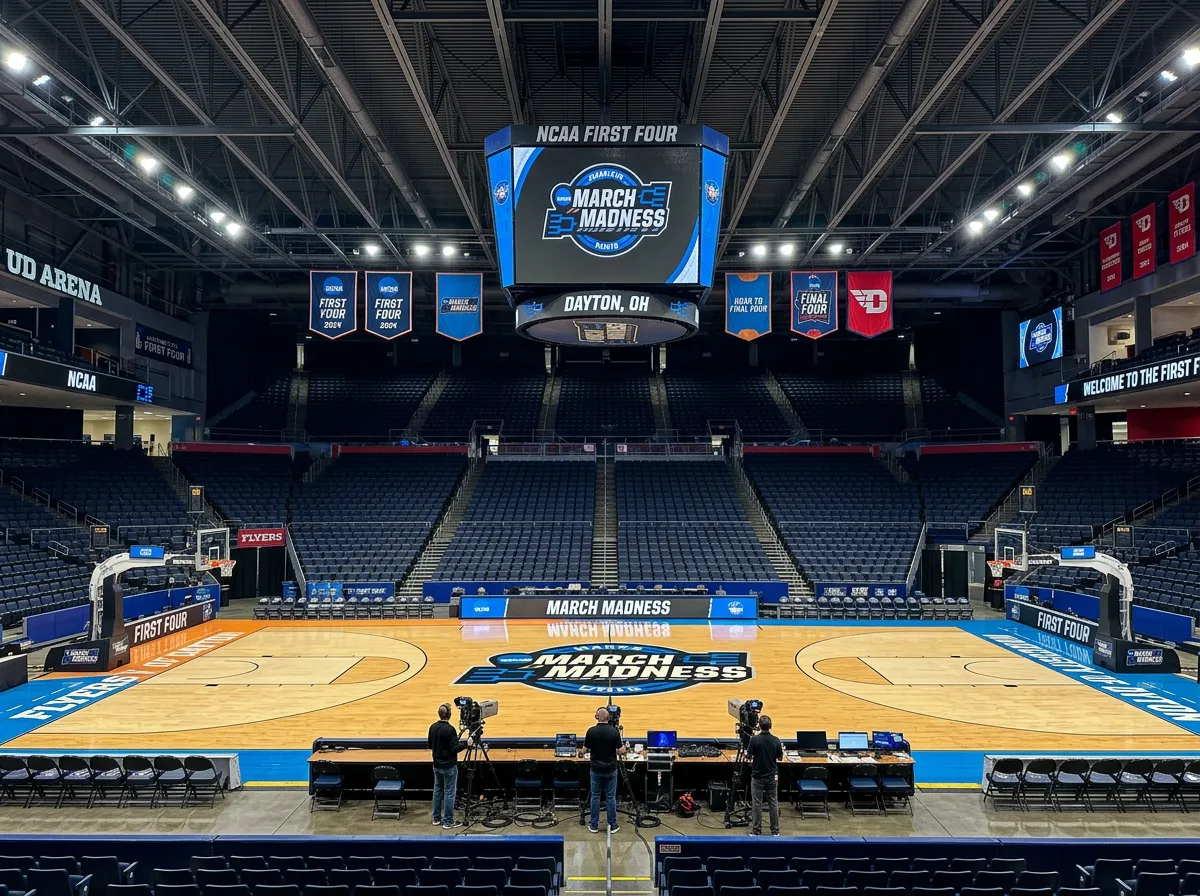
The First Four: What Tips Off in Dayton Tonight
The action begins at 6:40 p.m. ET on truTV, when No. 16 UMBC faces No. 16 Howard for the right to play Michigan in the Midwest Region's first round. UMBC made history in 2018 as the first 16-seed to beat a 1-seed, knocking off Virginia in a moment that still haunts Cavaliers fans. Howard, the MEAC champion, brings a 23-11 record and the tournament's most compelling story in freshman guard Jaylen Okafor, whose father played for the Bison in the mid-2000s.
At 9:15 p.m. ET, No. 11 Texas takes on No. 11 NC State in a game with far higher stakes. The winner lands in the West Region and a first-round date with No. 6 BYU, a beatable draw that could launch a run to the second weekend. Texas, the one-time Big 12 power now rebuilding in the SEC, limped into the tournament with three losses in its final five games. NC State, by contrast, caught fire in the ACC Tournament and enters Dayton with the kind of momentum that made them a Sweet 16 team two years ago.
Wednesday's card opens with No. 16 Prairie View A&M against No. 16 Lehigh at 6:40 p.m. ET, followed by No. 11 Miami (Ohio) versus No. 11 SMU at 9:15 p.m. ET. The Miami-SMU winner draws No. 6 Tennessee in the Midwest, a matchup that could produce one of the tournament's best first-round games.
Duke and Cameron Boozer: The Bracket's Headliner
Duke's path through the East Region starts Thursday against No. 16 Siena in Greenville, South Carolina, and the Blue Devils are expected to handle their first two games without much drama. The drama, if it comes, waits in the Sweet 16 and beyond, where No. 4 Kansas or No. 5 St. John's could test Duke's depth, and where No. 2 UConn (29-5) lurks as the most dangerous potential Elite Eight opponent.
Cameron Boozer is the reason Duke sits atop the entire field. The ACC Player of the Year and Freshman of the Year is the frontrunner for National Player of the Year honors and is on pace to finish the season with the highest offensive rating in KenPom history, dating back to the 2003-04 season. He does not just score. He shoots .400 from three on 3.7 attempts per game, a combination of volume and efficiency that college basketball has rarely seen from a freshman big man. CBS Sports analyst Clark Kellogg called Boozer "the most complete freshman since Anthony Davis" during the Selection Sunday broadcast, a comparison that carries weight given what Davis did in leading Kentucky to the 2012 national title.
Duke head coach Jon Scheyer, now in his fourth year, built this roster around Boozer but gave him enough support to prevent the kind of one-man-band vulnerability that dooms top seeds in March. Guard Tyrese Proctor runs the offense with the composure of a senior. Wing Kon Knueppel spaces the floor. The Blue Devils rank third nationally in adjusted defensive efficiency, a stat that matters far more than scoring average when tournament games tighten in the final ten minutes.
Arizona, Michigan, and Florida: The Other Top Seeds
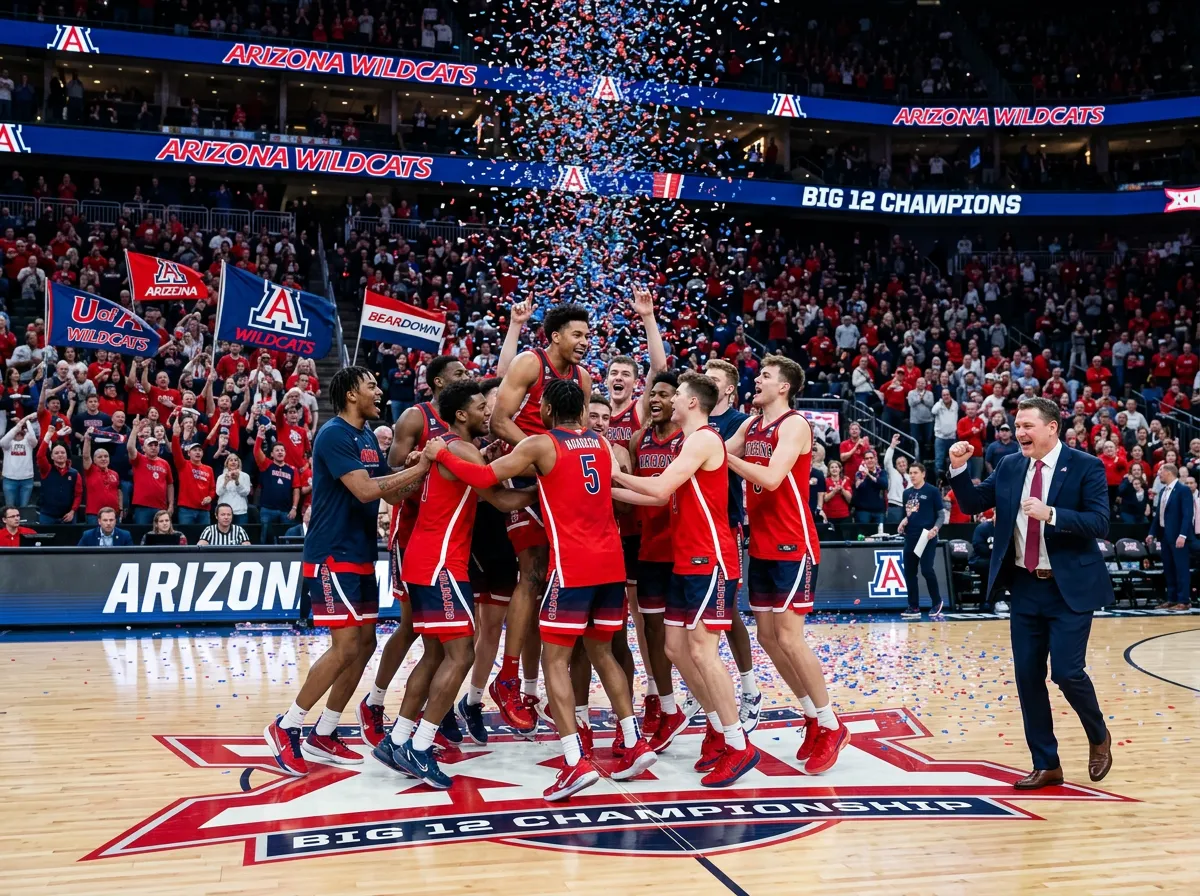
Arizona (32-2) enters the West Region riding a nine-game winning streak after beating Houston 79-74 in the Big 12 Tournament championship. Head coach Tommy Lloyd has built the Wildcats into a program that wins with length, switching defense, and Koa Peat, the 6-foot-8 freshman forward who gives Arizona a second scoring option to complement senior guard Caleb Love. The Wildcats won the Big 12 regular season and tournament titles, sweeping both for the first time in program history. Their bracket includes No. 2 Purdue (27-8), No. 3 Gonzaga (30-3), and No. 4 Arkansas (26-8), making the West arguably the toughest region top to bottom.
Michigan (31-3) claimed the Midwest's top seed despite losing to Purdue in the Big Ten Tournament final. The Wolverines have the tournament's most balanced roster, with five players averaging between 11 and 16 points per game. No. 2 Iowa State (27-7) and No. 3 Virginia (29-5) headline the bottom half of their region. Virginia, which lost in the first round last year, brings a suffocating defensive system that historically translates well to tournament play, where possessions become more valuable and pace slows to a grind.
Florida (26-7) enters as the defending national champion and No. 1 seed in the South, though their seven losses give them the weakest resume among the top seeds. The Gators rallied from a shaky early season to reel off an 11-game winning streak late in SEC play, and their frontcourt depth makes them a nightmare matchup for smaller lineups. The South Region's biggest threat to Florida sits two rounds away: No. 2 Houston (28-6) could force a de facto road game for the Gators if both teams reach the Sweet 16 at Houston's home Toyota Center.
Cinderellas and Sleepers: The Mid-Majors to Watch
Every March produces at least one team that nobody outside its conference picked to win two games. This year's bracket has several candidates, starting with No. 13 Hofstra (24-10), which faces No. 4 Alabama in the Midwest Region. Hofstra is coached by Speedy Claxton, the former NBA point guard and program alumnus who guided the Pride to the CAA title. Alabama (23-9) has the talent to reach the second weekend but also has the defensive lapses to lose to a disciplined mid-major that controls tempo and makes free throws.
No. 11 VCU is a popular upset pick over No. 6 North Carolina in the South Region. The Rams have lost just one game in their last two months of play, an Atlantic 10 run that included wins over Saint Louis and Dayton on the road. North Carolina, meanwhile, will be without star freshman Caleb Wilson for the tournament, a blow that strips the Tar Heels of their most dynamic scorer and makes their path through the opening weekend significantly harder. ESPN bracketologist Joe Lunardi flagged this as the most likely 6-11 upset on the board during his Selection Sunday analysis.
Other potential bracket-busters include No. 12 High Point, which drew No. 5 Wisconsin in the West, and No. 10 Santa Clara, which faces No. 7 Kentucky in the Midwest. Santa Clara finished 26-7 and broke through to the tournament for the first time since 1996, bringing a three-point shooting attack that ranked 12th nationally. Since the field expanded to 64 teams in 1985, there have been 250 instances of a double-digit seed winning its first-round game. At least one 13-seed has won in 28 of the last 40 tournaments, a stat that should make Alabama, Kansas, Nebraska, and Arkansas fans nervous as they fill in their brackets today.
Nebraska's Historic Drought and the South's Toughest Tests
No. 4 Nebraska (26-6) carries one of the more unusual storylines into the tournament: the Cornhuskers have never won an NCAA Tournament game. Not once. Not in any era. Fred Hoiberg's team earned its highest seed in program history and opens against No. 13 Troy, a Sun Belt champion that beat San Diego State on the road during the regular season. A loss would extend the drought into another decade. A win would be program-altering, the kind of moment that shifts recruiting conversations and fan expectations permanently.
The South Region also includes No. 5 Vanderbilt, which has not won a tournament game since 2012, and No. 7 Saint Mary's, whose first-round matchup with No. 10 Texas A&M pits two of the nation's most methodical offenses against each other in what could be the lowest-scoring game of the first round. The region's construction puts Florida and Houston on a collision course in the Sweet 16, a potential matchup between the defending champion and a program that has reached the Final Four in two of the past four tournaments. For Florida head coach Todd Golden, the path to a repeat could run through one of the most hostile environments in college basketball.
This kind of geographic disadvantage historically translates into measurable performance gaps, particularly in single-elimination settings where crowd energy compounds the pressure of tight games. Houston playing a de facto home game in the Sweet 16 is not a neutral-court matchup no matter what the NCAA calls it.
Why 2026 Could Be the Most Unpredictable Tournament in Years
The overall seed list released by the committee reveals just how compressed the talent gap is this year. The top 16 seeds range from Duke at 32-2 down to Arkansas at 26-8, with seven teams carrying at least 27 wins. Historically, a bracket this tightly packed produces more upsets in the first two rounds because the gap between a 4-seed and a 13-seed is smaller than usual. KenPom's adjusted efficiency margin between the average 4-seed and the average 13-seed this year is 7.2 points, the narrowest since 2014, a tournament that produced three double-digit seeds in the Sweet 16.
Conference realignment has also reshaped the tournament in ways that are still being understood. Arizona and Houston play in the Big 12. Texas is in the SEC. The ACC has Duke and Louisville but lost several programs to other leagues over the past two years. The result is a selection process where traditional conference hierarchies matter less, and where committee members relied more heavily on advanced metrics and quality-win profiles than on league affiliations. Andy Katz of NCAA.com reported Sunday that the committee spent significant time debating the final four at-large spots, eventually choosing SMU, South Florida, NC State, and Miami (Ohio) over bubble teams from the Big Ten and Big East.
The tournament's growing reach also continues to reshape the economics of college basketball. This year's broadcast deal, split between CBS, TNT, TBS, and truTV, pays the NCAA $1.1 billion annually, a figure that dwarfs the revenue from any other college sporting event. That money filters down to conferences and schools, funding scholarships, facility upgrades, and the rapidly expanding infrastructure of women's college athletics. March Madness is not just a basketball tournament. It is the financial engine that powers college sports in America.
What to Watch
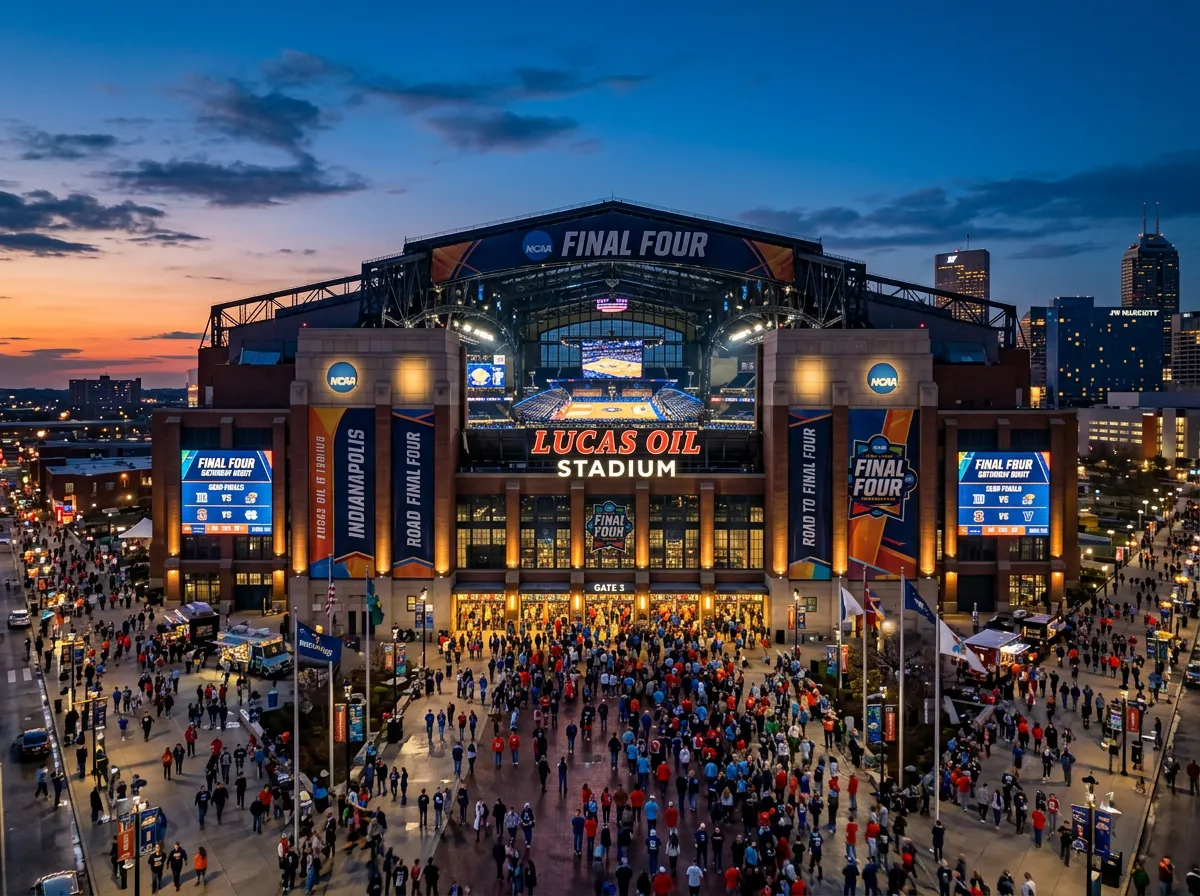
Tonight's First Four games set the table, but the real tournament begins Thursday with 16 first-round games across four venues. The key matchups to circle: Duke vs. Siena (Thursday, CBS), VCU vs. North Carolina (Thursday, TNT, 6:50 p.m. ET), Alabama vs. Hofstra (Thursday, TBS), and Houston vs. Idaho (Thursday, truTV, 10:10 p.m. ET). By Saturday night, the field will be cut to 32, and the bracket will start to reveal whether this is Duke's tournament to lose or whether one of the sleepers lurking in the double-digit seeds can produce the kind of run that makes March the most compelling month in American sports.
The numbers favor chalk. No. 1 seeds have won 28 of 39 national championships since the field expanded in 1985. But six double-digit seeds have reached the Final Four in that span, and three of them got there in the last decade. This bracket, with its tight efficiency margins, its wounded blue bloods (North Carolina without Wilson, Alabama's defensive inconsistency), and its confident mid-majors, has the ingredients for a tournament that rewards the bold.
Fill out your bracket. Trust your gut on at least one 12-over-5 upset. And clear your Thursday and Friday schedules, because the first two days of March Madness remain the best 48 hours in sports. Tip-off is at 6:40 p.m. ET.
Sources
- NCAA Tournament Tip Times and First Four/First Round Teams - NCAA.com
- March Madness 2026 Bracket: Duke as No. 1 Overall Seed - Yahoo Sports
- 2026 NCAA Tournament Seeds 1-68 Revealed by Committee - CBS Sports
- Joe Lunardi's Ultimate Guide to Men's March Madness 2026 - ESPN
- Breaking Down the 2026 Men's NCAA Tournament Bracket - The Ringer