
The NHL's trade deadline clock hits 3 PM Eastern on Friday, and the final hours of deal-making have already produced moves that will define the second half of the season. Colorado parted with a top-10 protected first-round pick to land Nicolas Roy from Toronto. The Anaheim Ducks acquired John Carlson from Washington in the early morning hours. Edmonton bolstered its depth by grabbing Connor Murphy, Jason Dickinson, and Colton Dach from Chicago. And the Buffalo Sabres, whose aggressive pre-deadline posturing we detailed yesterday, added defensemen Logan Stanley and Luke Schenn from Winnipeg as part of their franchise-altering bet on ending a 15-year playoff drought. With Trocheck, Robert Thomas, and Steven Stamkos still potentially on the board as the final minutes tick down, this deadline is shaping up as the most consequential since 2020.
The deals completed so far reveal a market where contenders are paying premium prices for targeted upgrades, sellers are extracting significant future assets, and a handful of franchises are making bets that will look either brilliant or catastrophic by June. Here is what the final slate of deals tells us about the teams that are all-in, the teams that are cashing out, and the cap gymnastics that made it all possible.
Colorado's Roy Gamble: Paying First-Round Prices for a Second-Line Center
The headline deal of the deadline, at least until the final-hour frenzy, is Colorado's acquisition of Nicolas Roy from the Maple Leafs. The Avalanche sent a top-10 protected first-round pick in the 2027 draft and a conditional fifth-round pick in 2026 to Toronto for the 28-year-old center, a price that has drawn mixed reactions from analysts and scouts.
Roy is a solid two-way center who provides exactly what Colorado needs: size, faceoff ability, and defensive reliability down the middle of the ice. He has 14 goals and 22 assists this season in Toronto, playing primarily in a second-line role. His 54.2% faceoff win rate ranks in the top 20 among qualifying centers leaguewide, and his defensive impact metrics, particularly his expected goals against per 60, grade out as above average. For an Avalanche team that has relied heavily on Nathan MacKinnon's line for offense, Roy gives them a legitimate second scoring threat that can also be trusted in defensive-zone starts and on the penalty kill.
The price, though, is steep. A conditional first-round pick for a player with one year of team control remaining reflects a market where the supply of quality centers was thin and the demand was intense. Colorado's front office clearly decided that this is a championship-or-bust season, and that the difference between a second-round exit and a deep playoff run could come down to exactly the kind of center-ice depth Roy provides.
"We've been building toward this for three years," Avalanche general manager Chris MacFarland said in a conference call with reporters Friday morning. "Nicolas gives us the center depth we need to compete against any team in a seven-game series. That was worth the investment."

The Cap Space Math: Who Got the Best Value Per Dollar
The most instructive way to evaluate deadline deals is not through the lens of star power but through cap efficiency: how much additional wins-above-replacement did each team acquire per dollar of cap space committed? This analysis separates the smart moves from the splashy ones.
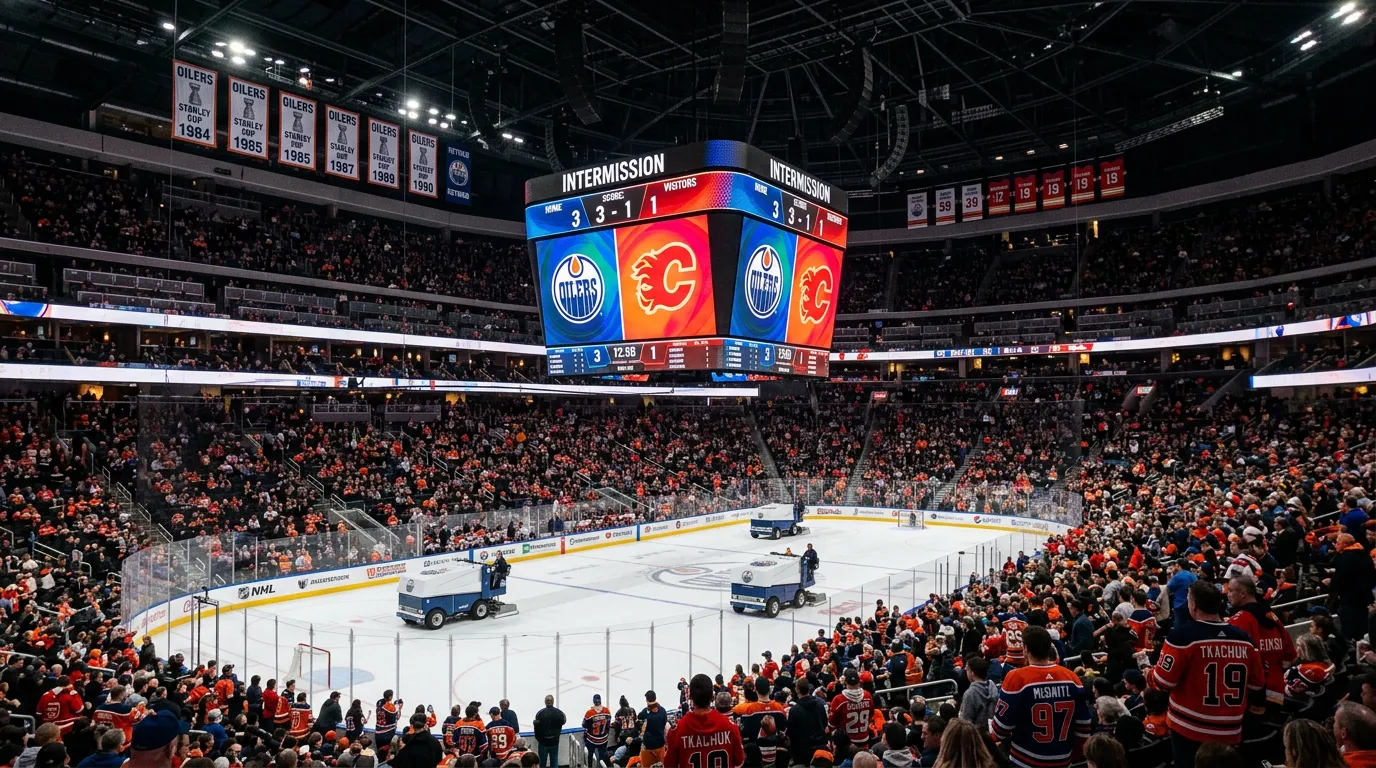
Edmonton's three-player acquisition from Chicago stands out as the best value deal of the deadline. Connor Murphy, Jason Dickinson, and Colton Dach combine for approximately $7.8 million in cap hit, but only Murphy carries significant salary, and his $3.85 million is fully reasonable for a third-pairing defenseman who can play up in the lineup during injuries. The Oilers sent back a single second-round pick in 2028, meaning they added three NHL-caliber bodies for minimal future cost. Murphy's defensive metrics have been strong all season, Dickinson provides penalty-killing depth, and Dach is a low-risk upside play who could develop into a useful middle-six forward. The package addresses Edmonton's depth concerns without mortgaging the future.
Compare that to Anaheim's acquisition of John Carlson from Washington. Carlson is 35, carries a $5.5 million cap hit, and his production has declined significantly from his peak years. The Ducks sent a conditional first-round pick in 2026 and a third-round pick in 2027, which is an enormous price for a player whose best days are behind him. The deal makes sense only if you view it through the lens of Anaheim trying to create a veteran presence for its young defensemen, a mentorship premium rather than a performance one. On pure cap efficiency, it grades poorly.
Columbus's acquisition of Connor Garland from Vancouver falls in the middle. Garland is a feisty, productive winger who brings energy and secondary scoring, and the price of a 2028 second and a 2026 third is fair for a player with term remaining on his deal. The Blue Jackets are not contending this season, so the acquisition is about building for next year and beyond, which changes the value calculation.
The Rangers' Fire Sale Reaches Its Final Act
New York's teardown, which began in February with the Panarin trade, entered its concluding chapter this week. With Trocheck still technically available as the clock ticks toward 3 PM, the Rangers have already stripped their roster of nearly every tradeable asset acquired during their competitive window. The total haul of picks and prospects accumulated through the deadline is significant: multiple first-round picks, several high-end prospects, and enough draft capital to accelerate a rebuild that most analysts expected to take three to four years.
The question for Rangers general manager Chris Drury is whether the Trocheck trade, if it happens in the final hours, yields the kind of return that justifies holding him this long. Every day that Trocheck remained on the roster was a day his value theoretically increased as buyer urgency intensified. But it was also a day of risk, because an injury would have eliminated the return entirely. ESPN's Greg Wyshynski reported that Trocheck's 12-team no-trade list has complicated negotiations, limiting the buyer pool and potentially suppressing the price below what the Rangers had hoped to extract.
Minnesota remains the front-runner for Trocheck, with the Wild's combination of cap space, prospect depth, and positional need making them the most natural fit. If the deal closes before 3 PM, it will cap a Rangers deadline that, in total, returned more future value than any single-team sell-off since Ottawa's teardown in 2018.

The Sabres' Bet Against 15 Years of Failure
No team at this deadline has more riding on the next three months than Buffalo. The Sabres have not made the playoffs since 2011, the longest active drought in the NHL, and this season's push represents a deliberate organizational decision to spend draft capital and cap space to end that streak. The additions of Logan Stanley and Luke Schenn from Winnipeg give Buffalo two physical, playoff-experienced defensemen who address the team's greatest weakness: a blue line that ranks 25th in expected goals against per 60 at five-on-five.
Stanley, at 6-foot-7, brings a physical dimension that Buffalo's defense has lacked. Schenn, at 35, is a veteran whose playoff resume includes deep runs with Tampa Bay and Vancouver. Neither player transforms the Sabres into a contender by himself, but combined with the earlier additions this season, they represent the most aggressive deadline spending in franchise history.
The risk is real. If Buffalo misses the playoffs despite these additions, the franchise will have spent significant future assets to finish ninth or tenth in a conference where the margin between the playoff line and the lottery is razor-thin. But Sabres general manager Kevyn Adams is clearly operating from the position that the franchise cannot afford another year of rebuilding, that the organizational culture cost of a 16th consecutive year without playoff hockey would be more damaging than the draft picks traded away. That is a defensible argument, even if the outcome remains uncertain.
Winners and Losers
Winner: Edmonton Oilers. Three useful players for a single second-round pick is the kind of deadline shopping that builds dynasties. The Oilers addressed depth without sacrificing their future, and Connor Murphy is a legitimate upgrade to their defensive rotation.
Winner: Toronto Maple Leafs (as sellers). Extracting a conditional first-round pick for Nicolas Roy, a player with one year of control, is excellent return. The Leafs' retool-on-the-fly strategy is accumulating future assets that could accelerate their next competitive window.
Loser: Anaheim Ducks. A first-round pick for a 35-year-old John Carlson is difficult to justify on any timeline. Even as a mentorship acquisition for their young core, the price was too high when cheaper veteran options were available.
Winner: Colorado Avalanche (with a caveat). Roy fills their biggest need, and if the Avalanche win a Stanley Cup this spring, no one will question the cost. If they lose in the second round, a first-round pick for a rental center will look reckless.
Wild Card: Buffalo Sabres. The Sabres' deadline spending is an all-or-nothing proposition. If they make the playoffs and compete in the first round, the additions justify the cost and change the franchise's trajectory. If they miss, the organizational fallout will be significant, and Adams's job security will be a legitimate question heading into the summer.
The final trades before the 3 PM buzzer could still reshape these assessments. Trocheck, Thomas, and Stamkos are the names to watch. But regardless of how the final minutes play out, this deadline has already separated the teams willing to bet on themselves from those content to wait. The playoff race starts now.