
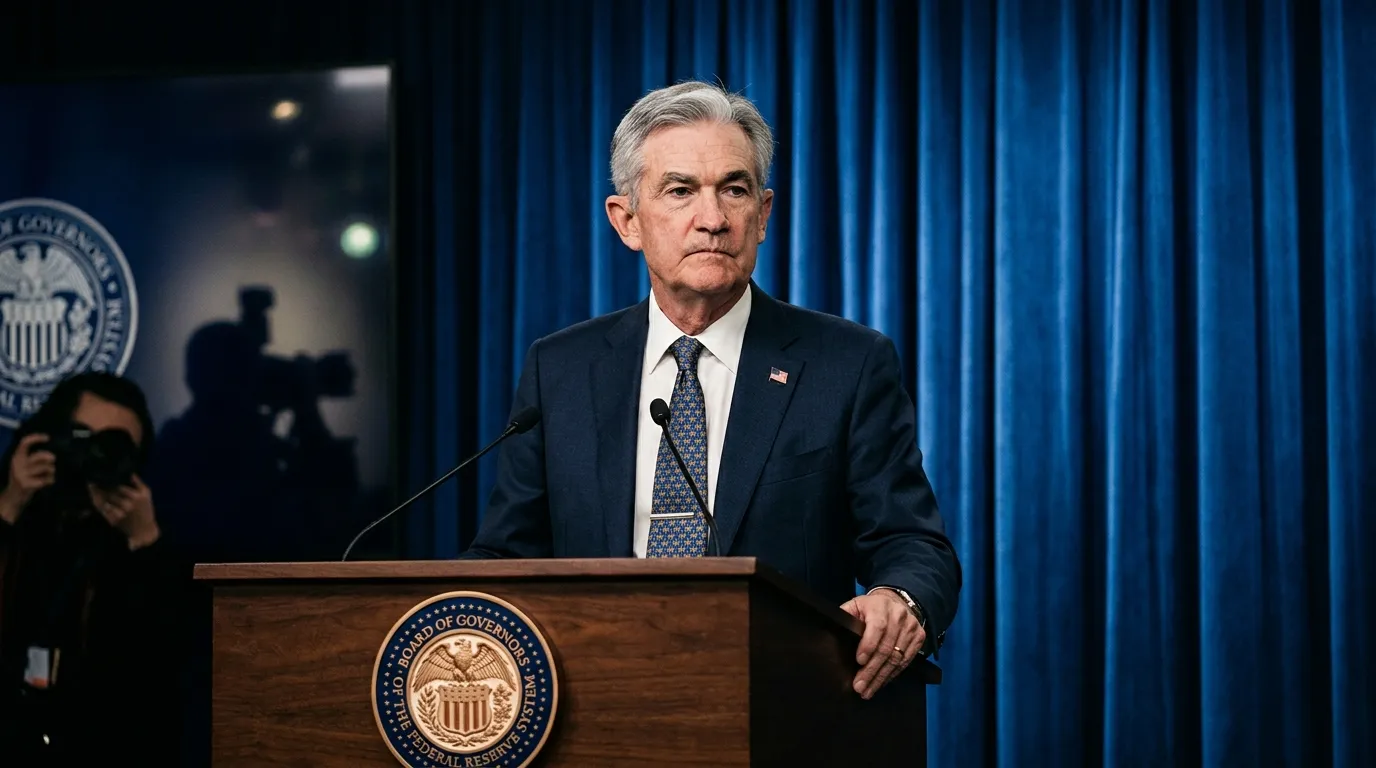
Jerome Powell doesn't usually make news at Fed press conferences for anything other than interest rates. On Wednesday, that changed. When a reporter asked about the Justice Department's criminal investigation into his conduct, the Fed chair looked straight into the camera and said he has "no intention of leaving the board until the investigation is well and truly over, with transparency and finality."
The statement landed like a gavel. Powell was drawing a line: the Federal Reserve will not be bullied out of its independence by a prosecution that a federal judge has already called pretextual. Five days earlier, U.S. District Judge James Boasberg had quashed the DOJ's grand jury subpoenas in a ruling so forceful it read more like an indictment of the investigation itself. He wrote that the government had produced "essentially zero evidence" to suspect Powell of a crime, and that "a mountain of evidence suggests that the Government served these subpoenas on the Board to pressure its Chair into voting for lower interest rates or resigning."
The DOJ, led by Acting U.S. Attorney Jeanine Pirro, is appealing. Powell, for his part, isn't going anywhere. Here's how a $2.5 billion building renovation became the most consequential fight over central bank independence since Watergate.
A Probe Built on a Building Budget
The investigation centers on testimony Powell gave to the Senate Banking Committee last year about cost overruns in renovations to the Federal Reserve's Eccles Building in Washington, D.C. The project, which ballooned from an initial estimate to roughly $2.5 billion, drew congressional scrutiny. Pirro's office opened a criminal probe arguing that Powell may have misled lawmakers about the costs.
On its face, the claim is narrow: a building renovation that went over budget. Government construction projects routinely exceed initial estimates, from the Pentagon to the Capitol Visitor Center. But critics of the probe point out that the timing is far from coincidental. President Trump has publicly pressured Powell for years to cut interest rates more aggressively, and the investigation materialized only after the Fed held rates higher than the administration wanted.
Senator Elizabeth Warren, one of Powell's most frequent critics on monetary policy, called the probe "a disgrace to the office of the Attorney General." Republican Senator Susan Collins went further: "If you can criminally investigate a Fed chair for a building budget, you can criminally investigate any Fed chair for any policy decision you disagree with. That's the point."
The Judge's Rebuke
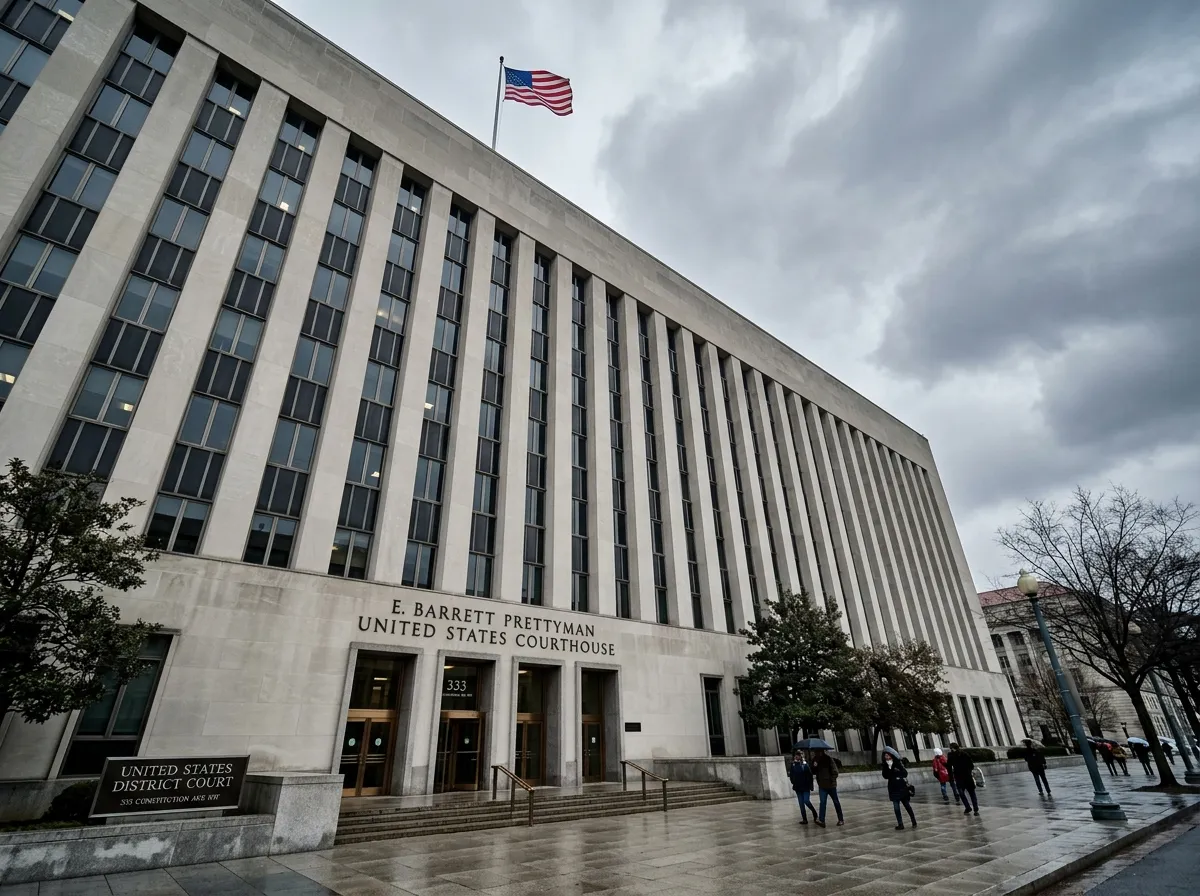
Judge Boasberg's March 13 ruling didn't just block the subpoenas. It dismantled the investigation's stated rationale with the kind of language federal judges typically reserve for the most egregious government overreach. The proceedings had been sealed, initiated by the Fed's Board of Governors in February, and only became public when Boasberg issued his opinion.
"The Government has produced essentially zero evidence to suspect Chair Powell of a crime," Boasberg wrote. "Indeed, its justifications are so thin and unsubstantiated that the Court can only conclude that they are pretextual." He noted the "mountain of evidence" that the subpoenas were designed to pressure the Fed chair into cutting rates or stepping down, a conclusion drawn from public statements by administration officials, the timing of the probe, and the absence of any substantive criminal predicate.
The ruling was significant for another reason: Boasberg is not a partisan outlier. Appointed by President Obama to the district court, he was later named chief judge of the Foreign Intelligence Surveillance Court, a position that requires trust from the intelligence community. His opinion carried the weight of a jurist accustomed to handling sensitive matters of national security and executive power.
Acting U.S. Attorney Pirro responded within hours, calling Boasberg an "activist judge" and announcing an immediate appeal. "He has neutered the grand jury's ability to investigate crime," Pirro said in a statement. "Jerome Powell today is now bathed in immunity." The rhetoric was notable for its intensity. Federal prosecutors rarely attack sitting judges publicly, and even more rarely do so immediately after a ruling. Legal experts pointed out that Pirro's language seemed designed for a political audience rather than an appellate court. Laurence Tribe, professor emeritus of constitutional law at Harvard, told CNN that Pirro's statement was "more suited to a cable news segment than a legal strategy." Former federal prosecutor Preet Bharara called it "a tell that the case was never really about the building renovation."
Three Former Fed Chairs Break Their Silence
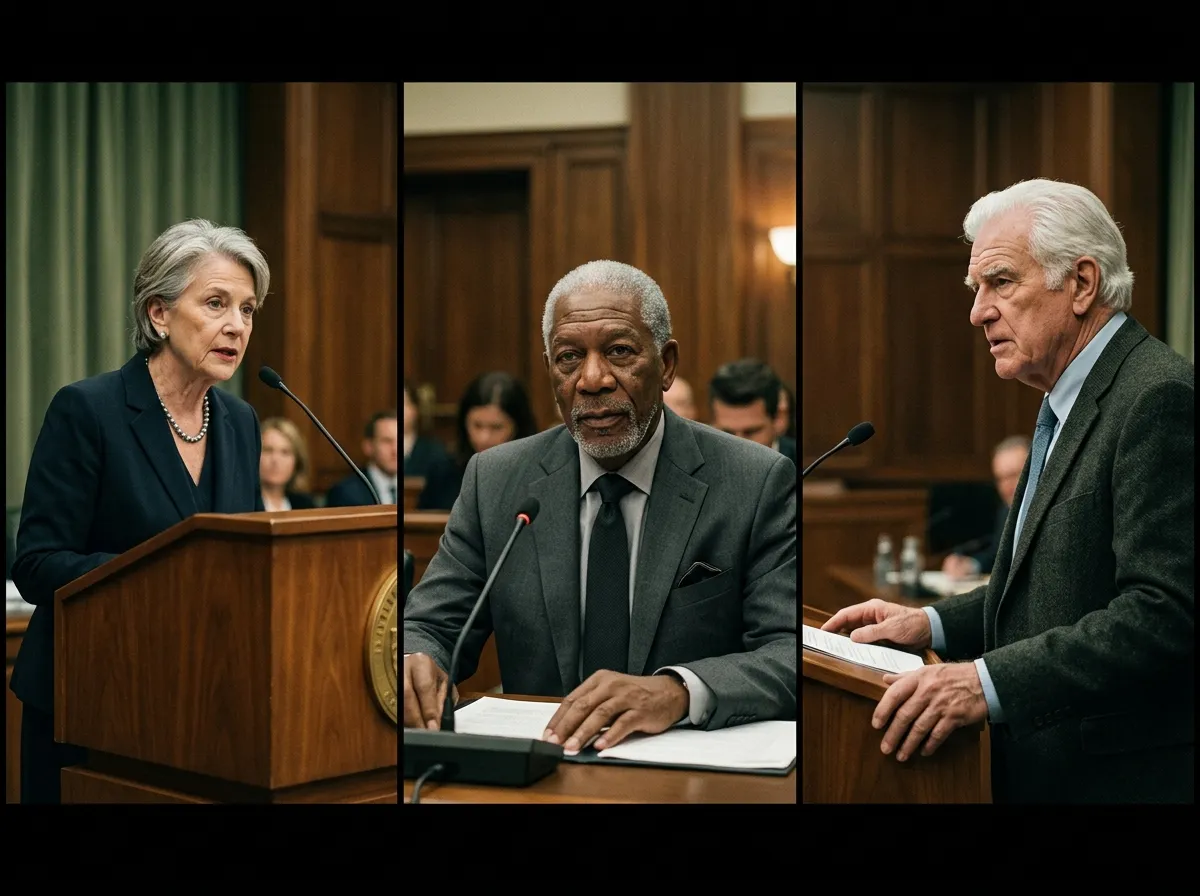
The most striking institutional response came not from Congress or the markets but from Powell's living predecessors. Alan Greenspan, Ben Bernanke, and Janet Yellen released a joint statement condemning the probe as an "unprecedented attempt to use prosecutorial attacks to undermine the independence of the Federal Reserve." The statement was first reported by NBC News.
The three former chairs rarely agree on policy. Greenspan, a libertarian-leaning Republican appointee, served under four presidents. Bernanke, who navigated the 2008 financial crisis, received a Nobel Prize in Economics. Yellen, now a private citizen after serving as Treasury Secretary, has been one of the more vocal critics of the current administration's fiscal approach. That all three set aside decades of policy disagreements to issue a unified warning speaks to how seriously they view the threat.
"The Federal Reserve's ability to make monetary policy decisions free from political pressure is not a perk of the institution," the statement read. "It is a structural requirement for economic stability. History has shown repeatedly that when governments control monetary policy for political purposes, the result is inflation, instability, and suffering."
The Nixon Parallel Nobody Wants to Draw
Political journalists have been careful about historical comparisons, but the parallels to a specific episode in American history are difficult to ignore. In October 1973, President Nixon ordered Attorney General Elliot Richardson to fire Watergate Special Prosecutor Archibald Cox. Richardson refused and resigned. Deputy Attorney General William Ruckelshaus also refused and was fired. The episode, known as the Saturday Night Massacre, became a turning point in the Watergate crisis because it exposed the lengths to which a president would go to shut down an investigation that threatened his power.
The current confrontation is structurally different but shares a critical feature: the use of prosecutorial tools to target an independent official whose decisions the president dislikes. Nixon wanted Cox gone because the special prosecutor was investigating the White House. Trump has made no secret of his desire for lower interest rates, and the DOJ probe materialized after the Fed declined to deliver them. In both cases, the question is whether the executive branch can use the machinery of justice to pressure individuals whose independence is protected by law or institutional norm. The probe has become another data point in the ongoing academic debate about democratic guardrails, with scholars noting that central bank independence is typically one of the first institutional protections to erode in backsliding democracies.
The analogy has limits. Powell is not investigating the president, and the Fed chair's independence is a matter of tradition and institutional design rather than statutory protection comparable to a special prosecutor. But the principle is the same: when the Justice Department is used as a tool of policy pressure rather than law enforcement, the institutional damage extends far beyond the individual target. If a criminal investigation can be opened against a Fed chair whenever interest rate decisions displease the White House, no future Fed chair will feel genuinely free to make unpopular but necessary calls.
Former Fed Vice Chair Alan Blinder, now a Princeton economics professor, told the Financial Times that the probe has already inflicted damage regardless of its outcome. "Every future Fed chair will know that this happened," Blinder said. "That's the whole point. You don't have to win the case. You just have to show that the case can be brought."
The Warsh Confirmation Problem
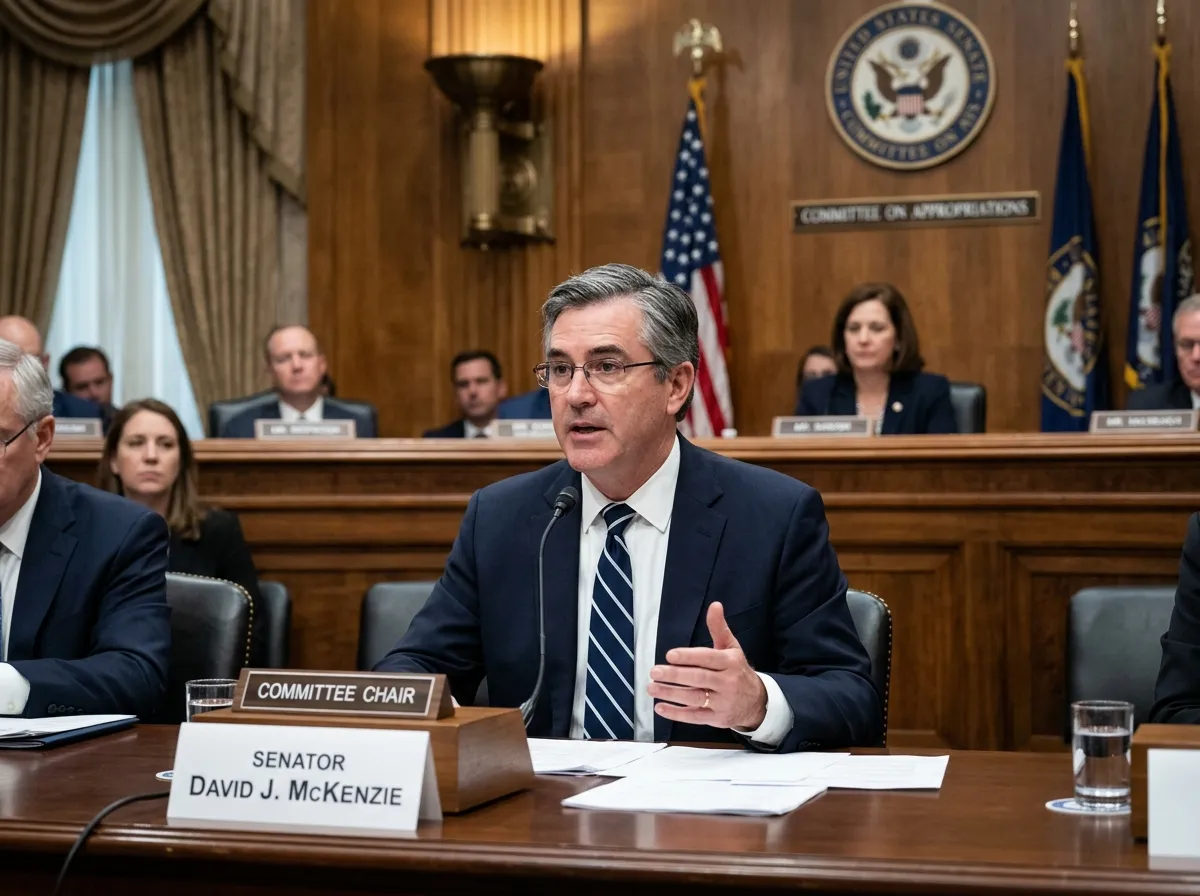
Powell's defiance has created an additional complication for the White House. President Trump nominated Kevin Warsh, a former Fed governor, as Powell's replacement as chair. But Warsh's confirmation has stalled in the Senate, where several Republican senators have said privately that they are uncomfortable voting on a successor while a politically motivated investigation is pushing out the incumbent.
Powell, whose term as chair expires in May, signaled Wednesday that he is prepared to stay beyond that date if necessary. He told reporters that if Warsh is not confirmed by the Senate before his term ends, he would remain as Fed chair "pro tem" while the probe is unresolved. That statement, which Powell's staff later clarified was consistent with the Federal Reserve Act's provisions for holdover service, puts the White House in an uncomfortable position. The longer the investigation drags on, the longer Powell stays, and the harder it becomes to confirm his replacement.
This dynamic has not gone unnoticed on Capitol Hill. Senator Mike Rounds, a South Dakota Republican who sits on the Banking Committee, told reporters: "I support Kevin Warsh for the position, but I don't want history to record that we confirmed a Fed chair while the Justice Department was trying to push the last one out the door. That looks terrible." At least three other Republican senators have reportedly communicated similar concerns to the White House, according to Roll Call.
What Changes
The DOJ's appeal will be argued before the D.C. Circuit within weeks, but the legal outcome is almost secondary to the institutional damage already done. Judge Boasberg's ruling gives Powell and the Fed a strong legal shield, and the appellate court is unlikely to reverse a finding that the government produced "essentially zero evidence" of criminal conduct. Even if Pirro somehow prevails on a procedural argument, the factual record is devastating for the prosecution.
The bigger question is what happens to the nomination process. If Republican senators continue to slow-walk Warsh's confirmation, the White House faces a choice: drop the investigation and clear the path for its own nominee, or continue the probe and risk having Powell serve as chair well into 2027. Based on the administration's public statements, the probe is unlikely to be dropped voluntarily, which means this standoff probably extends past the May deadline.
For the Fed itself, the immediate policy implications are limited. The March decision to hold rates at 3.50%-3.75% was unanimous except for Governor Miran's dissent, and the dot plot points to just one cut this year. The war in Iran and its effects on energy prices have given the Fed a legitimate, non-political reason to hold steady. But the investigation hangs over every future decision. When the Fed eventually does cut rates, critics will ask whether the central bank was influenced by the probe, regardless of the economic data. That erosion of credibility is exactly the kind of damage that three former chairs warned about, and it may be the probe's most lasting consequence.
Sources
- Judge blocks DOJ's criminal probe of Federal Reserve, blasting it as political - NPR, March 13, 2026
- Powell says he will remain at Federal Reserve during DOJ investigation - Fox News, March 18, 2026
- DOJ will appeal block of Fed subpoenas in Jerome Powell probe - CNBC, March 13, 2026
- Powell has 'no intention of leaving' the Fed until Trump's DOJ probe is closed - NBC News, March 18, 2026
- Judge blocks grand jury subpoena in Jerome Powell investigation - Roll Call, March 13, 2026