
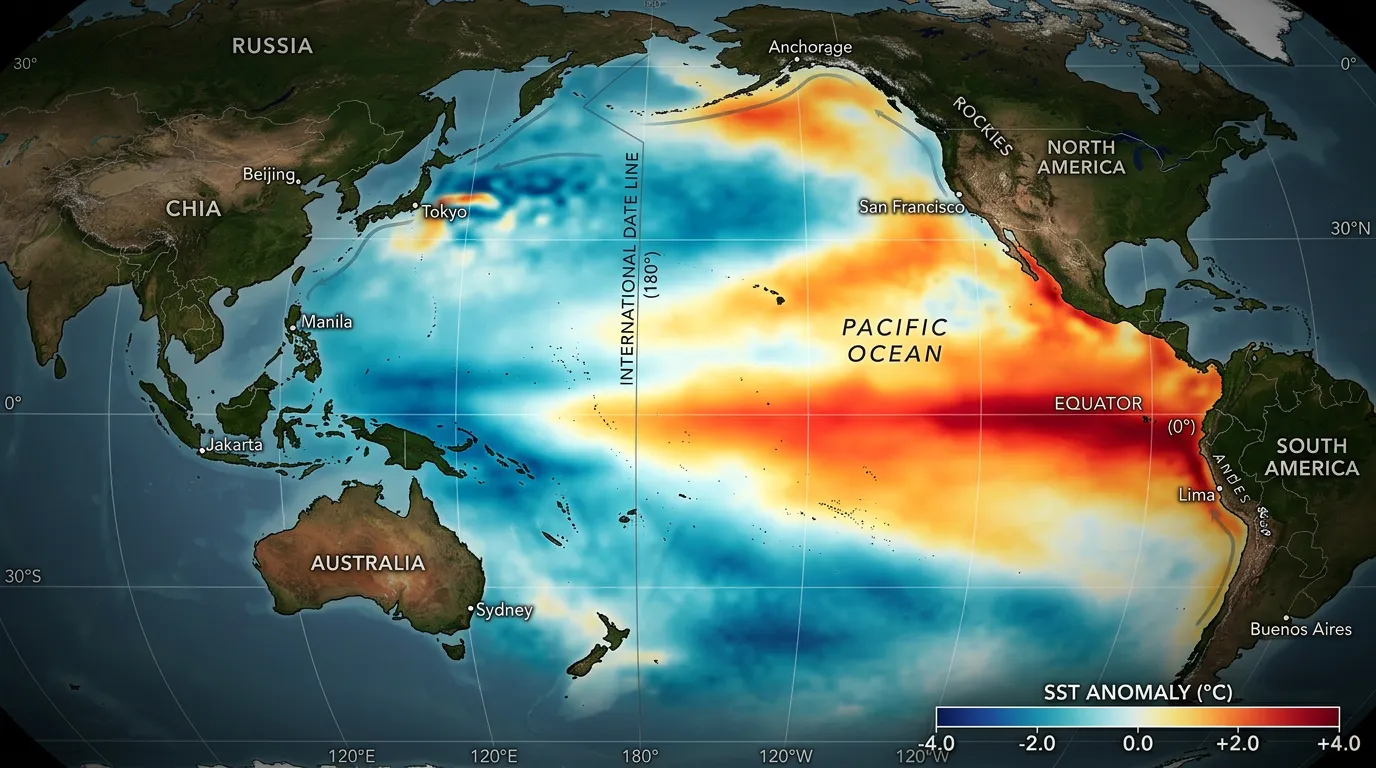
Mark your calendar: forecasters are now saying there's an 80% chance that a strong El Nino will develop by late summer 2026, with some models pointing toward a "Super El Nino" event by the end of the year. If that sounds abstract, here's the translation: your weather, your energy bills, your grocery prices, and your wildfire risk are all about to be affected by what's happening in the Pacific Ocean right now.
El Nino is one of those climate patterns that sounds like background science until it shows up on your electric bill. The last strong one, in 2023-24, contributed to making 2024 the hottest year in recorded history. This one could push 2027 past that record. But the immediate effects, the ones you'll actually feel this year, are more specific and more practical than global temperature averages suggest.
What's Happening in the Pacific
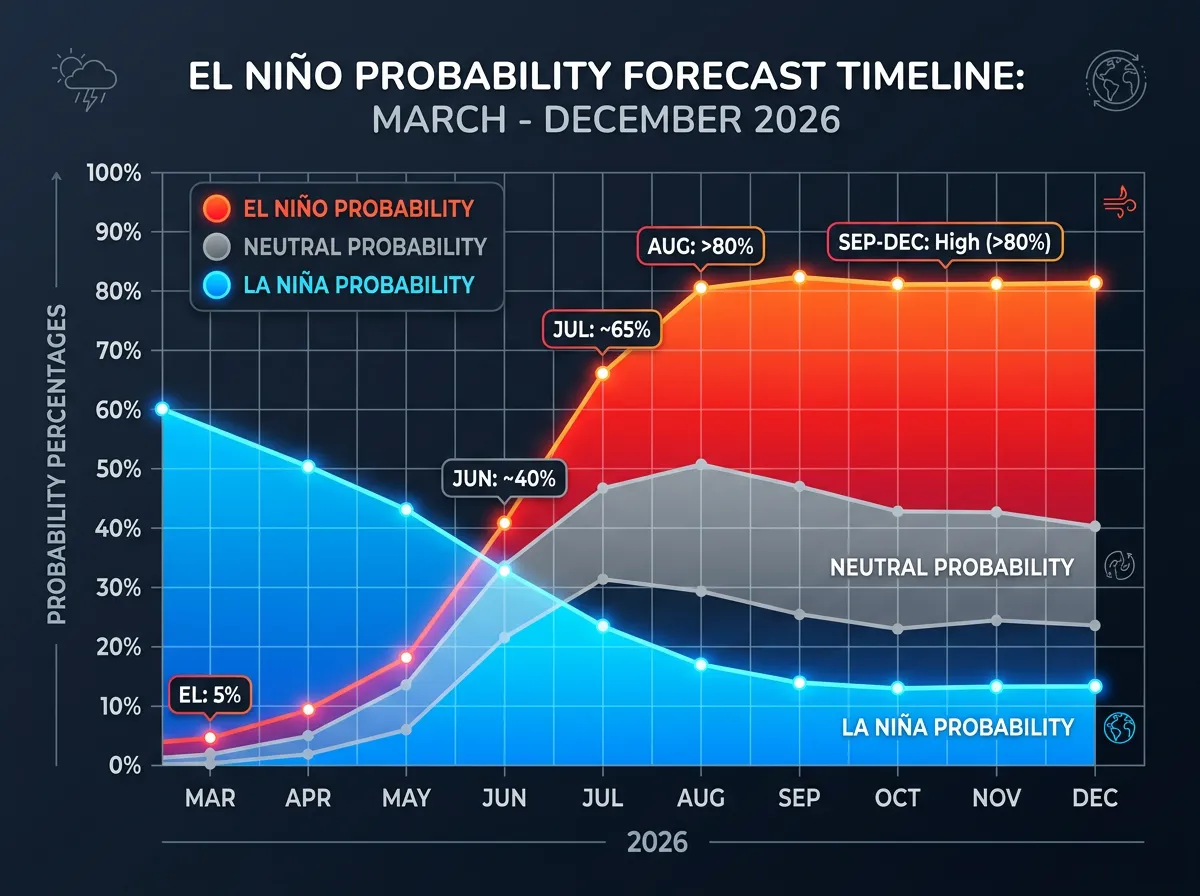
La Nina, the cooler counterpart to El Nino that's been influencing weather patterns for the past year, is collapsing faster than forecasters expected. The Climate Prediction Center's latest analysis shows equatorial Pacific sea surface temperatures rapidly warming, with ENSO-neutral conditions expected through late spring before El Nino takes hold.
The numbers behind the forecast are striking. According to the International Research Institute for Climate and Society at Columbia University, there's a 62% chance of El Nino conditions developing during the June-August window. One of the world's leading seasonal forecast models puts the odds of a strong event at 80% by late summer, with at least a moderate event at roughly 98% certainty. Some European models, as reported by Severe Weather Europe, suggest the event could intensify to Super El Nino status by December.
NPR's reporting from Thursday confirms the broad scientific consensus: El Nino is coming, and it's likely to be powerful. The question isn't whether it will happen. It's how strong it gets and how quickly.
How El Nino Actually Affects Your Life
If you don't live on a coastline or work in agriculture, you might think El Nino is someone else's problem. It isn't. Here's how the effects cascade into everyday life.
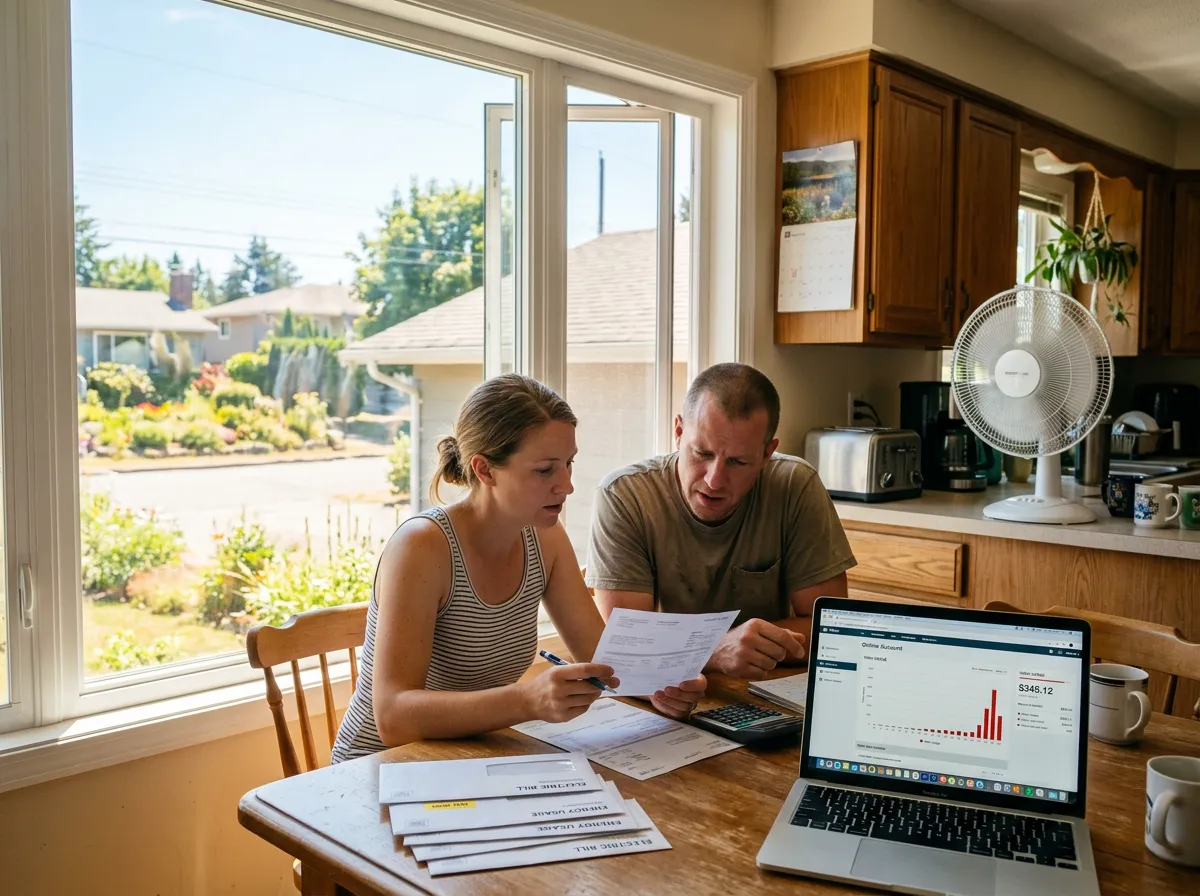
Your energy bills. Strong El Nino events push warmer-than-average temperatures across much of the northern United States during winter months, which typically reduces heating costs. But before winter arrives, the summer warmth can intensify, driving up air conditioning demand. AccuWeather's 2026 forecast notes that the transition from La Nina to El Nino can create volatile temperature swings that strain energy grids. If you live in the South, the potential for above-average rainfall could reduce drought-related energy restrictions, but flooding becomes a concern.
Your grocery prices. El Nino disrupts agriculture globally. Warmer Pacific waters reduce fish stocks along South America's coast (the pattern gets its name from Peruvian fishermen who noticed it around Christmas, "El Nino" meaning "the boy child"). Drought conditions in Australia and Southeast Asia during El Nino years reduce grain and sugar production. The 2023-24 El Nino contributed to rice price spikes that hit consumers worldwide. If the 2026 event reaches Super El Nino strength, similar agricultural disruptions are likely.
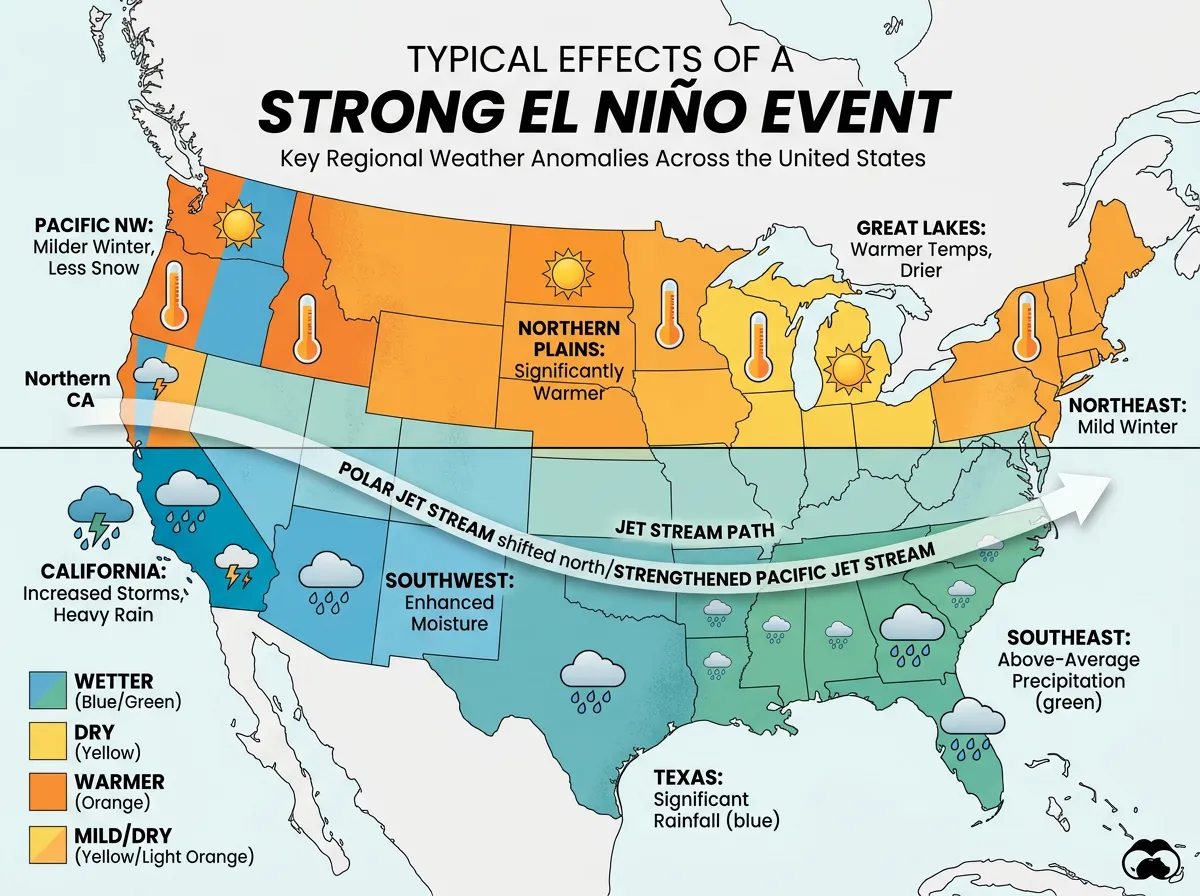
Your wildfire risk. This one is counterintuitive. El Nino tends to increase rainfall in California and the southern United States, which actually reduces wildfire risk in those regions. But the increased moisture means more vegetation growth, which becomes fuel for fires once the cycle shifts. The 2015-16 Super El Nino brought heavy rains to California, followed by massive wildfires in subsequent years when that vegetation dried out. AccuWeather's analysts have flagged this delayed effect as a significant concern.
The Hurricane Season Upside
Here's the one piece of genuinely good news. El Nino events typically suppress Atlantic hurricane activity. The mechanism is straightforward: El Nino increases wind shear across the Atlantic basin, and wind shear tears apart tropical storms before they can organize into hurricanes.
The 2023-24 El Nino contributed to a below-average Atlantic hurricane season in 2024, with just seven named storms compared to the 30-year average of 14. If the 2026 event is as strong as forecasters expect, the 2026 Atlantic hurricane season could be similarly quiet. For anyone who lives along the Gulf Coast or the Eastern Seaboard, that's meaningful protection during a time when rising energy costs from the Iran conflict are already straining household budgets.
But there's a catch. Reduced Atlantic hurricanes don't mean reduced storms globally. El Nino shifts tropical cyclone activity toward the central and eastern Pacific. Hawaii, which saw Hurricane Dora intensified by the 2023 El Nino, could face elevated risk again. And the western Pacific typhoon season can be brutal during strong El Nino years, with storms tracking farther east than normal and affecting islands that aren't accustomed to direct hits.
The Temperature Ratchet Effect
Climate scientists have a concept called the "ratchet effect" that's relevant here. El Nino years produce temporary temperature spikes above the long-term warming trend. When El Nino fades, temperatures drop back, but not quite to where they were before. Each cycle leaves the baseline a little higher.
The 2023-24 El Nino pushed global average temperatures past 1.5 degrees Celsius above pre-industrial levels for the first time. A strong 2026-27 El Nino, layered on top of continued greenhouse gas accumulation, could push 2027 into record territory as the warmest year ever measured. Scientific American's analysis notes that even a moderate El Nino in 2026 would make 2027 "very likely the warmest year in recorded history."
For the average person, this isn't about abstract global averages. It's about the compounding effect of warmer summers, more volatile weather patterns, and increasingly expensive insurance premiums in climate-vulnerable areas. If you've noticed your homeowner's insurance going up, El Nino's contribution to extreme weather frequency is one of the reasons.
The Timing Collision With the Oil Crisis
What makes the 2026 El Nino forecast especially consequential is the timing. The Iran conflict has already pushed oil prices above $100 a barrel, with the IEA releasing record emergency reserves to stabilize supply. Energy costs are already elevated. A strong El Nino adding summer heat waves that drive up electricity demand creates a compounding effect on household budgets.
Natural gas, which generates roughly 40% of U.S. electricity, tends to spike during extreme heat waves as power plants ramp up to meet air conditioning demand. If those spikes coincide with sustained high oil prices from the Hormuz crisis, American consumers could face the most expensive summer for energy in at least a decade. The Energy Information Administration's spring outlook, due in April, will provide clearer estimates, but the directional picture is already concerning.
Agricultural commodity markets are watching the El Nino forecast closely as well. Wheat, corn, and soybean futures all carry an El Nino risk premium based on historical disruption patterns. If global crop yields decline in the same year that energy and transportation costs are elevated, grocery inflation could return to levels not seen since 2022.
What Changes
A strong El Nino arriving in summer 2026 means several things are about to shift.
If you're in California or the southern U.S., expect above-average rainfall from fall through next spring. That's good for drought relief and reservoir levels but bad for flooding and mudslide risk, especially in areas scarred by recent wildfires. If you're in the northern U.S., you're likely looking at a milder winter in 2026-27, which will help on heating bills but may accelerate pest and disease cycles that normally get knocked back by hard freezes.
If you're anywhere along the Atlantic or Gulf coast, hurricane risk drops, but don't cancel your insurance. El Nino suppression isn't absolute, and the storms that do form in El Nino years tend to track in unexpected paths.
The broader signal is this: 2026 is shaping up to be a year where multiple weather and energy variables stack simultaneously. A strong El Nino, elevated oil prices, and a global agricultural system already under strain from the Middle East conflict create a convergence that will hit household budgets from several directions at once. The forecast models are clear. The question is whether policymakers, utility companies, and individual households start preparing now or wait until the effects arrive.
Sources
- El Nino is set to take hold this summer, driving up global temperatures - NPR
- El Nino is brewing: Here's what it means for US weather in 2026 - AccuWeather
- Will El Nino return in 2026? Here's what we know so far - Scientific American
- The Return of a Super El Nino: How the Rapid Collapse of La Nina is Triggering a Massive Global Shift - Severe Weather Europe