
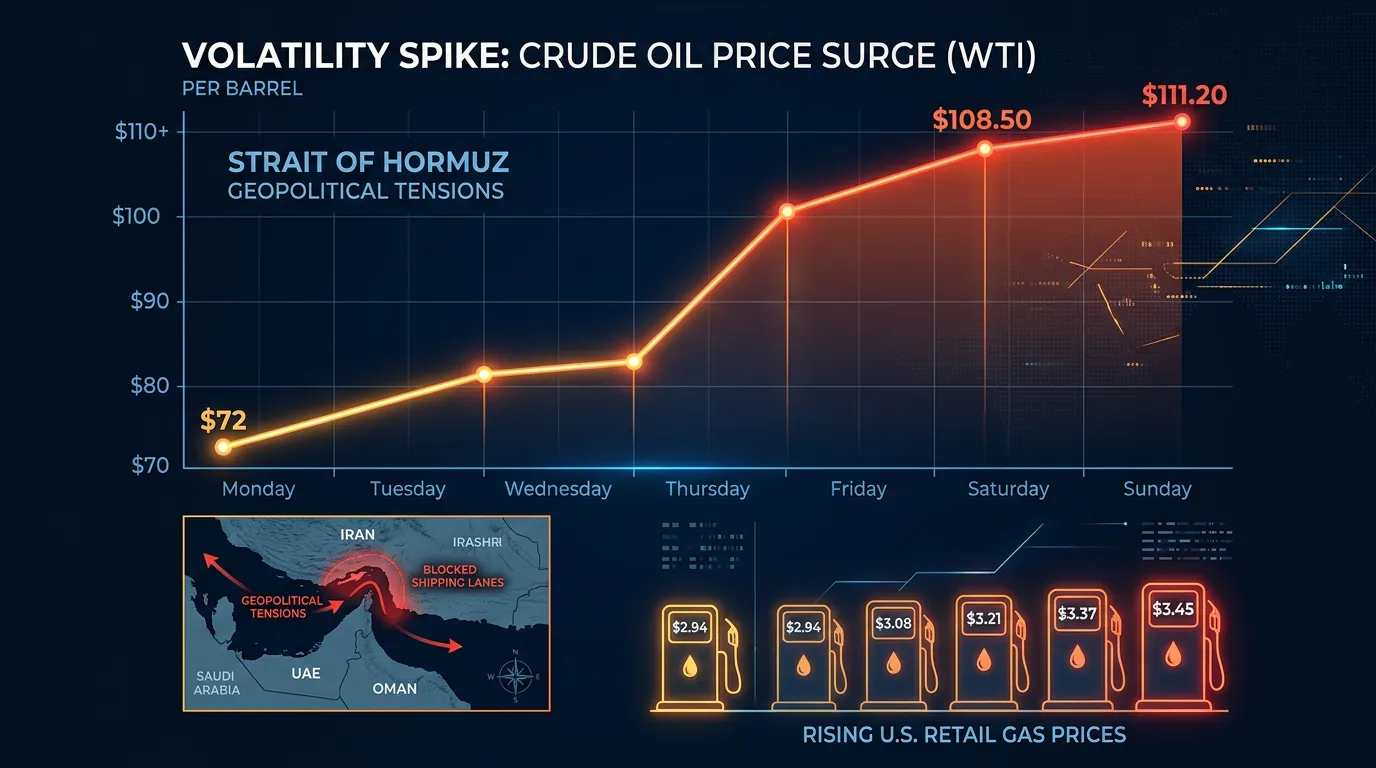
If you filled up your car last week, you probably noticed the jump. The national average gas price hit $3.45 a gallon on Monday, up more than 51 cents in a single week. That's the fastest weekly increase since the early days of Russia's invasion of Ukraine in 2022, and it's about to get worse. Prediction markets on Polymarket now put the odds of gas hitting $4.50 by the end of March at 64%, which would mean the highest prices Americans have paid at the pump since the summer of 2022. In California, some forecasts project $7 per gallon.
The cause is straightforward: the Strait of Hormuz, the narrow waterway between Iran and Oman that carries roughly 20% of the world's seaborne oil, has effectively shut down. Tanker traffic that normally moves 20 million barrels a day has dropped to near zero since Iran's navy began blocking passage in retaliation for U.S.-Israeli strikes. West Texas Intermediate crude surged from $72 per barrel at the start of last week to above $108, a 50% increase that hasn't fully filtered through to the gas station yet.
On Monday, G7 finance ministers began discussing the biggest tool they have to respond: a coordinated release of emergency oil reserves.
What the G7 Is Considering
French President Emmanuel Macron, whose country holds the current G7 presidency, initiated the emergency discussion. Finance ministers from the seven nations, along with IEA Executive Director Fatih Birol, are working out the logistics of a coordinated release of 300 to 400 million barrels from strategic petroleum reserves.
That's a significant number. It would draw down roughly a quarter to a third of the IEA system's total public reserves. Three G7 nations, including the United States, have already expressed support, according to Fox Business reporting. The goal is to flood the market with enough supply to bring prices back below $100 per barrel, buying time while the military situation evolves.
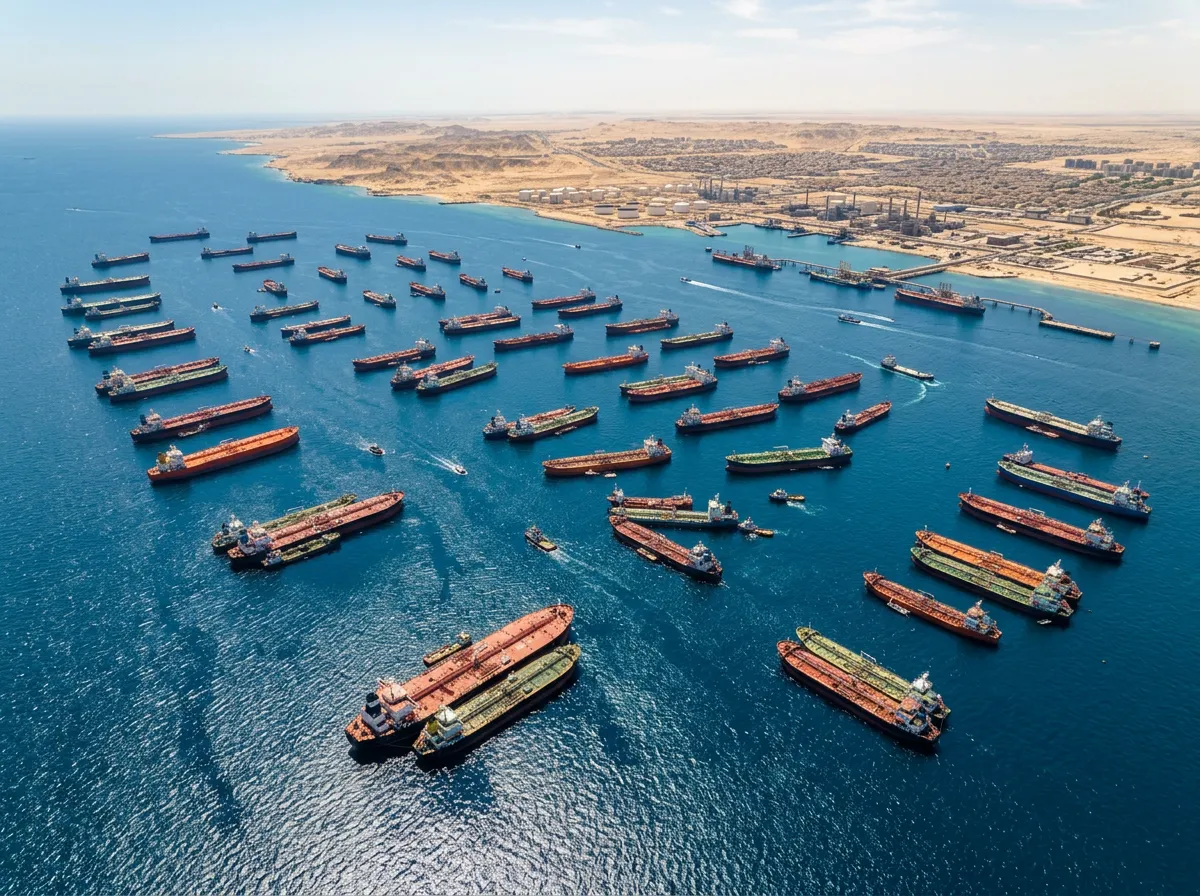
The approach has already shown early signs of working, at least on paper. After reports of the G7 discussions, WTI crude pulled back from its peak of around $119 to roughly $104. Brent crude, the global benchmark, settled just under $106. But those prices are still nearly 50% higher than where they were two weeks ago, and the relief rally could be temporary if the Strait remains blocked.
President Trump, for his part, has framed the price spike as acceptable collateral. "It's a very small price to pay for safety and peace," he said, suggesting prices would decline once "the destruction of the Iran nuclear threat is over." That timeline is unclear.
Why 300 Million Barrels May Not Be Enough
Here's the math that should worry anyone watching their gas budget. The Strait of Hormuz normally handles 20 million barrels of oil per day. A release of 300 to 400 million barrels can cover that shortfall for roughly 15 to 20 days, assuming the strait remains completely blocked and no alternative routes absorb some of the traffic.
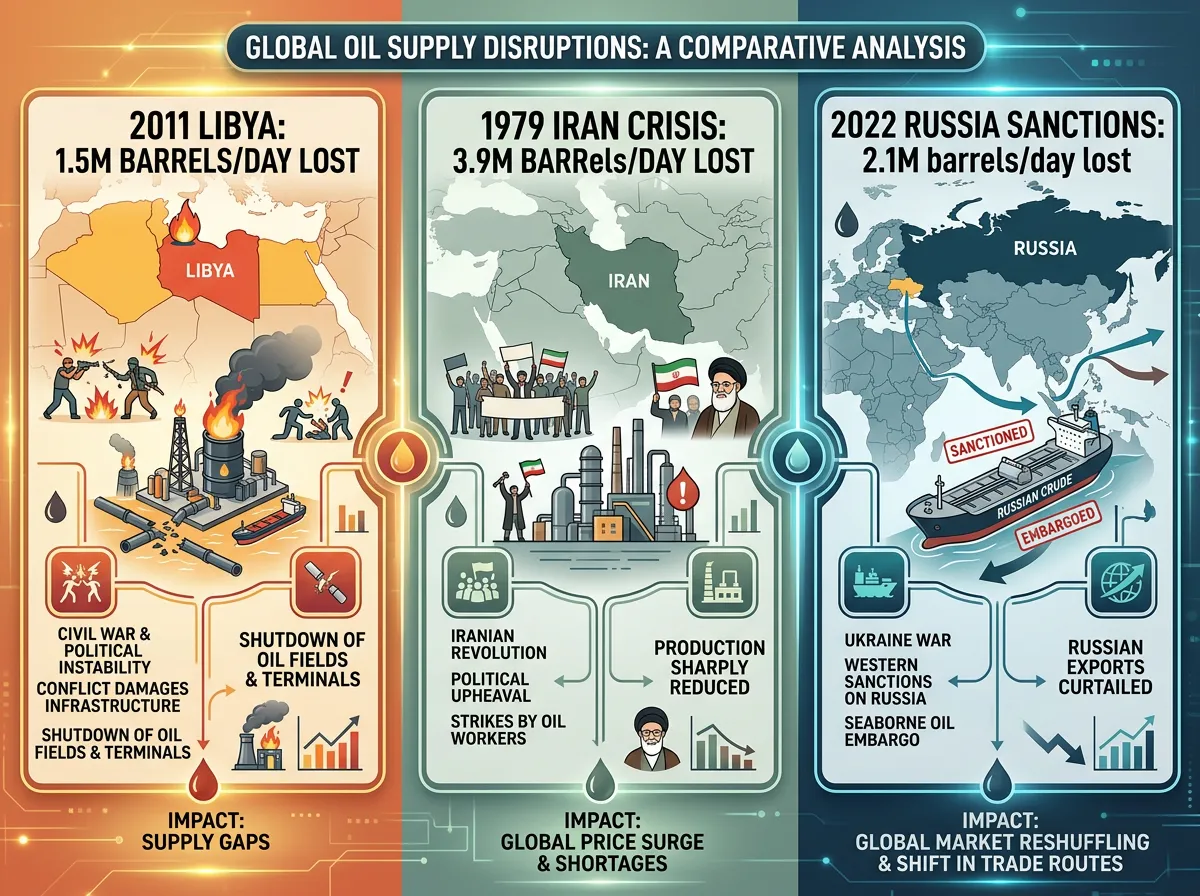
The IEA has activated its emergency response mechanism only five times in its history: during the 1991 Gulf War, after Hurricanes Katrina and Rita in 2005, during the 2011 Libyan crisis, and twice following Russia's 2022 invasion of Ukraine. The 2022 releases totaled about 182 million barrels over six months, and they were credited with helping stabilize prices, though critics argued the effect was modest and temporary.
The current situation is more acute. The 2022 crisis reduced Russian exports by perhaps 1 to 2 million barrels per day, a meaningful but manageable disruption. The Hormuz closure has removed 20 million barrels from daily circulation, roughly ten times the scale. Kuwait has already cut oil production in response, further tightening supply. Even a full 400 million barrel release is a bridge, not a solution. If the blockade lasts more than three weeks, the IEA's reserves start looking uncomfortably thin.
What This Actually Means for Your Wallet
The gap between crude oil prices and what you pay at the pump takes about two to four weeks to close. That lag is why Monday's gas prices don't yet reflect the full impact of crude's surge. The crude spike from $72 to $108 will continue pushing retail gas prices upward through March, even if crude stabilizes or drops slightly from here.
At $3.45 per gallon, the average American household driving two cars is spending roughly $60 more per month on fuel than they were a month ago. If prices reach the $4.50 level that prediction markets are pricing in, that monthly increase jumps to about $150, a meaningful hit for families already dealing with elevated grocery and housing costs. For lower-income households that spend a larger share of their budgets on gas, the burden is disproportionately heavy.
The knock-on effects extend beyond the pump. Diesel prices, which drive shipping and logistics costs, are climbing on the same trajectory. That feeds into the price of virtually everything that moves by truck, train, or ship, which is most of what you buy. The Federal Reserve, which had been cautiously signaling potential rate cuts later this year, now faces the prospect of an oil-driven inflation surge that could force it to hold rates steady or even raise them, the opposite of what the economy needs.
The Pattern That Should Concern Washington
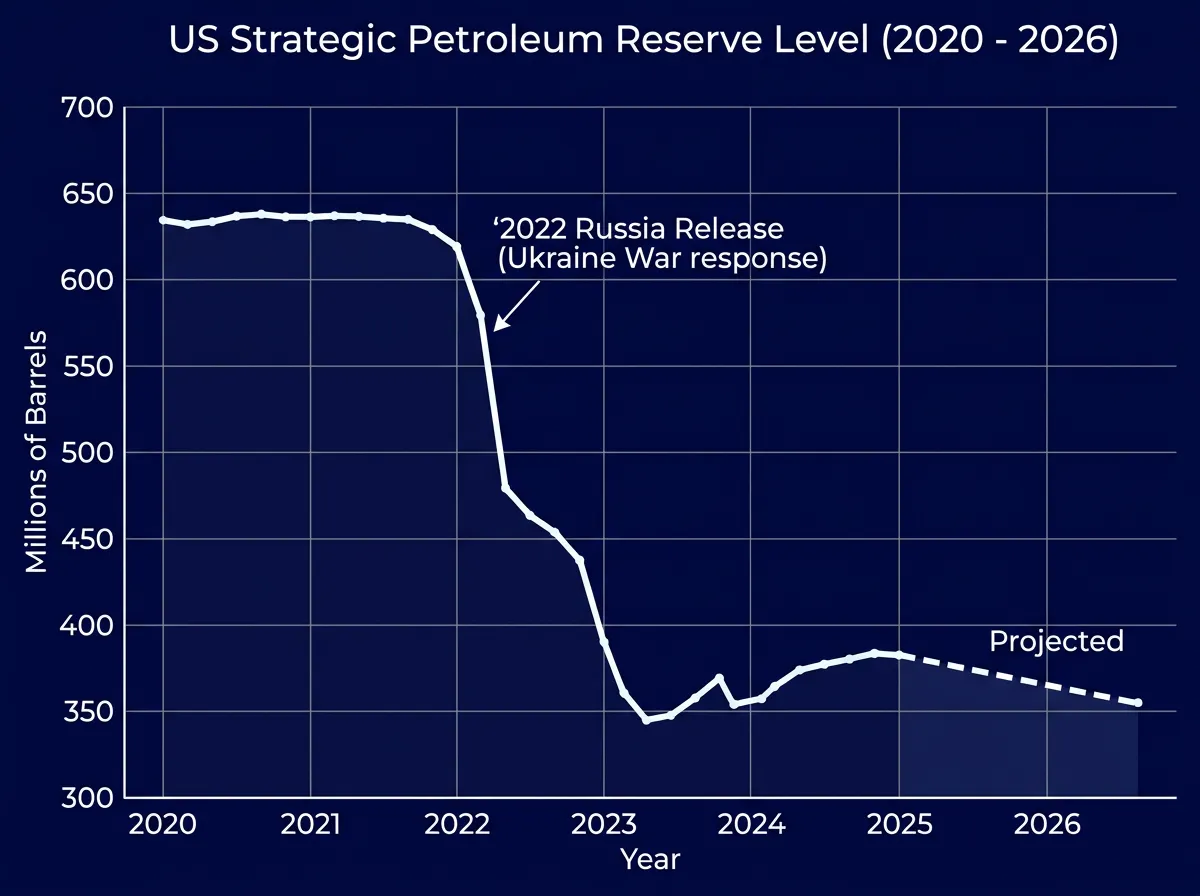
The strategic petroleum reserve exists precisely for moments like this, but the United States enters this crisis with less ammunition than it once had. After the massive 2022 releases to combat Russian supply disruptions, the U.S. SPR sits at roughly 370 million barrels, down from over 600 million a decade ago. Congress authorized partial refills in 2023 and 2024, but the reserve never returned to pre-2022 levels.
That drawdown matters now. If the U.S. contributes proportionally to a 300 to 400 million barrel G7 release, it could drop the SPR below 300 million barrels for the first time since the early 1980s, when the reserve was still being filled. The United States would be burning through its emergency energy cushion at a rate that assumes the crisis resolves quickly. If it doesn't, the options narrow considerably.
There's a deeper structural issue at play. The U.S. produces more oil than any country in history, roughly 13.5 million barrels per day. But domestic production can't fully insulate American consumers from a global price shock of this magnitude. Oil is priced on world markets. When 20% of global supply disappears from the Strait of Hormuz, every barrel on Earth gets more expensive, including the ones pumped in Texas and North Dakota. Domestic production is a buffer, not a shield.
This is the same dynamic that played out during the 2022 Russia crisis and the 1973 Arab oil embargo before it. American energy independence, the phrase politicians love to invoke, has never meant immunity from global oil price shocks. It means the shocks hurt slightly less here than in countries that import most of their oil. Slightly less is not painless, especially when you're filling a tank at $4.50.
What This Really Means
The G7's emergency discussion is the right move for the next three weeks. A coordinated 300 to 400 million barrel release will likely pull crude back below $100 and slow the gas price increase that's already underway. Markets responded positively to just the discussion alone, which is how reserve releases are supposed to work: the signal matters as much as the actual barrels.
But the relief is temporary by design. Strategic reserves are stopgaps, not substitutes for functioning supply chains. If the Strait of Hormuz remains effectively closed through April, the G7 will have spent a significant portion of its emergency reserves with no guarantee that prices stay down. The IEA's reserves would drop to levels that limit its ability to respond to a second shock, whether that's a hurricane season disruption, a further escalation in the Gulf, or another supply crisis somewhere else.
The specific number to watch is $4.50 per gallon. If the national average crosses that threshold, the economic impact shifts from a nuisance to a drag on GDP growth. Consumer spending accounts for roughly 70% of the U.S. economy, and fuel costs at that level historically reduce discretionary spending enough to show up in quarterly economic data. The last time gas crossed $5 nationally, in June 2022, consumer confidence hit its lowest point in over a decade.
For now, the G7's reserve release will buy time. Whether that time is used to resolve the Hormuz crisis or simply to delay the full price shock depends entirely on how the conflict in Iran unfolds. Gas prices are the most visible way that distant wars come home, and this one is coming home fast.
Sources
- G7 energy ministers to meet Tuesday morning to discuss release of oil reserves - CNBC
- G7 finance ministers to discuss emergency oil reserve release amid price surge - Fox Business
- Gas Prices Could Set New All-Time High By the End of March - Yahoo Finance
- 2026 Strait of Hormuz crisis - Wikipedia
- Amid regional conflict, the Strait of Hormuz remains critical oil chokepoint - U.S. Energy Information Administration