
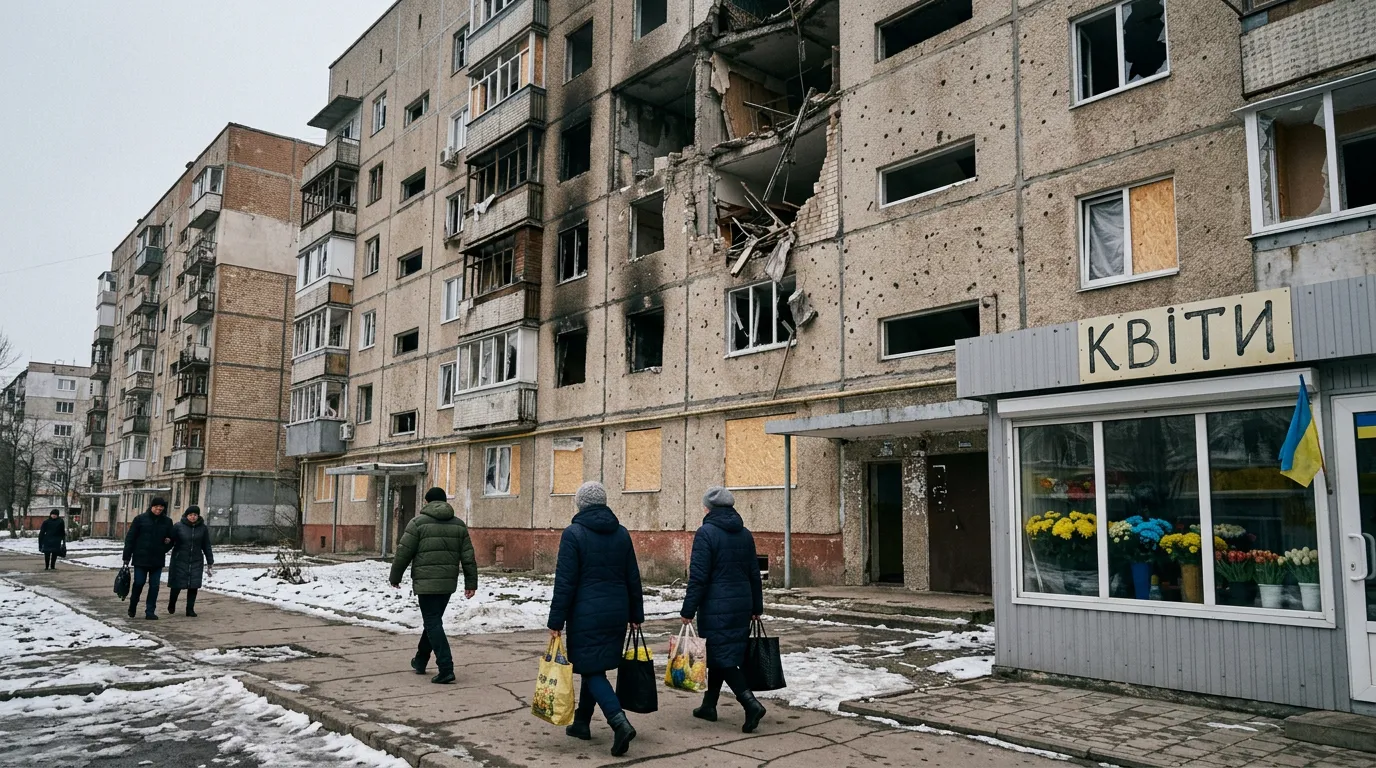
Tomorrow marks exactly four years since Russian tanks crossed into Ukraine, and the country that was supposed to fall in three days is still fighting. Four years of shelling. Four years of displacement. Four years of diplomatic frameworks, ceasefires that never materialized, and promises from world capitals that range from earnest to hollow. If you're looking for a tidy narrative about how the international community rallied and brought peace, you won't find it here. What you'll find instead is a war that has ground into something dangerously close to permanent, even as negotiators in Geneva and Washington insist that a deal is within reach.
President Trump claimed back in December that a peace agreement was "close to 95% done." Two months later, the fighting continues without pause. Ukrainian forces and Russian troops are still killing each other across a front line that has barely shifted in over a year. The trilateral peace talks that began in late 2025 have produced meetings, communiques, and cautious diplomatic language, but they haven't produced peace. And the human toll keeps compounding in ways that statistics can capture but never fully convey.
The Numbers Behind Four Years of Destruction
Let's start with the scale of what this war has done to ordinary people, because the diplomatic maneuvering doesn't mean much without that context.
Roughly 3.7 million Ukrainians are internally displaced within their own country. These aren't abstract figures. These are people who left Mariupol, Kherson, parts of Kharkiv, towns across the Donbas, and dozens of smaller cities you've never heard of. They left behind homes, jobs, schools, and communities, and most of them have no realistic timeline for returning. Another 5.9 million Ukrainians are registered as refugees abroad, scattered across Poland, Germany, the Czech Republic, and beyond. That's nearly 10 million people uprooted from a pre-war population of about 44 million.
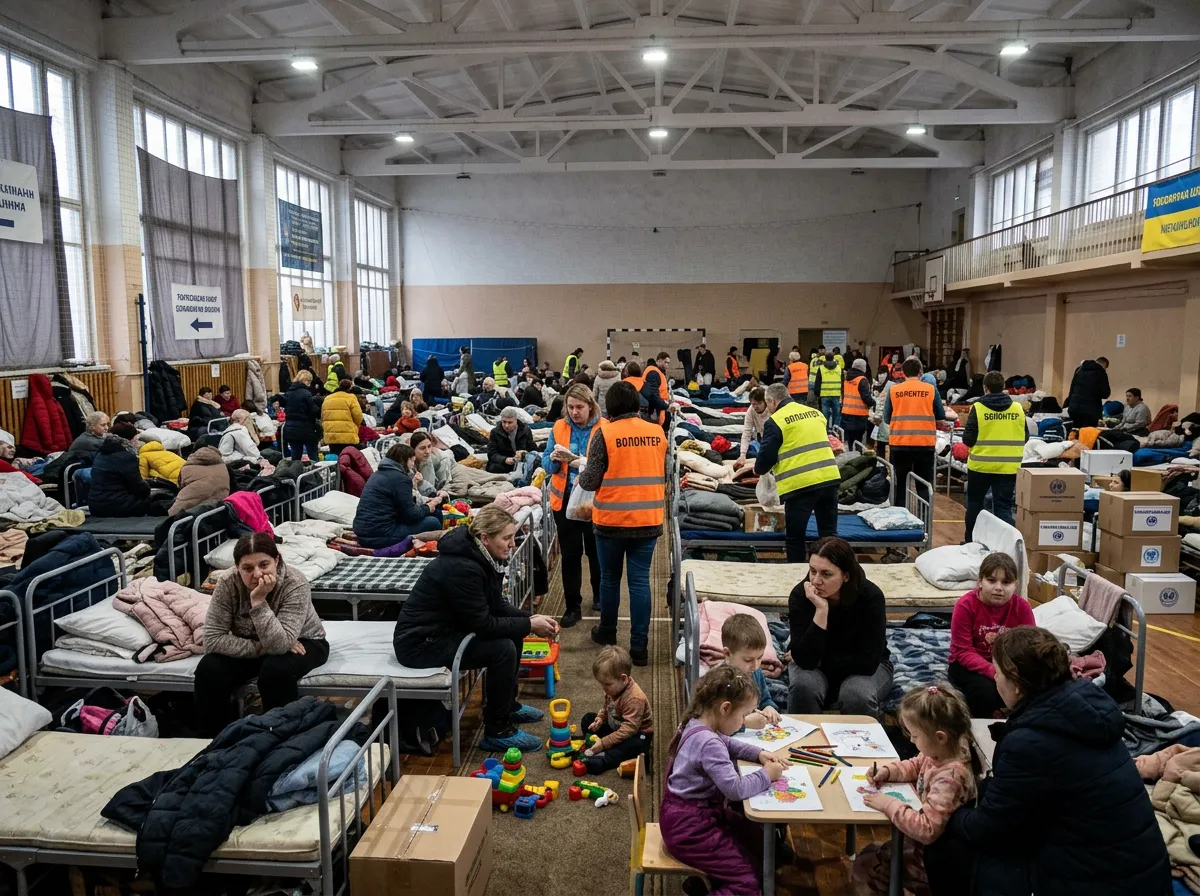
The United Nations estimates that over 10.8 million people inside Ukraine currently need humanitarian assistance. That includes people living in areas near active combat, communities dealing with damaged infrastructure (hospitals, water treatment plants, electrical grids hit by Russian strikes), and vulnerable populations like the elderly and disabled who can't easily relocate. Four years in, the humanitarian operation in Ukraine is one of the largest in the world, and it's running on donor fatigue and stretched budgets.
These numbers don't capture everything. They don't capture the psychological toll on children who've spent a quarter of their lives in a war zone. They don't capture the slow erosion of communities that may never reconstitute even if the fighting stops tomorrow. But they do establish the stakes of the peace process in concrete terms. Every month without a deal adds to these figures.
The Peace Talks: Lots of Process, Little Progress
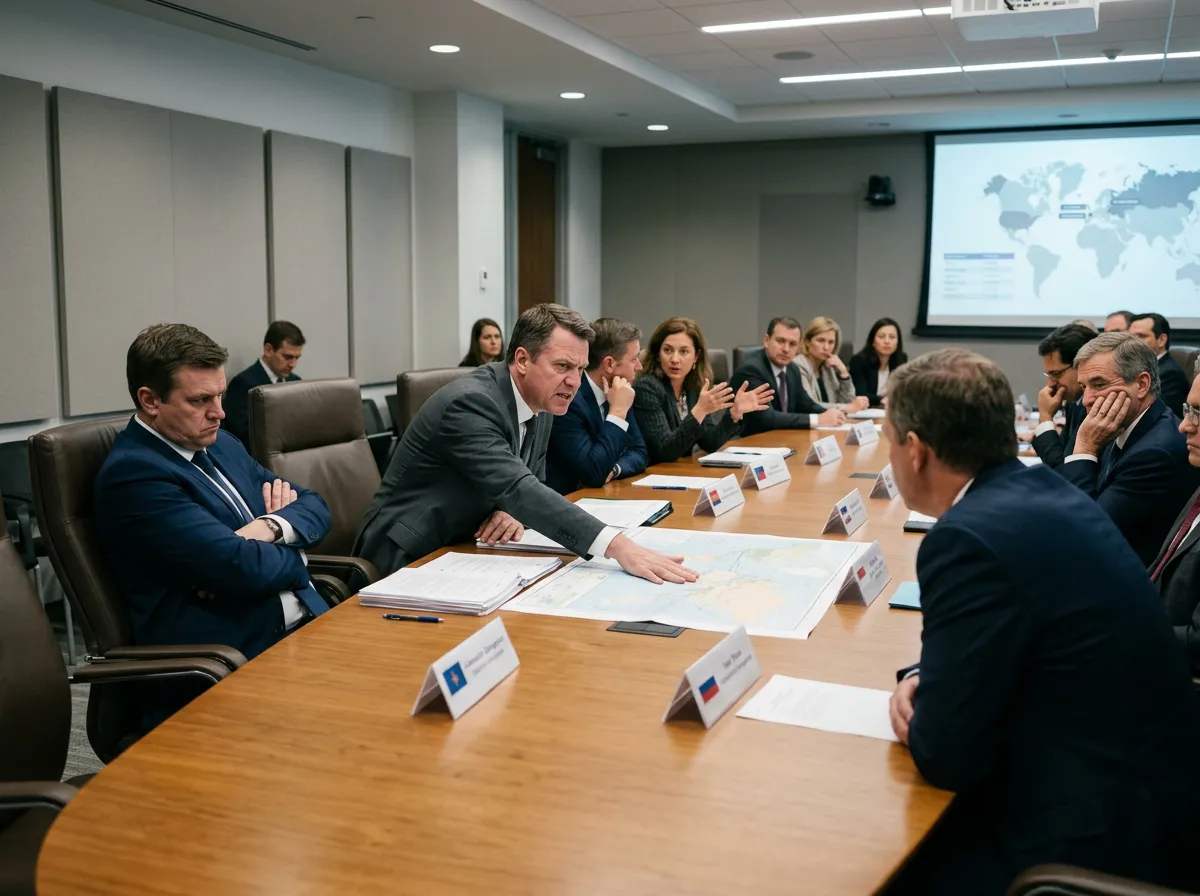
If you've been following the U.S.-brokered trilateral peace talks, you know the basic rhythm by now. American, Ukrainian, and Russian delegations meet. Military teams make technical progress on ceasefire mechanics. Political negotiators hit the same walls they hit last time. Everyone agrees to keep talking. Repeat.
The talks have been running since late 2025, with rounds in Abu Dhabi, Geneva, and Washington. The military track has been genuinely productive. Teams from all three countries have worked out detailed frameworks for ceasefire monitoring, verification protocols, and communication channels. If someone flipped a switch and said "stop fighting now," the military planners could implement a monitoring structure within weeks.
But nobody is flipping that switch, because the political issues haven't moved. The three major sticking points are the same ones that existed before the first round of talks:
- The fate of the Donbas. Russia's envoys have demanded that Ukraine withdraw from the entirety of the Donetsk and Luhansk regions, including territory that Russian forces don't even currently occupy. This is a maximalist position that would require Ukraine to hand over land it still controls, on top of accepting the loss of territory Russia seized by force.
- Western security guarantees for Ukraine. Kyiv wants ironclad commitments that it won't be invaded again. Russia wants Ukraine permanently barred from NATO. Squaring that circle has proven effectively impossible so far.
- Control of the Zaporizhzhia Nuclear Power Plant. Europe's largest nuclear facility has been under Russian military occupation since March 2022. Its status touches energy security, environmental safety, and territorial sovereignty all at once.
Former U.S. Ambassador to Ukraine William Taylor has been blunt about the dynamic. "Russia has given no indication that they're willing to move from their maximum demands," he said in a recent assessment of the talks. "They show up, they participate in the process, and they leave with the same positions they arrived with."
The 95% Problem
When Trump told reporters in December that a deal was "close to 95% done," it was the kind of statement that sounds optimistic until you think about what the remaining 5% actually contains. In negotiations like these, the last 5% is where all the hard stuff lives. It's the territorial concessions. It's the security architecture. It's who controls a nuclear power plant. Calling a deal 95% done when the existential questions are still open is like saying you're 95% done building a house because you've poured the foundation and framed the walls, but you haven't agreed on whether the house should have a roof.
The frustration on the Ukrainian side is palpable. President Volodymyr Zelensky has grown increasingly vocal about the gap between diplomatic rhetoric and results. He's praised the military-track progress but hasn't hidden his disappointment with the political negotiations, and he's pushed back against any framing that suggests Ukraine should accept territorial losses as the price of peace.
Meanwhile, the dynamic at the Munich Security Conference in mid-February highlighted Europe's growing anxiety about the direction of these talks. Secretary of State Marco Rubio offered reassurances about allied solidarity, but European leaders have noticed that Washington applies noticeably more pressure on Kyiv than on Moscow. That imbalance has fueled concern that the Trump administration might accept a deal that trades Ukrainian sovereignty for a headline-friendly agreement.
What Four Years of War Have Hardened
One thing that gets lost in the diplomatic coverage is how much the war itself has changed the political calculations on both sides. Four years ago, there was still a constituency in Ukraine for some form of accommodation with Russia. That constituency has essentially vanished. You don't compromise with the country that bombed your apartment building, occupied your city, and displaced your family. Ukrainian public opinion has hardened to the point where any leader who accepts significant territorial concessions faces a domestic political crisis.
On the Russian side, the calculus is different but equally rigid. Putin has staked his presidency on the idea that the Donbas is Russian territory. He held sham referendums in 2022 to annex four Ukrainian regions and has incorporated them into Russian constitutional law. Walking that back, even partially, would be an admission that the entire operation was a mistake. The political cost of genuine compromise may be higher for Putin than the cost of continued fighting.
Fiona Hill, former Senior Director for European and Russian Affairs on the U.S. National Security Council, put it this way in a recent analysis: "Both sides are now locked into positions that their domestic politics won't let them abandon. The question isn't whether the leaders want a deal. It's whether they can survive one."
This hardening effect is why the earlier talk of rapid dealmaking at Davos felt disconnected from the reality on the ground. The financial and business leaders at Davos wanted certainty and resolution. The people actually fighting the war and living under occupation want justice and security. Those aren't the same thing.
The Humanitarian Clock
While negotiators debate borders and security frameworks, the humanitarian situation continues to deteriorate in ways that don't make headlines anymore. The 10.8 million people needing assistance include populations in recently de-occupied areas dealing with destroyed infrastructure, communities in frontline zones that receive sporadic shelling, and millions of displaced people living in temporary arrangements that have become semi-permanent.
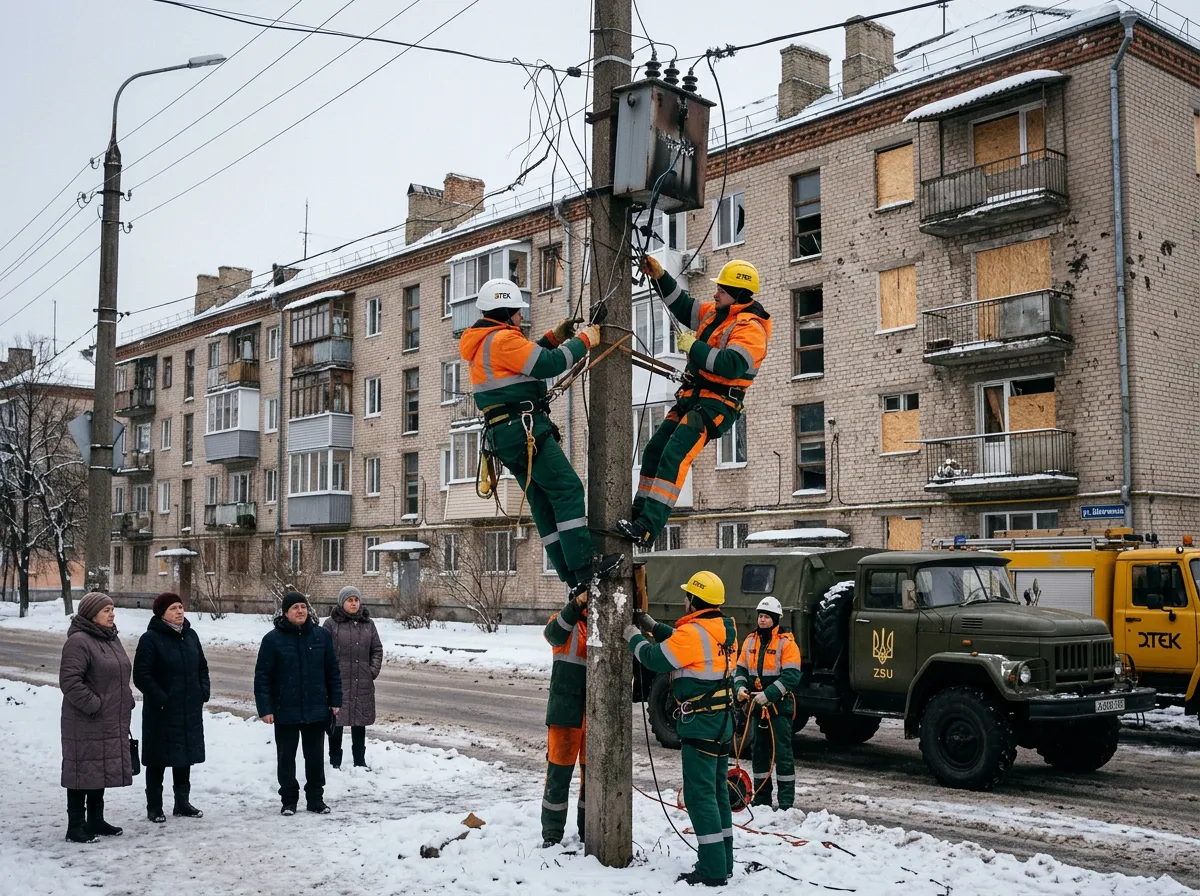
Winter has been particularly brutal. Russian strikes on energy infrastructure have become a deliberate strategy, targeting power plants and heating systems as temperatures drop. Repair crews work constantly to patch systems that get hit again weeks later. For civilians in cities like Kharkiv, Odesa, and Dnipro, the war isn't an abstract geopolitical contest. It's whether you'll have heat tonight, whether the water will run, whether the school your child attends will still be standing tomorrow.
The refugee situation abroad presents its own challenges. Four years is long enough for displacement to become a new reality. Children who left Ukraine at age six are now ten, growing up in Polish or German schools, speaking new languages. Some families have built new lives. Others are stuck in limbo, unable to fully integrate but unable to return. The longer the war continues, the harder reintegration becomes, and the more permanent the demographic loss for Ukraine.
International aid organizations have warned that donor fatigue is real and worsening. Ukraine competes for attention and funding with conflicts in Sudan, Myanmar, Gaza, and elsewhere. The initial wave of solidarity that defined the Western response in 2022 has faded into something more complicated: ongoing support, yes, but with growing questions about cost, duration, and endgame.
What to Watch
The fourth anniversary will bring renewed attention to the conflict, but attention fades. Here's what actually matters in the coming weeks and months:
- The next round of trilateral talks. Dates haven't been confirmed, and the pace of scheduling itself signals how much momentum the process has (or lacks). Any delay beyond early March would suggest the process is stalling.
- Trump's June deadline. The administration set an ambitious target for reaching a settlement. As that deadline approaches, watch for signs of whether Washington pressures Ukraine to accept unfavorable terms or quietly extends the timeline.
- Russia's territorial demands. The demand that Ukraine withdraw from all of Donetsk and Luhansk, including areas Ukraine still controls, is the clearest indicator of whether Moscow is negotiating seriously or running out the clock. Any softening of this position would be significant.
- European security commitments. If the U.S. can't or won't provide the security guarantees Ukraine needs, the question becomes whether European nations will step into that role. Watch for movement on bilateral defense agreements between Ukraine and major European powers.
- The humanitarian funding gap. The UN's 2026 humanitarian appeal for Ukraine will test whether the international community is willing to sustain funding at the levels the crisis demands. Shortfalls will have immediate, visible consequences.
Four years ago, the conventional wisdom was that Russia would take Kyiv in days and Ukraine would collapse. Ukraine didn't collapse. But it hasn't won, either, and the peace that everyone claims to want keeps receding behind a wall of maximalist demands, strategic calculations, and political constraints that no amount of shuttle diplomacy has been able to breach. The fifth year of this war begins tomorrow. Whether it ends before a sixth depends on decisions that, right now, nobody involved seems willing to make.
Sources
- "Ukraine: Humanitarian Situation Overview, February 2026" - United Nations Office for the Coordination of Humanitarian Affairs (OCHA)
- "Ukraine Refugee Situation: Operational Data Portal" - United Nations High Commissioner for Refugees (UNHCR), February 2026
- "Russia-Ukraine Peace Talks: Status and Prospects" - Congressional Research Service, February 2026
- "Four Years On: The War in Ukraine and European Security" - International Crisis Group, February 2026
- Comments from Former U.S. Ambassador to Ukraine William Taylor and former NSC Senior Director Fiona Hill, via public media appearances, February 2026