
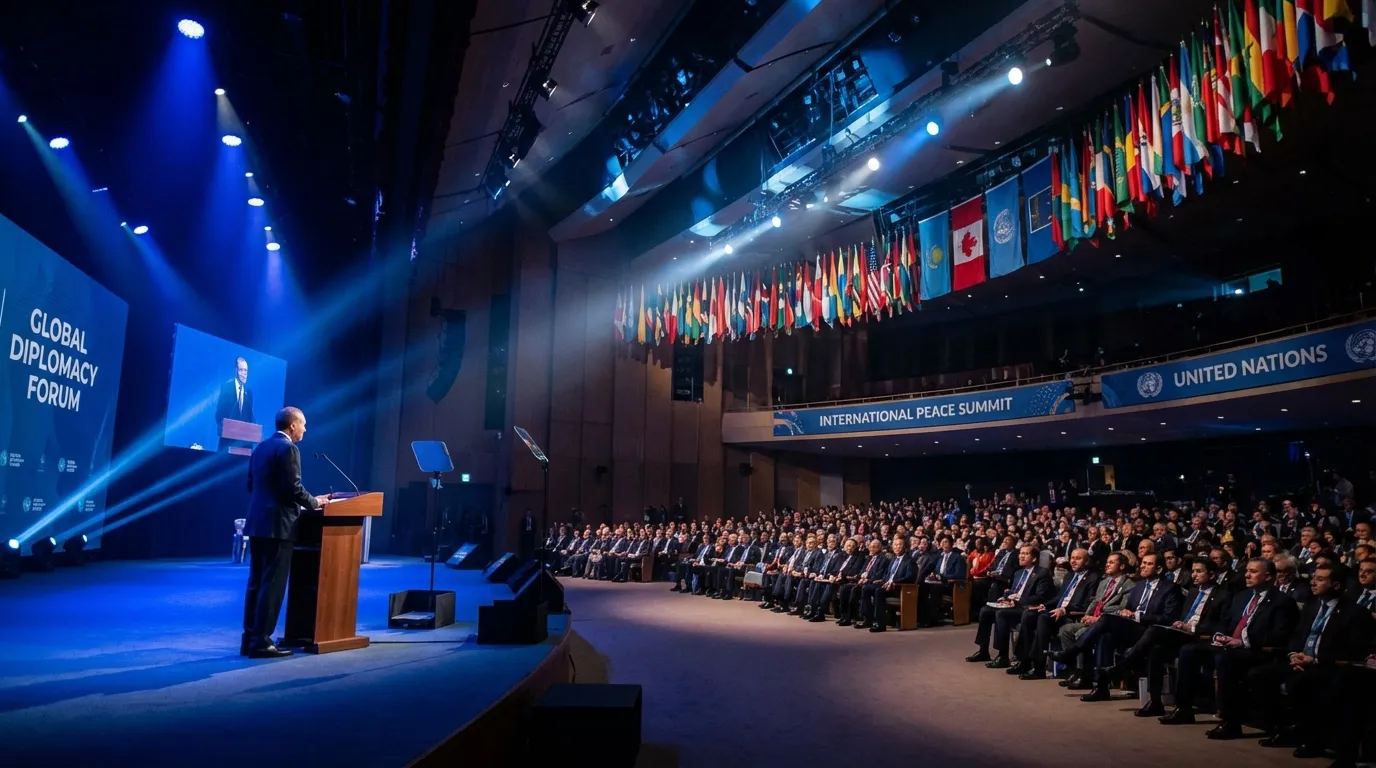
Secretary of State Marco Rubio stood before more than 1,000 diplomats, heads of state, and defense officials at the Munich Security Conference on Friday and delivered a speech that would have sounded reassuring if you only heard the tone. He called the United States "a child of Europe." He urged the two sides to "revitalize an old friendship and renew the greatest civilization in human history." He got a standing ovation.
Then the policy specifics began, and the warmth evaporated. Rubio criticized European climate commitments, condemned the continent's immigration policies, and repeated the Trump administration's position that NATO allies must spend more on defense. He offered no new commitments on Ukraine and didn't mention Russia by name in the main address. For a speech framed as a Valentine's Day peace offering to the transatlantic relationship, the gift came with a long list of conditions.
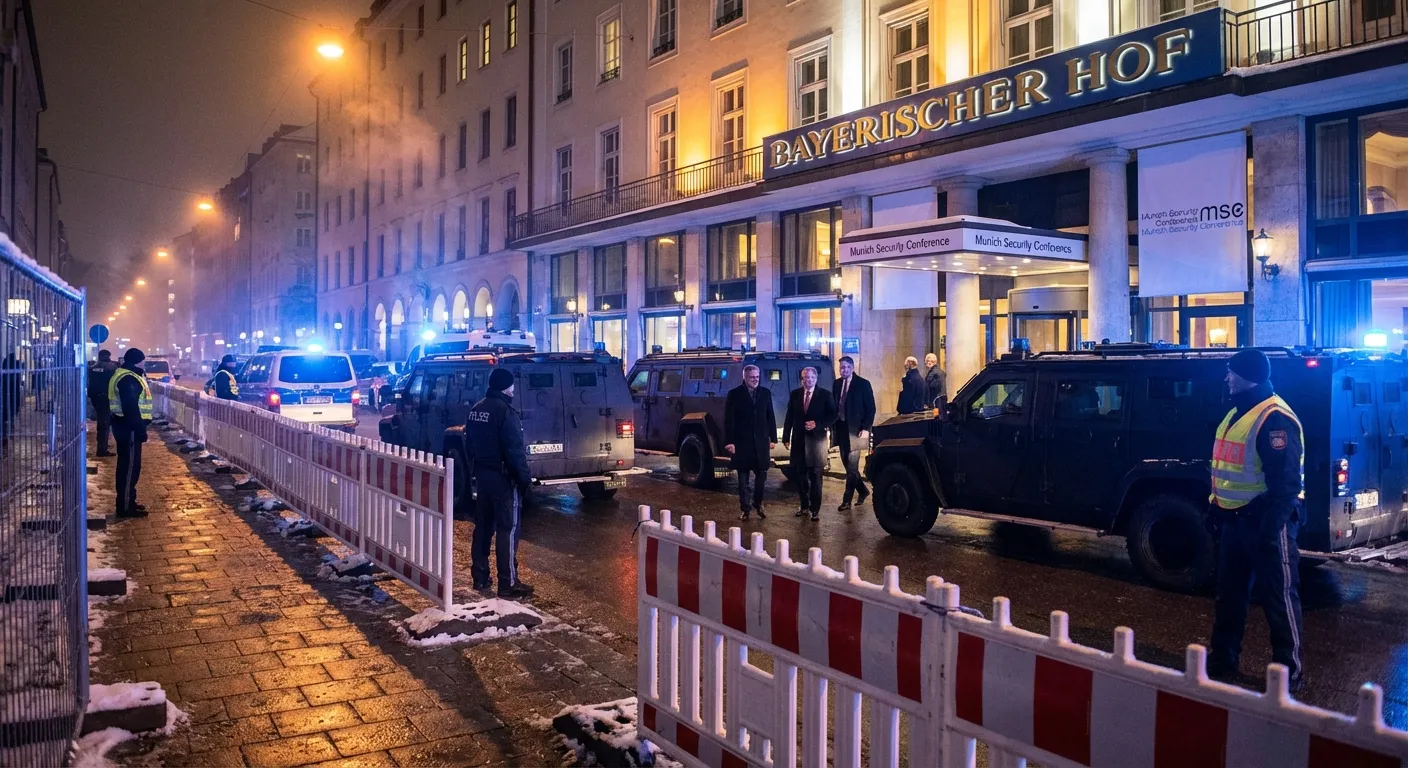
The 62nd Munich Security Conference, running February 13 to 15 at the Bayerischer Hof hotel, drew nearly 60 heads of state and government to address what organizers described as "a fundamental inflection point" for international security. Rubio's speech was the marquee event, the first major European address by a senior Trump administration official since Vice President JD Vance's combative appearance at last year's conference. The contrast was deliberate, but how much it actually signaled is a different question.
The Velvet Delivery, the Same Demands
Rubio's rhetorical strategy was clear from the opening minutes. Where Vance had lectured and accused, Rubio connected and flattered. He invoked shared heritage, civilizational pride, and the idea that American and European values stem from the same root. The audience responded visibly. European officials who had braced for another round of confrontation found themselves applauding.
But the substance told a different story. Rubio described the post-Cold War era as a period of "dangerous delusion," arguing that Western leaders had embraced "a dogmatic vision of free and unfettered trade, even as some nations protected their economies and subsidized their companies to systematically undercut ours." He framed European policies on climate and migration as failures that weakened the continent, language that mirrors the talking points of Europe's own far-right parties.
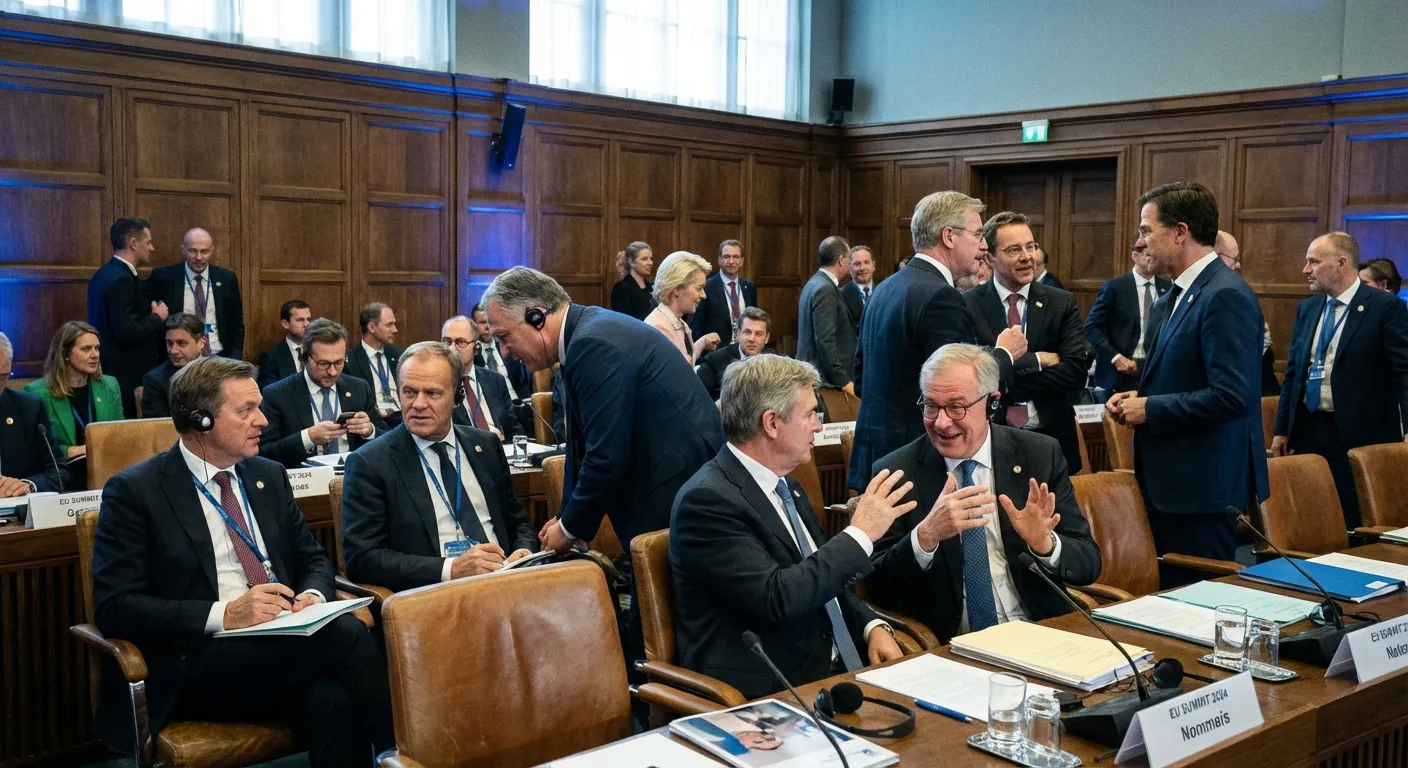
Conference Chairman Wolfgang Ischinger captured the room's mood when he told Rubio directly from the stage: "Mr. Secretary, I'm not sure you heard the sigh of relief through this hall." The standing ovation was real, but as CNN's analysis noted, the applause "belied his stark policy message." CNN called the speech "a wrecking ball wrapped in chocolate and warm fuzzies" and described the dynamic as "the couples' therapy stage of an abusive relationship in decline."
Not everyone was buying it. EU High Representative for Foreign Affairs Kaja Kallas pushed back on what she described as "European bashing," telling attendees: "Contrary to what some may say, 'woke, decadent Europe' is not facing civilizational erasure." She added that the EU was "pulling up our boots, revving up our engines," welcoming Rubio's call for unity while explicitly rejecting the administration's framing of European decline.
Donald Jensen, a former U.S. diplomat and professor of Russian foreign policy at Johns Hopkins University, offered a structural critique. "He's reaching out for Europe to join the Trump administration's view of the world, view of international security," Jensen told Al Jazeera. "And in that regard, I think it will not do much to attain that goal." Jensen noted a deeper problem: Rubio is "one of several voices on the Ukraine issue" within the administration and not "always on the same page" with Vance or other officials. "The problem remains on the Washington end," Jensen said, "how to have a more consistent view of that worldview that Trump is extending towards the Europeans, because often, internally, the US administration also is not consistent."
The Meetings That Mattered More
The sideline diplomacy at Munich may prove more consequential than the main address. Rubio held bilateral meetings with Ukrainian President Volodymyr Zelensky, Chinese Foreign Minister Wang Yi, and Syrian Foreign Minister Asaad al-Shaibani over the weekend, each carrying its own set of signals.
The Zelensky meeting produced the most friction. According to the Ukrainian president, the U.S. proposed a 15-year security guarantee as part of a potential peace framework, but Ukraine wanted a deal lasting 20 years or longer. Zelensky also pushed back publicly on the direction of negotiations. "The Americans often return to the topic of concessions, and too often, those concessions are discussed only in the context of Ukraine, not Russia," he told reporters. Radio Free Europe/Radio Liberty reported that Rubio reassured Zelensky of continued U.S. commitment while simultaneously warning that "hard concessions" would be necessary.
The Wang Yi meeting was described by the State Department as "positive and constructive," the kind of deliberately vague language that tells you very little. With China aggressively courting European partners, the meeting's subtext was about competition for influence on a continent that both Washington and Beijing want in their corner. CNN reported that "as Rubio tries to make amends, China looks to woo Europe," framing the conference as a three-way tug of war.
Rubio also held a joint meeting with al-Shaibani and Syrian Democratic Forces commander Mazloum Abdi, where the discussion centered on a ceasefire in northeast Syria and the integration of Kurdish-led forces into a unified Syrian governance framework. The Syria talks received less attention but signal that the administration is maintaining diplomatic engagement in the Middle East even as Ukraine dominates the headlines.
The Pattern Europe Should Recognize
The most useful lens for understanding Rubio's Munich appearance isn't the contrast with Vance. It's a pattern that has repeated itself across decades of transatlantic diplomacy: American officials deploy reassuring rhetoric at European forums while advancing policies that challenge European interests, and European leaders accept the tone as evidence that the relationship is safe.
This pattern played out during the George W. Bush administration's push for the Iraq War, when Secretary of State Colin Powell's diplomatic overtures to European allies coexisted with Defense Secretary Donald Rumsfeld's dismissal of "Old Europe." It resurfaced during the Obama administration, when the "pivot to Asia" was accompanied by reassurances that European security remained a priority. In each case, European leaders found comfort in the words of the more diplomatic American official while underestimating the policy trajectory that the less diplomatic one had revealed more honestly.
Rubio is playing the Powell role to Vance's Rumsfeld. His speech at Munich was calibrated to lower the temperature, not to change direction. The administration's national security strategy, as the Atlantic Council noted, has now formally enshrined Vance's 2025 accusations that Europe is "suppressing freedom of speech and democracy and facing civilizational decline." A softer delivery of the same message doesn't change the message.
What makes this iteration different is that European leaders no longer have the luxury of misreading it. The Trump administration's approach to foreign policy has been explicit about transactional priorities, and its trade policies have already imposed real economic costs on allies. The standing ovation at Munich was a reflex, not a verdict. The real European response will come in defense budgets, trade negotiations, and diplomatic alignments over the months ahead.
The Bigger Story
Munich 2026 will be remembered less for what Rubio said than for what the conference revealed about the state of the transatlantic relationship. Europe is caught between wanting American security guarantees and resenting the conditions attached to them. The United States is caught between needing European cooperation on China, trade, and security and believing that Europe isn't pulling its weight.
The conference took place against a shifting European political landscape, where far-right movements are alternately gaining and losing ground across the continent, and where the very critiques Rubio leveled at European governance are already central to domestic political debates. When the American Secretary of State tells European leaders their immigration and climate policies have failed, he's echoing arguments that European populists have been making for years. That alignment isn't accidental, and it's not lost on the center-left and centrist leaders who received the standing-ovation speech with careful smiles.
The question hanging over Munich isn't whether America and Europe can maintain their alliance. It's whether the alliance will function as a partnership or as a hierarchy. Rubio's speech offered friendship. The policy framework behind it offered terms. How Europe responds to that distinction will define the transatlantic relationship for the rest of the decade.
Sources
- Secretary of State Calls on European Leaders to Defend Western Civilization in Munich Security Conference Speech - U.S. Department of State
- Rubio's message at Munich Security Conference to Europe: Change or get dumped - CNN
- Rubio calls for U.S. and Europe to "revitalize an old friendship" in speech to allies - CBS News
- Rubio slams European policies on climate, migration as he calls for unity - Al Jazeera
- Rubio Reassures Zelenskyy Of US Commitment, But Warns Of 'Hard' Concessions - Radio Free Europe/Radio Liberty