
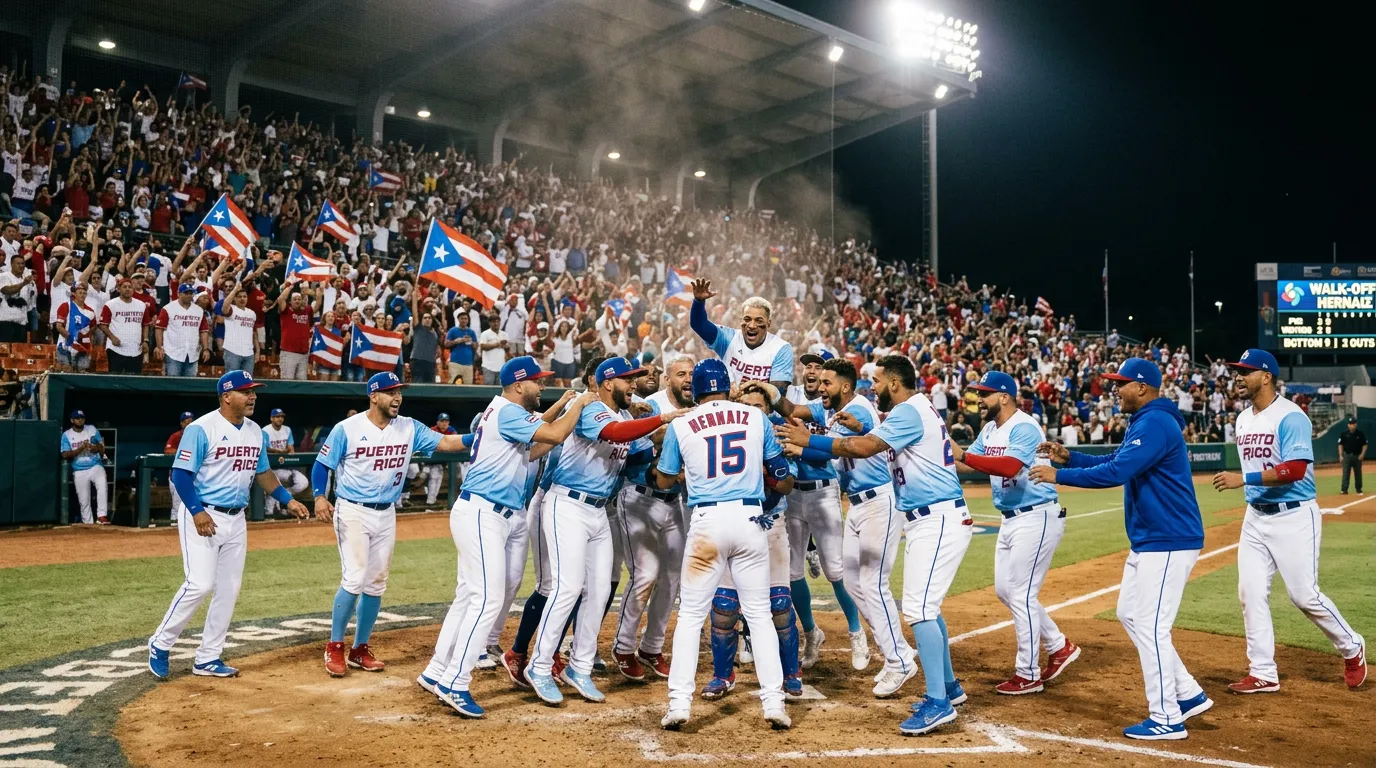
Darell Hernaiz stood in the batter's box in the bottom of the 10th inning at Hiram Bithorn Stadium, one swing away from doing something nobody had ever done in the World Baseball Classic's 20-year history. The 24-year-old Athletics infield prospect from San Juan, playing in front of his hometown crowd, launched a 374-foot bomb to left field that sent Puerto Rico past Panama 4-3 and delivered the WBC's first-ever walk-off home run. Twenty minutes later, he had company: Ozzie Albies crushed one of his own for the Netherlands against Nicaragua, making it two walk-off homers in a single night of a tournament that had never produced one.
Saturday's pool play action was the kind of night that justifies the entire WBC's existence. Across three venues spanning multiple time zones, the tournament delivered drama, power, and moments that will be replayed for years. Japan hammered four home runs, including two from Seiya Suzuki, to rally past Korea 8-6 at a sold-out Tokyo Dome. The United States rolled to a 9-1 blowout of Great Britain behind Kyle Schwarber and Tarik Skubal. And the Dominican Republic flexed its absurd lineup depth with a 12-1 mercy-rule demolition of the Netherlands in their pool play opener.
Two Walk-Offs, Zero Precedent
In five previous editions of the World Baseball Classic spanning 2006 through 2023, not a single game had ended on a walk-off home run. Saturday produced two within the same window of games, a statistical anomaly that speaks to the heightened stakes and talent level of the 2026 tournament.
Hernaiz's blast came after Puerto Rico had clawed back from a 2-0 deficit. A bases-loaded walk to Willi Castro in the bottom of the ninth tied the game and sent the San Juan crowd into a frenzy that shook the stadium's upper deck. Then Hernaiz, who entered the tournament batting .280 in Triple-A, drove a 2-1 slider over the left-field wall to end it. ESPN's Marly Rivera reported that Hernaiz's family was in the stands, including his grandmother, who has attended every Puerto Rico home game since the 2013 WBC.
The emotional weight of the moment extended beyond Hernaiz's family. Francisco Lindor, Puerto Rico's biggest star, was forced to watch from home after an injury kept him off the roster. Bad Bunny, who had made a public gesture of support for the team earlier in the week, watched the walkoff unfold on television. The entire island felt like it was inside Hiram Bithorn, and Hernaiz, a kid from San Juan who hasn't yet established himself in the majors, became the face of that collective joy.

Albies, playing for the country of his birth after years of representing Curaçao in international competition, sent a 3-2 fastball into the seats to lift the Netherlands past Nicaragua in a game that had swung back and forth three times. The Atlanta Braves second baseman has been one of the WBC's most dynamic performers, and his walk-off was the perfect punctuation on a night of firsts.
Japan's Four-Homer Barrage Sends a Message to the Bracket
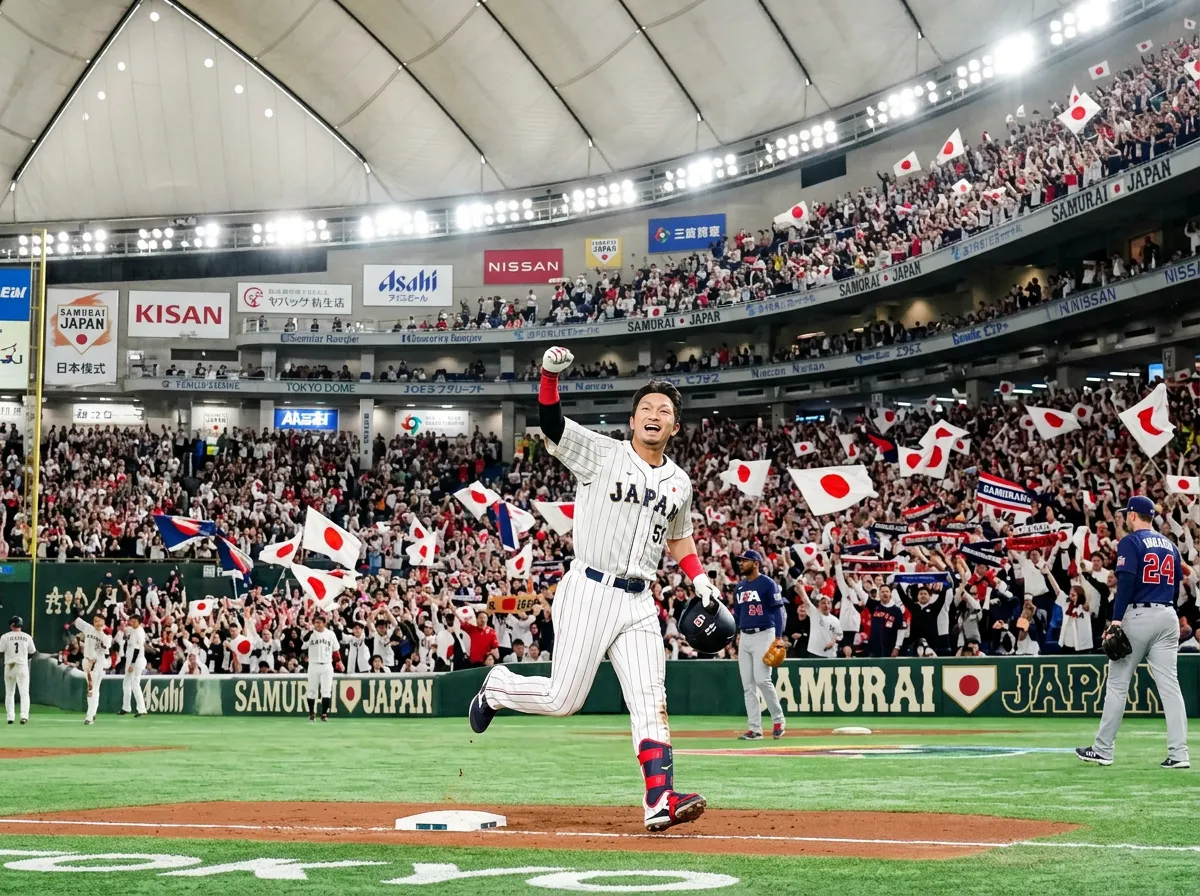
If there was any remaining doubt about Japan's status as the tournament favorite alongside the United States, Saturday's win over Korea erased it. Japan hit four home runs at the Tokyo Dome, rallying from a 4-2 deficit to win 8-6 in a game that demonstrated both the power in Hideki Kuriyama's lineup and the resilience that carried Japan to the 2023 title.
Suzuki's two home runs were the headliners, but the entire sequence told a richer story. Shohei Ohtani's solo shot in the fifth was his second homer of the tournament, and it came on a breaking ball that Korea's starter Ryu Hyun-jin had used to retire him in his first two at-bats. Masataka Yoshida added the fourth homer, a two-run shot that broke a 6-6 tie in the seventh and sent the Tokyo Dome into delirium.
Japan's four-homer night was notable for what it signals about their approach. This is a lineup that can win games with power, not just with the small-ball tactics that have historically defined Japanese baseball. Per MLB.com's Daniel Kramer, Japan's slugging percentage through two pool play games (.578) is the highest by any team through two games in WBC history. That number will regress, but the message it sends to the knockout bracket is real. Teams that face Japan won't be able to rely on keeping the ball in the yard and grinding out close games. They'll need to match power with power, and very few rosters in the tournament can do that.
The Pool Play Picture After Day Two
With Saturday's results, the bracket implications are starting to crystallize. In Pool A, the United States and Puerto Rico sit at 2-0, with both teams looking dominant in different ways. Team USA has outscored opponents 18-2 through two games, relying on pitching depth and power hitting. Puerto Rico's path has been grittier, winning tight games on clutch performances, which may serve them better when the knockout rounds begin on Thursday.
Pool B features the Dominican Republic at 2-0 after its blowout win, with Canada also at 2-0 following an 8-2 victory over Colombia earlier in the day. The DR's lineup, featuring Vladimir Guerrero Jr., Rafael Devers, and Juan Soto, is averaging 10 runs per game. CBS Sports' Matt Snyder noted that the Dominican Republic's batting lineup is "arguably the most dangerous collection of hitters ever assembled for an international baseball tournament," a claim backed by their combined 47 career All-Star selections.
Pool C belongs to Japan and Australia, both 2-0, with Korea and Chinese Taipei battling for the last knockout spot. The path from pool play to the knockout bracket rewards consistency more than any single dominant performance, which is why Puerto Rico's ability to win a game they were losing 2-0 in the ninth might matter more than the DR's 12-1 mercy-rule win. Tournament baseball punishes teams that can't win close games, and Puerto Rico just proved they can.
Why This WBC Already Feels Different
Four previous World Baseball Classics were criticized for a perceived lack of intensity, with MLB players sometimes treating the tournament as extended spring training. The 2023 WBC, anchored by Ohtani's legendary strikeout of Mike Trout in the championship game, changed that perception significantly. The 2026 edition is pushing even further.
The participation level tells the story. Per Baseball America, 87% of invited MLB players accepted their roster spots this year, up from 71% in 2023 and just 58% in 2017. The rosters are deeper, the pitchers are throwing harder, and the atmosphere in San Juan, Tokyo, and Houston has matched or exceeded anything the WBC has produced before. Saturday's walk-off homers were not spring training swings from players going through the motions. They were adrenaline-fueled moments from competitors who clearly cared about winning.
The structural changes help too. The expanded 20-team format, with single-elimination knockout rounds beginning Thursday, raises the stakes of every pool play game. A loss doesn't eliminate you, but it determines seeding, and seeding in a single-elimination format can be the difference between facing Australia and facing Japan. Teams know this, and Saturday's intensity reflected it. The 2023 WBC proved the tournament could produce a single iconic moment. The 2026 edition is proving it can sustain that intensity across an entire day of action, with multiple games delivering moments that would headline any SportsCenter broadcast.
How This Plays Out
Saturday's action answered some questions and raised new ones. Japan's power is legitimate, not a quirk of one Ohtani at-bat. Puerto Rico can win the tight games that define tournament baseball. The Dominican Republic's lineup depth might be the best in the field. And the United States, for all its talent, hasn't faced a real test yet.
The knockout rounds begin Thursday, and based on the first two days of pool play, the semifinal picture looks increasingly like it will feature the tournament's four heavyweights: the United States, Japan, the Dominican Republic, and one of Puerto Rico or Korea. The walk-off home runs were the highlight reel moments, but the real story of Saturday was the depth of quality across the entire tournament. This WBC has the talent, the atmosphere, and now the history to stand as the best edition yet. The only question is whether the knockout rounds can match the drama that pool play has already delivered.
Sources
- WBC Saturday Scores and Highlights - CBS Sports
- Hernaiz Walk-Off HR Lifts Puerto Rico - ESPN
- WBC Daily: Two Walk-Off Homers Cap Epic Night - FOX Sports
- Japan vs. Korea and Netherlands vs. Nicaragua Recap - Pinstripe Alley