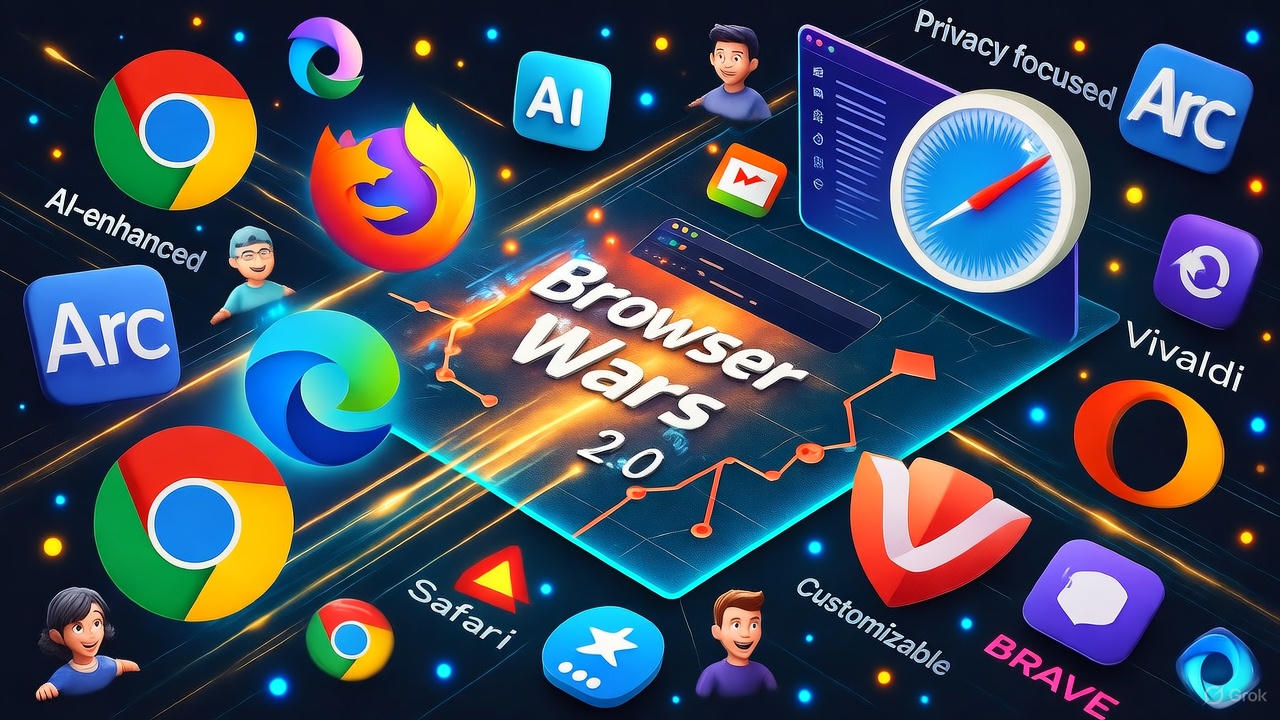
For the past decade, the browser wars were over. Chrome won with 68% market share. Everyone else was fighting for scraps. Innovation mostly stalled. Browsing the web felt fine, but not great. Just fine. But something weird is happening in 2025: browsers are exciting again. New players are gaining real market share, Chrome is scrambling to respond, and for the first time since Firefox’s peak in 2009, people are genuinely enthusiastic about how they access the internet.
Welcome to Browser Wars 2.0, where AI is the secret weapon and privacy is the rallying cry.
Chrome’s Grip Is Slipping
Chrome still dominates with 63% global market share, but that’s down from 68% just two years ago. In the tech world, that’s a massive decline for a product that once seemed completely untouchable. The reasons are straightforward: Chrome has become bloated, slow, and eats RAM like it’s trying to set records. Sound familiar? It’s exactly what happened to Internet Explorer, the browser Chrome replaced.
Privacy concerns finally reached critical mass. Google’s aggressive tracking, the endless delays and confusion around killing third-party cookies, and the general sense that Chrome exists primarily to feed Google’s advertising machine all drove users to look elsewhere. The breaking point for many was realizing that the company controlling the browser also controls the ads, the search engine, and has a financial incentive to know everything about you.
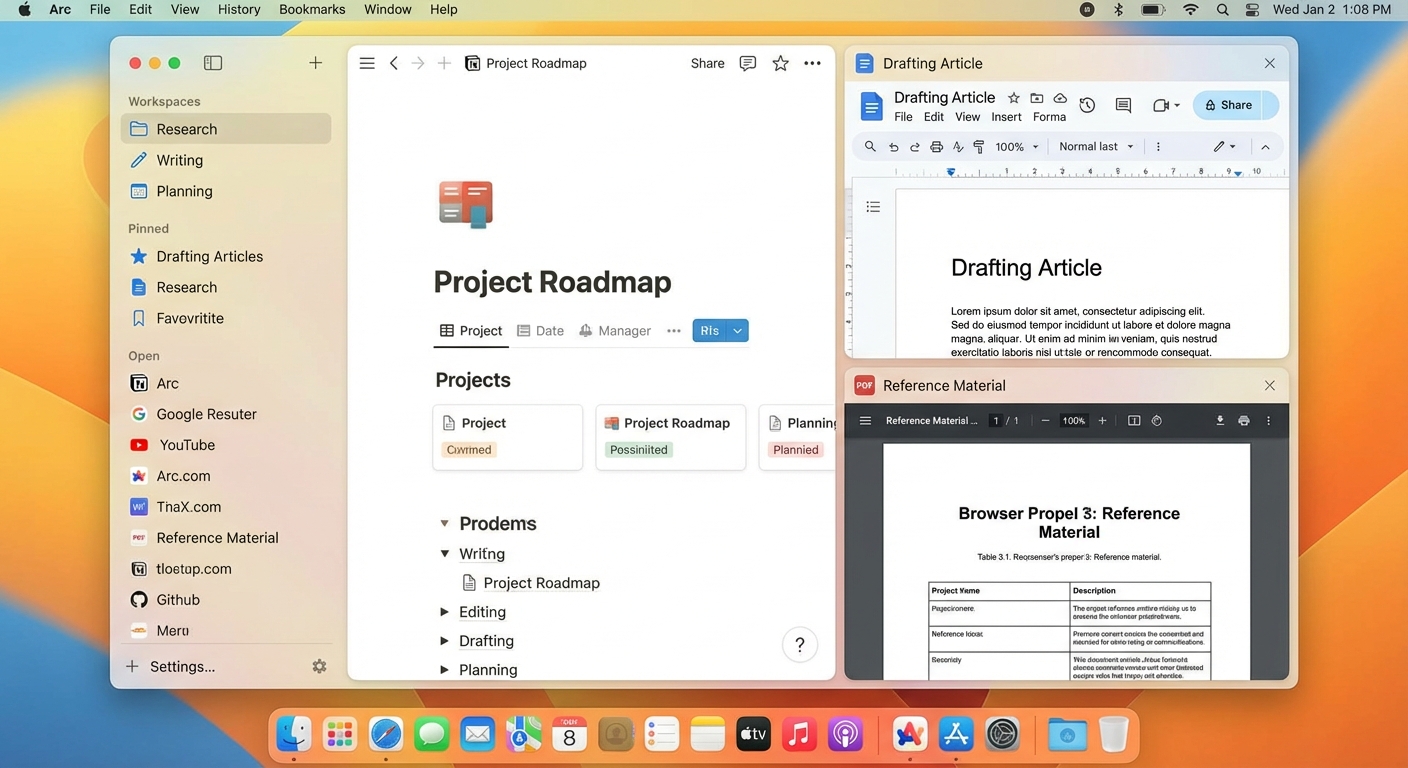
Enter Arc, the browser that threw out everything you thought you knew about how browsers should work. Released by The Browser Company, Arc killed the traditional tab bar in favor of organized spaces and a sidebar. It integrates productivity tools like notes and split views directly into the browser. It looks like what would happen if Apple designed a browser specifically for people who live in their browser for work. With over 1 million daily active users, it’s tiny compared to Chrome. But it’s massive in influence, forcing every competitor to rethink their approach. When was the last time a browser made you excited about tabs?
AI and Privacy Drive Innovation
Two forces are reshaping browsers right now: artificial intelligence and privacy. AI in browsers used to be a gimmick, like Clippy with better marketing. Now it’s solving real problems. Brave has built-in AI summarization that works offline, so you’re not sending everything you read to the cloud. Opera integrated ChatGPT and its own assistant, Aria, directly into the sidebar to help you write and research. Microsoft Edge added Copilot for instant answers without opening new tabs. Arc is testing “Arc Max” features like automatic tab renaming and instant answers to questions about the page you’re reading.
These aren’t toys. They’re genuinely useful tools that change how you interact with information online. Related: how personal AI assistants are becoming more integrated into every aspect of technology.
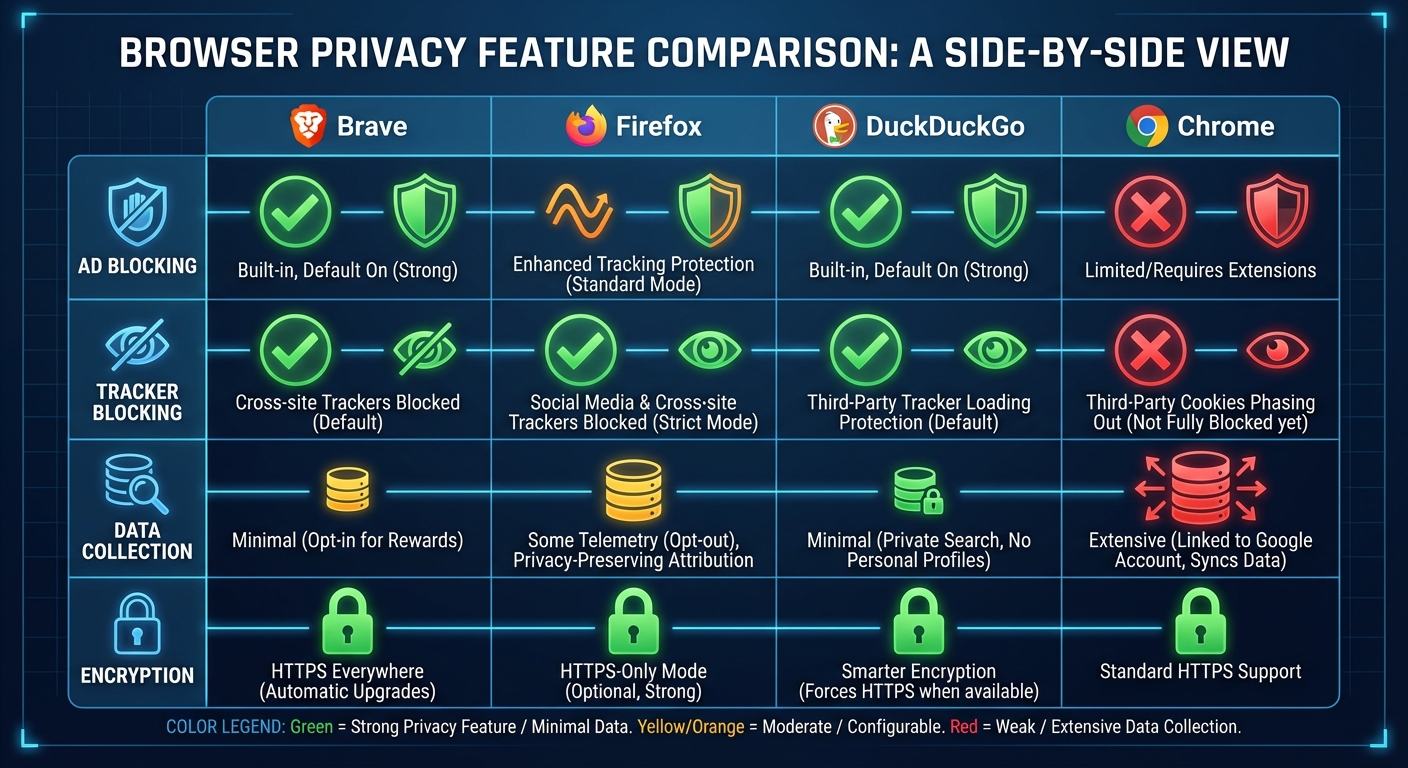
On the privacy front, what used to be a feature for paranoid techies has gone mainstream. Brave blocks all ads and trackers by default, no configuration needed. DuckDuckGo’s browser forces encrypted connections and erases your history automatically. Firefox continues being the open-source champion, funded by users instead of ad companies. Regular people are switching because they’re tired of being tracked, profiled, and turned into products. The browser has become the first line of defense in personal digital security.
Google Fights Back (But Can It Win?)
Google isn’t blind to the threat. Chrome is fighting back with performance improvements, new privacy features (though skepticism remains high), and Gemini AI integration baked directly into the browser. But Google faces a fundamental contradiction: it wants to appear privacy-friendly while its core business model depends on tracking users for targeted ads. This tension makes their privacy promises feel hollow to many users.
The DOJ’s antitrust case against Google specifically targets its browser monopoly tactics, threatening to force changes in how Chrome is distributed and bundled. If Google is forced to stop paying billions to be the default browser on devices, Chrome’s dominance could erode even faster.
Market share shifts tell the story. Arc is growing 30% month-over-month among tech workers and knowledge professionals. Brave hit 60 million monthly active users in 2024. Edge is slowly gaining ground on Windows, helped by Microsoft’s aggressive bundling and genuinely useful AI features. The browser market is competitive again, and that benefits everyone. The stakes are high too, as explored in the antitrust fight that could reshape the entire tech industry.
Picking Your Weapon
For users, this competition is fantastic news. Better speed, better privacy, better features, and actual choices that matter. If you’re curious about switching, each browser has a distinct personality. Arc works best for productivity-focused users who want their browser to be a workspace. Brave is ideal for privacy without sacrificing modern features. Firefox appeals to open-source advocates and privacy purists. Edge surprisingly works well now, especially if you use Microsoft services. Opera and Edge lead on AI integration.
The best part? Switching is painless. All modern browsers sync bookmarks, passwords, and settings instantly. You can try a new one for a week and switch back if it doesn’t work for you. There’s no lock-in anymore.
The Bottom Line
The internet hasn’t changed much in years, but the way we experience it is evolving fast. For the first time since the early 2000s, browsers are actually fun again. Competition has forced innovation, woken up giants who got complacent, and given birth to scrappy challengers who are genuinely trying new ideas. Whether you stick with Chrome or jump ship to Arc, Brave, or something else entirely, your web experience is about to get significantly more interesting. And in a world where we spend half our lives in browsers, that matters more than you might think.
Sources: Browser market share data, technology company announcements, privacy and security research.