Web3 crashed spectacularly. Crypto prices collapsed, NFT markets imploded, and most Web3 startups either failed or quietly pivoted to something else. But while everyone was watching blockchain burn, researchers at universities, government labs, and major tech companies were working on what comes after the current internet. Not Web3. Web4.
The next internet won’t be built on blockchain. It’ll be built on quantum networking and AI infrastructure. And it’s already being developed at CERN, MIT, Google’s labs, and government research facilities worldwide. This isn’t speculative future tech. Working prototypes exist. The physics works. The challenge is engineering and scale, not whether it’s possible.
When Web4 arrives, likely in the 2030s, it won’t just be faster internet. It’ll be fundamentally different in ways that change computing, security, communication, and how data moves globally.
What Web4 Actually Means
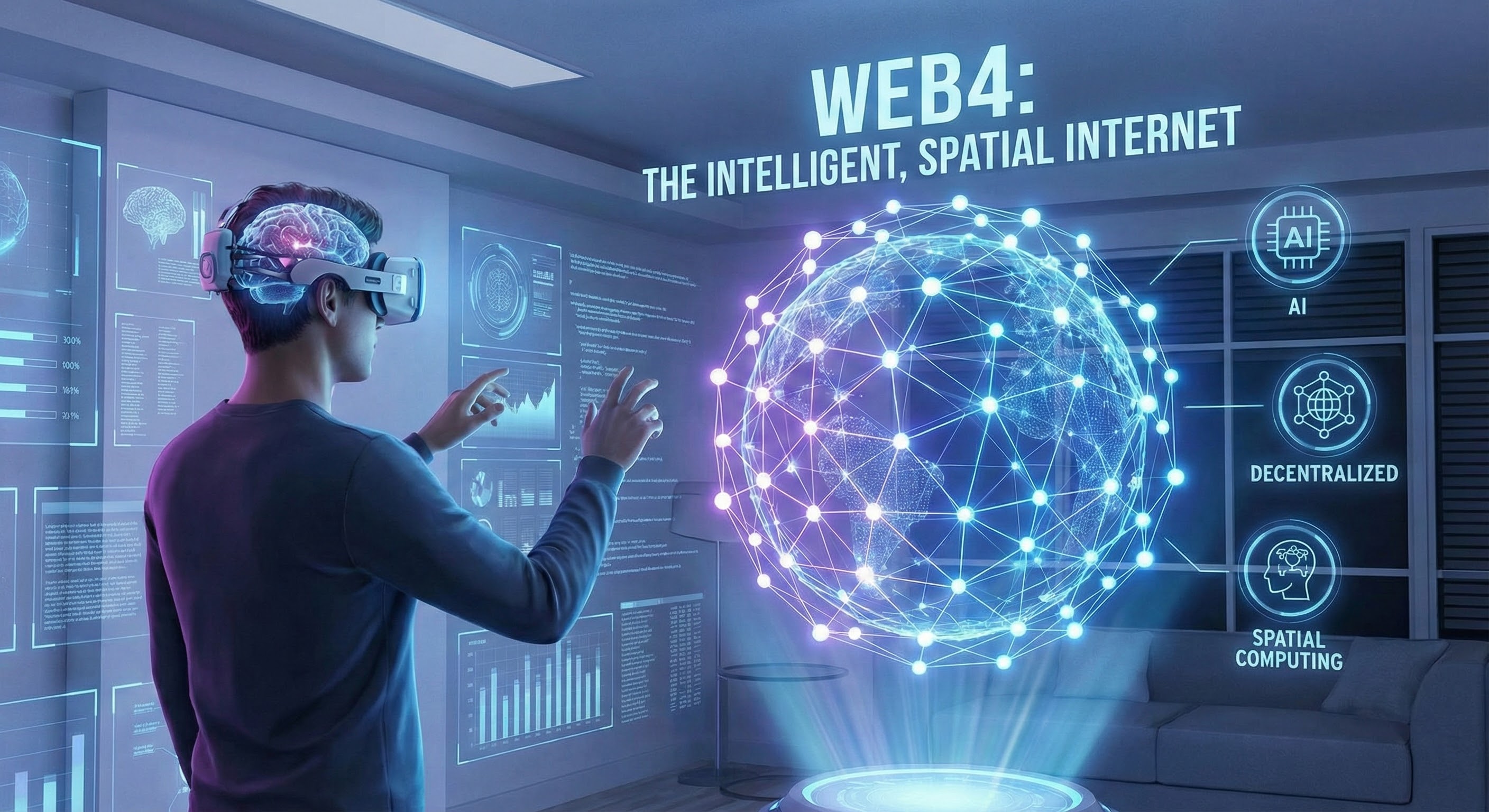
Web4 is a loose term describing the next paradigm of internet infrastructure that moves beyond silicon-based, human-centric networks. It involves several revolutionary capabilities working together. Quantum internet uses entangled particles for communication that’s physically impossible to hack. AI-native infrastructure is designed for autonomous machine agents rather than humans clicking links in browsers. Edge computing distributes processing power to the network’s periphery instead of centralized servers.
The quantum component sounds like science fiction, but it’s surprisingly close to reality. Unlike current networks that use electrical signals through fiber optic cables, quantum networks use the quantum states of particles like photons. Through “entanglement,” two particles remain connected regardless of distance. Measuring one instantly reveals the state of the other. This enables perfectly secure communication because any eavesdropping attempt destroys the quantum state, making it immediately detectable.
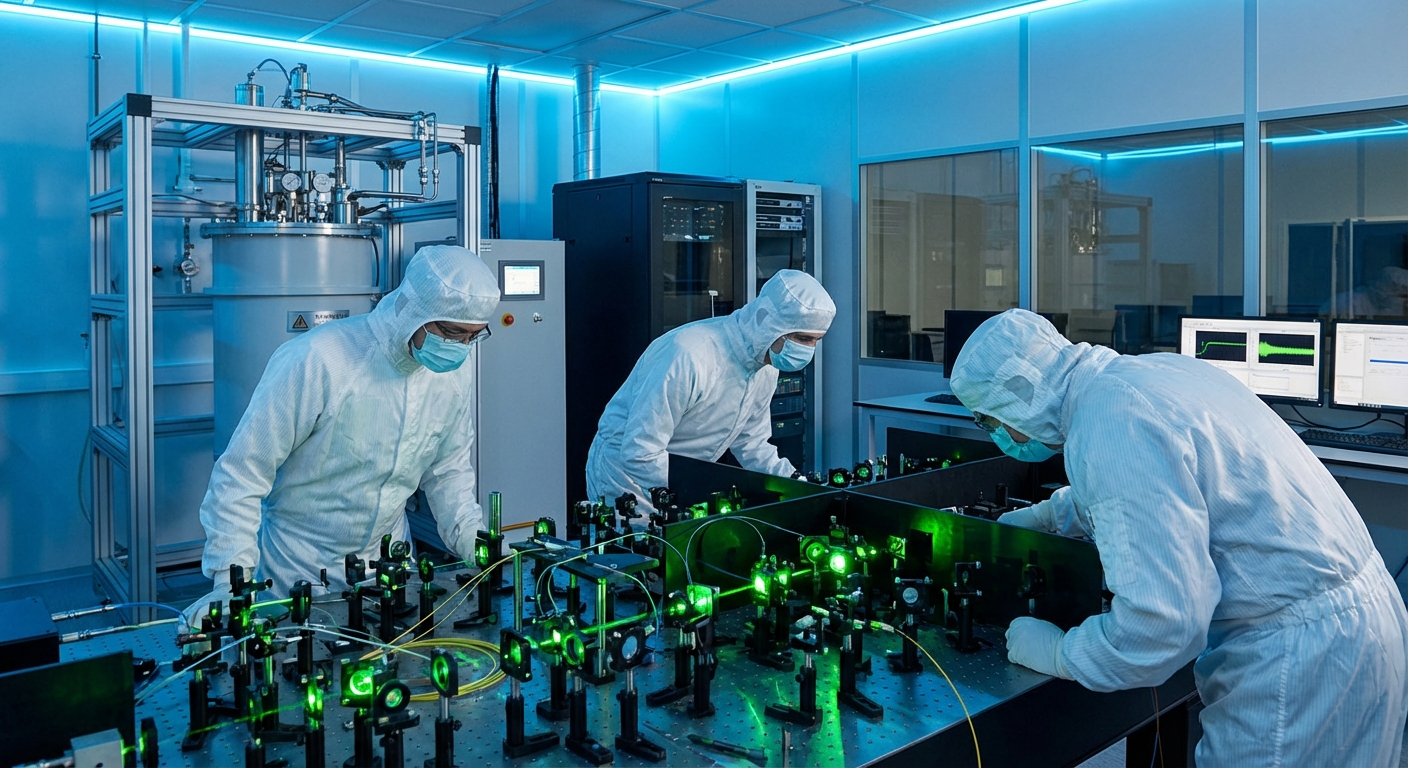
More practically, quantum networks can connect quantum computers into distributed supercomputers with combined processing power that would be impossible otherwise. China already has a 2,000 km quantum network operational. The US and EU are investing billions to catch up. This isn’t theoretical research anymore. It’s an engineering race with geopolitical stakes.
AI-Native Infrastructure Changes Everything
The current internet was built for humans clicking links on web pages. Web4 is being designed for AI agents operating autonomously. Today, AI tools like ChatGPT and the systems discussed in personal AI assistants are retrofitted onto infrastructure not built for them. The next internet will have AI integration at the protocol level.
This “Semantic Web” concept means data will be structured so AI can understand meaning and context, not just process text strings. Machines will navigate, transact, and communicate with other machines without human intervention for routine tasks. Imagine telling an AI agent, “Plan a vacation to Japan,” and it negotiates with other agents to book flights, hotels, and activities without you ever touching a website. This requires fundamental changes in how resources are discovered and orchestrated online.
CERN, Google, and the Quantum Internet Alliance are currently engineering these protocols. The work is real, funded, and progressing toward implementation timelines in the 2030s.
Why Regular Users Should Care
Why should you care about quantum networks if you just want to browse social media and check email? Two reasons: security and capability. As quantum computers advance, they will eventually break current encryption standards. Every password, banking transaction, and secure communication on the internet today relies on math problems that are hard for classical computers to solve but trivial for quantum computers. The internet needs quantum-resistant security before quantum computers become powerful enough to break everything.
The capability improvements will enable applications we can’t currently imagine, much like 4G networks enabled the ride-sharing economy and mobile video streaming that were impossible on 3G. The speed and latency improvements from quantum and edge computing will make current internet feel as slow as dial-up does today.
The Realistic Timeline
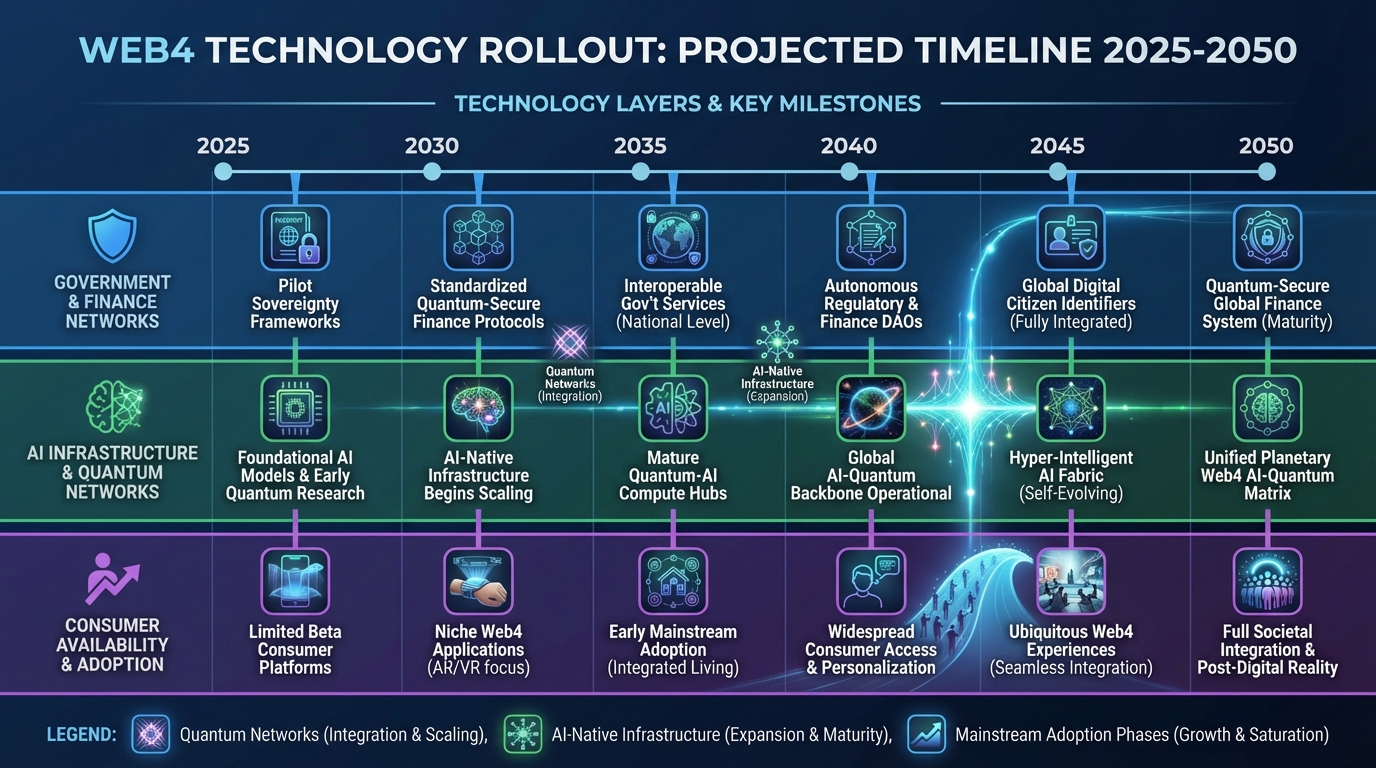
Don’t expect to plug into a quantum modem next year. The timeline is measured in decades. From now through 2030, we’ll see specialized quantum networks for government communications and financial transactions. From 2030 to 2040, early AI-native infrastructure will roll out, improving cloud services and security for businesses. From 2040 to 2050, mature quantum and AI infrastructure becomes accessible to regular users. A true consumer-level quantum internet is 60+ years away, if it happens at all in that form.
We’re in the foundational phase where decisions made now about standards and protocols will define the digital world for the next half-century. That’s why governments and tech giants are investing so heavily despite the long payoff timeline.
Web3 vs. Web4: What’s the Difference?
It’s important to distinguish this from the Web3 hype cycle. Web3 was largely speculative, driven by crypto investors looking for problems to solve with blockchain. The technology was interesting but struggled to find practical applications beyond speculation and financial instruments. Web4 is being driven by governments, major corporations, and research institutions to solve concrete, existing problems: the need for unhackable security and infrastructure that can handle exponential AI growth.
This connects to broader shifts in how technology companies are being held accountable, as explored in the antitrust fight against big tech. Web4’s development is happening in established institutions, not through decentralized communities or token sales.
The Bottom Line
While Web3 imploded in spectacular fashion, real research into next-generation internet infrastructure continues steadily in well-funded labs worldwide. Quantum networks and AI-optimized internet infrastructure aren’t hype or speculation. They’re being built right now by serious institutions with massive funding and concrete timelines.
Regular users won’t notice much for 10-15 years. The changes will be gradual, mostly invisible backend improvements rather than dramatic user experience shifts. But by 2040, the internet might work very differently than it does today, supporting capabilities that current architecture fundamentally cannot handle. Web4 isn’t around the corner. But it’s coming. And the people building it now will shape how the internet works for the next 50 years, whether we’re paying attention or not.
Sources: Quantum computing research institutions, government technology initiatives, AI infrastructure analysis.