In Star Trek, the replicator assembles food, medicine, and objects from raw matter at the molecular level. Say “tea, Earl Grey, hot,” and it materializes in seconds. We’re not there yet. But we’re closer than most people realize. Several companies and research labs are working on molecular assembly technologies that can build complex molecules and eventually materials from basic chemical building blocks.
It’s not science fiction. It’s applied chemistry and nanotechnology. The first commercial applications are 5-10 years away, not 50. The implications are staggering: custom medicine synthesized on-demand for your specific genetic profile, food created from basic nutrients without agriculture, materials with impossible properties assembled atom-by-atom.
Welcome to molecular printing, the technology that sounds like fantasy but is rapidly becoming an engineering challenge rather than a physics problem. Like the AI boom driving nuclear power investments, molecular printing represents a fundamental shift in how we produce what we consume.
How It Actually Works
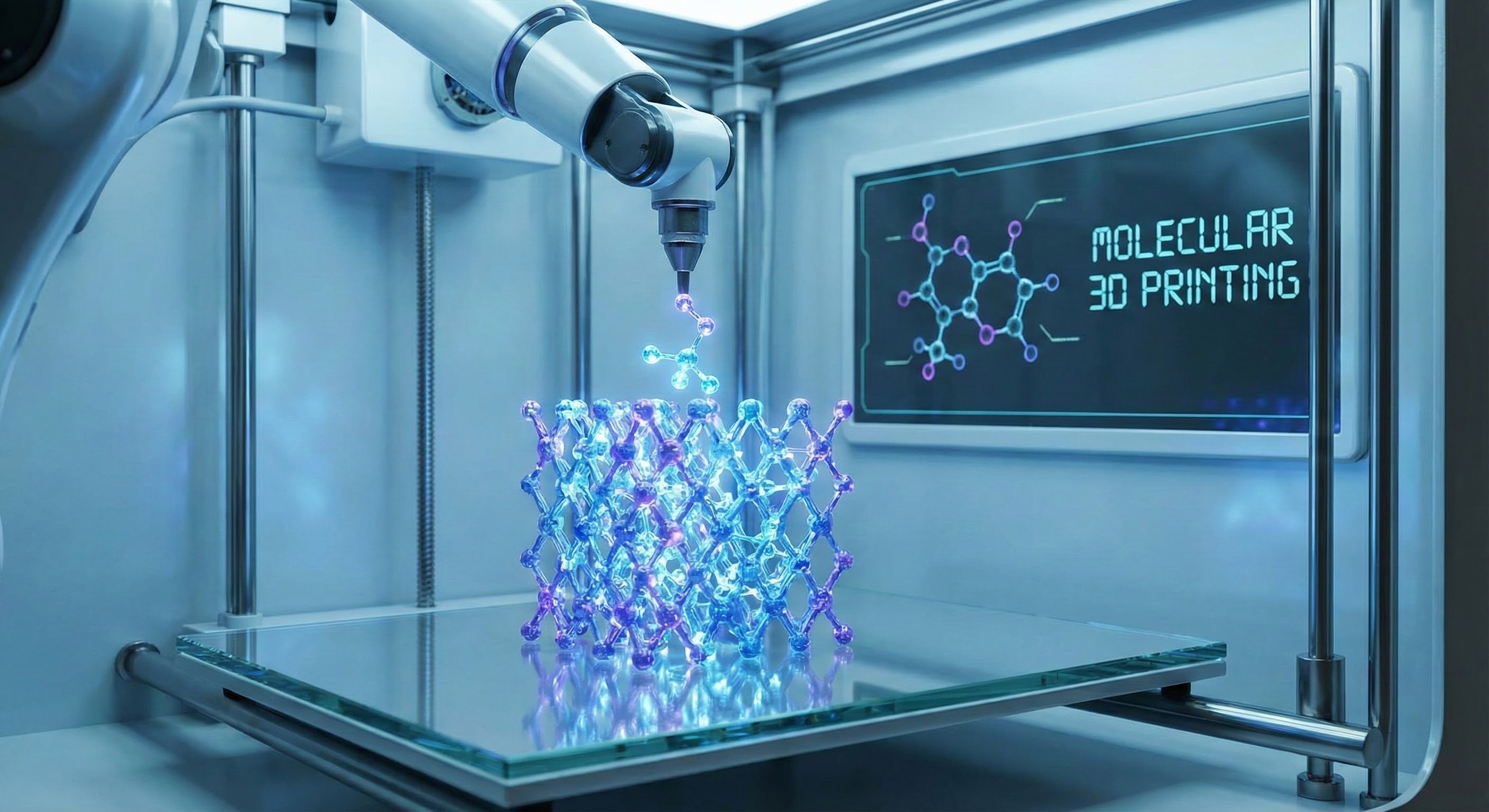
Current 3D printing builds objects by depositing layers of plastic or metal, stacking them until you have a shape. Molecular assembly is fundamentally different. It builds objects by positioning individual molecules or atoms precisely where you want them. Think of it as the difference between sculpting a statue from a block of marble versus assembling it atom by atom from the ground up.
Traditional manufacturing starts with bulk materials like wood, metal, or plastic and shapes them through cutting, molding, or melting. Molecular assembly starts with raw atoms and molecules, arranging them into the desired structure from the bottom up. This allows creation of structures impossible through traditional manufacturing: materials with properties not found in nature, custom molecules designed for specific purposes, and precise control over every aspect of the final product.
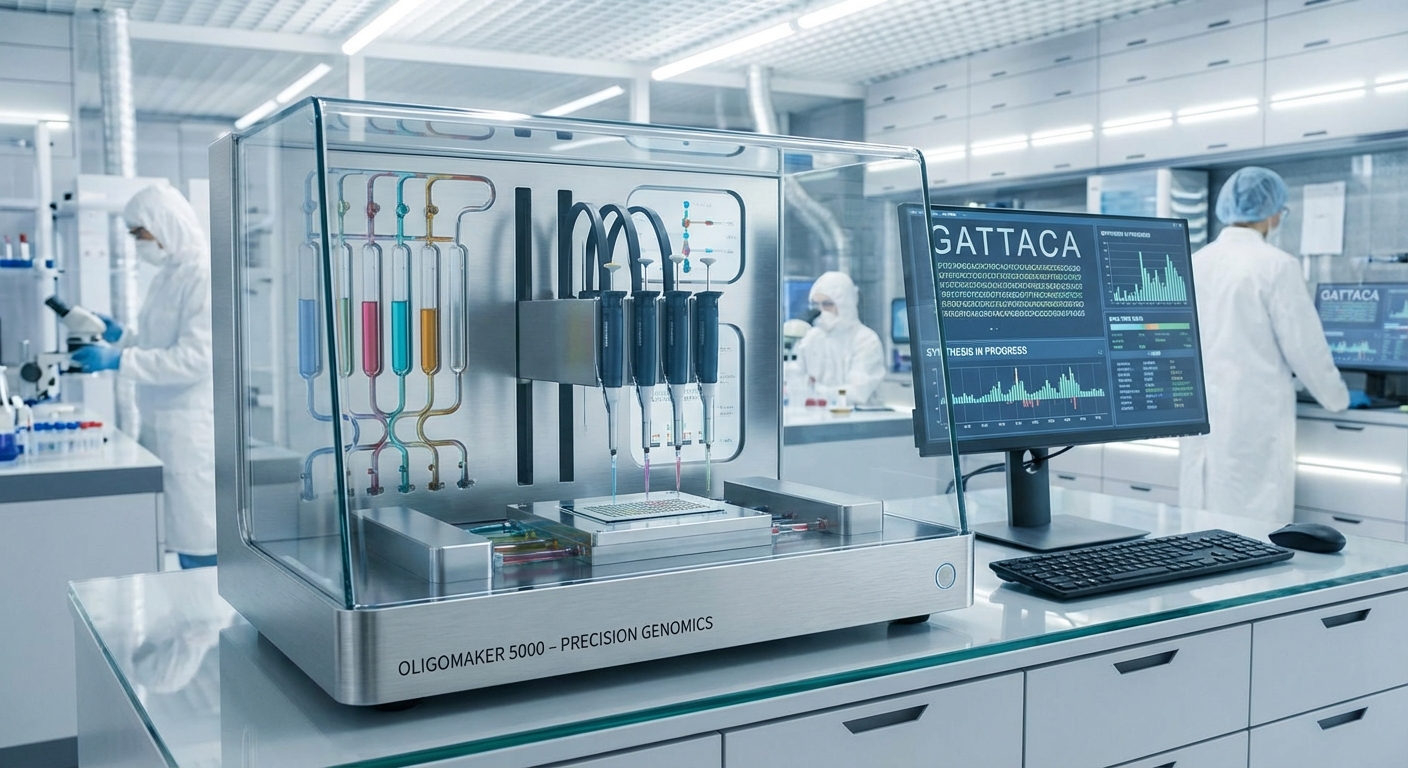
We’re not building starship parts yet, but molecular assembly is working in limited domains right now. Companies like Twist Bioscience print custom DNA sequences, allowing researchers to order synthetic DNA online for medicine development or industrial biology applications. Automated systems build custom proteins and peptides for pharmaceutical research. Some labs use systems that assemble drug molecules from chemical building blocks automatically. Academic research facilities with atomic-level manipulation capabilities can position individual atoms using scanning tunneling microscopes, though at impractically slow speeds.
These are early, specialized applications, but they prove the fundamental concept works at commercial scale.
The Medicine Revolution
The most advanced near-term application is personalized medicine. Currently, pharmaceutical companies manufacture drugs in massive batches at centralized factories and ship them to pharmacies nationwide. Patients get standard doses of standard formulations. In a molecular printing future, a pharmacy or hospital would have a molecular printer that receives your prescription along with your genetic profile and current health data. It would then assemble medication with precise dosing, combinations, and formulations tailored specifically to your biology.
The benefits are immense. Personalized medicine becomes practical at scale instead of prohibitively expensive. Supply chain delays disappear when you’re printing on-site. Manufacturing costs drop dramatically once the technology matures. Counterfeit drugs become nearly impossible when medicine is printed on-demand rather than shipped globally.
Prototypes of pharmaceutical molecular printers exist in research hospitals now. The first commercial units could be deployed within a decade, starting with specialized applications like cancer treatments and rare diseases where customization provides the most value.
The Food Challenge (Much Harder)
The food application is more Star Trek-like and significantly further from reality, but serious research is happening. The concept involves assembling basic nutrients like proteins, fats, carbohydrates, and vitamins into food with desired taste and texture. Some companies are already making plant-based foods with printed structures. Research on cellular agriculture is growing meat from cells in bioreactors.

But creating appetizing textures from component nutrients is incredibly difficult. Making it taste genuinely good is even harder. Current costs are prohibitive, with lab-grown meat costing hundreds of dollars per pound. Regulatory approval and consumer acceptance remain massive hurdles. People might trust molecularly printed medicine because it’s already weird and clinical. Getting them to eat molecularly assembled steak is a different challenge.
Basic versions of food printing might exist in 15-20 years for specialized applications like space travel or military rations. True “replicator food” that regular people choose to eat is likely 50+ years out, if it happens at all.
Materials Science: The Big Prize
The most transformative long-term application is materials science. Molecular assembly could create materials with properties impossible to achieve naturally. Imagine materials with the strength of diamond but the flexibility of rubber, or substances that conduct electricity like copper but insulate heat like ceramic. Self-healing materials that repair damage automatically. Programmable matter that changes properties on demand.
This involves arranging molecules in structures that don’t occur in nature. While decades away for most applications, early versions are already being developed in research labs. The implications for construction, electronics, aerospace, and countless other industries would be revolutionary.
The Economic Earthquake
If molecular assembly works at scale, the economic disruption would be profound. Local production could replace global supply chains entirely. Why ship products from factories halfway around the world when you can print them locally from raw materials? Traditional pharmaceutical manufacturing and distribution could collapse. Agriculture might eventually face disruption from food printing, though that’s the furthest out.
This represents automation of physical production at a level that makes current manufacturing automation look minor. Jobs in manufacturing, agriculture, and logistics could face displacement on a massive scale. It’s the kind of economic restructuring that happens over decades, creating both enormous opportunities and significant challenges. Similar patterns are emerging with AI agents automating knowledge work.
The Realistic Timeline
Let’s be clear about timing. Now through 2030, we’ll see specialized molecular synthesis for pharmaceuticals and research, primarily in industrial and medical settings. From 2030 to 2040, broader pharmaceutical printing could reach hospitals and pharmacies, with possible early food applications for niche markets. Advanced materials with custom properties might arrive between 2040 and 2060. A true Star Trek replicator for everyday consumer goods is 60+ years away, if the economics and physics ever make it practical.
We’re in the foundational research phase where the technology is proven but scaling to practical, affordable, widespread use remains a multi-decade engineering challenge.
The Bottom Line
Molecular assembly is transitioning from science fiction to serious engineering. You won’t have a replicator in your kitchen next year or probably even in the next decade. But the first molecular assemblers for medicine and specialized materials are coming within 10-20 years. The technology is real, the physics works, and serious money is being invested in making it practical.
The replicator future isn’t here yet. But it’s coming, slowly and steadily, in labs and startups that most people have never heard of. By the time it arrives, it won’t feel revolutionary because the transition will happen gradually. Until one day you realize that the medicine you’re taking was printed specifically for you that morning, and that’s just normal. Welcome to the very early stages of the replicator economy.
Sources: Nanotechnology research, biotechnology industry analysis, pharmaceutical manufacturing reports, materials science research.