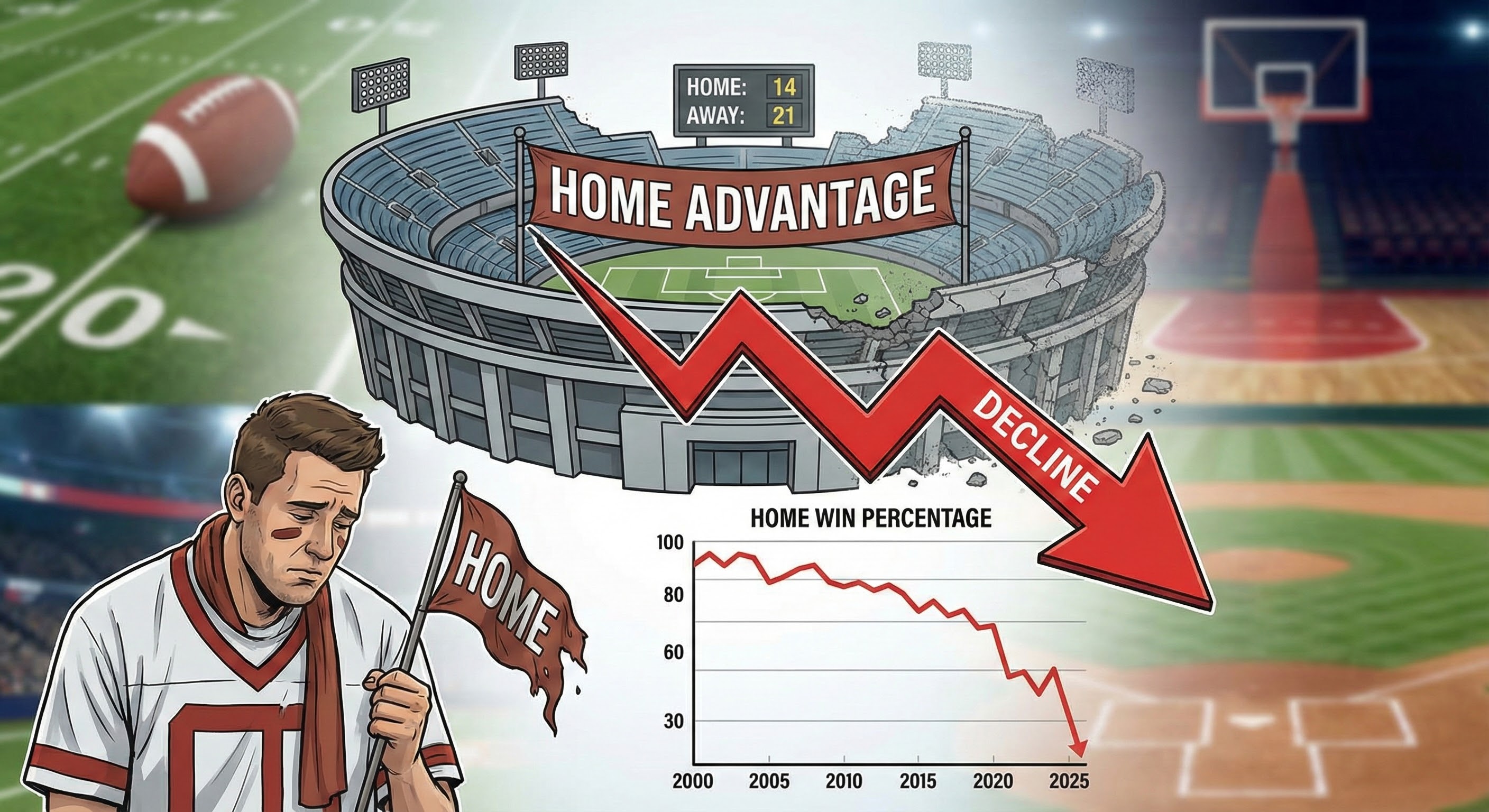
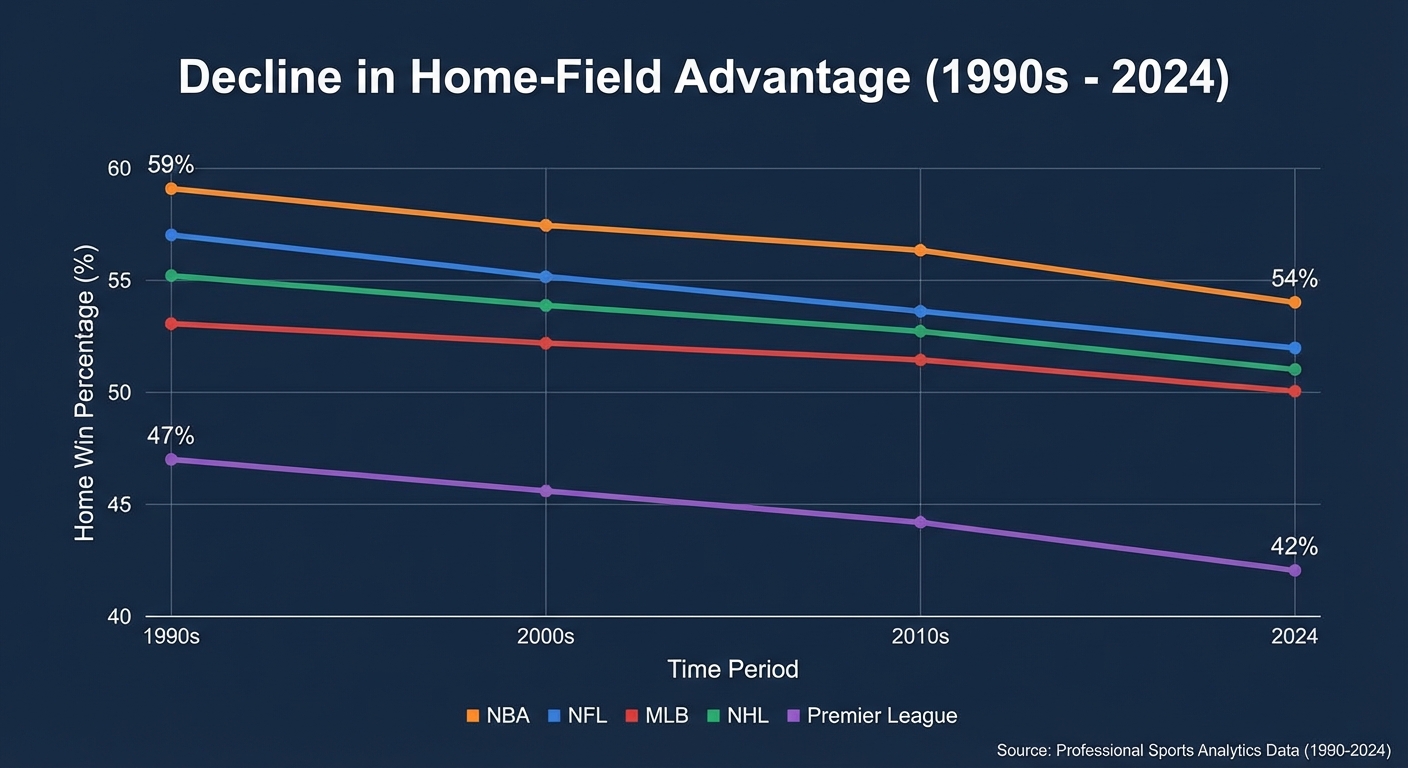
Home-field advantage has been a fundamental assumption in sports forever. Teams historically win 54-60% of home games across major leagues. Crowd energy, familiar surroundings, and lack of travel fatigue supposedly give home teams an edge. Except that advantage is shrinking. Across the NFL, NBA, MLB, NHL, and European soccer leagues, home winning percentages have declined 3-7 points over the past decade.
The trend is consistent and measurable. In the NBA, home wins dropped from 59% in the 1990s to 54% today. In the Premier League, it fell from 47% to 42%. The effect still exists, but it’s weaker than it’s been in 50+ years of record-keeping. Sports scientists have identified the causes, revealing how professional sports have become standardized, efficient, and less psychologically vulnerable to hostile crowds.
Travel Got Too Easy
The biggest factor is travel. Historically, travel was grueling: long bus rides, commercial flights, poor sleep in random hotels. Today, teams fly private charters with sleep specialists and nutritionists managing every detail. Away teams arrive rested and recovered, neutralizing the fatigue that used to handicap them.
NBA teams now travel with full medical staff, massage therapists, and chefs who prepare meals to players’ exact specifications. NFL teams book entire hotel floors and bring their own bedding. The physical disadvantage of being the away team has been engineered away through money and expertise.
Technology Killed Referee Bias
Extensive research showed officials subconsciously favored home teams in close calls due to crowd pressure. With the advent of VAR in soccer, instant replay in basketball and football, and rigorous performance monitoring, that bias has largely evaporated. Cameras don’t care about noise.
Referees are now evaluated on every call with video evidence. Their performance scores affect playoff assignments and compensation. This accountability has eliminated most of the marginal home-team advantage that used to come from questionable calls in crucial moments.
Venues Lost Their Uniqueness
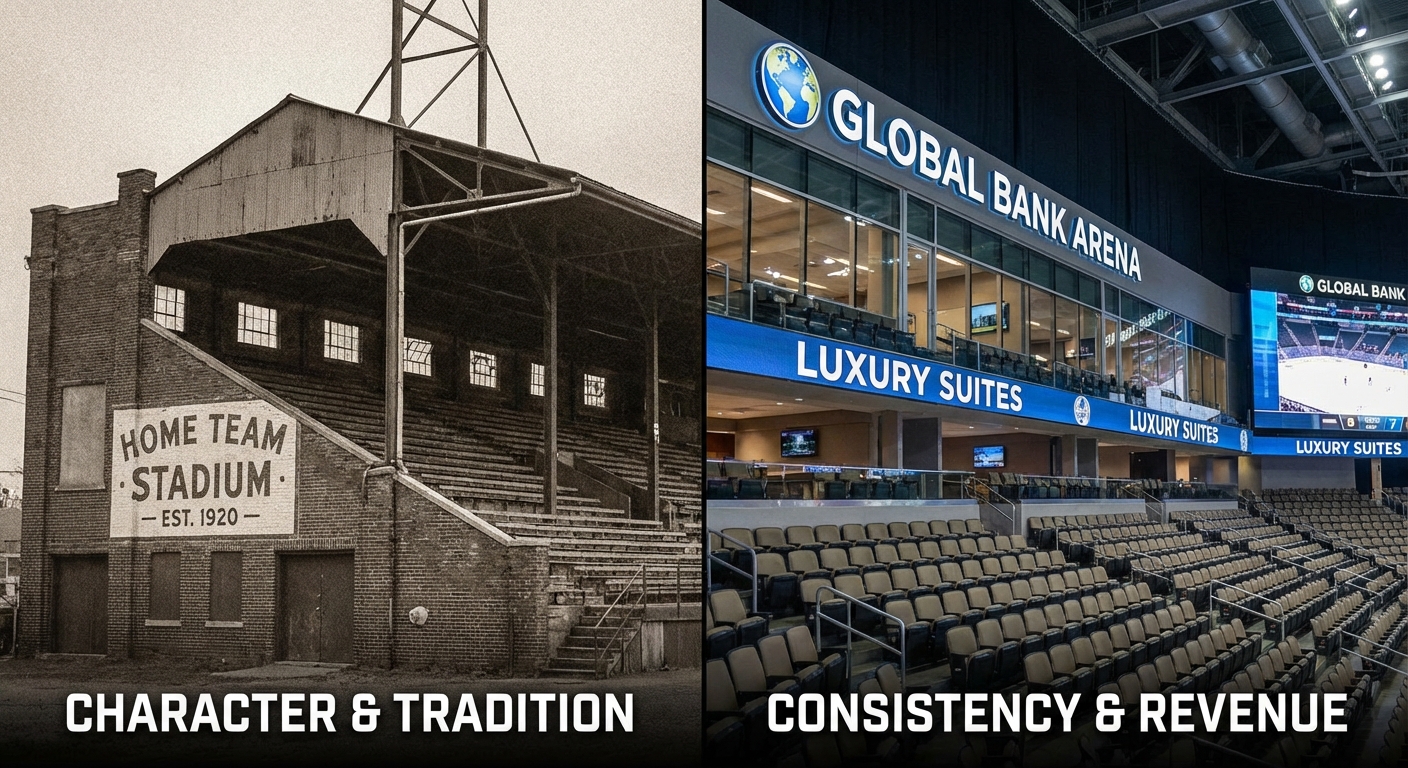
Modern stadiums are built to similar specifications with standardized lighting, dimensions, and playing surfaces. Players are no longer walking into weird, idiosyncratic arenas that only the home team understands. The old Boston Garden had dead spots in the parquet floor the Celtics knew how to exploit. Fenway Park’s Green Monster creates unique situations. But most new venues are generic, designed for maximum revenue rather than home-team advantage.
Combined with VR simulation training, the “strangeness” of an away game is disappearing. Teams practice in virtual replicas of opponents’ stadiums, getting familiar with sightlines and backgrounds before they ever arrive.
Athletes Are Immune to Crowds
The “12th Man” effect, crowd intimidation, is weaker on modern athletes. Players growing up in AAU circuits travel constantly and play in hostile environments from age 12. By the time they reach the pros, noise is background static. They’ve been booed in every gym from coast to coast.
COVID-19’s “ghost games” proved this. Without crowds, home advantage dropped further, but it didn’t return to historical highs when fans came back. The psychological edge was already eroding; the pandemic just exposed how little it mattered to elite athletes who’d been tuning out crowds for decades.
The Bottom Line
Home-field advantage is dying slowly. It still matters, but it’s no longer decisive. For fans, this means more competitive games and unpredictable playoffs. For teams, it means the game is decided by talent and execution, not by who slept in their own bed. The professionalization and standardization of sports has made it fairer, even if it’s made it a bit less mystical. For more on how sports are evolving, check out the concussion crisis changing football and women’s sports breaking through.
Sources: ESPN Stats & Information, sports analytics journals, COVID-era performance studies.