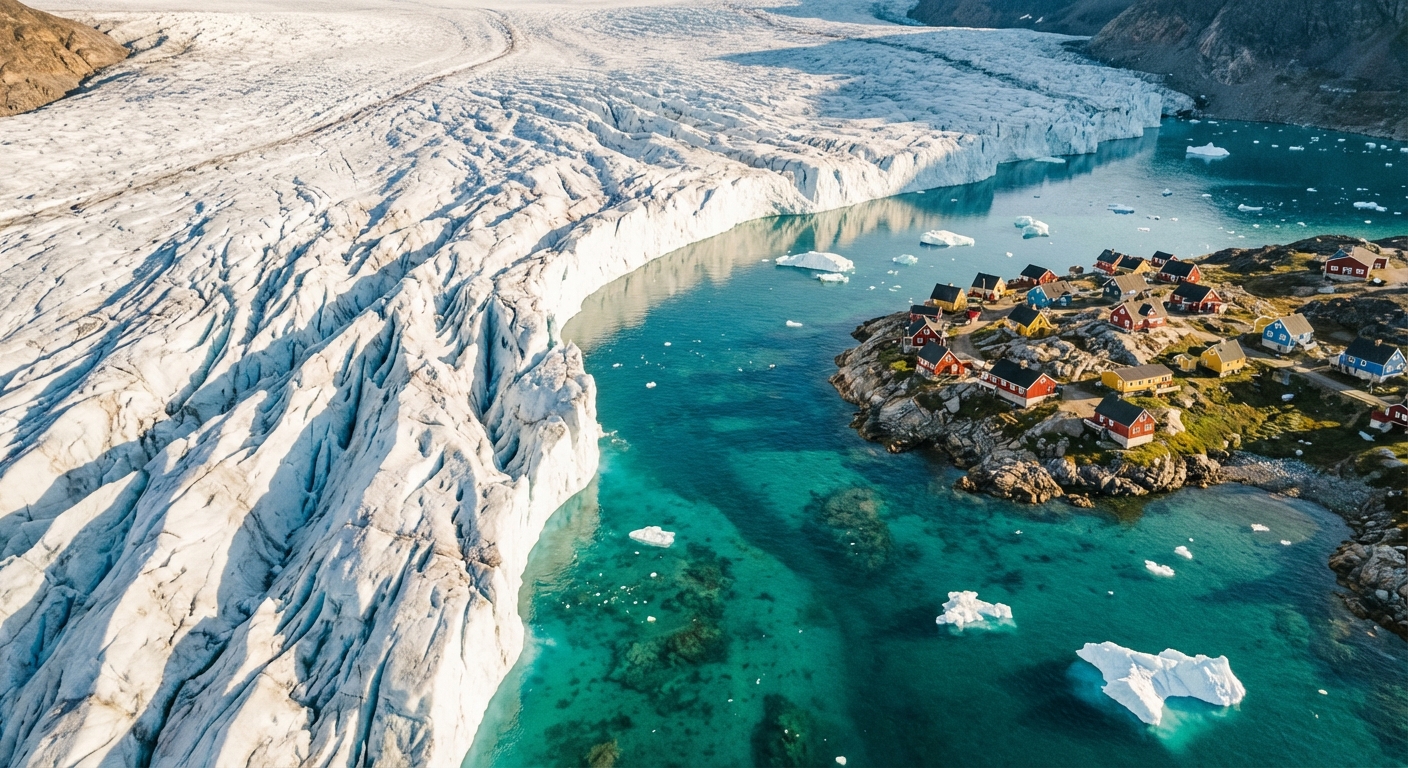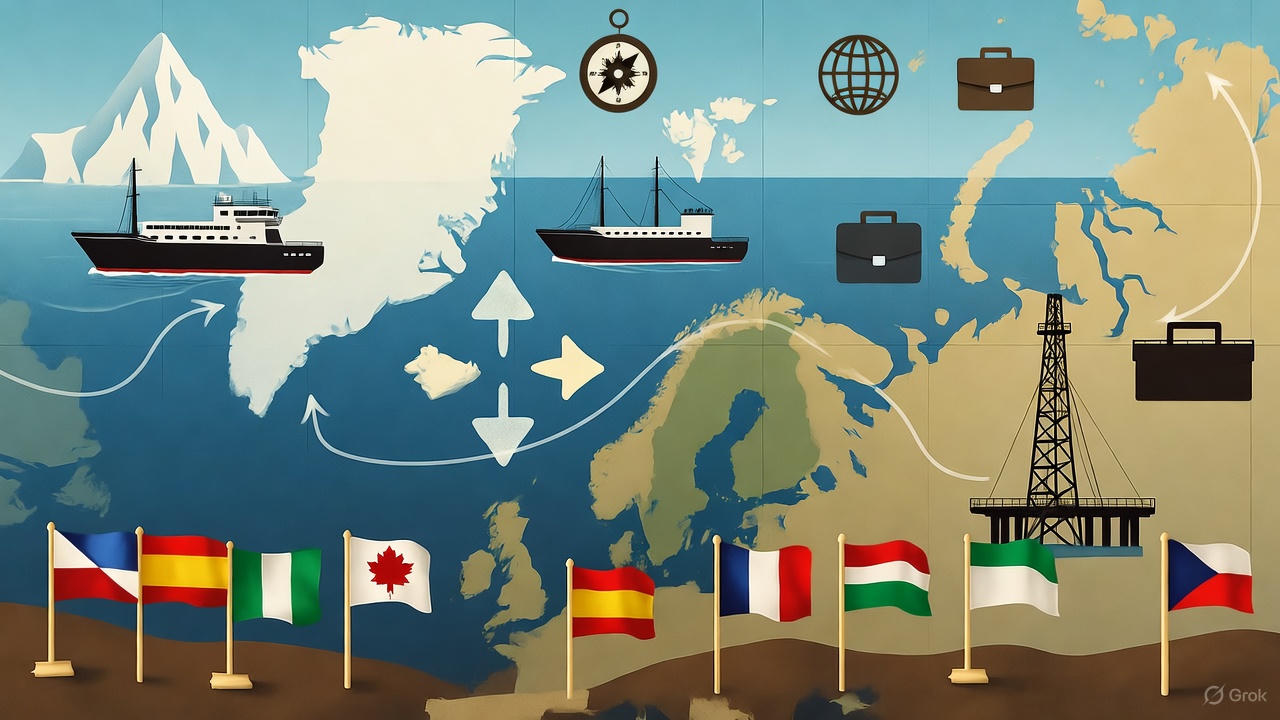
The Northwest Passage, the legendary Arctic sea route that killed explorers for centuries, was ice-free for four months in 2024. Commercial ships navigated it without icebreaker escorts, turning what was once a frozen death trap into a routine shipping lane. This isn’t just a climate milestone, it’s the opening bell of a geopolitical gold rush.
As polar ice recedes, it’s revealing an entirely new ocean. Shipping routes that save weeks of travel time. Fishing grounds shifting northward. And most importantly, vast reserves of oil, gas, and rare earth minerals that were previously locked beneath impenetrable ice. Russia, the United States, Canada, Norway, Denmark, and even China are positioning themselves to claim these resources and control these routes.
The Arctic is transforming from a frozen buffer zone into a contested theater of economic and military competition. And the countries that establish dominance now will control strategic advantages for the rest of the century.
The Shipping Revolution
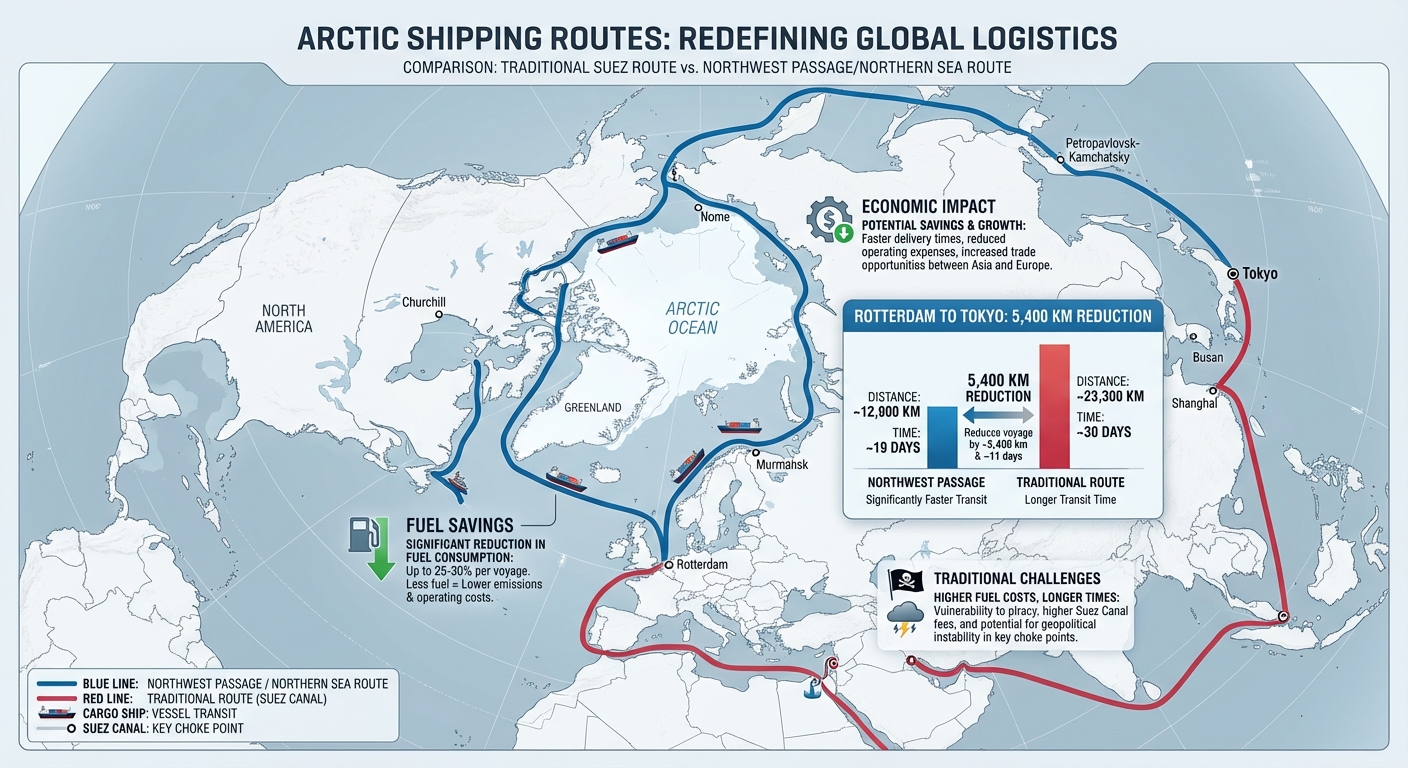
For the global shipping industry, an ice-free Arctic is transformative. The Northwest Passage through Canadian waters and the Northern Sea Route along Russia’s coast slash the distance between Europe and Asia by up to 40% compared to traditional routes through the Suez or Panama Canals. A container ship traveling from Rotterdam to Tokyo saves 5,400 kilometers and roughly eight days of travel time.
In an industry where margins are razor-thin and determined by fuel costs and delivery speed, these savings represent billions of dollars annually. Russia is already capitalizing heavily, with its Northern Sea Route handling over 1,800 commercial transits last year. As ice continues to recede, these numbers will only grow, fundamentally reshaping global trade patterns.
But control of these routes is contested. Canada claims the Northwest Passage as internal waters, requiring foreign ships to seek permission and follow Canadian law. The United States and European Union claim it’s an international strait, open to all. This dispute isn’t just legal semantics, it’s about who controls one of the 21st century’s most valuable shipping lanes.
The Resource Rush
Beneath the melting ice lies staggering wealth. The U.S. Geological Survey estimates the Arctic holds 13% of the world’s undiscovered oil, 30% of its undiscovered natural gas, and roughly 90 billion barrels of oil equivalent. For context, that’s more than the proven reserves of many OPEC nations.
Beyond fossil fuels, which carry obvious climate irony, the Arctic is rich in rare earth minerals critical for modern technology: lithium for batteries, cobalt for electronics, rare earths for military hardware. These are the same materials that AI companies are racing to secure for their data center expansion. As China currently dominates global rare earth production, finding alternative sources is a strategic imperative for Western nations.
Fish populations are also migrating north to cooler waters as oceans warm, making the Arctic increasingly important for global food security. The question of who controls fishing rights in newly accessible waters is creating its own conflicts, with nations jockeying for position.
The Militarization and Claims
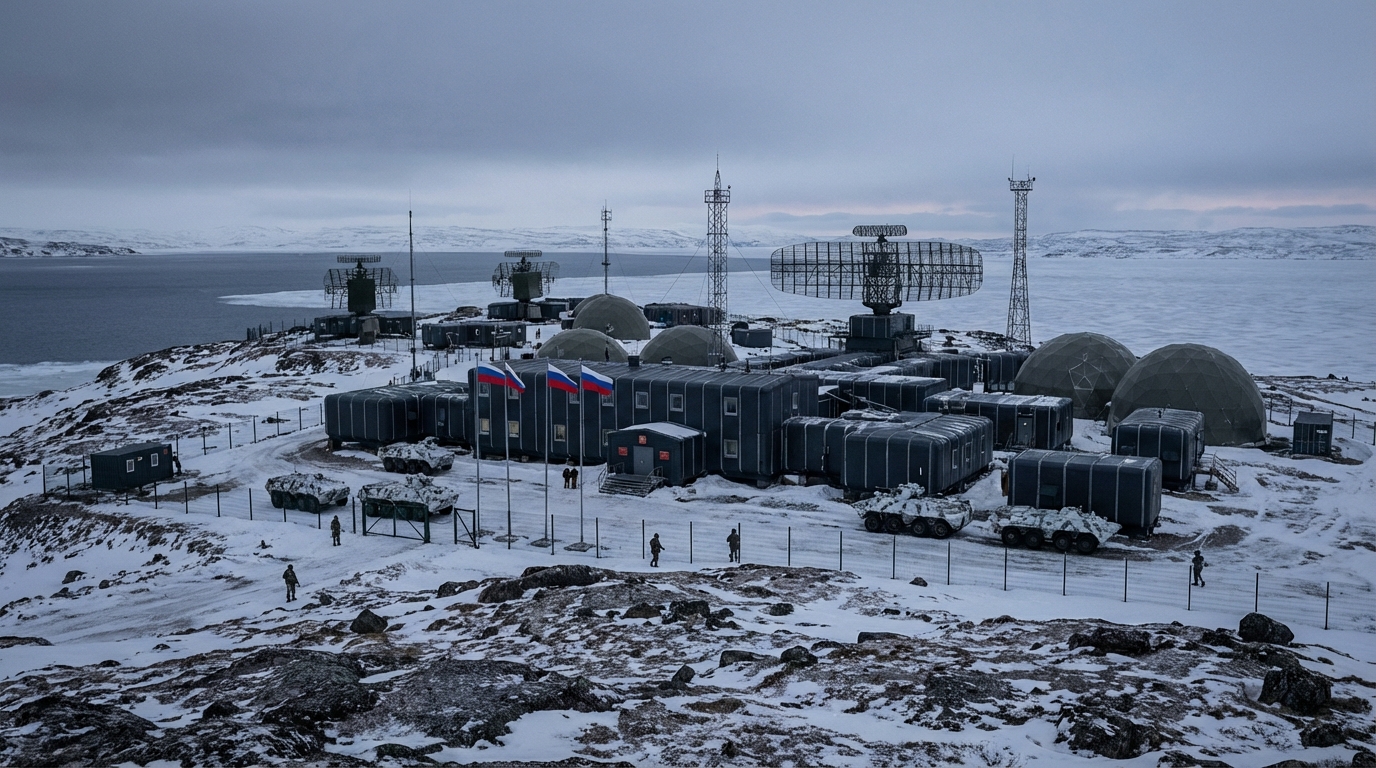
Russia has moved aggressively to dominate the Arctic. It has reopened dozens of Soviet-era military bases along its northern coast, deployed advanced air defense systems, and stationed nuclear submarines. Russia also claims the Lomonosov Ridge, an underwater mountain range, is a natural extension of its continental shelf, which would grant exclusive economic rights to massive areas of the Arctic Ocean. This claim is disputed but backed by military presence.
The United States is playing catch-up after decades of neglect. It’s investing in new icebreakers, just two currently operational compared to Russia’s 40-plus, and upgrading military capabilities in Alaska. But American Arctic infrastructure lags far behind Russian capabilities.
Canada asserts sovereignty over its Arctic waters and islands but lacks the military and economic resources to effectively patrol or develop them. This makes Canada vulnerable to both Russian expansion and American/European claims that its waters are international.
Denmark, through Greenland, has significant Arctic territory and is strengthening its claims. Norway is developing its northern regions economically and militarily. And perhaps most intriguingly, China has declared itself a “near-Arctic state,” despite having no Arctic territory whatsoever. China is investing billions in Arctic research, building icebreakers, and ensuring it has influence over whatever governance structures emerge, part of the same strategic positioning that’s driving its aggressive AI and robotics education initiatives.
The Human and Environmental Cost
Lost in the geopolitical maneuvering are the 4 million people, many Indigenous, who actually live in the Arctic. They face existential threats from climate change: melting permafrost destroying homes and infrastructure, eroding coastlines forcing village relocations, and collapsing ice ecosystems destroying traditional ways of life.
Indigenous communities are fighting for self-determination and environmental protection while watching nations squabble over resources. The Inuit Circumpolar Council and other Indigenous organizations are demanding seats at the table, arguing that Arctic governance should include the people who’ve lived there for thousands of years, not just the nations that want to exploit it.
The bitter irony is inescapable: the fossil fuels being extracted from the Arctic will accelerate the warming that made their extraction possible, creating a feedback loop of profit and environmental destruction. We’re mining the Arctic’s resources precisely because climate change exposed them, and using those resources will worsen the climate crisis.
The Bottom Line
The Arctic is opening, and the race to control it is already underway. Shipping routes worth billions, resources worth trillions, and strategic military positioning that will define the next century are all in play. It’s not unlike the water wars heating up across the globe, another resource conflict flying under the radar. The nations that establish dominance now, through military presence, legal claims, or economic development, will reap enormous advantages.
But this competition is happening in one of the planet’s most fragile ecosystems, with profound consequences for global climate and Indigenous peoples who call it home. The Arctic is becoming accessible because we’re destroying it. And our response is to exploit it faster. Future generations will judge whether the resources we extract were worth the planet we sacrificed to get them.
This analysis draws on data from the National Snow and Ice Data Center, Arctic Council reports, U.S. Geological Survey resource estimates, Russian Arctic strategy documents, academic research on Arctic geopolitics, shipping industry data, and statements from Indigenous Arctic communities.
Sources: National Snow and Ice Data Center, Arctic Council, U.S. Geological Survey.