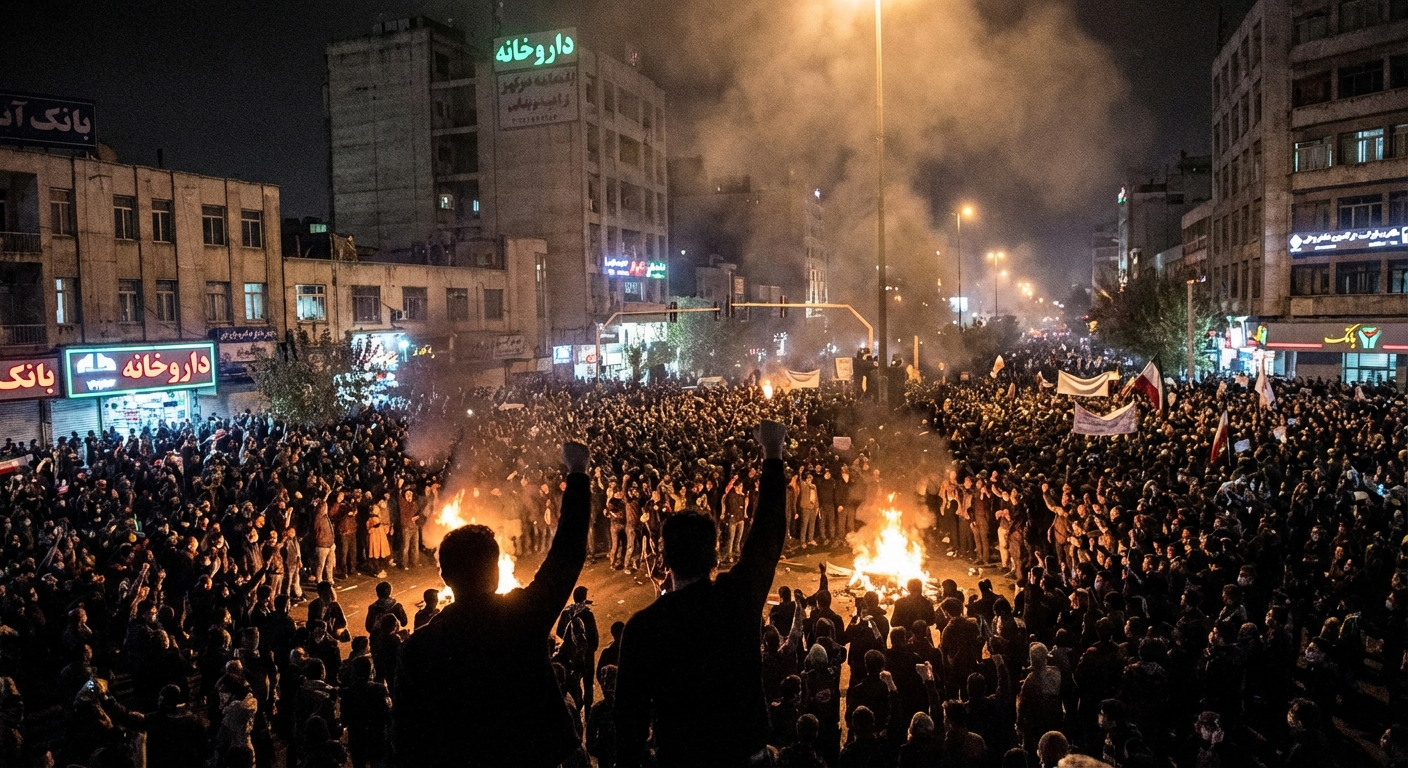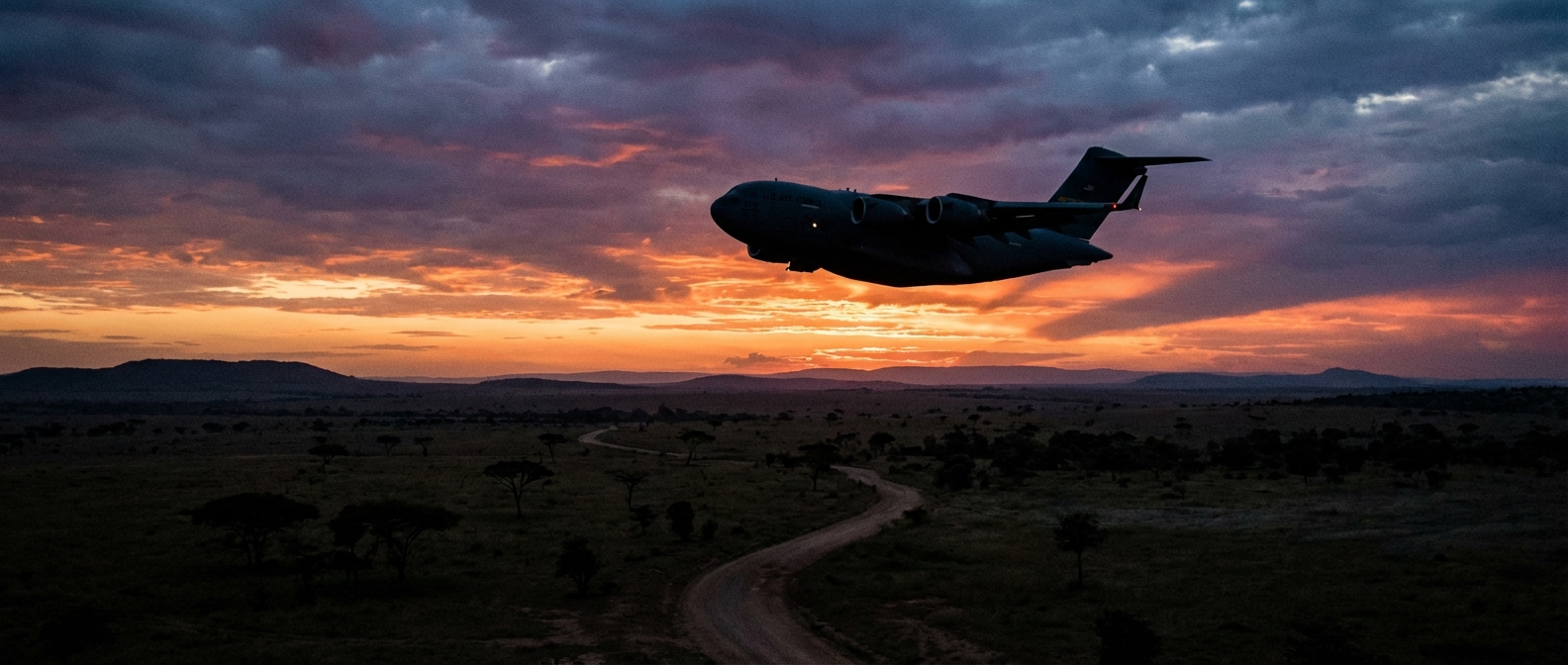
The U.S. military launched what President Trump called “powerful and deadly” airstrikes against Islamic State targets in Nigeria on Christmas Day, marking the first known American combat operation in the West African nation. The strikes, conducted in coordination with Nigerian authorities, represent a dramatic escalation of U.S. military involvement in a region where violence has killed tens of thousands over the past five years.
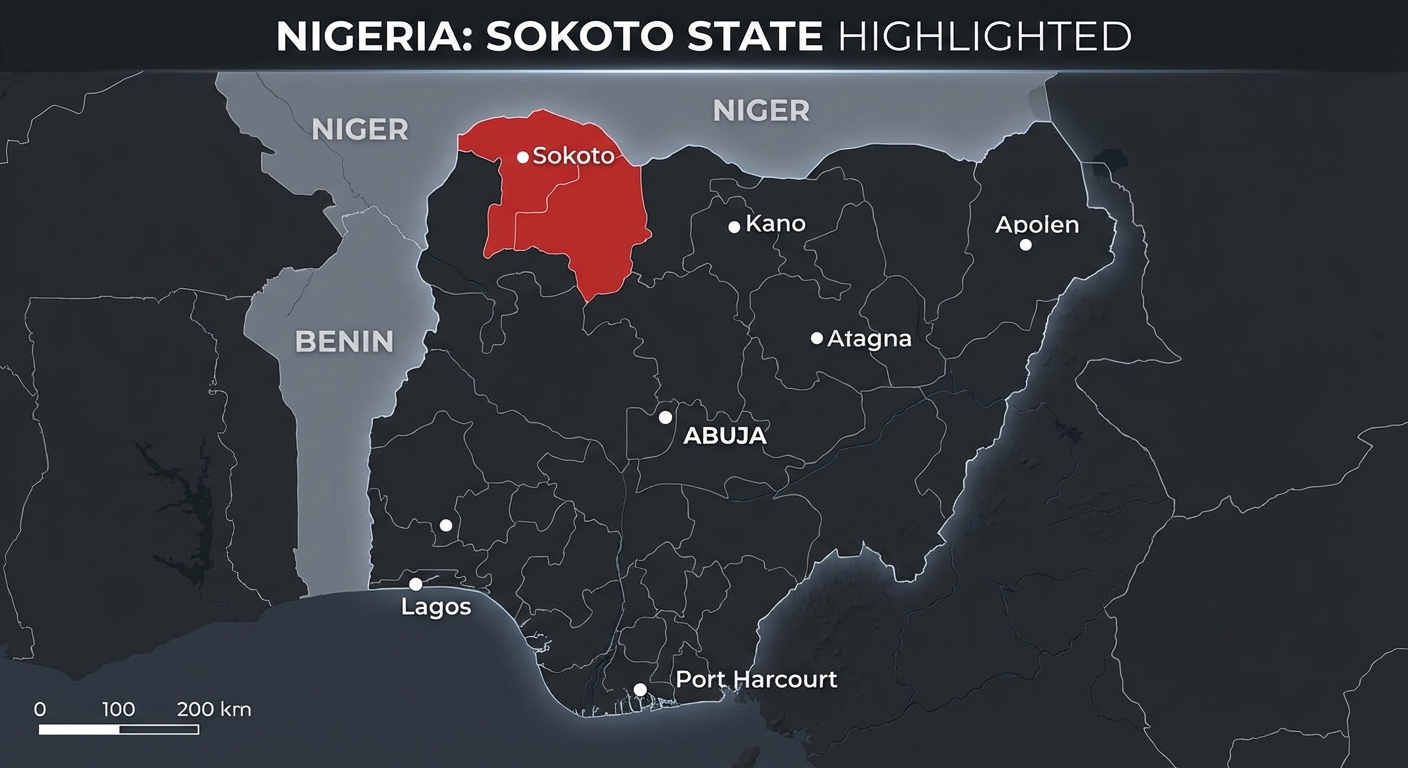
The operation targeted ISIS camps in Sokoto State, in Nigeria’s northwest region. According to U.S. Africa Command, “multiple ISIS terrorists were killed” in the precision strikes, though exact casualty figures have not been released. Nigeria’s foreign ministry confirmed the attacks, stating that “structured security cooperation with international partners” led to “precision hits on terrorist targets.”
This isn’t a spontaneous military action. It’s the culmination of weeks of escalating rhetoric from the Trump administration about what it characterizes as the persecution of Christians in Nigeria, the largest democracy in Africa and home to roughly equal populations of Muslims and Christians.
What Happened on Christmas Night
At approximately 10 p.m. Eastern Time on December 25, U.S. forces conducted strikes against ISIS positions in Sokoto State, a predominantly Muslim region in Nigeria’s northwest. The operation was carried out at the direction of President Trump and Defense Secretary Pete Hegseth, in coordination with the Nigerian government.
“Tonight, at my direction as Commander in Chief, the United States launched a powerful and deadly strike against ISIS Terrorist Scum in Northwest Nigeria, who have been targeting and viciously killing, primarily, innocent Christians,” Trump wrote on Truth Social. He added ominously: “I have previously warned these Terrorists that if they did not stop the slaughtering of Christians, there would be hell to pay, and tonight, there was.”
The Nigerian government’s response has been carefully calibrated. Daniel Bwala, special adviser to President Bola Tinubu, told CNN that “the U.S. and Nigeria are on the same page in the fight against terrorism.” The foreign ministry acknowledged being given advance notice of the strikes, framing the operation as part of ongoing security cooperation rather than a unilateral American intervention.
The Complex Reality of Nigerian Violence
The strikes come after months of Trump administration warnings about violence against Christians in Nigeria. But the security situation in Africa’s most populous nation is far more complicated than the administration’s framing suggests.
Armed conflict monitoring group ACLED has documented over 20,400 civilian deaths in attacks between January 2020 and September 2025. Of those deaths where religious affiliation could be determined, 317 were from attacks specifically targeting Christians while 417 were from attacks targeting Muslims. The vast majority of civilian deaths could not be attributed to religiously-motivated violence at all.
Nigeria faces a convergence of security threats that don’t fit neatly into a Christian-versus-Muslim narrative. Boko Haram and its splinter group ISIS West Africa Province operate primarily in the northeast. Bandits and criminal gangs terrorize the northwest. Farmer-herder conflicts plague the Middle Belt. Each of these conflicts has complex local dynamics involving economics, ethnicity, land rights, and climate change alongside religious tensions.
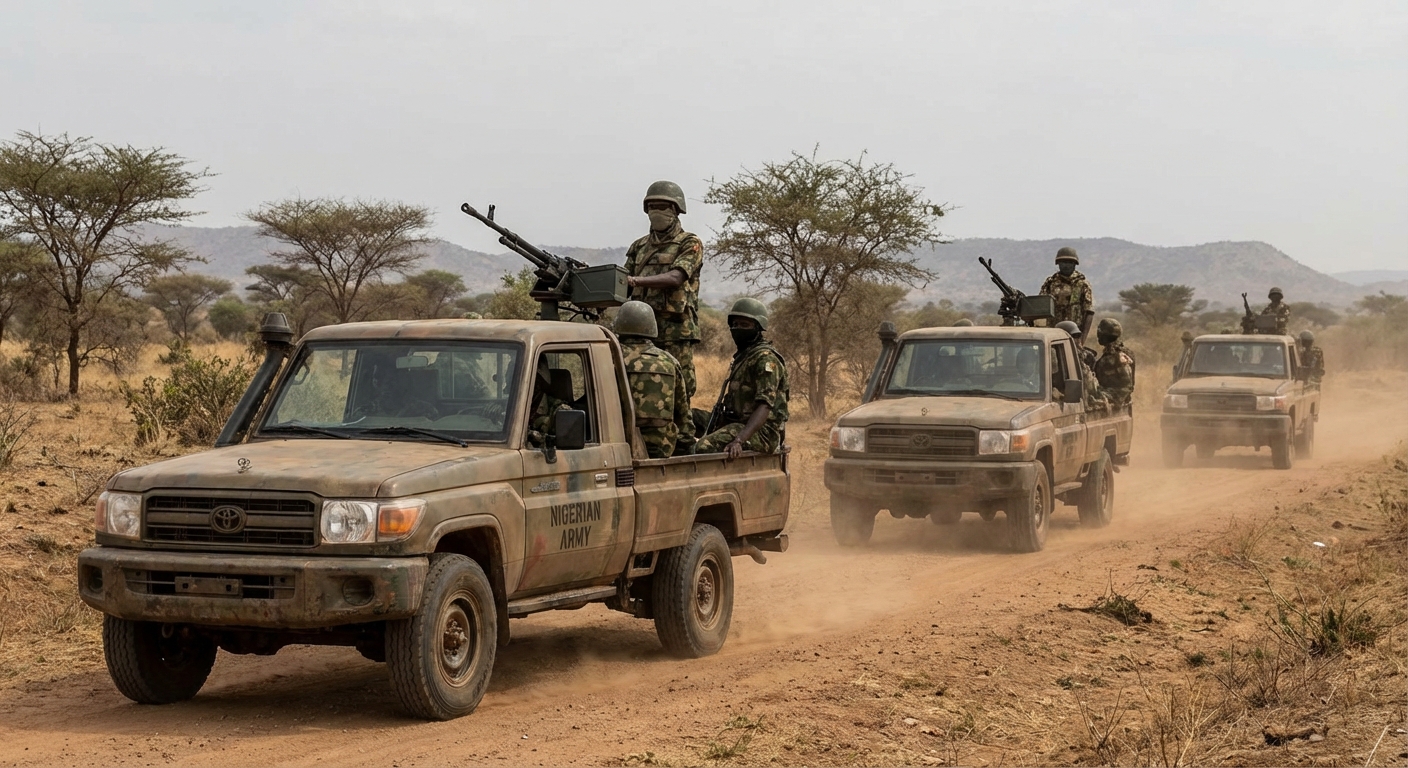
Security analysts believe the Christmas Day strikes likely targeted Lakurawa, a lesser-known militant group that has become increasingly deadly in northwestern states this year. Lakurawa often targets remote communities and security forces regardless of religious affiliation, operating more as criminal enterprise than ideological movement.
Why This Matters Beyond Nigeria
The strikes represent a significant expansion of U.S. military operations in West Africa. While American forces have conducted counterterrorism operations across the Sahel region for years, including in neighboring Niger until a 2023 coup led to a U.S. withdrawal, direct strikes inside Nigeria mark new territory.
Nigeria is no failed state. It’s a major oil producer, a regional power, and a country with a functioning government and military of its own. The U.S. typically reserves unilateral military action for countries where the government is unable or unwilling to address terrorist threats. The fact that these strikes were conducted “in coordination” with Nigerian authorities suggests an attempt to maintain that distinction, but the optics are complicated.
For the Trump administration, the strikes serve multiple purposes. They demonstrate a willingness to use military force to protect Christians abroad, a message that resonates strongly with the evangelical base that forms a core part of Trump’s coalition. They also signal to African nations that the U.S. remains engaged on the continent, despite the withdrawal from Niger and questions about American commitment to the region.
The Nigerian government faces its own political calculations. Publicly endorsing American strikes against militants allows President Tinubu to claim progress in the fight against terrorism without deploying Nigerian forces. But it also risks inflaming anti-American sentiment in the Muslim-majority north and raising questions about national sovereignty.
What Happens Next
The immediate question is whether these strikes represent a one-time action or the beginning of sustained U.S. military operations in Nigeria. Trump’s rhetoric suggests the latter, his Truth Social post promising that “ISIS and all other Terrorist Thugs should watch out, because we will be coming for you!”
Nigeria’s security challenges cannot be solved by periodic American airstrikes. Like the reconstruction challenges in Syria, the country needs economic development, job creation, and effective governance in regions that have been neglected for decades. It needs climate adaptation as desertification pushes herders into conflict with farmers. It needs security sector reform to address a military that has itself been accused of human rights abuses.
What it may be getting instead is a new front in America’s forever wars, complete with the same debates about mission creep, civilian casualties, and the limits of military solutions to political problems that have characterized U.S. counterterrorism efforts since 2001.
The Bottom Line
The Christmas Day strikes mark a new chapter in U.S. military engagement in West Africa. While the immediate tactical results, killing ISIS militants, may be clear, the strategic implications are anything but.
The broader ceasefire efforts in the Middle East provide context for the administration’s approach to regional conflicts. The Trump administration has framed this as defending persecuted Christians from Islamic terrorism. But the reality in Nigeria is messier: multiple armed groups, complex local conflicts, and violence that doesn’t respect religious boundaries. Whether American airstrikes can address those underlying dynamics, or whether they risk creating new grievances in an already volatile region, remains to be seen.
For now, Nigeria finds itself in an uncomfortable spotlight, a testing ground for a more muscular American approach to counterterrorism in Africa. The coming weeks will reveal whether Christmas Day was an isolated operation or the opening salvo of something larger. Given Trump’s rhetoric, betting on restraint seems unwise.
Sources: U.S. Africa Command, CNN, ACLED, Nigerian Ministry of Foreign Affairs.