If historians were to summarize 2025 in a single word, that word might be “acceleration.” Everything moved faster this year. AI capabilities that seemed years away arrived in months. Geopolitical alliances that had endured for decades frayed in weeks. Markets that typically took quarters to move dramatically swung in days. The year felt compressed, as though the normal pace of change had been put on fast-forward.
Looking back from December 31, certain moments stand out as hinge points, the events that divided “before” from “after.” Some were anticipated, like the continued escalation of AI capabilities. Others came as shocks, like the brief but terrifying India-Pakistan crisis that brought nuclear powers to the brink. Together they form the mosaic of a year that will be studied for decades to come.
This is not comprehensive history. It’s a selection of the moments that mattered most, the stories that future readers will need to understand if they want to grasp how we arrived at wherever we’re heading next.
The AI Inflection Point
The year began with a shock that few outside China saw coming. In January, a relatively unknown Chinese startup called DeepSeek released an AI model that matched the capabilities of systems costing orders of magnitude more to develop. DeepSeek-R1 demonstrated that the enormous capital advantages enjoyed by American AI companies might not be as decisive as assumed. The implications rippled through markets, policy circles, and research labs for months afterward.
What made DeepSeek significant wasn’t just its technical achievement. It represented a potential decoupling of AI capability from AI spending. If frontier models could be created for millions rather than billions, the competitive landscape would look very different. American companies that had staked their futures on capital-intensive approaches suddenly faced questions about whether they were building moats or just burning money.
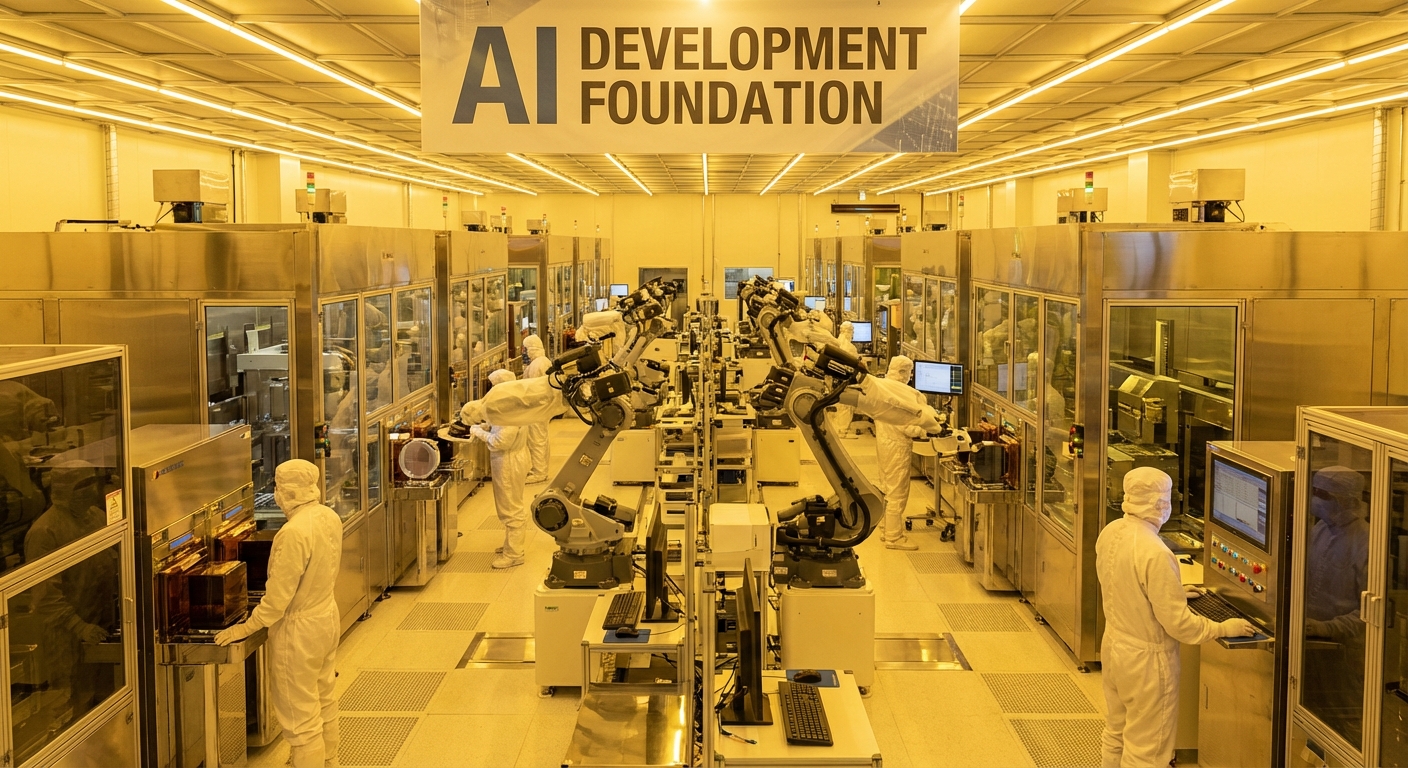
The year also saw AI move from novelty to necessity. ChatGPT usage jumped from 40% to 61% of internet users globally. What had been an interesting toy in 2023 became an expected tool in 2025. Students used it for research. Professionals used it for drafting. Programmers used it for coding. The question shifted from “are you using AI?” to “how are you using AI?” Those who weren’t risked falling behind.
Perhaps most significantly, 2025 marked the emergence of agentic AI, systems that don’t just answer questions but take actions. Meta’s $2 billion acquisition of Manus exemplified this shift. The startup had built AI agents capable of executing complex tasks autonomously, and it was already generating $100 million in annual revenue. AI was no longer just a research project or a consumer gadget. It was becoming an economic actor in its own right.
Silicon Valley Goes to Washington
The relationship between technology and political power underwent a visible transformation this year. Tech leaders who once kept government at arm’s length found themselves actively engaging with the Trump administration through donations, advisory roles, and public appearances.
The shift was most visible at the inauguration in January, where tech executives occupied prominent positions that would have seemed unthinkable a decade earlier. The subsequent months saw a revolving door between Silicon Valley and Washington that made previous administration-industry relationships look distant by comparison.
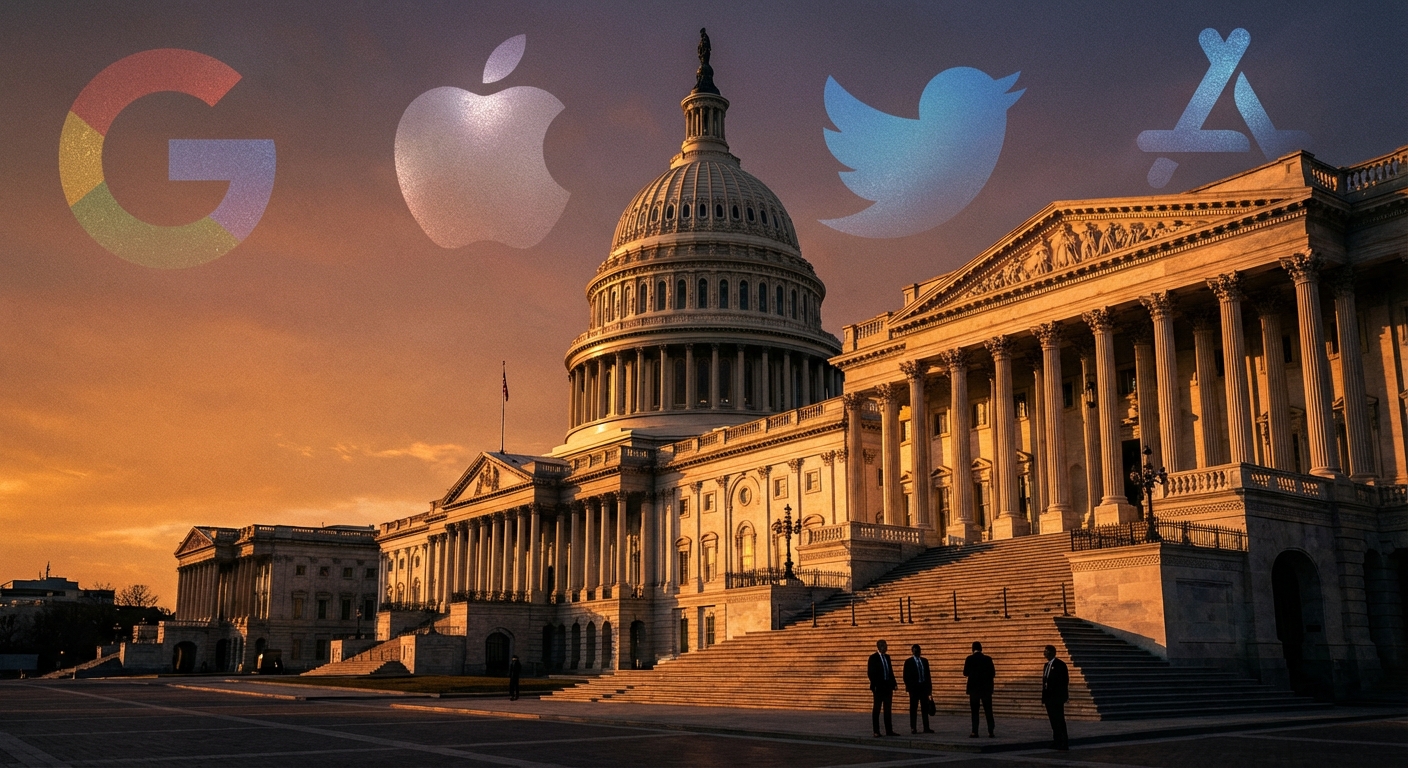
The administration’s approach to technology policy combined aggressive deregulation domestically with assertive competition internationally. Executive orders rolled back AI safety guidelines that the previous administration had established. Trade policy explicitly targeted Chinese technology companies while providing incentives for domestic production. The message was clear: American tech supremacy was a matter of national priority.
Not everyone celebrated this alignment. Critics warned that the merger of tech wealth and political power created conflicts of interest that would shape policy for years. When the people advising on AI regulation are the same people profiting from AI development, the regulations that emerge may not serve the public interest. These concerns found little traction in a political environment that prioritized growth and competition over caution.
Markets on a Roller Coaster
Bitcoin’s journey through 2025 captured the year’s mood of wild swings better than any other asset. The cryptocurrency hit an all-time high of $126,080 in October, a moment that seemed to validate years of true-believer predictions about digital gold replacing traditional stores of value. Then it dropped, settling around $88,400 by year’s end. That’s still a remarkable price by historical standards, but the volatility reminded everyone that crypto remains a speculative asset rather than a stable store of value.
The stock market told a different story, one of concentration and transformation. Kioxia, a Japanese memory chip manufacturer that went public just last December, gained over 540% to become the best-performing stock in the MSCI World Index. The company’s surge reflected AI’s insatiable appetite for memory, a demand that reshaped the semiconductor industry throughout the year.
The broader market remained healthy by traditional measures. The S&P 500 posted double-digit gains, driven largely by the AI supercycle. But the concentration of those gains in a handful of companies raised questions about market health. When a small number of mega-cap tech stocks account for most of the market’s returns, even a strong year can mask underlying fragility.
Conflict and Resolution
The year brought moments of genuine fear. In May, tensions between India and Pakistan escalated after an attack that killed 26 people near Pahalgam in Jammu and Kashmir. India responded with missile strikes on Pakistani bases. Pakistan retaliated. For several days, two nuclear-armed nations exchanged fire in a pattern that seemed capable of spiraling beyond anyone’s control.
The ceasefire that took hold on May 10 felt like a collective exhale. The crisis demonstrated how quickly regional conflicts could escalate and how thin the membrane separating conventional warfare from nuclear catastrophe remained. It also demonstrated that deterrence still worked, barely. Both nations stepped back from the brink, recognizing that continued escalation offered no victory worth achieving.
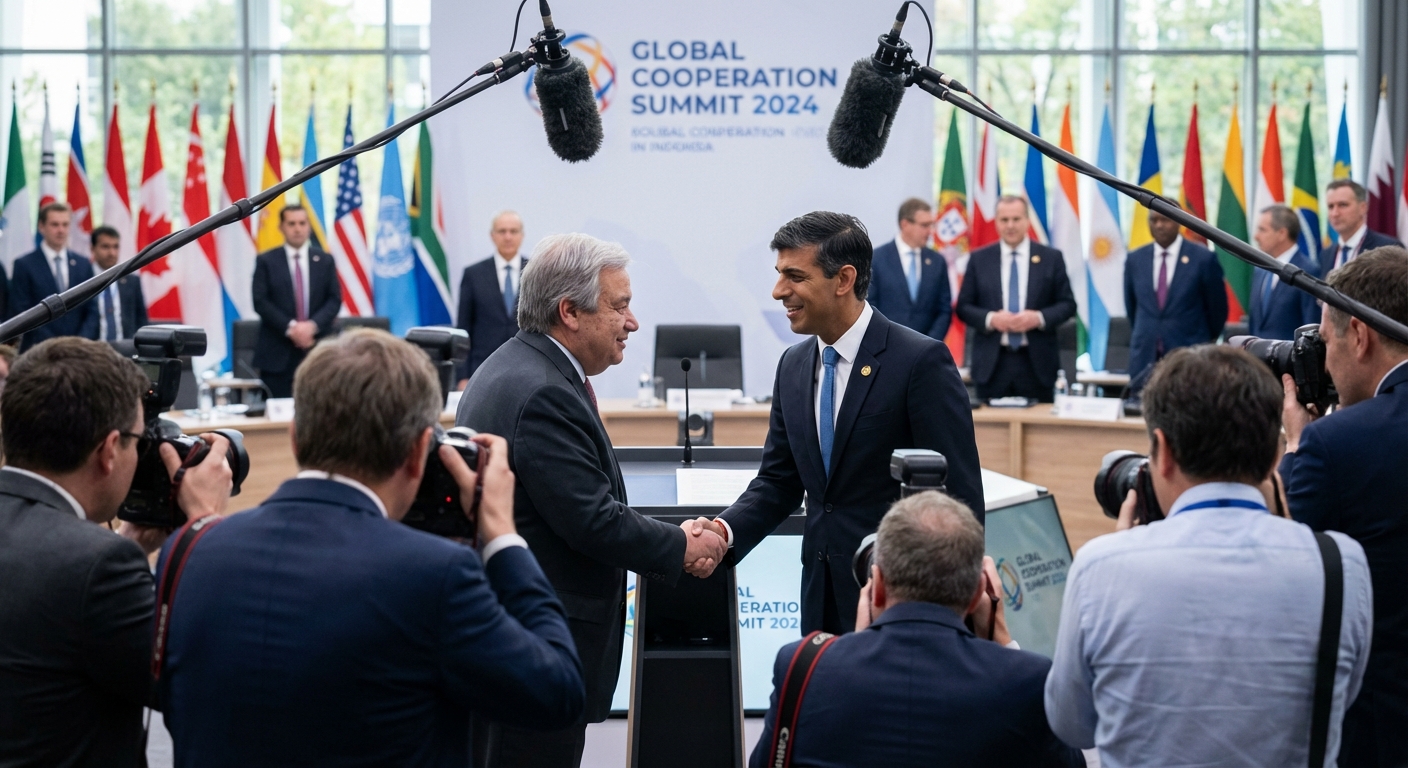
The Middle East saw movement in a different direction. In October, Israel and Hamas agreed to the first phase of a peace plan, potentially paving the way toward ending a conflict that had devastated Gaza for over two years. The agreement remained fragile as the year closed, with implementation challenges and mutual distrust threatening progress. But after years of seemingly intractable violence, any movement toward peace represented a shift worth noting.
Syria marked one year since the fall of the Assad regime, with over 782,000 Syrian refugees documented as having returned home. The country remained unstable, but the direction of population flows had reversed. People who once fled were now choosing to return, suggesting some baseline of hope that hadn’t existed in years.
Climate Keeps Score
Natural disasters cost an estimated $105 billion in insured losses through the first nine months of 2025, marking the sixth consecutive year exceeding $100 billion in climate-related damages. The consistency of these numbers represents a new normal that insurance companies, governments, and individuals are still learning to accommodate.
The year’s disasters included wildfires in regions historically considered safe from fire, floods in areas that weren’t supposed to flood, and heat waves that broke records in places where such records had stood for decades. Each individual event had local causes and consequences. Together they formed a pattern that tracked with what climate scientists had been predicting for years.
The policy response remained fragmented. Some nations accelerated investment in renewable energy and climate adaptation. Others continued prioritizing fossil fuel extraction. The gap between what scientific consensus recommended and what political systems delivered showed no signs of closing. For those tracking the trajectory, 2025 offered little comfort and few surprises.
Looking Back, Looking Forward
Certain stories that dominated headlines in years past receded in 2025. The pandemic, which had shaped 2020-2022 so completely, rarely made news except in discussions of long-term health effects. The metaverse, which Meta once staked its identity on, saw budget cuts of up to 30% announced for 2026. Remote work debates, so contentious in 2022 and 2023, settled into a new equilibrium that most companies seemed content to maintain.
New storylines emerged to take their place. Australia implemented the world’s strictest social media laws, prohibiting under-16s from using platforms, a move that could influence policy globally. Japan elected Sanae Takaichi as its first female prime minister. New York City elected Zohran Mamdani, the city’s first Muslim, South Asian, and African-born mayor, on a platform of rent freezes and universal childcare.
The year’s pattern suggests what may come next. AI will continue accelerating, probably faster than most projections assume. The alignment between tech industry and political power will shape policy in ways that benefit insiders. Markets will reward those who bet correctly on transformation while punishing those who cling to models that no longer apply. Climate will continue extracting costs that accounting systems barely capture.
The Bottom Line
2025 was the year that acceleration became undeniable. The pace of change that had been building for years reached a velocity that even participants found disorienting. Companies that seemed permanent proved fragile. Technologies that seemed futuristic became routine. Geopolitical alignments that had defined decades shifted in months.
For those living through it, the challenge was keeping up. For those who will study it later, the challenge will be understanding how so much happened so quickly. The year’s events don’t fit neatly into any single narrative. They represent multiple stories happening simultaneously, each with its own logic, all intersecting in ways that produced outcomes no one fully predicted.
What 2025 demonstrated most clearly is that the pace of change isn’t slowing. If anything, it’s accelerating. The institutions, skills, and mental models that served well in slower times now face continuous stress tests. Adaptation isn’t a one-time adjustment but an ongoing requirement. Those who learned that lesson in 2025 are better prepared for whatever 2026 brings.
And based on everything we saw this year, 2026 will bring plenty.
Sources: Al Jazeera 2025 Year in Review, Britannica 2025 Year in Review, TechStartups Year in Review, Brookings 2025-2026 Global Economy Outlook