
If you've used Claude, the AI chatbot that's been steadily climbing app store charts and winning over developers, you've used Anthropic's technology. Until very recently, so did the Pentagon. Now the Defense Department has banned Anthropic from all government contracts, Anthropic has filed a lawsuit calling the ban "unprecedented and unlawful," and the fight between Washington's most important AI company and its biggest potential customer has become the defining conflict in the future of artificial intelligence.
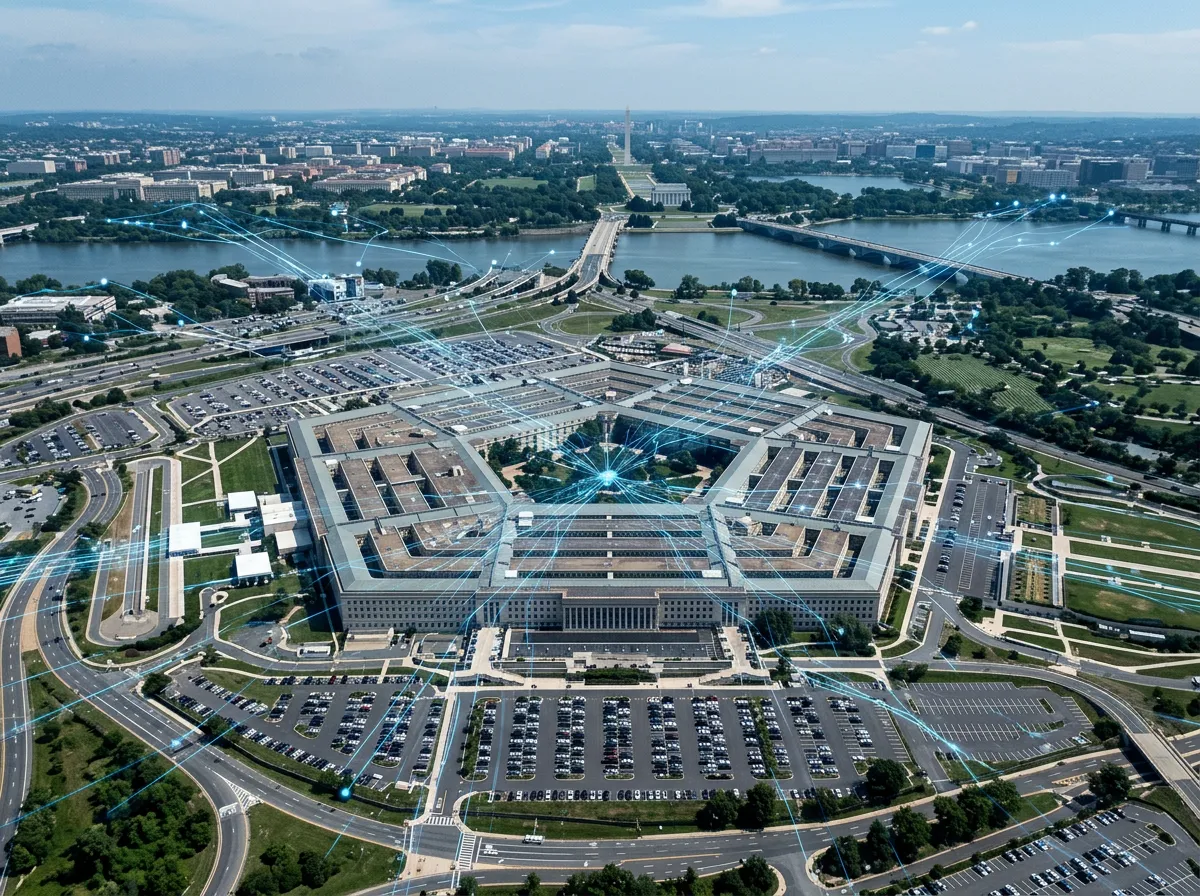
Here's the short version: Anthropic told the military it wouldn't allow its AI to be used for autonomous weapons or mass domestic surveillance. The Pentagon said private companies don't get to dictate how the government uses technology in wartime. Defense Secretary Pete Hegseth labeled Anthropic a "supply-chain risk to national security." President Trump told all federal agencies to stop using Anthropic's tools. And on Monday, Anthropic sued.
The longer version is more complicated, more consequential, and directly relevant to anyone who cares about where AI is headed.
How We Got Here
Anthropic wasn't some fringe startup trying to break into defense contracting. It was the Pentagon's preferred AI provider. A Fortune report from March 7 described a "whoa moment" among senior defense officials when they realized how deeply integrated Anthropic's Claude had become across military planning, logistics, and intelligence analysis. Hundreds of millions of dollars in contracts were either active or in negotiation.
The split started quietly. According to CBS News, Pentagon chief technology officer Emil Michael pushed for expanded use cases that Anthropic's acceptable use policy wouldn't permit. Specifically, the military wanted authorization for two categories: fully autonomous weapons systems with no human involvement in targeting decisions, and mass surveillance tools that could be deployed against domestic populations. Anthropic said no to both.
Pentagon officials have disputed this framing. Michael told CBS that the military's proposed uses were all "lawful" and that Anthropic was "imposing ideological constraints on national security." He argued that private companies cannot be the ones deciding what a democratic government can and can't do with purchased technology, particularly during an active military conflict with Iran.
What Anthropic Actually Refused
This is where the details matter more than the headlines. Anthropic didn't refuse to work with the military. It refused two specific categories of use.
The first is fully autonomous weapons, meaning systems that can select and engage targets without a human being approving each strike. This is distinct from AI-assisted targeting, where the technology identifies potential targets but a human makes the final call. Anthropic was reportedly comfortable with the latter. The company drew its line at removing the human entirely from the kill chain.
The second is mass domestic surveillance. This means using AI tools to monitor American citizens at scale without individualized warrants or oversight. Again, the distinction matters: Anthropic wasn't objecting to foreign intelligence work or targeted investigations. It was objecting to dragnet surveillance of the domestic population.
Anthropic's position, laid out in the company's responsible use policy and reinforced in its lawsuit, is that these two use cases represent red lines that no commercial AI provider should cross. CEO Dario Amodei has been consistent on this point since founding the company in 2021, when he left OpenAI over similar disagreements about safety guardrails.
The Pentagon's position is equally clear: in wartime, the government needs maximum flexibility with the tools it purchases. Officials have argued that Anthropic's conditions amount to a private company exercising veto power over military operations, a precedent they consider dangerous.
The Google Project Maven Parallel, and Why This Is Different
If this sounds familiar, it should. In 2018, Google employees revolted over Project Maven, a Pentagon contract that used Google's AI for drone surveillance image analysis. Google eventually pulled out of the contract under internal pressure. At the time, it seemed like a watershed moment. AI companies had drawn a line.
They hadn't. After Google's exit, the contract went to other companies without public protest. Amazon, Microsoft, and Palantir expanded their defense work. The lesson the Pentagon took from Project Maven wasn't that AI companies had moral limits. It was that some companies would say no and others would say yes, so you work with the ones who say yes.
The Anthropic situation is different for three reasons. First, the government didn't quietly move on. It designated Anthropic a national security risk, a designation that carries real legal and financial consequences not just for Anthropic but for any company that partners with it. This isn't the Pentagon shrugging and calling another vendor. It's an active punishment.
Second, the technological context has changed. In 2018, AI was a useful tool. In 2026, it's foundational infrastructure. The Fortune report described Pentagon officials realizing that switching from Claude to alternative AI systems would require months of retraining, reintegration, and potential capability gaps during an active military campaign. The dependency is real.
Third, Anthropic sued. Google walked away from Project Maven quietly. Anthropic is fighting in court, calling the government's actions "unprecedented and unlawful" and arguing that the "supply-chain risk" designation has no legal basis when applied to a company that simply maintained its published use policies.
What This Means for the AI Industry
The Anthropic-Pentagon conflict is going to force every AI company to answer a question they've been able to avoid: what are your actual limits?
OpenAI is reportedly stepping in to fill the gap left by Anthropic's departure. Palantir, which has always positioned itself as defense-friendly, stands to gain significantly. But the designation of Anthropic as a security risk sends a chilling message to the entire sector. If the government can punish a company for maintaining ethical guardrails, then those guardrails become a competitive disadvantage.
This creates a perverse incentive structure. Companies that set clear boundaries on how their AI can be used risk losing government contracts, facing "security risk" designations, and watching competitors profit from their restraint. Companies that don't set boundaries get the contracts but accept moral and legal exposure they may not fully understand yet.
The irony is that Anthropic was founded specifically to build AI safely. Its entire brand, its pitch to investors, its appeal to top researchers, rests on the promise that safety guardrails matter. If the government can effectively force Anthropic to choose between its principles and its survival, that sends a message to every AI startup currently deciding how much safety infrastructure to build.
For Apple and other tech giants navigating their own AI strategies, the Anthropic case adds a new variable. Building AI that's too capable invites government dependency. Building AI with limits invites government retaliation. The middle ground is getting narrower.
The Bigger Story
The Anthropic-Pentagon fight isn't really about one company and one contract. It's about who gets to decide the ethical boundaries of the most powerful technology humans have ever built.
If the courts side with the government, the precedent says: once you sell technology to the military, you don't get conditions. That would accelerate the development of autonomous weapons and domestic surveillance tools, not because the technology demanded it, but because no company would risk the consequences of saying no.
If the courts side with Anthropic, the precedent says: companies can maintain ethical red lines even when the government is the customer. That would preserve the current system, where commercial AI providers set their own use policies, but it would also raise questions about private companies constraining democratic governments during wartime.
Neither outcome is simple. Neither is entirely comfortable. But the case will likely be decided within months, given the wartime urgency both sides are claiming. When it is, every AI company, every defense contractor, and every government agency that uses artificial intelligence will adjust accordingly. The rules of AI's relationship with military power are being written right now, in a courtroom, because a company said "we won't build that."
Sources
- Anthropic was the Pentagon's choice for AI. Now it's banned and experts are worried - CNBC
- Anthropic sues the Trump administration over 'supply chain risk' label - NPR
- Top Pentagon official recalls the 'whoa moment' when defense leaders realized how indispensable Anthropic is - Fortune
- Pentagon official lashes out at Anthropic as talks break down - CBS News