
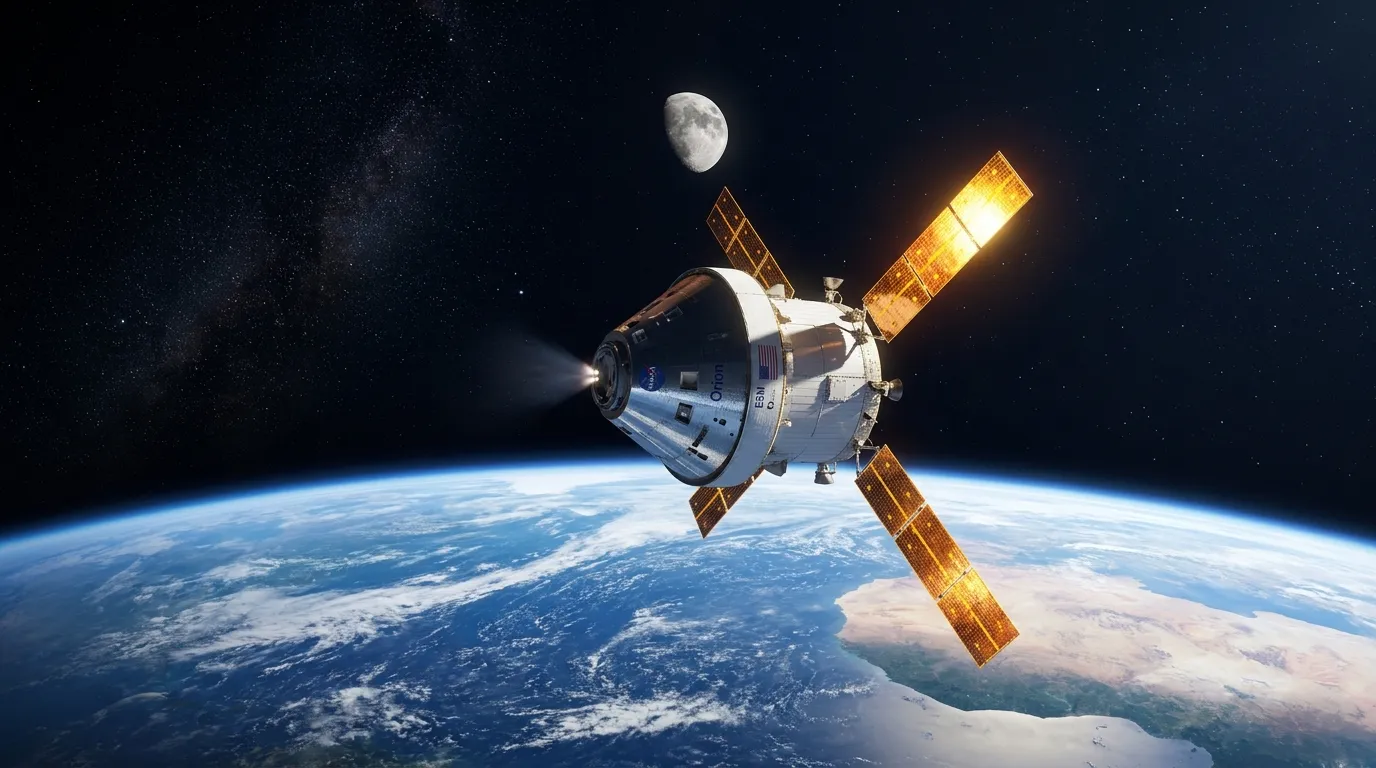
Sometime around 7:49 PM Eastern tonight, four astronauts strapped inside NASA's Orion capsule will feel a push that nobody alive has felt in more than half a century. The spacecraft's service module engine will ignite for five minutes and 51 seconds, accelerating Orion by 1,272 feet per second and bending its trajectory away from Earth and toward the moon. When the engine shuts down, there's no turning back. The laws of orbital mechanics will have committed Reid Wiseman, Victor Glover, Christina Koch, and Jeremy Hansen to a 10-day loop around the far side of the moon and back, a journey that humans haven't made since Apollo 17 splashed down on December 19, 1972.
The translunar injection burn, or TLI, is the single most consequential moment of the Artemis II mission. Everything before it has been preparation. Everything after it is a consequence. And tonight, if NASA's mission management team gives final approval after their first full systems review, it happens.
What's Already Happened
Artemis II launched at 6:35 PM EDT yesterday from Kennedy Space Center's Launch Complex 39B atop NASA's Space Launch System rocket, the most powerful rocket ever flown. The launch itself was flawless, placing Orion and its crew into an initial Earth orbit after the SLS core stage and solid rocket boosters did their work and fell away.
Since then, the crew has been busy. The spacecraft performed an apogee raise burn on the first orbit, adjusting the high point of its path around Earth. This morning, Orion's service module engine fired for 43 seconds to complete a perigee raise burn, lifting the lowest point of the orbit and refining the trajectory for tonight's TLI. Both burns went according to plan.
Between the orbital adjustments, the crew executed a proximity operations demonstration, manually flying Orion to within 10 meters of the Interim Cryogenic Propulsion Stage (the spent upper stage of the SLS rocket) for approximately 75 minutes. This wasn't just practice. Future Artemis missions will require Orion to dock with a lunar lander in orbit around the moon, and the proximity demo was a real-world test of the piloting techniques and sensor systems that will make those dockings possible.
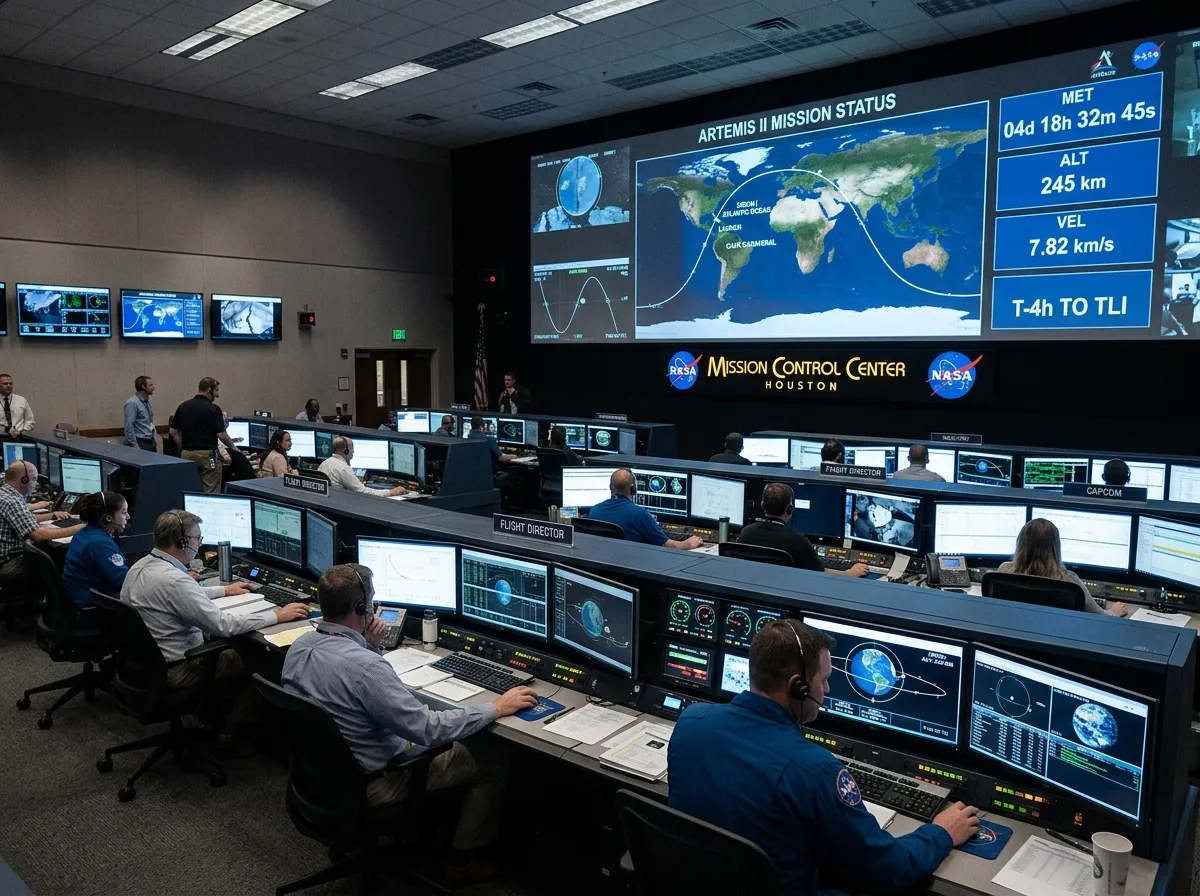
The Crew Making History
The four people about to leave Earth orbit form one of the most diverse and experienced crews NASA has ever assembled.
Commander Reid Wiseman is a Navy test pilot from Baltimore who has already spent 165 days in space aboard the International Space Station during Expedition 41. He later served as NASA's chief astronaut, the person responsible for crew assignments and astronaut office management, before being named to command Artemis II. At 50, Wiseman brings the kind of calm, methodical temperament that NASA wants at the controls when a spacecraft commits to a lunar trajectory.
Pilot Victor Glover is a Navy captain who was the first Black astronaut to live aboard the ISS for an extended mission, spending 168 days in orbit and completing four spacewalks during the Crew-1 mission in 2020-2021. Tonight, Glover will become the first person of color to travel beyond low Earth orbit. He has logged more than 3,500 hours of flight time across more than 40 aircraft types, and he'll be the one with hands on the controls if Orion needs manual course corrections during the lunar flyby.
Mission Specialist Christina Koch holds the record for the longest single spaceflight by a woman: 328 consecutive days aboard the ISS across Expeditions 59, 60, and 61. Koch, an electrical engineer from North Carolina State University, will become the first woman to fly to the moon. She and fellow astronaut Jessica Meir conducted the first all-female spacewalk in 2019, and her nearly year-long ISS stay generated critical data on the effects of extended spaceflight on the female body.
Mission Specialist Jeremy Hansen is the wild card in the best possible sense. A Canadian Space Agency astronaut, Royal Military College graduate, and CF-18 fighter pilot, Hansen has never actually been to space before. Artemis II will be his first mission, making him simultaneously a spaceflight rookie and the first non-American to fly to the moon. He grew up on a farm in Ontario and earned his glider wings at 16.
The Road to the Moon
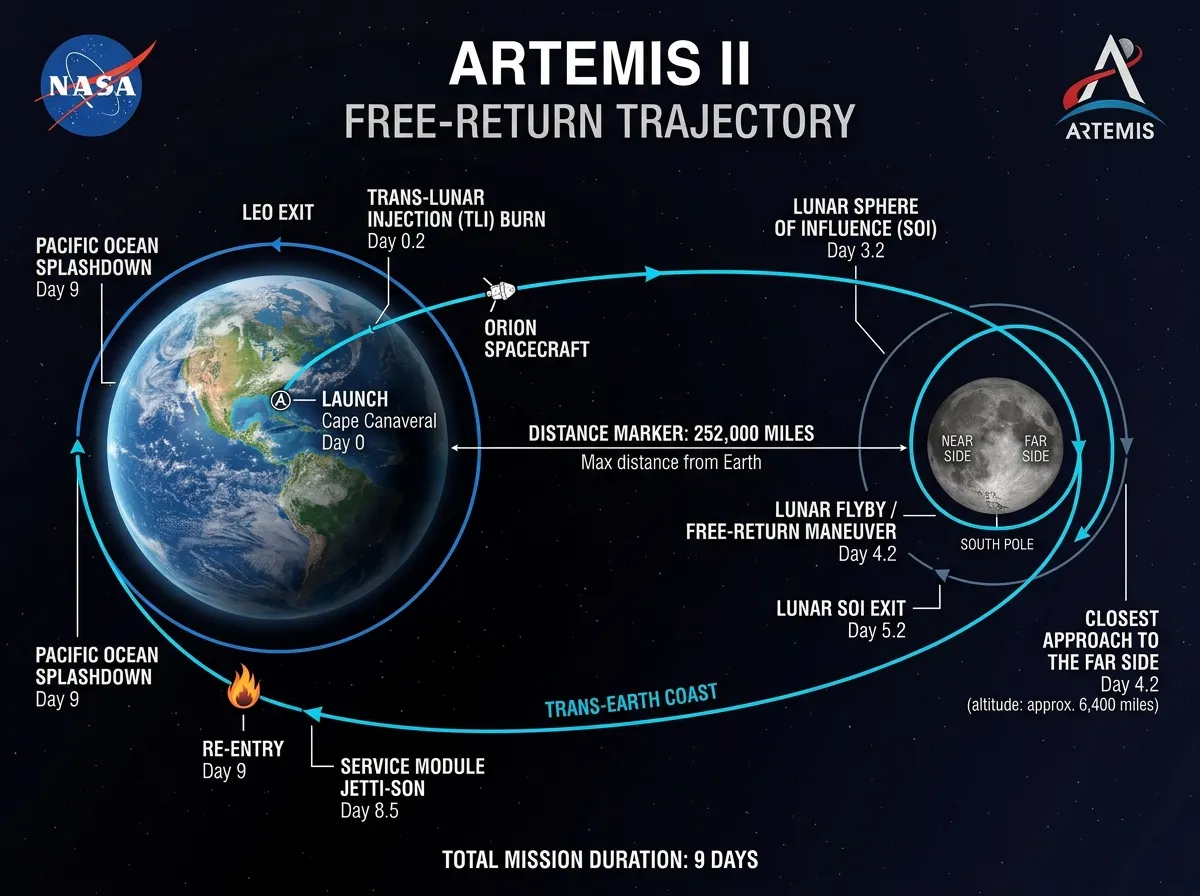
Once the TLI burn is complete tonight, Orion will be on what NASA calls a "free-return trajectory," a figure-eight path that uses the moon's gravity to sling the spacecraft around the far side and send it back toward Earth without requiring another major engine burn. It's the same type of trajectory that saved the Apollo 13 crew in 1970 when their service module was crippled by an oxygen tank explosion.
The transit to the moon will take approximately four days. On day five, Orion will enter the lunar sphere of influence, the point where the moon's gravity becomes the dominant force acting on the spacecraft. On day six, the crew will reach their closest approach: approximately 4,100 miles above the lunar far side. At that moment, they'll be farther from Earth than any human has ever traveled, approximately 252,000 miles, setting a new distance record that surpasses Apollo 13's mark of 248,655 miles from 1970.
The far-side pass will also mean something that no astronaut has experienced since 1972: complete loss of communication with Earth. For the roughly 30 minutes that the moon blocks the line of sight to mission control, the four crew members will be entirely on their own, farther from human help than anyone in history. Then the moon's gravity will bend their path back toward home. Splashdown is scheduled for April 10 in the Pacific Ocean off San Diego.
Fifty-Four Years in the Making
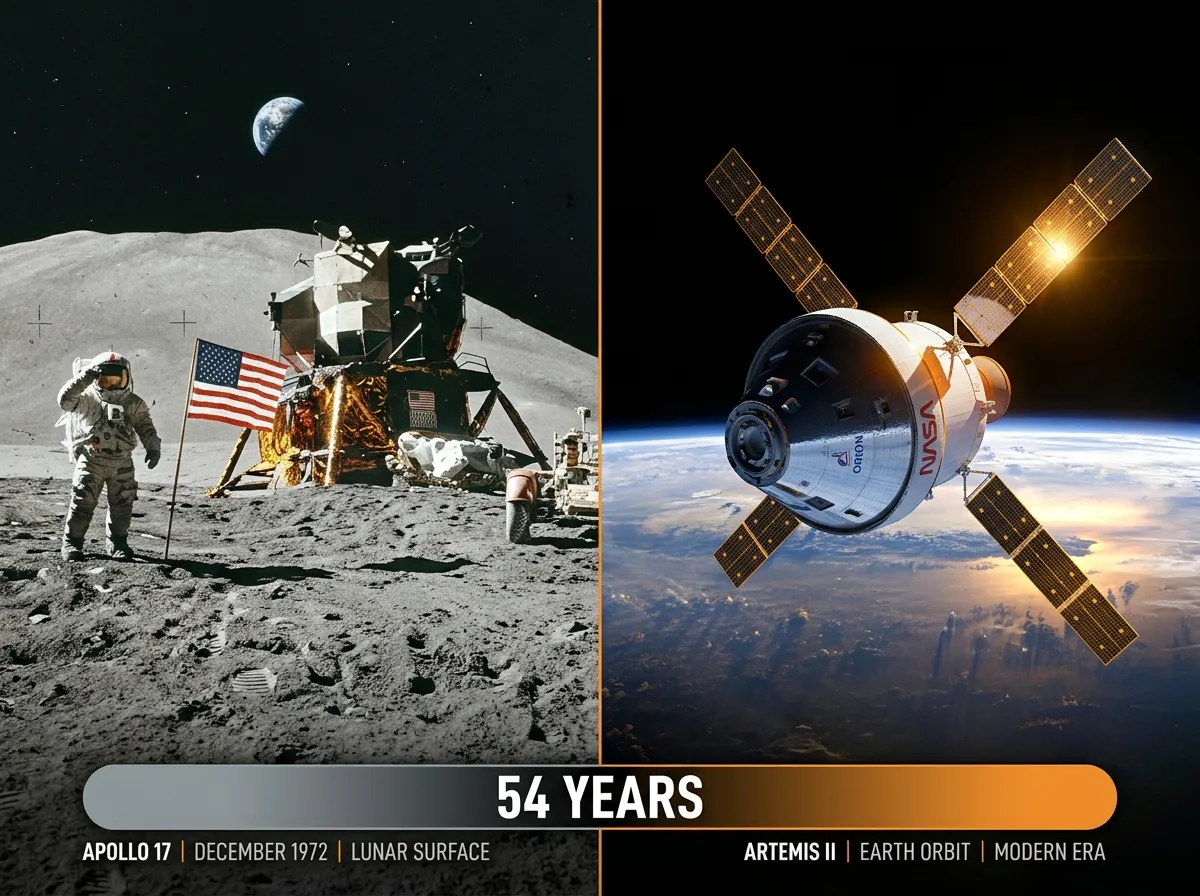
The gap between Apollo 17 and Artemis II is the longest stretch in human history between crewed missions beyond low Earth orbit. When Gene Cernan climbed back into his lunar module in December 1972 after becoming the last person to walk on the moon, few people imagined it would take more than five decades for humans to return. NASA's subsequent programs, the Space Shuttle and the International Space Station, kept astronauts in space but never sent them farther than a few hundred miles above Earth's surface.
Artemis II doesn't land on the moon. That milestone belongs to Artemis III, currently targeted for 2028. But tonight's TLI burn is the moment that breaks the 54-year drought. It's the moment four humans leave the relative safety of Earth orbit and commit to the deep-space environment that only 24 people in all of human history have experienced. The technology industry is pouring billions into infrastructure that will define the next decade, but no investment of the past year carries quite the same symbolic weight as the one NASA is about to make with five minutes and 51 seconds of engine thrust.
The Artemis program has been expensive, delayed, and politically contentious. The SLS rocket costs roughly $2.2 billion per launch, and the program's total development costs have exceeded $40 billion. Critics argue the money could achieve more if directed toward commercial launch providers. Supporters counter that only a government program can sustain the political will and engineering continuity required for human deep-space exploration across decades. That debate will continue long after Orion splashes down on April 10.
Why It Matters
Tonight's burn is technically a test. Artemis II's primary objective is to validate the Orion spacecraft's life support, navigation, and communication systems in the deep-space environment before NASA attempts a crewed lunar landing on Artemis III. The crew will collect engineering data on every system throughout the 10-day mission, testing components that the uncrewed Artemis I flight in 2022 couldn't fully evaluate because nobody was aboard to interact with them.
But the test frame obscures what's actually happening. Four human beings are about to travel a quarter of a million miles from Earth, loop around the far side of the moon, and return. Victor Glover will become the first Black astronaut to see the moon up close. Christina Koch will become the first woman. Jeremy Hansen will be the first Canadian, the first non-American, and the first person to go to the moon on their very first spaceflight. We live in a time when robots walk through the White House and AI reshapes entire industries overnight, but there is still no technological substitute for putting human eyes on the far side of the moon and bringing those humans home.
The burn is scheduled for 7:49 PM EDT. It lasts five minutes and 51 seconds. And when it's over, for the first time since Richard Nixon was in the White House, humans will be on their way to the moon.
Sources
- Artemis II Flight Update: Perigee Raise Burn Complete - NASA
- Artemis 2 LIVE: Astronauts face critical moment today - Space.com
- The Critical Burn: How Artemis 2's Translunar Injection Commits Four Astronauts to the Moon - SpaceDaily
- Artemis II mission timeline: What the 10-day journey will look like - ABC News
- Liftoff! NASA Launches Astronauts on Historic Artemis Moon Mission - NASA