
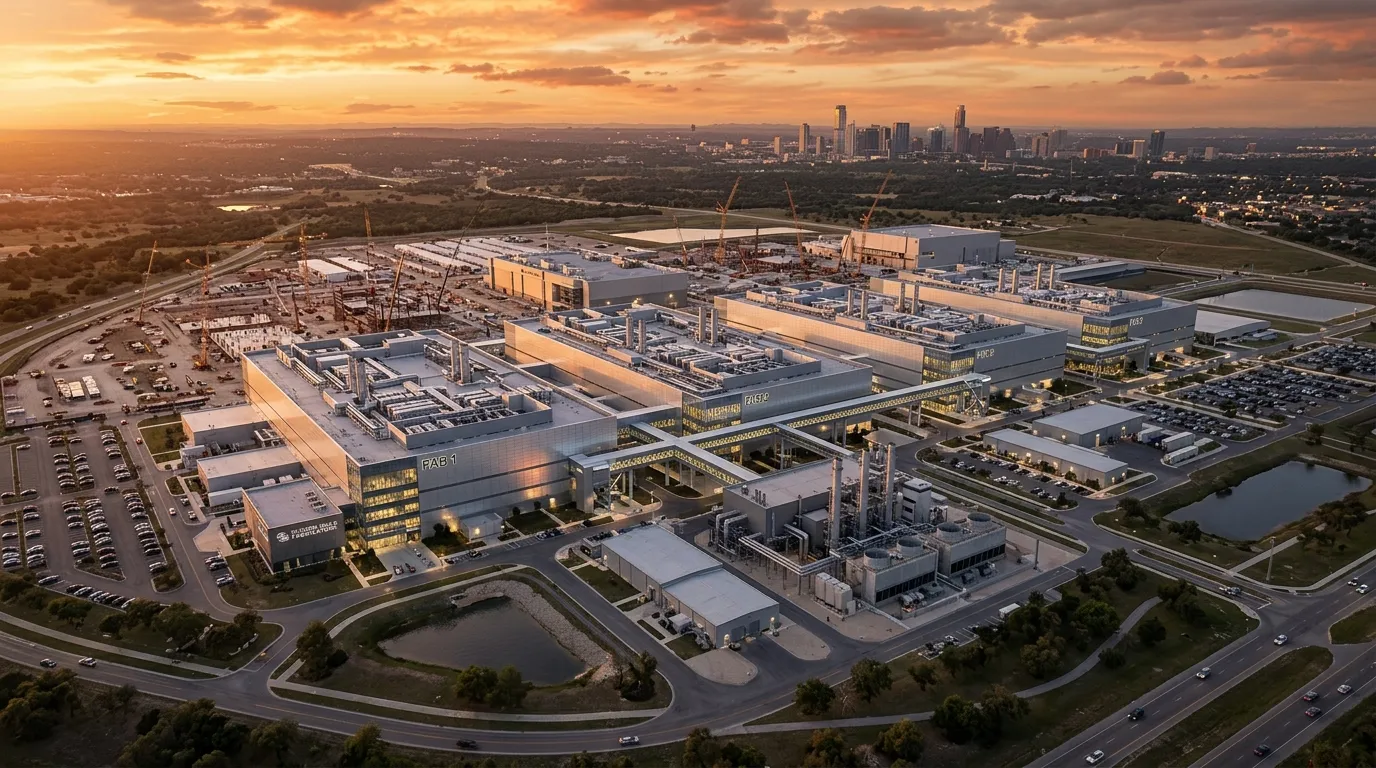
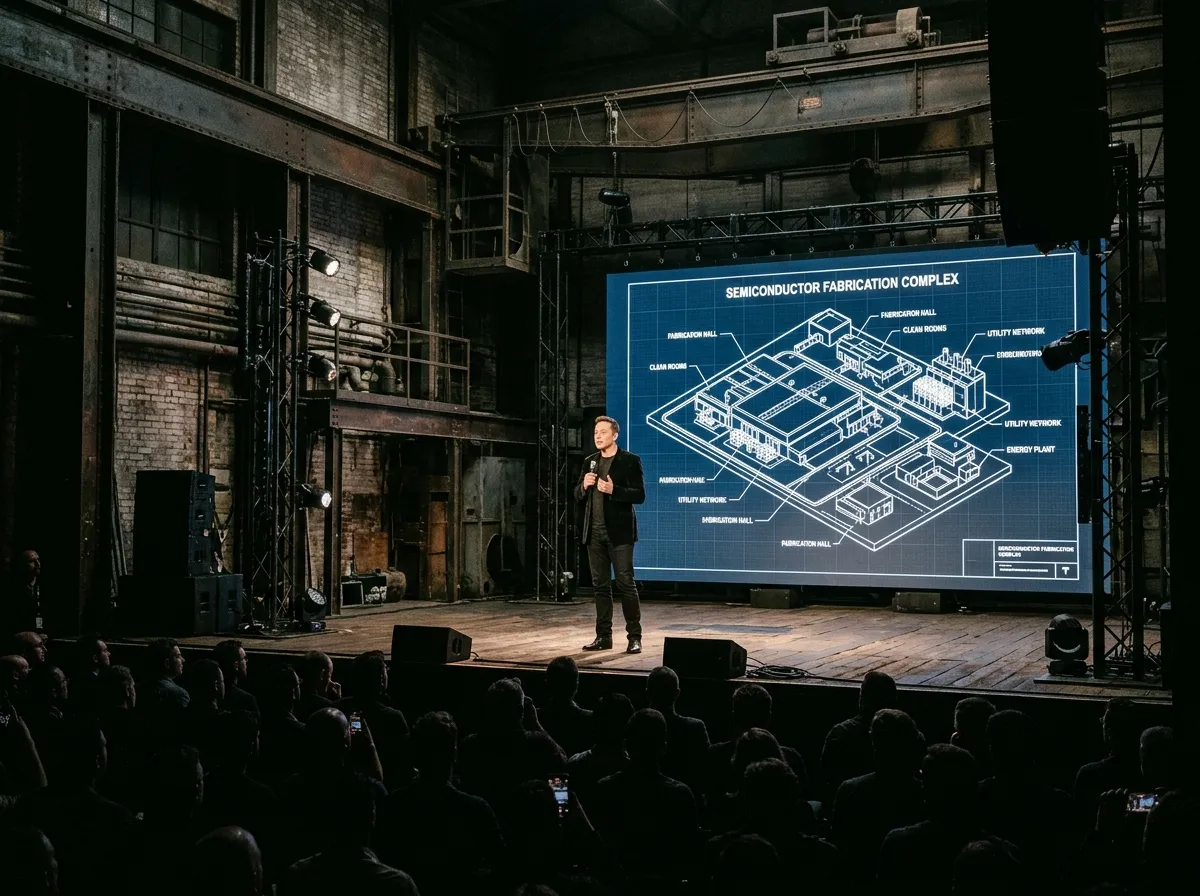
On Friday night, Elon Musk stood on a stage inside Austin's decommissioned Seaholm Power Plant and announced what he called "the most epic chip building exercise in history by far." The project is Terafab, a joint venture between Tesla, SpaceX, and xAI that aims to build a fully integrated semiconductor fabrication facility at the North Campus of Giga Texas. The price tag: somewhere between $20 billion and $25 billion. The goal: to manufacture everything from AI inference chips to radiation-hardened space processors under one roof, on a 2-nanometer process node that the world's most experienced chipmakers are still working to commercialize.
It is, by any measure, an extraordinary ambition. Whether it is a realistic one is a different question entirely.
What Terafab Is Supposed to Be
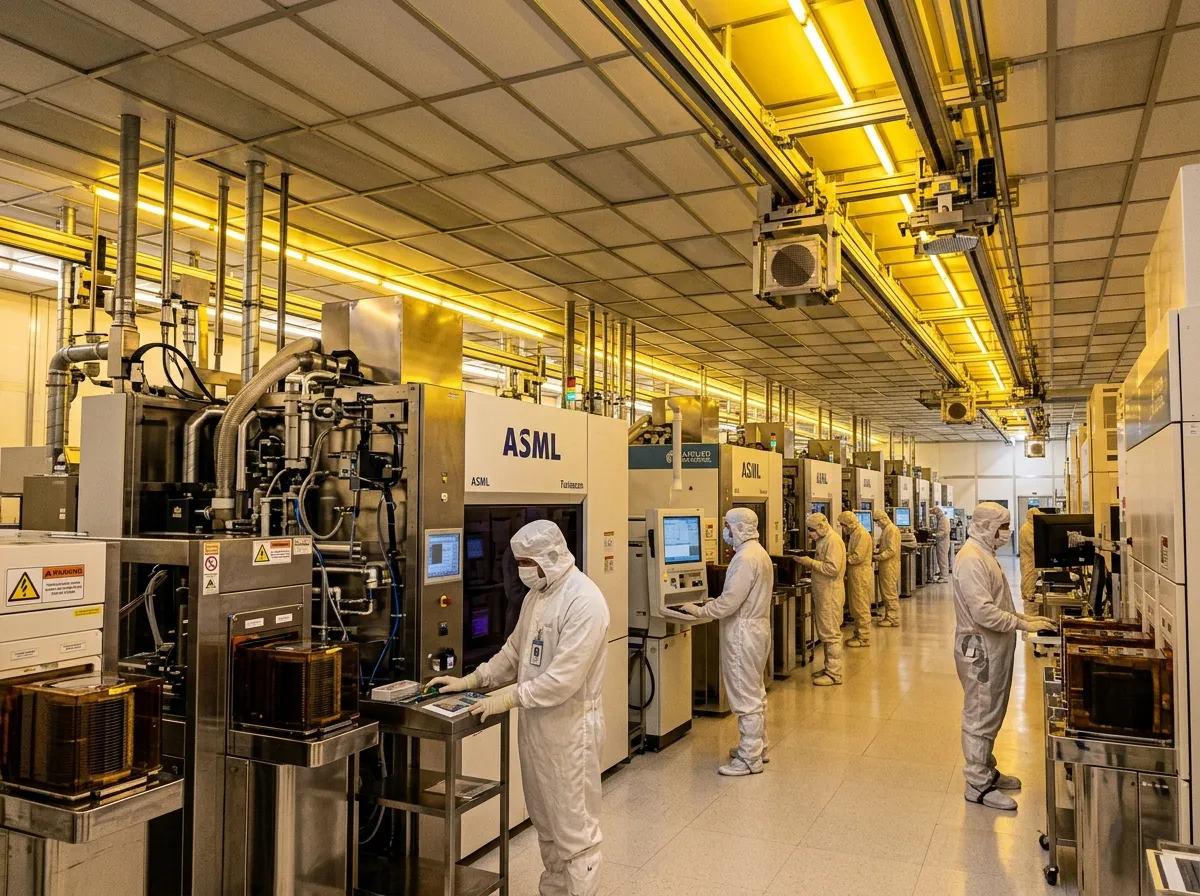
The facility Musk described would consolidate every stage of semiconductor production: chip design, lithography, fabrication, memory production, advanced packaging, and testing. That vertical integration is rare in the chip industry, where most companies specialize in one or two links of the chain. TSMC fabricates. ASML builds lithography machines. Synopsys and Cadence design the software tools. Musk wants to do all of it.
Terafab's first two products would be the AI5, Tesla's fifth-generation inference chip designed for Full Self-Driving, the Cybercab robotaxi, and the Optimus humanoid robot, and the D3, a radiation-hardened processor built to operate in the extreme conditions of low Earth orbit. Small-batch AI5 production is targeted for late 2026, with volume manufacturing projected for 2027.
The capacity targets are staggering. Musk outlined an initial goal of 100,000 wafer starts per month, scaling eventually to one million. At full capacity, the facility would produce between 100 and 200 billion custom chips annually and generate what Musk described as a terawatt of computing output per year. Eighty percent of that compute, he said, would be directed toward SpaceX's planned orbital AI data center constellation, with 20% allocated to terrestrial applications.
The Space Angle
The most unusual element of the announcement is how little of it is actually about cars. The 80/20 allocation toward space-based computing reflects SpaceX's growing ambitions beyond launch services. The D3 chip is designed for what Musk described as "AI Sat Mini" satellites, 170-meter orbital platforms carrying 100 kilowatts of onboard processing power. The pitch is that superior solar irradiance in orbit could make space-based data centers cost-competitive with terrestrial ones within two to three years.
This is where xAI fits in. SpaceX completed an all-stock acquisition of the AI company in February 2026, and the combined entity now needs custom silicon for training and running Grok models at scale. Musk has been vocal about the shortage of compute capacity, claiming at the Terafab event that existing fabrication facilities produce "only about 2% of needed capacity" for his companies' AI ambitions.
The orbital data center concept, however, has drawn sharp skepticism. Electrek's analysis described the vision as having "essentially zero connection to any near-term business reality." Building and launching 170-meter satellite platforms with onboard AI processing would require breakthroughs in space construction, thermal management, and satellite-to-ground data transfer that don't yet exist at the required scale. For context, NVIDIA's Jensen Huang unveiled a $1 trillion AI chip pipeline at GTC just days earlier, and none of that roadmap involves putting chips in orbit.
The Credibility Gap
Semiconductor analysts have been measured in their enthusiasm, and some have been blunt. Morgan Stanley estimates the full cost of Terafab could run $35 billion to $40 billion and has cautioned that chips likely wouldn't emerge from the facility before 2028, even under optimistic assumptions.
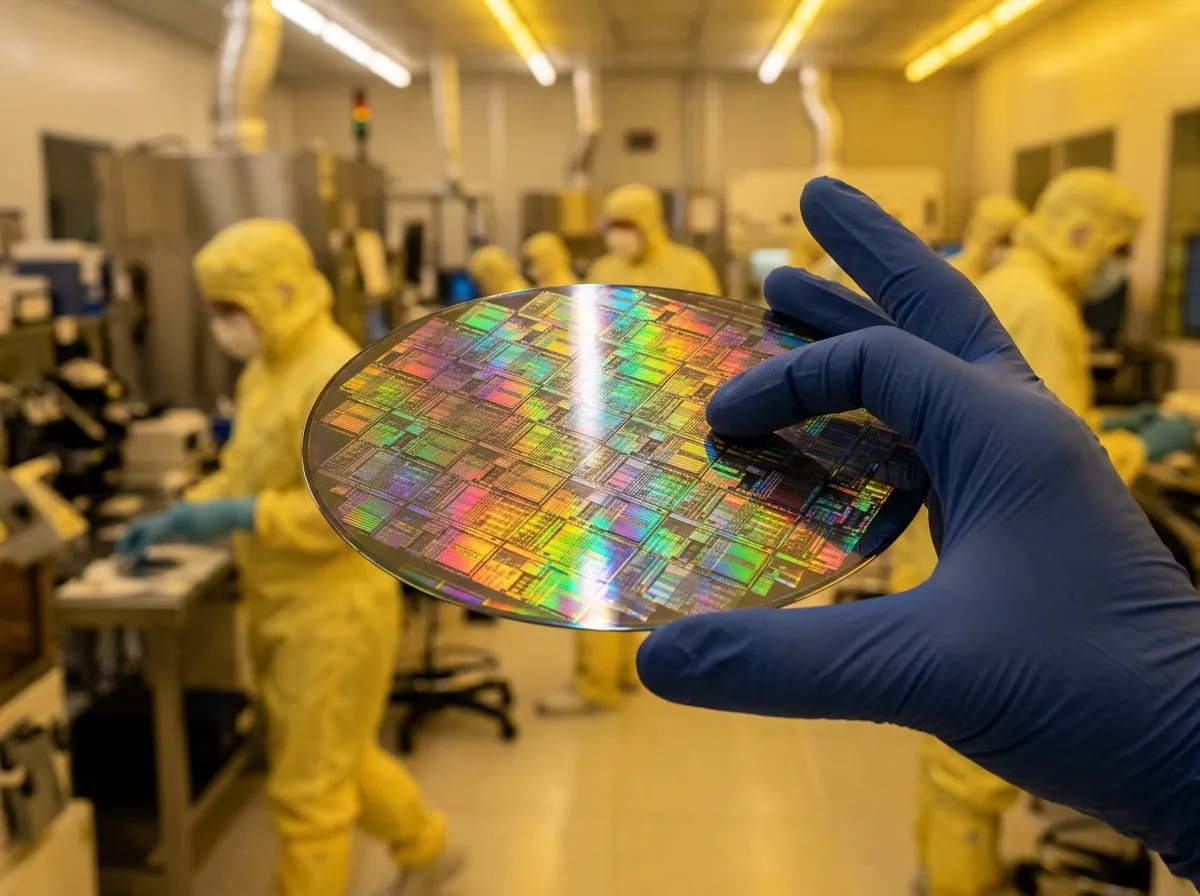
The comparison to established chipmakers puts the challenge in relief. TSMC, the world's dominant contract manufacturer, has spent $165 billion building six fabs in Arizona. Those facilities won't reach 2nm production until 2029. TSMC employs roughly 50,000 engineers focused exclusively on fabrication, with decades of accumulated process knowledge. A single 2nm fab running at 50,000 wafer starts per month costs approximately $28 billion and requires about 38 months to construct in the United States.
Tesla has zero semiconductor manufacturing experience. It designs chips, including its current Hardware 4 FSD processor, but has always relied on Samsung's foundry to actually produce them. The jump from chip design to chip fabrication is enormous, comparable to the difference between writing sheet music and building a concert hall.
There is also a talent bottleneck. Semiconductor manufacturing depends on highly specialized engineering teams working in a culture of extreme precision and discipline that differs fundamentally from the move-fast ethos of software and automotive startups. Recruiting at scale while TSMC, Intel, and Samsung are all competing for the same people adds another layer of difficulty.
Those who have tracked Musk's announcements over the years will recall a precedent. At Tesla's Battery Day in 2020, Musk outlined plans for the 4680 battery cell that would cut costs by 56% and enable massive production volumes. Five years later, Tesla has achieved roughly 2% of those original manufacturing targets. The chip smuggling case against Super Micro's co-founder, meanwhile, illustrates just how valuable and tightly controlled advanced AI chips have become, which both explains Musk's desire for supply chain independence and underscores how difficult the market is to break into.
Why It Matters
Skepticism aside, the announcement reflects a real and growing problem in the AI industry: chip supply can't keep up with demand. Every major AI lab, cloud provider, and autonomous vehicle company is either locked into multi-year TSMC contracts or scrambling for alternatives. Apple, Google, Amazon, and Microsoft have all invested heavily in custom silicon, but none of them are trying to build their own fabs.
Musk is. Whether that reflects visionary thinking or a pattern of overcommitting to vertical integration depends largely on your prior assessment of his track record. The $25 billion question is whether Tesla and SpaceX can acquire the expertise, the talent, and the patience to do what only three companies on Earth currently can. Even a partial success, a facility that produces lower-volume custom chips for internal use, could reduce Musk's dependence on TSMC and Samsung. A full success would reshape the global semiconductor map.
For now, Terafab is a rendering, a stage presentation, and a promise. Tesla's stock slipped in after-hours trading following the announcement. The market, apparently, wanted to see a blueprint before buying the dream.
Sources
- Tesla and SpaceX announce $25B 'Terafab' chip factory - Electrek
- TERAFAB Launched: Here Is What Elon Musk Actually Built - FinTech Weekly
- Tesla Stock Slips After Musk Unveils $25B Terafab - StockTwits / Analyst Commentary
- Can Musk's Terafab turn chip independence into reality? - DigiTimes