

The co-founder of one of America's largest server companies has been charged with running a $2.5 billion smuggling operation that funneled Nvidia's most advanced AI chips to China through a front company in Southeast Asia. Federal prosecutors allege that Yih-Shyan "Wally" Liaw, a board member and co-founder of Super Micro Computer (SMCI), orchestrated a scheme that used fabricated documents, staged "dummy" servers, and a network of compliant insiders to evade U.S. export controls designed to keep cutting-edge AI hardware out of Chinese hands.
The indictment, unsealed Thursday, also names Ruei-Tsan "Steven" Chang and Ting-Wei "Willy" Sun as co-conspirators. Liaw and Sun were arrested Thursday morning. Chang is a fugitive. The charges include conspiring to violate the Export Controls Reform Act, smuggling goods from the United States, and defrauding the federal government. SMCI shares cratered 25% on Friday as investors absorbed the scale of the alleged diversion.
This is, by dollar volume, the largest known case of illegal AI chip exports to China. And it hits at precisely the moment when Washington is trying to convince allies that its export control regime actually works.
What Prosecutors Say Happened
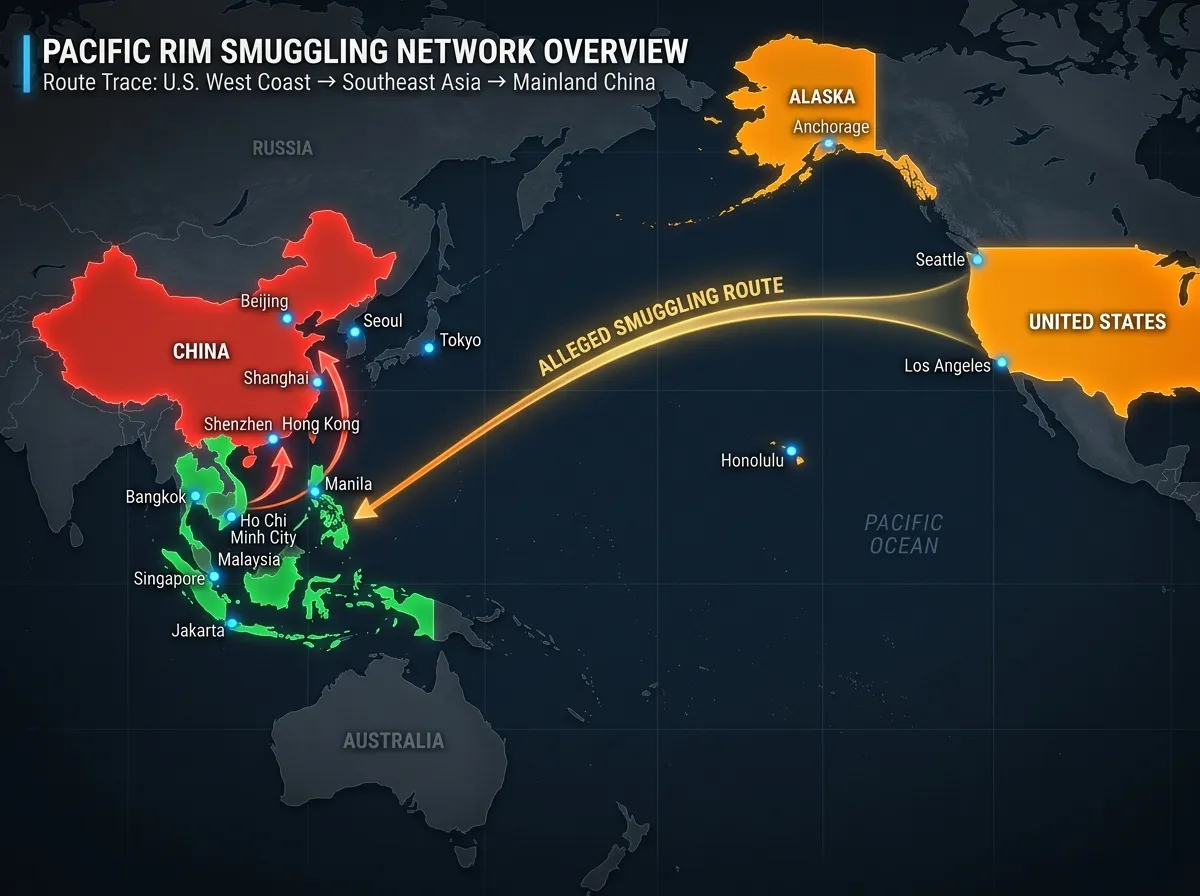
The scheme, according to the indictment, was straightforward in design if audacious in scope. Liaw allegedly used his position at Super Micro to route completed servers loaded with Nvidia AI chips to a pass-through company in Southeast Asia. That company existed, prosecutors say, for a single purpose: to receive the servers and forward them to end users in China.
Here's how it allegedly worked:
- Super Micro built servers equipped with Nvidia's advanced AI processors, including chips based on the Blackwell architecture
- Liaw directed sales to a Southeast Asian intermediary company, creating paper trails that made the transactions appear to terminate in a country not subject to U.S. export restrictions
- When compliance officers or U.S. export control officials inspected operations, the team staged "dummy" servers, machines that appeared to be the real inventory but were actually decoys
- Fabricated end-user certificates and shipping documents obscured the true destination of the hardware
- The Southeast Asian company then re-exported the servers to customers in mainland China
The dollar figures are staggering. Prosecutors allege that between late April and mid-May 2025 alone, $510 million worth of servers moved through this pipeline. Over the full course of the conspiracy, the total reached approximately $2.5 billion. To put that in context, Super Micro reported $14.9 billion in total revenue for its fiscal year 2024. The alleged diversion represents a significant chunk of the company's overall business.

The Blackwell Connection
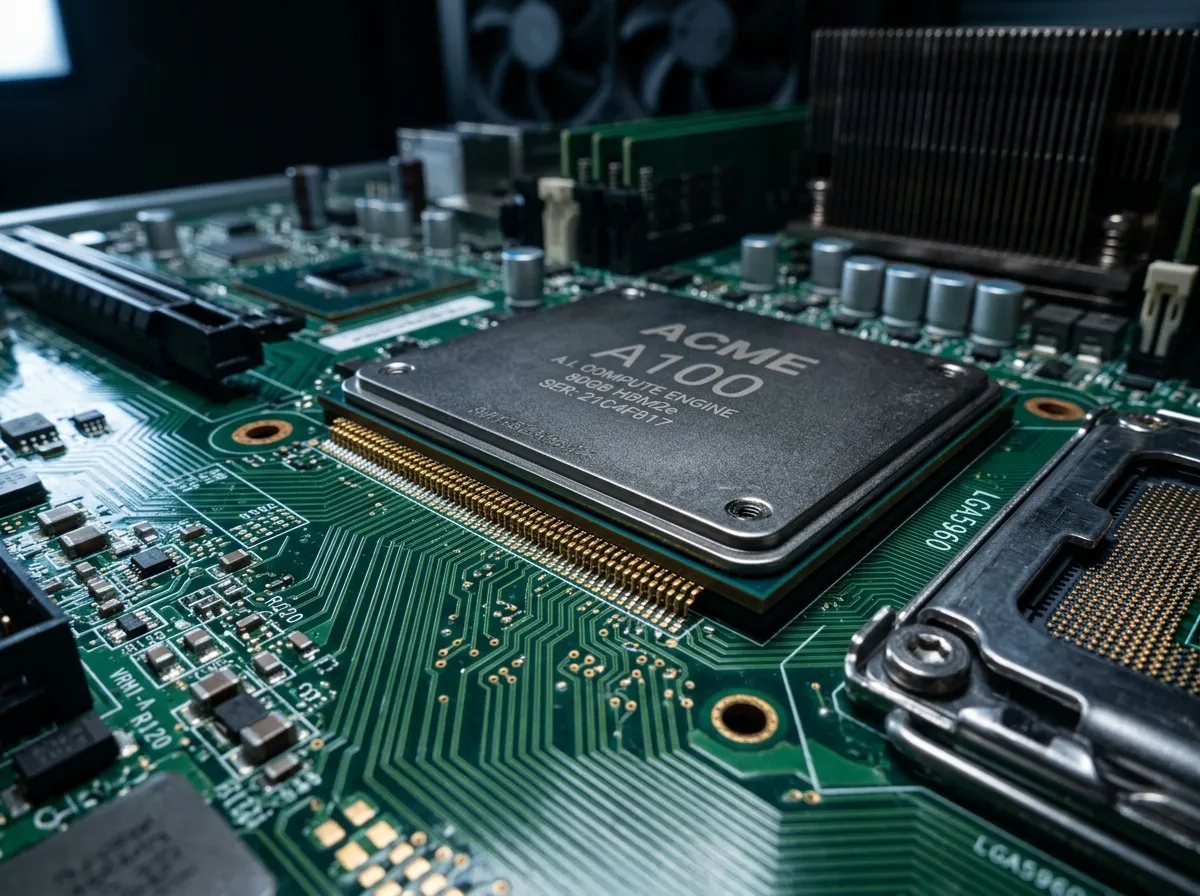
One detail in the indictment stands out: Liaw allegedly pushed Super Micro to adopt Nvidia's B200 chips based on the Blackwell architecture in late 2024, just as those processors were becoming available. The Blackwell platform, which Nvidia unveiled at GTC and has since built into a trillion-dollar order pipeline, represents the company's most advanced AI training and inference hardware. A single B200 GPU delivers 20 petaflops of FP4 inference performance, making it exactly the kind of chip that China's AI labs have been desperate to acquire since the U.S. began tightening export restrictions in October 2022.
The timing matters. The Biden administration's original chip export controls targeted Nvidia's A100 and H100 processors. Nvidia responded by designing cut-down chips (the A800 and H800) that technically complied with the rules. Washington then closed that loophole in October 2023, broadening the restrictions to cover any chip above a certain performance threshold. The Blackwell architecture, with its massive leap in capability, was never going to qualify for legal export to China under any reading of the current rules.
"This was not a gray area," said Matthew Olsen, former assistant attorney general for national security, in a statement to reporters. "These are chips that are explicitly restricted. The export control framework was designed to prevent exactly this kind of transfer."
Liaw's alleged push to adopt B200 chips, prosecutors argue, was motivated at least partly by the premium Chinese buyers would pay for access to hardware they couldn't legally obtain. The indictment describes communications in which Liaw discussed the "strong demand" from customers who needed the most advanced chips available, without specifying by name that those customers were in China.
Super Micro's Troubled History
If this were the first time Super Micro found itself at the center of a federal investigation, the market reaction might have been less severe. It isn't. The company has a pattern of governance failures that makes this indictment feel less like an aberration and more like a recurring theme.
A quick timeline of Super Micro's compliance problems:
- 2018-2020: The SEC charged the company with widespread accounting violations, including premature revenue recognition and understatement of expenses. Super Micro paid $17.5 million to settle without admitting wrongdoing.
- 2024: Ernst & Young resigned as the company's auditor, citing concerns about internal controls and the board's independence. Super Micro's stock dropped sharply, and the company faced a lengthy process to find a replacement auditor and avoid delisting from Nasdaq.
- 2024-2025: The DOJ opened a separate investigation into the accounting issues flagged by EY. That probe is reportedly still active.
- 2026: The current indictment alleging $2.5 billion in illegal chip exports.
Charles Liang, Super Micro's CEO and other co-founder, has not been charged. The company issued a statement saying it "takes compliance with all applicable laws and regulations seriously" and is "cooperating fully with authorities." The stock's 25% single-day drop suggests investors found that reassurance insufficient.
"The pattern here is a company that has consistently treated regulatory compliance as an obstacle rather than a requirement," said Arun Viswanathan, a semiconductor analyst at RBC Capital Markets. "Each incident erodes the credibility of management's assurances that the next one won't happen."
Export Controls Under a Microscope
The Super Micro case arrives at a moment when the entire U.S. export control apparatus is under intense scrutiny. The Biden administration built a multi-layered system of chip restrictions over 2022 and 2023, and the Trump administration has expanded those controls in 2025 and 2026 while simultaneously pressuring allies like Japan, the Netherlands, and South Korea to enforce parallel restrictions on their own chipmaking equipment exports.
The theory behind the controls is simple: if you can cut China off from the most advanced AI chips, you can slow its progress in military AI applications, large-scale surveillance systems, and frontier model development. The practice is harder. Smuggling networks, intermediary countries, and creative re-routing have emerged as persistent challenges.
Here's where enforcement stands today:
- The Bureau of Industry and Security (BIS) has added hundreds of Chinese entities to the Entity List since 2022, restricting their access to U.S. technology
- Multiple enforcement actions have targeted smaller-scale chip diversions, typically involving individual resellers moving handfuls of GPUs through Hong Kong or Malaysia
- The Super Micro case dwarfs all previous actions in scale, suggesting that the smuggling problem extends well beyond small-time intermediaries
- The Commerce Department finalized new "know your customer" requirements for chip sales in January 2026, but those rules were not in effect during most of the alleged conspiracy
The case also raises uncomfortable questions about Nvidia's own compliance procedures. Nvidia sells chips to server manufacturers like Super Micro, who then sell completed systems to end users. If $2.5 billion in Nvidia-powered servers ended up in China, how did Nvidia's own compliance checks fail to flag the volume of sales flowing to a single Southeast Asian intermediary? Nvidia has not been charged and has said it "works closely with law enforcement and fully complies with all export regulations," but the company will face questions from investors and regulators about the adequacy of its supply chain monitoring.
How This Compares to Other Enforcement Actions
The Super Micro indictment is not the first export control case involving AI chips, but it is by far the most significant in terms of dollar volume, seniority of the defendants, and the directness of the alleged scheme.
Previous cases have typically involved mid-level distributors or trading companies. In 2023, a New York-based company was fined for shipping Nvidia A100 GPUs to China through a UAE intermediary, but the total value was under $10 million. In early 2025, federal agents intercepted a shipment of H100 chips destined for a Chinese military research institute via a Malaysian shell company, a case involving roughly $50 million. The Super Micro case, at $2.5 billion, represents a 50-fold escalation.
The involvement of a Super Micro co-founder and board member also elevates the case beyond a supply chain compliance failure. This is a C-suite-level defendant at a publicly traded company with a $15 billion market capitalization. If the allegations hold up, it means the diversion wasn't happening despite the company's leadership. It was happening because of it.
The case bears some structural resemblance to the ZTE sanctions saga of 2018, when the Chinese telecom giant was caught violating U.S. sanctions on Iran and North Korea. ZTE ultimately paid $1.4 billion in penalties and agreed to install a U.S.-selected compliance team. But ZTE was a Chinese company violating sanctions on third countries. Super Micro is an American company allegedly violating controls designed to protect American national security interests. The legal and political implications are categorically different.
For the broader AI chip supply chain, the indictment sends a signal that enforcement is scaling up alongside the restrictions themselves. The trillion-dollar AI infrastructure buildout that Nvidia outlined at GTC last week depends on trust between chipmakers, server manufacturers, and end users. When that trust breaks down at the level alleged here, the entire supply chain faces tighter scrutiny, more paperwork, and slower deal cycles.
That friction will hit honest companies hardest. Firms like Dell, HPE, and Lenovo, all of which compete with Super Micro in the AI server market, will likely face enhanced compliance requirements even though they have no connection to the alleged scheme. The cost of one company's alleged misconduct gets distributed across the entire industry.
The China AI Race Context
It is worth stepping back and understanding why $2.5 billion in smuggled chips matters strategically. China's AI capabilities have continued advancing despite export controls, partly through domestic chip development (Huawei's Ascend processors, for example) and partly through stockpiles of chips purchased before the restrictions took effect. But there is broad consensus among U.S. intelligence officials that the controls have meaningfully slowed China's ability to train frontier-scale AI models.
Each generation of restricted chips that reaches China erodes that advantage. Blackwell-based servers are not merely incremental upgrades. They represent a generational leap in training efficiency and inference throughput. If Chinese AI labs gained access to thousands of B200 GPUs, they could close capability gaps that the export controls were specifically designed to maintain.
The Anthropic-Pentagon dispute over AI weapons has already highlighted how the U.S. government views AI capability as a national security asset. The Super Micro case is the flip side of that coin: if advanced AI chips are a strategic resource worth fighting over in court, they are also a strategic resource worth smuggling. The $2.5 billion price tag reflects what Chinese buyers were willing to pay for access to hardware their own government cannot yet produce domestically at comparable performance levels.
"Export controls only work if they are enforced," said Kevin Wolf, former assistant secretary of commerce for export administration, in a statement following the indictment. "This case demonstrates both the seriousness of the enforcement effort and the scale of the challenge."
The Bigger Story
The Super Micro indictment is, on its surface, a criminal case about three men who allegedly circumvented export laws for profit. But it sits at the intersection of several forces that will shape technology policy for years.
First, it tests whether the U.S. export control regime can actually contain the flow of advanced chips to China. A $2.5 billion diversion through a single company suggests the leakage is substantial, and Super Micro is unlikely to be the only firm where compliance broke down. If prosecutors uncover similar schemes at other server manufacturers or distributors, the political pressure to impose even more restrictive controls will intensify.
Second, it creates a governance crisis for Super Micro at the worst possible time. The AI server market is booming, with Super Micro positioned as a leading supplier of GPU-dense systems for data center operators. Losing a co-founder and board member to a federal indictment, on top of the existing accounting investigation and the auditor resignation, raises serious questions about whether institutional customers will continue placing large orders with the company. Competitors will exploit that uncertainty aggressively.
Third, it puts Nvidia in an awkward position. Nvidia's chips were the product being smuggled, and while Nvidia bears no legal responsibility for what happened after the chips left its supply chain, the company's reputation is now tied to the enforcement story. Jensen Huang spent GTC last week celebrating a trillion dollars in chip orders. This week, the conversation is about where $2.5 billion worth of those chips actually ended up.
The defendants face maximum sentences of 20 years on the smuggling charges and five years on the conspiracy count. Liaw and Sun are scheduled for initial court appearances next week. Chang remains at large.
For the AI industry, the message from prosecutors is blunt: the era of loose enforcement is over. Whether the system is robust enough to match that ambition is the question that the Super Micro case, and inevitably others like it, will answer.
Sources
- Super Micro shares tank 25% after employees charged with smuggling Nvidia chips to China - CNBC
- Co-founder of tech company charged with diverting $2.5 billion in Nvidia AI chips to China - CNN
- Supermicro's co-founder arrested for allegedly smuggling $2.5 billion in GPUs to China - Fortune
- Three charged by US with plot to illegally send AI tech to China - Bloomberg
- 3 Men Are Charged With Conspiring to Smuggle US Artificial Intelligence to China - US News