
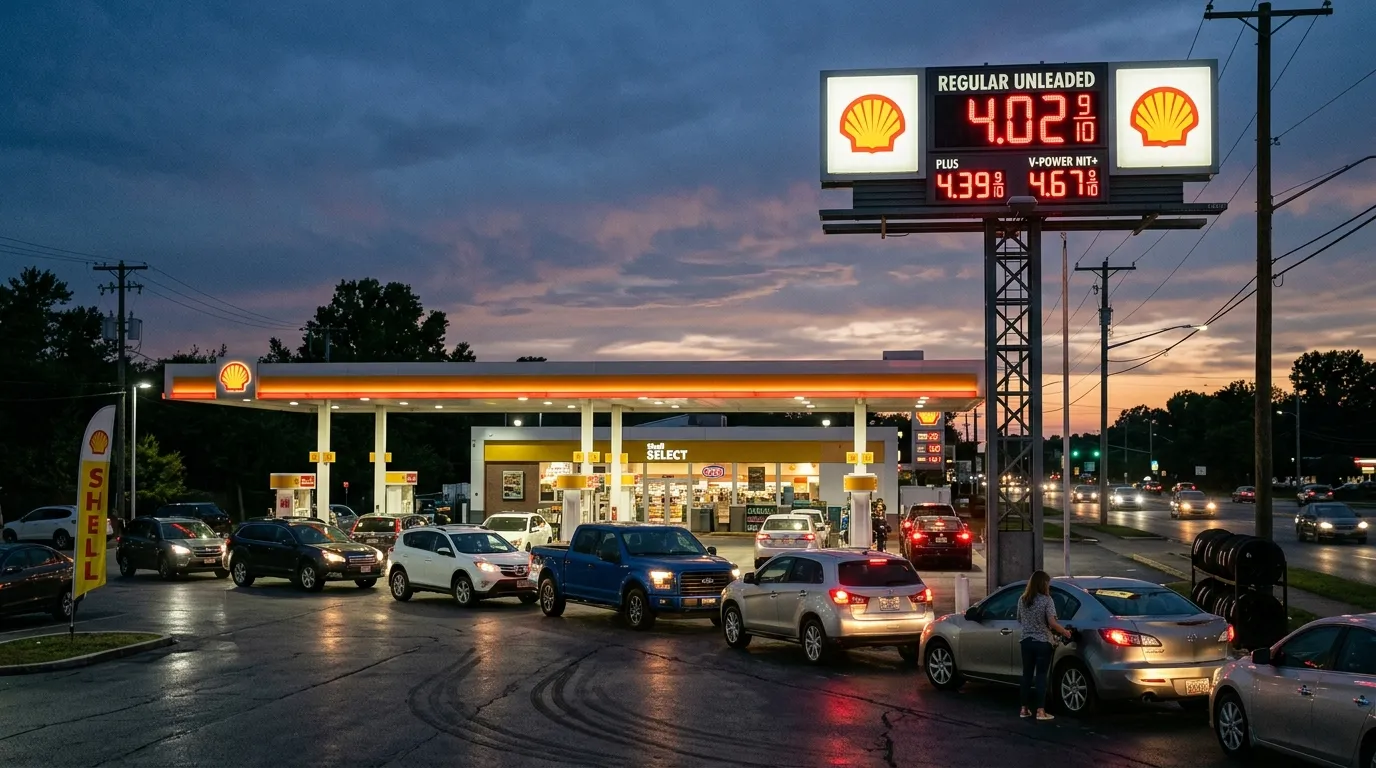
A month ago, filling up your car cost $2.98 a gallon. Today, the national average for regular unleaded crossed $4.02, according to AAA. That $1.04 jump in roughly four weeks represents a 34.7% monthly increase, larger than any single-month price swing triggered by Hurricane Katrina in 2005 or Russia's full-scale invasion of Ukraine in 2022.
The milestone isn't surprising. It was inevitable the moment the Strait of Hormuz, the 21-mile-wide chokepoint that handles roughly one-fifth of the world's daily oil supply, became a conflict zone. But the speed is what distinguishes this shock from every one that came before it. And it's the speed that will determine how deeply it cuts into American household budgets over the next several months.
How Fast This Happened
To understand why the pace matters more than the price, consider the comparison points. When gas prices surged past $5 a gallon in June 2022 after Russia invaded Ukraine, that climb took roughly four months. The post-Katrina spike of 2005 played out over six weeks. The Iran-driven spike compressed a similar magnitude of increase into less than 30 days.
The reason is structural. Previous oil shocks typically disrupted supply from a single region or created temporary logistical bottlenecks. The current crisis removed an entire transit corridor. When tanker traffic through the Strait of Hormuz effectively stopped, nearly 20% of global oil supply had to find alternative routes or simply didn't move. That's not a disruption. That's a subtraction.
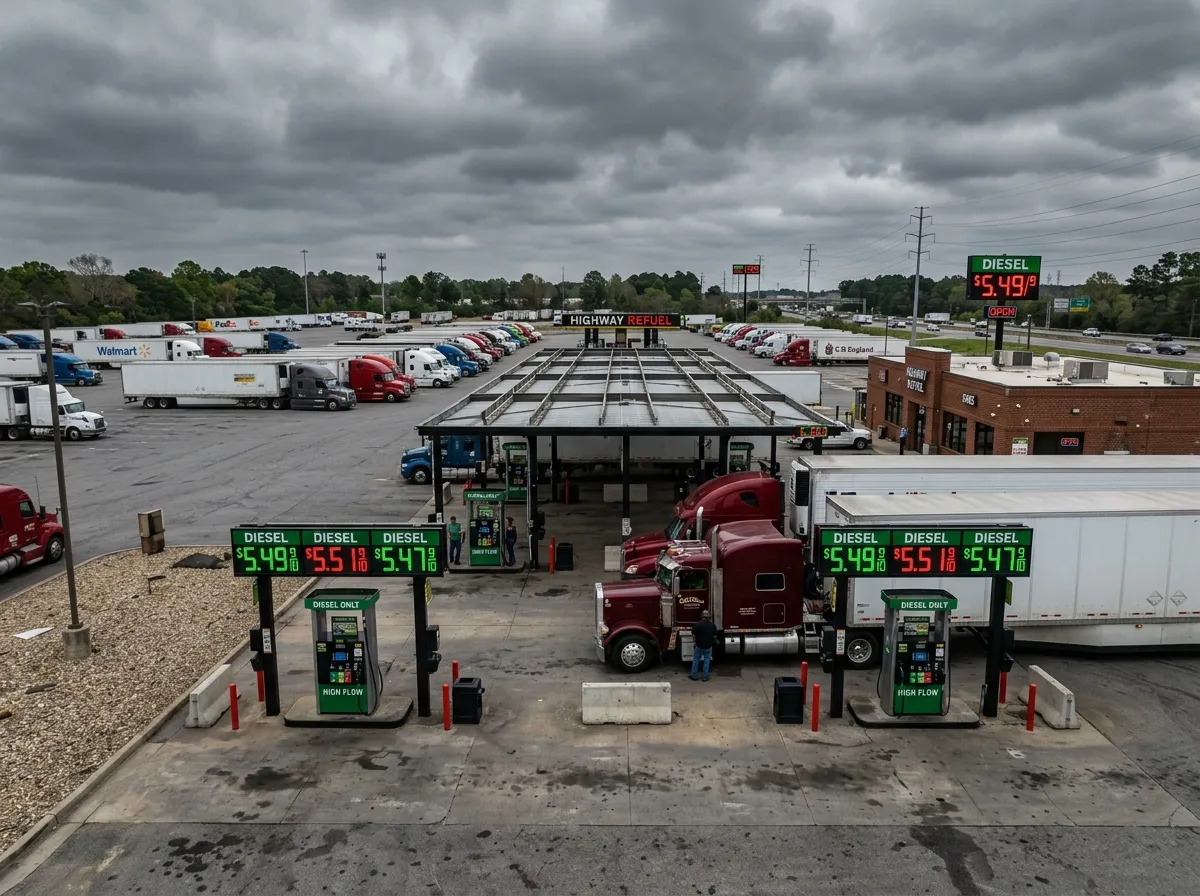
Diesel tells an even sharper story. The fuel that powers America's freight network now averages $5.45 a gallon, up from $3.76 before the conflict began on February 28. That 45% increase in diesel costs doesn't stay at the pump. It moves through every link of the supply chain, from the truck that delivers produce to your grocery store to the last-mile van that drops a package on your doorstep. United Parcel Service is already seeking a temporary 8% surcharge on Priority Mail and several other popular shipping products to offset fuel costs.
What You're Actually Paying More For
The $4.02 headline number is what you see on the sign outside your local gas station. The number you don't see is everything that gets more expensive because fuel does.
Patrick De Haan, head of petroleum analysis at GasBuddy, has tracked fuel-driven inflation cascades for more than a decade. The pattern is predictable but unforgiving: fuel costs spike, shipping costs follow within one to two weeks, and consumer goods prices adjust within 30 to 45 days. By mid-April, Americans will see higher prices at the supermarket, in their online shopping carts, and on their utility bills.
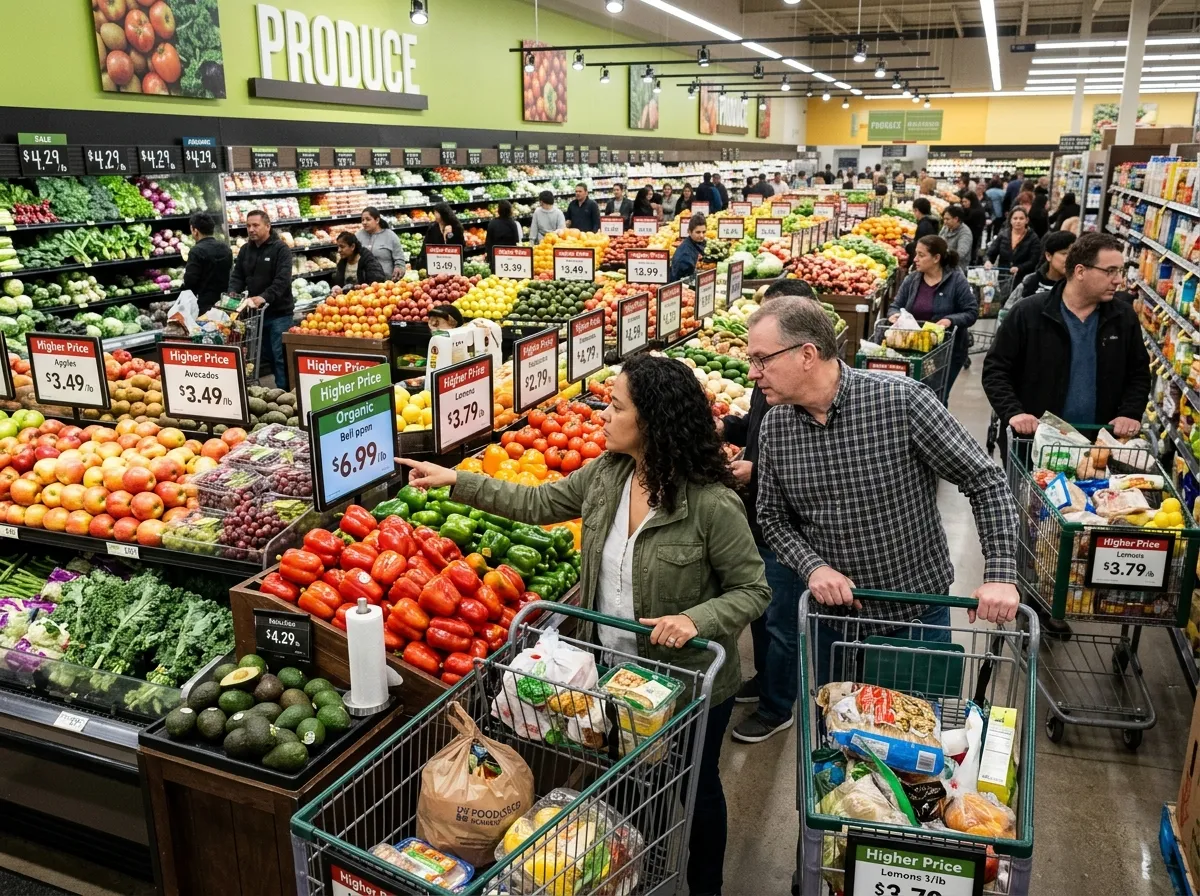
Groceries are particularly exposed. The American Farm Bureau Federation estimates that transportation accounts for roughly 8% of the average food item's retail price. When diesel jumps 45% in a month, that 8% slice grows fast. Fresh produce, dairy, and frozen goods, all of which require refrigerated transport, will absorb the biggest markups.
Airlines face their own reckoning. Jet fuel prices have tracked crude oil upward, and several carriers have already filed for fare increases with the Department of Transportation. Domestic round-trip tickets for summer travel could run $50 to $80 higher than the prices quoted just a few weeks ago, according to fare-tracking service Hopper.
The Inflation Problem Nobody Can Fix Fast Enough
Before the Iran conflict began, U.S. consumer prices were rising at an annual rate of 2.4% in February. That number now looks like a relic from a different economy. Analysts expect the March Consumer Price Index, due mid-April, to show inflation jumping to at least 3.5%. If oil prices hold above $100 a barrel through April, the annualized rate could breach 4%, effectively erasing two years of progress the Federal Reserve made in bringing inflation down from its 2022 peak.
The Fed finds itself in an impossible position. Raising interest rates would cool demand and help contain inflation, but it would also squeeze households and businesses already reeling from higher energy costs. Holding rates steady risks letting inflation expectations become entrenched. Cutting rates, which some in Washington have urged as a form of economic stimulus, would likely push inflation higher while doing nothing to address a supply-side shock.
Mark Zandi, chief economist at Moody's Analytics, described the situation bluntly in a recent analysis: this is a supply shock masquerading as an inflation problem, and monetary policy is the wrong tool for both. The only real fix is restoring oil supply, either by reopening the Strait of Hormuz or finding enough alternative production to compensate. Neither is happening quickly.
An AP-NORC poll released this week found that 45% of U.S. adults are now "extremely" or "very" concerned about their ability to afford gasoline in the coming months. That figure stood at 30% shortly after the 2024 presidential election, when falling gas prices were cited as one reason for voter optimism about the economy.
What Washington Is Doing About It
The federal response has been broad but so far insufficient to reverse the trend. The International Energy Agency coordinated a release of 400 million barrels from strategic petroleum reserves across member nations. The Biden-era precedent of tapping the Strategic Petroleum Reserve proved the concept works for temporary relief, but 400 million barrels replaces roughly four days of the supply the Strait of Hormuz normally handles. It buys time, not solutions.
The administration also waived the Jones Act for 60 days, allowing foreign-flagged vessels to transport fuel between U.S. ports. That move addresses a genuine bottleneck in domestic fuel distribution, particularly for the East Coast, which relies on shipments from Gulf Coast refineries. Sanctions on Venezuelan oil exports were eased, and some restrictions on Russian energy imports were temporarily relaxed, both politically uncomfortable concessions that acknowledge the severity of the supply gap.
On Capitol Hill, bipartisan pressure is building for a federal gas tax holiday. The current federal excise tax of 18.4 cents per gallon would save drivers roughly $2.75 on a 15-gallon fill-up, a modest but visible form of relief. Several states, including California, Georgia, and New York, are already considering their own temporary suspensions of state fuel taxes, which in some cases exceed 50 cents per gallon.
None of these measures address the root cause. As long as the Strait of Hormuz remains effectively closed and Iranian oil stays off the global market, the supply shortfall will keep prices elevated. The question is whether the conflict resolves before the summer driving season, when seasonal demand typically pushes prices higher regardless of geopolitics. If it doesn't, the June 2022 record of over $5 a gallon is well within reach.
Why It Matters
For context, Paris is currently paying the equivalent of $10.27 per gallon. American drivers are still getting a relative bargain by global standards. But the U.S. economy is built on cheap fuel in a way that European economies are not. Longer commutes, more freight trucking, less public transit, and lower fuel taxes all mean that American consumers and businesses absorb fuel price shocks more directly than their counterparts overseas.
The last time gas prices sustained a run above $4, in the spring and summer of 2022, consumer confidence dropped to its lowest point in over a decade. Retail spending slowed. Road trip vacations were canceled or shortened. Small businesses that depend on delivery, from florists to food trucks, saw margins evaporate. If $4 gas becomes $5 gas by summer, those same patterns will repeat, only this time against the backdrop of an economy that's already absorbing tariff-related price increases and elevated borrowing costs.
The $4.02 on the sign outside your gas station today is a number with a very short shelf life. The direction it moves next depends on a 21-mile stretch of water on the other side of the world, and on whether the people fighting over it decide to stop.
Sources
- U.S. gas prices hit $4 per gallon as fuel prices surge due to Iran war - AP/Local10 News
- What $4-a-gallon gasoline means for you and the economy - CNN Business
- Gas prices eclipse $4 a gallon in the U.S., the highest since 2022 - The Philadelphia Inquirer
- Gas prices soar past $4 on average for a gallon of regular in the US - The Baltimore Sun