
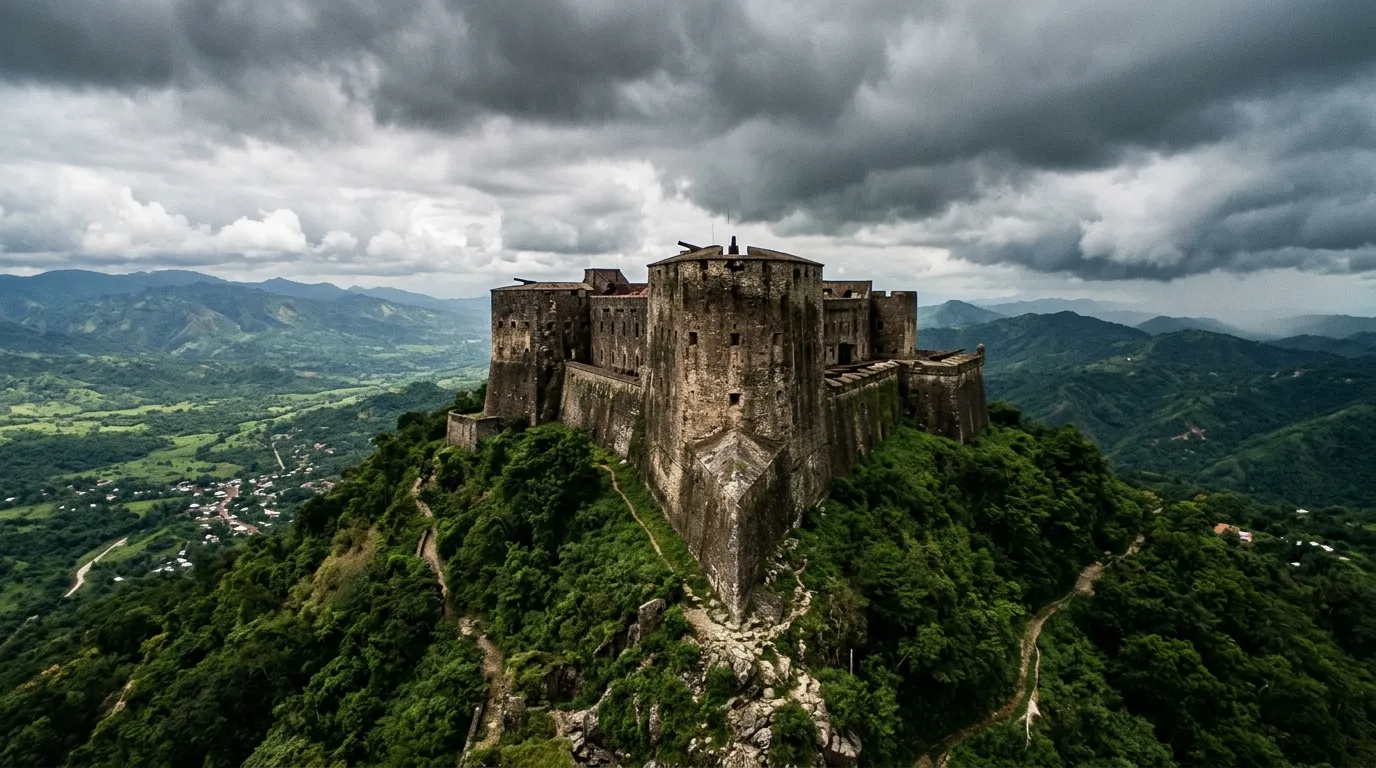
A stampede at Haiti's Citadelle Laferriere killed at least 25 people and injured dozens more on Saturday, turning an annual Easter celebration at one of the Caribbean's most significant historical monuments into a scene of panic, asphyxiation, and death. The victims were overwhelmingly young, many of them students on school field trips who had earned the journey through high academic performance.
The disaster struck at the fortress entrance, a UNESCO World Heritage Site perched 3,000 feet above the town of Milot in northern Haiti. Authorities attributed it to severe overcrowding compounded by sudden rainfall, as thousands of visitors funneled through a single access point on the mountain's narrow footpath. Haitian officials have since closed the fortress and launched a formal investigation, with autopsies on the victims beginning Sunday. Initial reports placed the death toll at 30, but investigators revised the figure to 25 after further examination of the remains.
A Single Entrance, a Deadly Crush
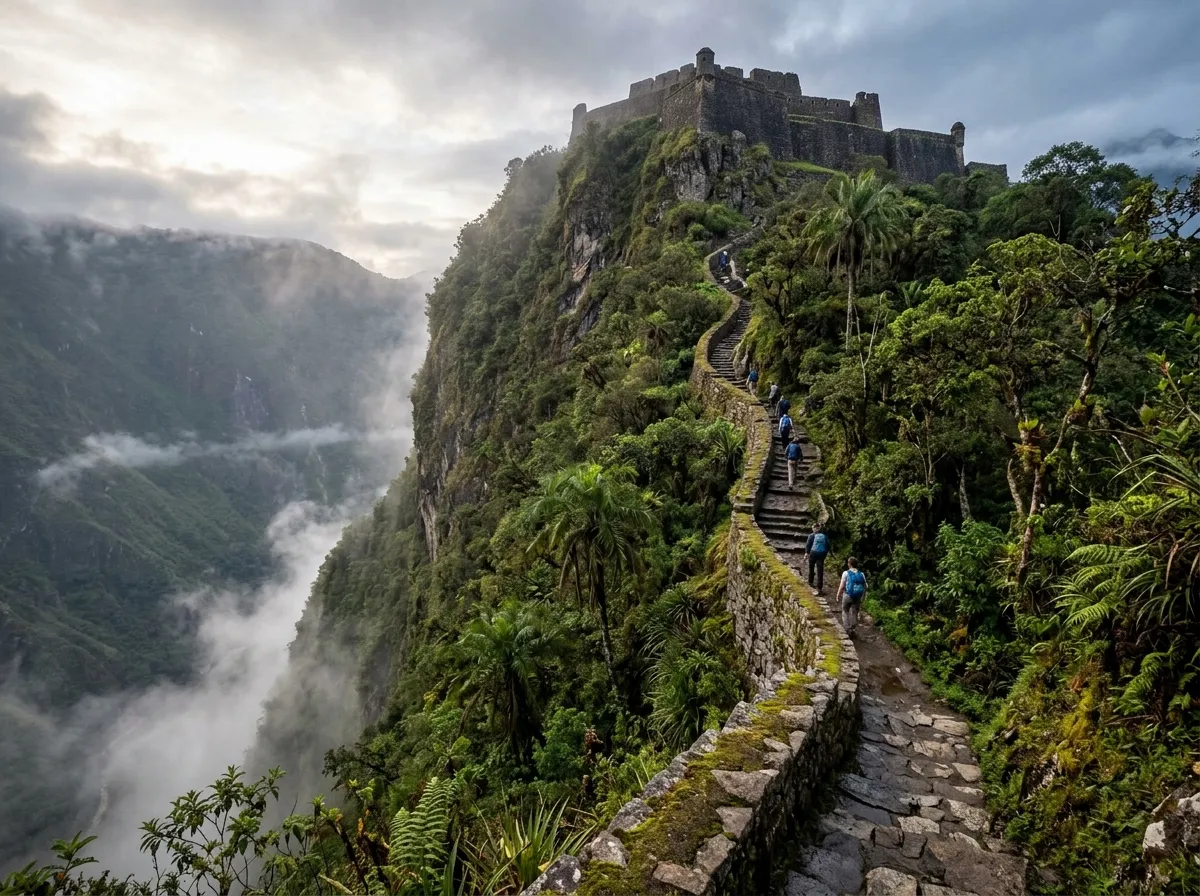
The Citadelle sits atop the Bonnet a l'Eveque mountain, accessible only by a winding footpath that narrows as it approaches the fortress walls. On Saturday, that path became a death trap. Jean Henri Petit, head of Civil Protection for Haiti's Nord Department, told reporters that visitors became congested at a bottleneck near the entrance, where people trying to exit collided with those still pushing to get in. A scuffle broke out. Then the rain began falling.
Within minutes, the situation collapsed into a full-scale crush. Local authorities reported "numerous cases of asphyxiation, trampling and loss of consciousness" as visitors, trapped on a steep mountainside with no alternative route, fell on top of one another. At least 30 people remained hospitalized as of Sunday, and officials warned the death toll could still climb as rescue teams continued searching for the missing.
Culture Minister Emmanuel Menard confirmed that search operations were ongoing. "The injured are currently receiving the necessary medical care, and a rescue team is searching for any missing persons," Menard said in a statement Saturday evening. The fortress was immediately closed to all visitors.
The gathering was advertised on TikTok, according to local media reports, which may have drawn crowds far beyond what the site's limited infrastructure could handle. The Citadelle receives thousands of visitors during the Easter period each year, but the event had no crowd-management system capable of controlling flow at the mountain's sole access point.
The Fortress That Freed Slaves Built
The Citadelle Laferriere is far more than a tourist destination. It is one of the most powerful symbols of Black liberation in the Western Hemisphere, and for many Haitians, the fortress is the physical embodiment of the nation's founding act of defiance.
Haitian revolutionary leader Henri Christophe commissioned the fortress in 1805, just one year after Haiti became the first nation founded by formerly enslaved people who had overthrown their colonizers. Christophe, who would later declare himself King Henri I, designed the Citadelle as a defensive stronghold against a French invasion that never materialized. Construction lasted 15 years, and the human cost was extraordinary: an estimated 20,000 workers, many of them formerly enslaved, died building the structure that was supposed to guarantee their freedom.
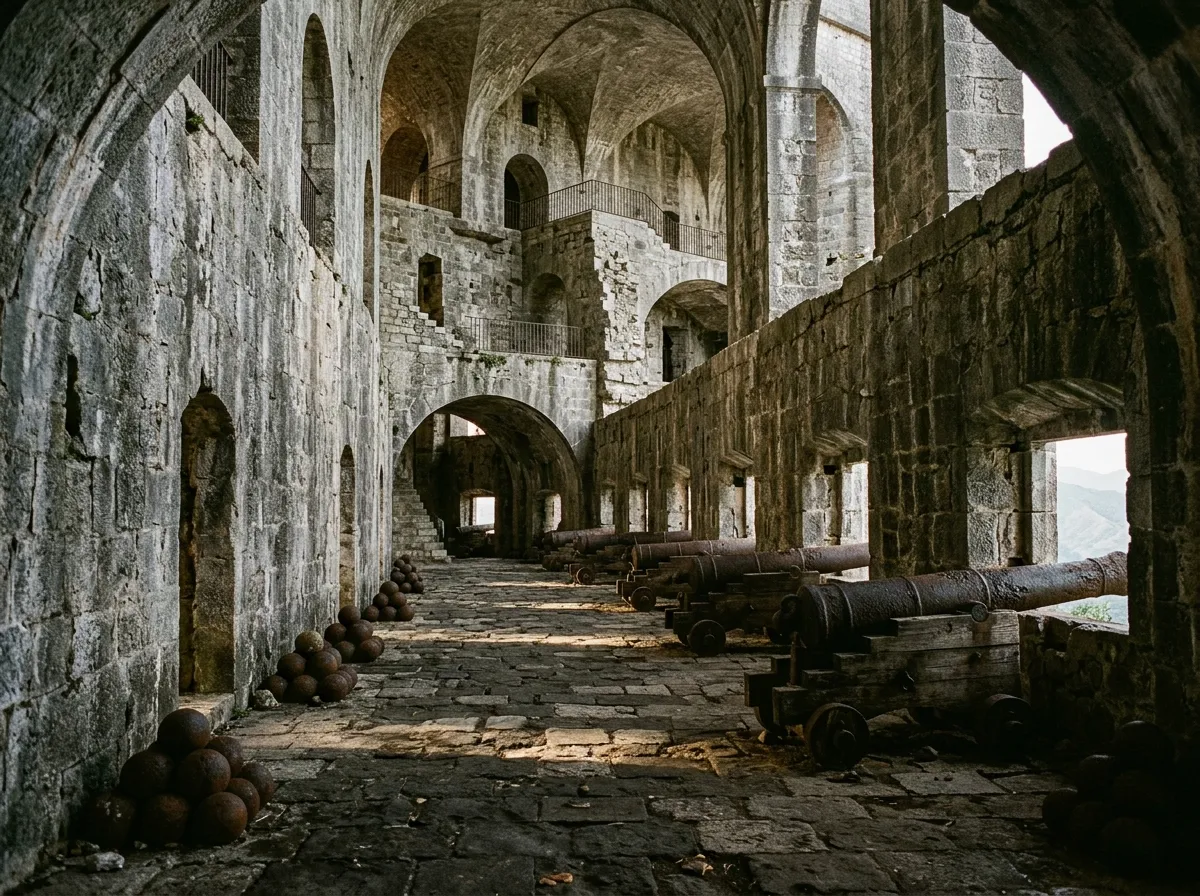
The result was the largest fortress in the Americas, a stone colossus armed with hundreds of cannons and engineered to withstand a prolonged siege from any European army. UNESCO designated it a World Heritage Site in 1982, calling it and the nearby Sans-Souci Palace "universal symbols of liberty, being the first monuments to be constructed by black slaves who had gained their freedom." Today, the Citadelle appears on Haitian currency, stamps, and government materials. It remains one of the country's few cultural sites that draws both international tourists and Haitians making what many consider a national pilgrimage.
For many of the students who traveled to Milot on Saturday, the school trip was both a reward for academic achievement and a chance to walk through the story of their country's independence. Donaldson Jean, whose sister died in the stampede, told the Associated Press that she had been a top student who earned her spot on the field trip through months of dedicated work. "Morning and night, she was studying for the genius program," Jean said. "She would come and ask me to help with homework before dinner. Look how I lost her."
When Social Media Fills a Mountaintop
The Haiti disaster carries echoes of a problem that crowd safety researchers have been warning about with increasing urgency: social media's capacity to concentrate enormous numbers of people at locations that were never designed to hold them. The same platforms that have turned run clubs into the new happy hour can also funnel thousands of visitors into spaces with no capacity limits and no safety infrastructure. The difference is the venue. A park can absorb overflow. A mountaintop with a single path cannot.
The Citadelle's layout is uniquely dangerous in this regard. The mountain has one trail. The fortress has limited entry points. There is no secondary egress route, no staging area for overflow, and no way for emergency vehicles to reach the site. When the crowd exceeded the path's capacity on Saturday, the options for escape dropped to zero.
This pattern has repeated with devastating frequency around the world. In March 2026, a stampede at the Sheetla Mata temple in Nalanda, India, killed nine people after more than 10,000 devotees crowded into a space designed for fewer than 1,000. The 2022 Itaewon Halloween crush in Seoul, which killed 159 people in a narrow alleyway, was amplified by social media posts that drew crowds far beyond what the neighborhood could absorb. In each case, the core failure was identical: more people arrived than the physical space could safely contain, and nobody was counting.
Research published in Frontiers in Public Health found that weak on-site crowd management is the leading root cause of stampede disasters, accounting for nearly 32% of fatal incidents globally. The same study identified "insufficient awareness of accident hazards" as the most common contributing factor, present in over 68% of cases. In Haiti, where the government has limited resources for infrastructure and event safety, the gap between the Citadelle's immense cultural significance and its nonexistent crowd-management capacity proved fatal.
What makes these tragedies particularly agonizing is how preventable they are. Crowd scientists have established that once density exceeds roughly six people per square meter, individuals lose the ability to control their own movement. The crowd behaves like a fluid, and a single perturbation, whether a stumble, a shove, or a sudden rainstorm, can trigger a compressive wave that kills through asphyxiation in minutes. The tools to prevent this are well established: controlled entry points, one-way flow systems, real-time density monitoring, and staged admission limits. None were deployed at the Citadelle on Saturday.
What Happens Next
Prime Minister Alix Didier Fils-Aime described the event as a "tourist activity bringing together many young people" and extended condolences to the affected families. The Haitian National Police launched a formal investigation, and the government requested public cooperation while discouraging the spread of unverified rumors on social media.
Whether Haiti's government has the resources to implement meaningful safety reforms at the site is an open question. The country has been struggling with gang violence, political instability, and a humanitarian crisis that has displaced hundreds of thousands. When even basic accountability for government actions proves difficult in fragile states, the prospect of sophisticated crowd management at a remote mountaintop fortress feels distant. Yet the Citadelle will continue to draw massive crowds every Easter, every school holiday, and every festival season. Without intervention, Saturday's disaster is less an anomaly than a preview.
The fortress will remain closed while the investigation continues. Officials have not yet indicated whether any individuals or organizations will face charges related to crowd management failures. For the families of the 25 confirmed dead, the investigation's outcome matters less right now than the loss itself: children who earned a trip to their country's greatest monument and never came home.
What We Know So Far
At least 25 people are confirmed dead, with 30 more hospitalized and some visitors still unaccounted for. The stampede occurred Saturday during an annual Easter celebration at the Citadelle Laferriere, triggered by overcrowding at the fortress entrance and worsened by heavy rain. Victims were predominantly young students on school field trips. The Haitian government has closed the site, launched an investigation, and begun autopsies. The event was widely promoted on TikTok, likely contributing to turnout that far exceeded the mountain's capacity. This is a developing story.
Sources
- "At Least 30 Dead in Stampede at Haiti's Historic Citadelle Laferriere," Al Jazeera, April 12, 2026
- "Stampede at Haitian Mountaintop Fortress Reportedly Leaves at Least 30 Dead," ABC News, April 13, 2026
- "Stampede at Historic Fortress Citadelle Henri in Haiti Killed at Least 25 People," CBS News, April 13, 2026
- "Research on Risk Factors of Human Stampede in Mass Gathering Activities," Frontiers in Public Health, 2025
- "National History Park: Citadel, Sans Souci, Ramiers," UNESCO World Heritage Centre