
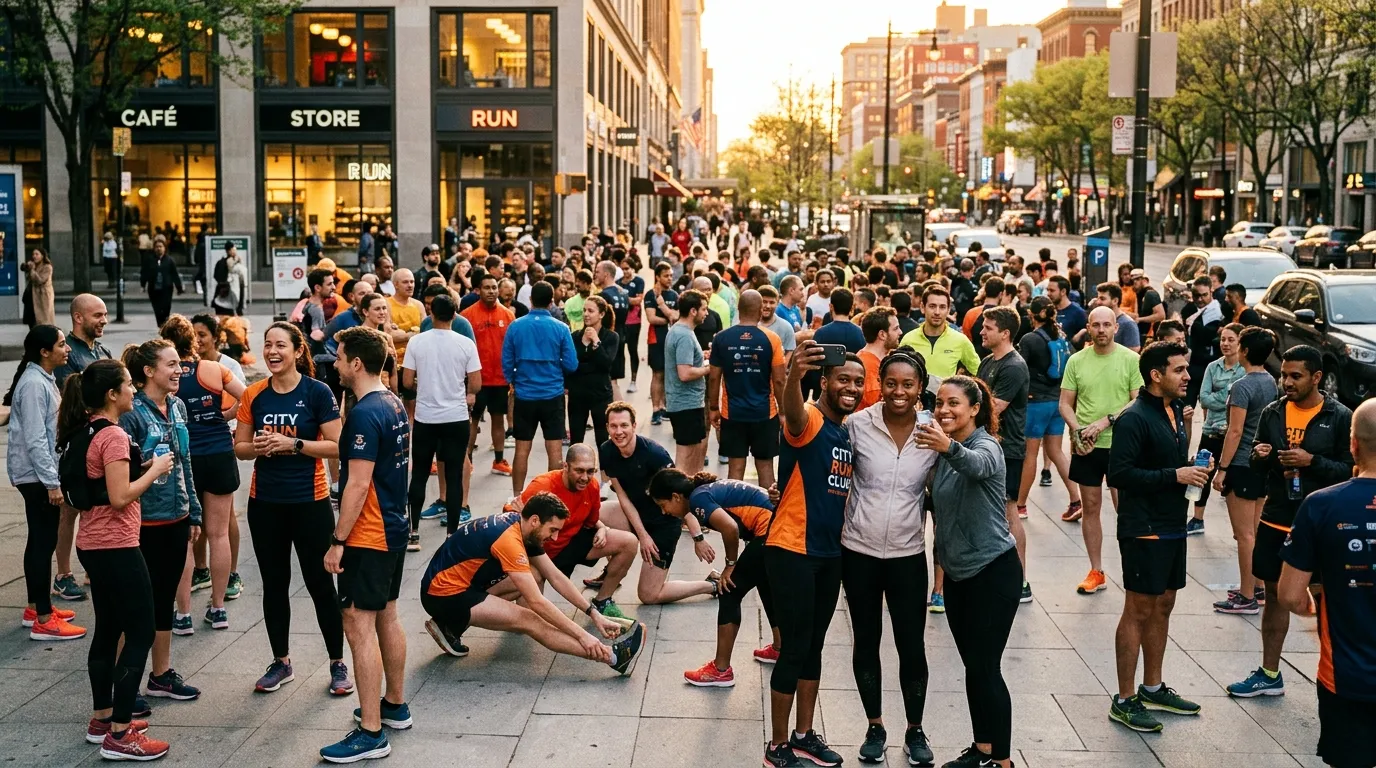
Steve Cole started Lunge Run Club in New York City in May 2024 with 20 people. By winter, roughly 1,000 showed up every Wednesday. The format is simple: a three-mile run or a mile-and-a-half walk, followed by socializing at a bar. Runners wear black if they are single, white if they are taken. Cole calls it the "largest singles event New York has ever seen." He is not exaggerating by much. Across the country and around the world, run clubs have gone from a niche hobby to something that looks, increasingly, like the primary way a generation of young adults socializes, dates, and builds community.
The numbers are hard to argue with. New clubs on Strava nearly quadrupled in 2025, reaching one million total. Running clubs specifically grew 3.5x. Global run club memberships surged 59% in 2024. One in five people surveyed by Strava reported going on a date with someone they met through a running club. Meanwhile, dating app downloads fell 16% from 2020 to 2023. Tinder lost 600,000 paid users. Bumble shed 368,000. Match Group's total paying subscribers dropped 5% year-over-year. Something has shifted, and it is not subtle.
The Third Place Problem
The sociologist Ray Oldenburg coined the term "third places" decades ago to describe the informal public spaces where community happens: coffee shops, libraries, bowling alleys, neighborhood bars. Places that are neither home nor work but something in between where people can encounter each other repeatedly around a shared context. Those spaces have been disappearing for years. Americans now spend 70% less time with friends than they did a decade ago, according to Les Mills' 2026 fitness trends report.
Dr. Alicia M. Walker, writing in Psychology Today in February 2026, put it directly: "We have quietly dismantled many of the spaces where adults repeatedly encounter one another around shared interests." Her argument is that loneliness is structural, not individual. "Close ties rarely form because someone sets out to 'make friends.' They form through repeated exposure, shared activity, and gradual self-disclosure."
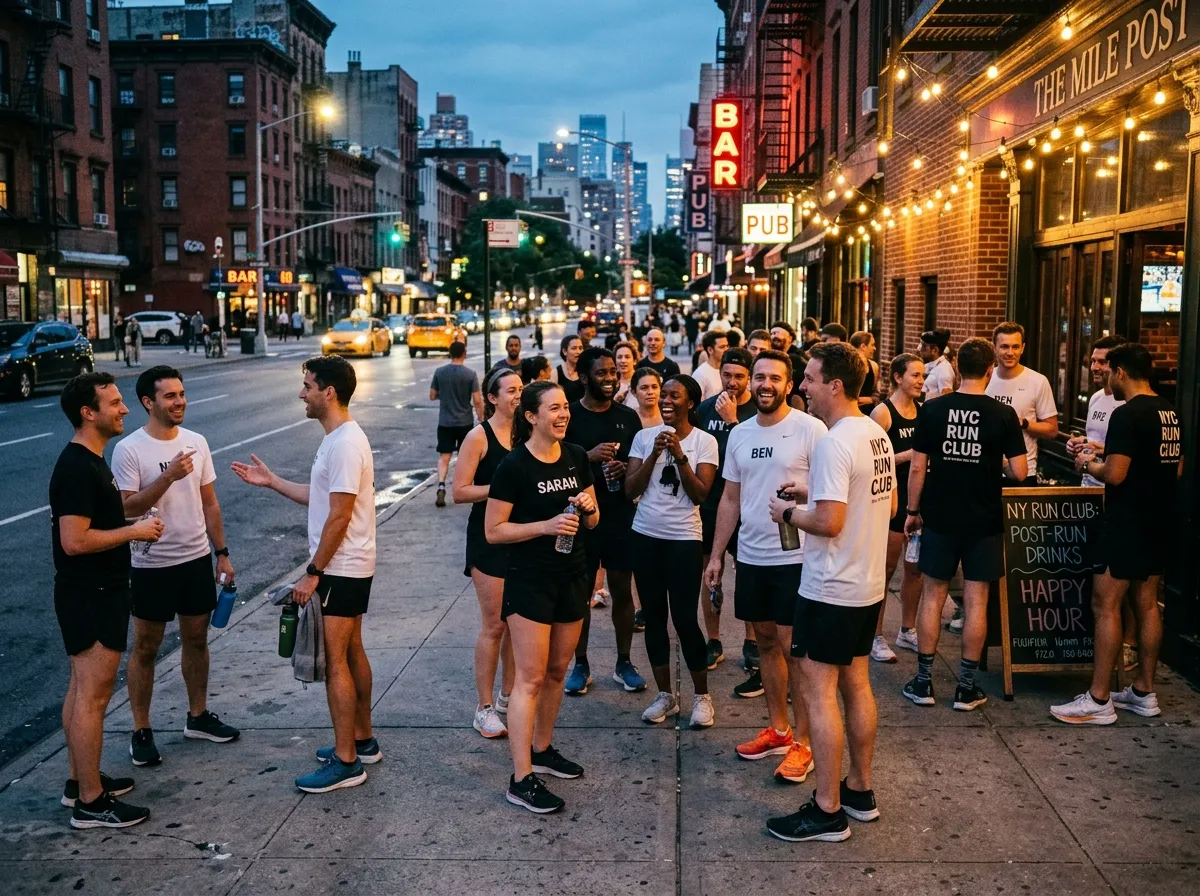
Run clubs slot into this gap with almost eerie precision. They are free. They are regular. They are activity-based rather than consumption-based. They attract the same people week after week, creating the repeated low-stakes exposure that Oldenburg described as the foundation of community. And they are growing at a pace that suggests they are not filling a niche but answering a need that nothing else has addressed.
The U.S. Surgeon General issued an 82-page advisory in 2023 declaring loneliness and social isolation a public health epidemic. Half of American adults reported being lonely. Gen Z, ages 18 to 22, was identified as the loneliest generation, with 79% reporting feelings of loneliness. Young adults experiencing chronic loneliness were found to be three times more likely to develop major depression within two years. Social isolation increases the risk of premature death by 29%.
Run clubs are not a medical intervention. But they are, by accident or design, the closest thing a generation has found to a structural remedy.
Why Gen Z Chose Running Over Drinking
The demographic driving this shift is also the generation least interested in alcohol. Fifty-three percent of Gen Z report they do not drink at all. Only 22.7% of teenagers reported drinking in the past month in 2021, down from 50.8% in 1991. Sixty-one percent of Gen Z say they plan to cut back further. The traditional social infrastructure of bars and nightclubs was built for a generation that drank. Gen Z does not, and the economics compound the cultural shift: a typical night out now exceeds $100 in major cities.
"People want to see each other in their most raw state, no alcohol, in the morning," said Jordan Williams, co-founder of Chicago Run Collective, which draws roughly 1,000 participants per event. The appeal is the opposite of a curated dating profile: you show up, you run, and whoever is next to you at mile two sees you sweaty, winded, and real.
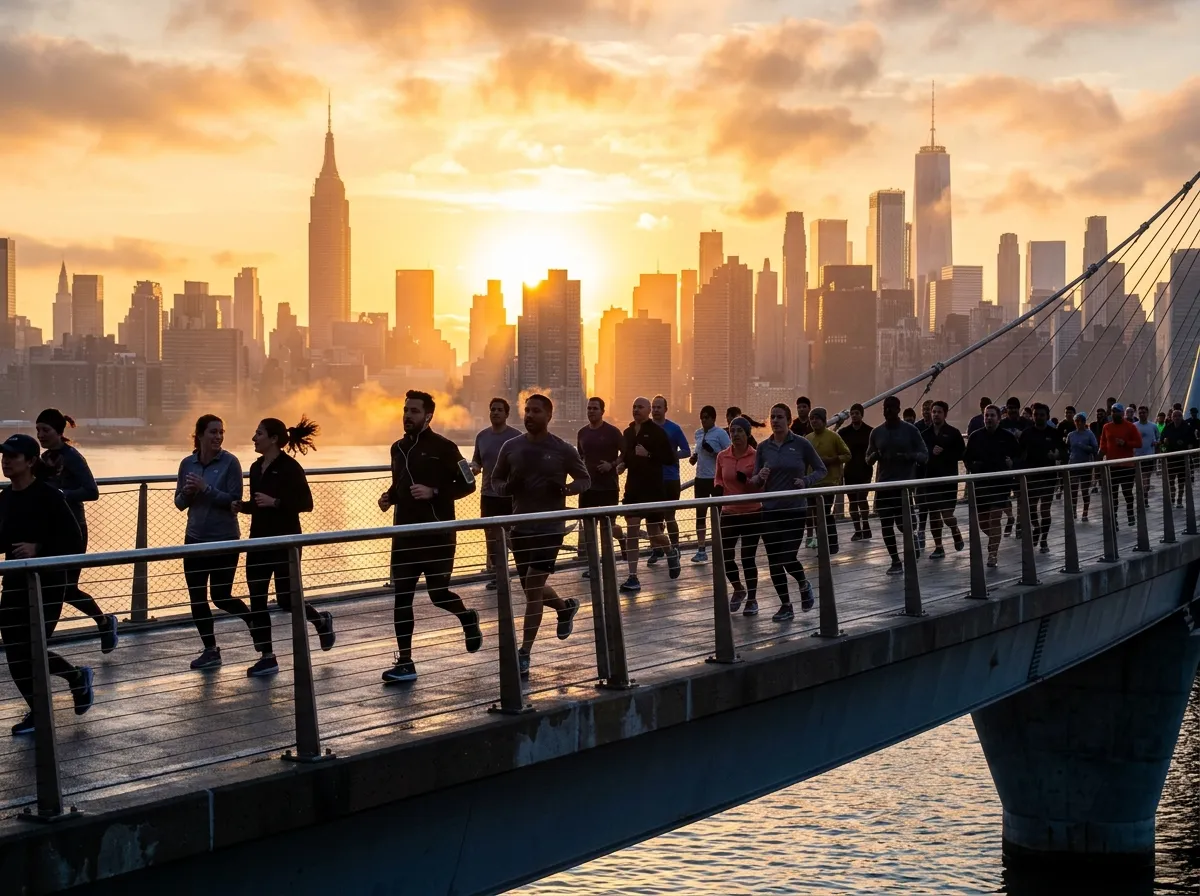
Strava's data confirms the pattern. Gen Z is 39% more likely than Gen X to use fitness specifically to meet people who share their interests. Twenty-two percent of Gen Z see run clubs as the "new dating app." Sixty-four percent say they would rather spend money on athletic gear than on dates. Michael Martin, Strava's CEO, framed it as a generational correction: "Gen Z is looking for real experiences, not more time staring at screens."
The dating apps themselves appear to agree. Hinge launched a $1 million "One More Hour" program, funding social groups in New York, Los Angeles, and London to host free in-person events. Bumble launched Bumble IRL, hosting fitness classes and social events in major cities, even as its revenue fell 10% year-over-year and paying users dropped 16% in Q3 2025. The companies that built their businesses on replacing in-person interaction are now spending money to facilitate it.
The Clubs That Became Movements
The scale of individual clubs tells the story as clearly as the aggregate data. Midnight Runners, a volunteer-based community, has more than 10,000 members across 18 cities globally. Mikkeller Running Club, started by a Copenhagen brewery, has grown to 30,000 members in 250 chapters across five continents. Brickell Run Club in Miami draws 1,600 participants weekly across eight locations. Its founder, Frankie Ruiz, described the dynamic simply: "Running is how we met, and it's how we stay connected."
Brands have noticed. Hoka runs thousands of demo events annually. Adidas partners with LSD Run Club and Runners Los Angeles. New Balance extended its partnership with New York Road Runners. The economics are compelling: Libie Motchan, co-founder of insole brand Fulton, reported that 20-30% of run club event attendees convert to product purchasers, and sponsorships helped the company reach over 100,000 people across social channels.
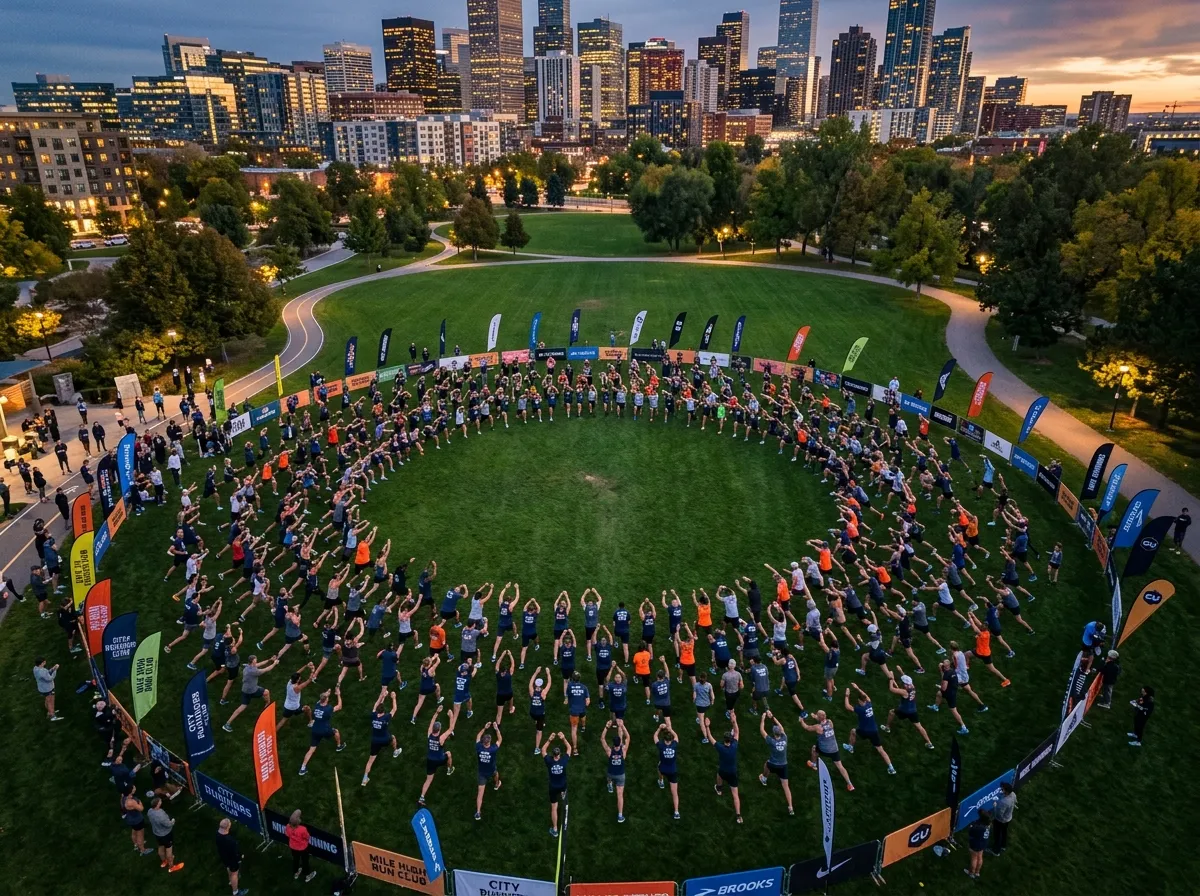
The ACSM's 2026 fitness trends survey, drawing on 2,000 fitness professionals, placed "Adult Recreation and Sport Clubs" in the top 20 for the first time. Exercise for mental health ranked sixth, up from eighth. Les Mills reported that 73% of club members say community is the most important factor in their fitness motivation, and only 10% prefer AI-led workouts over human-led ones. In an era when AI is reshaping how people work and how they spend their money, the fitness industry's fastest-growing segment is one that requires nothing more than shoes and the willingness to show up.
What Changes
Paul Cherchia, who works in mental health programs at Boston University, observed that "long before the pandemic, the most common factor we saw leading to a leave of absence was isolation and loneliness and feeling disconnected." The pandemic made it worse. But the run club explosion suggests the correction may not come from therapy apps, government programs, or social media platforms redesigning their algorithms. It may come from the simplest possible intervention: a recurring event, at a set time, in a public space, where people move their bodies alongside other people who keep coming back.
The sociological term for what makes this work is "propinquity," the tendency for people to form relationships with those they encounter frequently. Oldenburg built his theory of third places on it. The wellness industry has spent a decade selling optimization: better sleep, better supplements, better data. Run clubs sell something older and less quantifiable. They sell the experience of being around other people on a regular basis, doing something that requires no money and no screens, in a world that has made both of those things increasingly rare.
A thousand people show up on a Wednesday night in New York to run three miles and see who is wearing black. That is not a fitness trend. That is a social infrastructure being rebuilt from the ground up, one mile at a time.
Sources
- Strava Year in Sport 2025 Report - Run club growth data, Gen Z statistics, and CEO Michael Martin quotes
- CBS News: Singles Are Ditching Dating Apps for Run Clubs - Dating app decline data, Jordan Williams and Damona Hoffman quotes
- Psychology Today: We've Lost the Spaces That Foster Friendship - Dr. Alicia M. Walker on structural loneliness and third places
- NBC New York: NYC Singles Flood New Dating Scene at Lunge Run Club - Steve Cole quotes and Lunge Run Club growth data
- U.S. Surgeon General: Our Epidemic of Loneliness and Isolation - Public health data on loneliness, Gen Z statistics, and health risk findings