
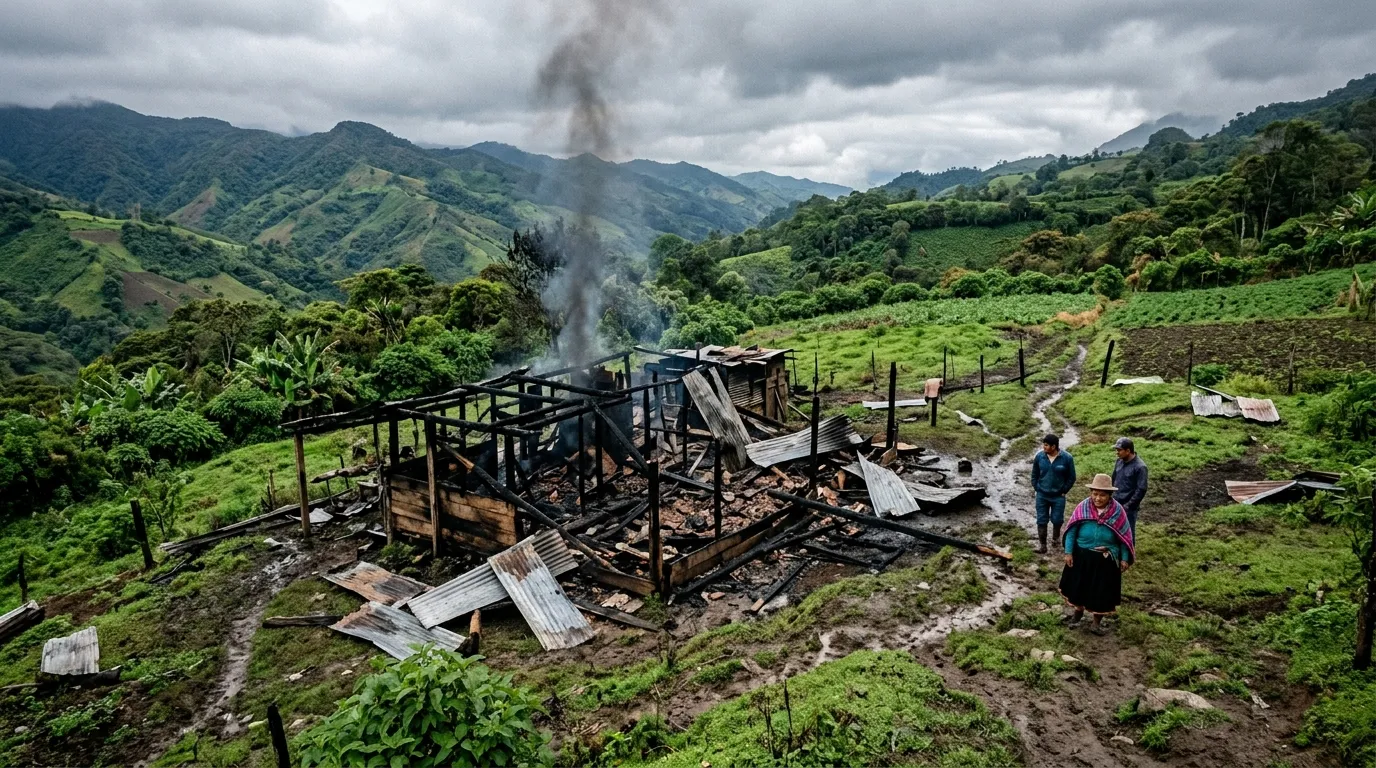
Defense Secretary Pete Hegseth posted a video of an explosion on social media earlier this month and called it proof that America was "bombing Narco Terrorists on land." His spokesman, Sean Parnell, went further, declaring it a "successful operation against a narco-terrorist supply complex" that had disrupted cartel "operations and logistics." The language invoked what the administration calls the "Donroe Doctrine," its hemisphere-wide framework for military action against drug trafficking. There was just one problem: a New York Times investigation published this week found that the target was a 350-acre cattle and dairy farm in rural Ecuador, home to more than 50 cows and, by every available account, zero drug traffickers.
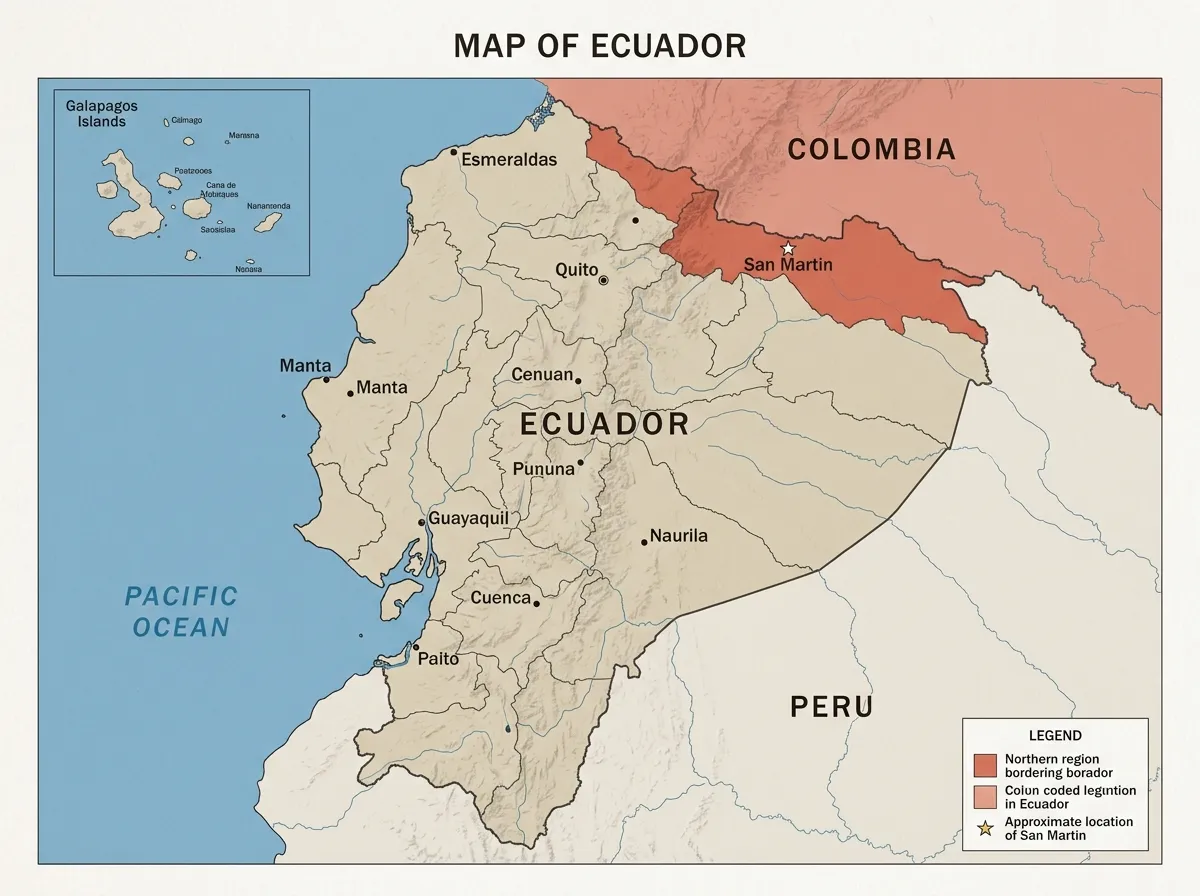
The reporting, based on interviews with the farm's owner, four of its workers, village leaders, human rights lawyers, and residents of San Martin, the remote farming community in northern Ecuador where the strike took place, raises serious questions about the accuracy of Pentagon claims and the expanding U.S. military campaign across Latin America.
What Happened in San Martin
The operation unfolded in two phases. On March 3, Ecuadorian soldiers arrived by helicopter at a farm owned by a man named Miguel, a 32-year-old carpenter and father of two who had purchased the 350-acre property six years earlier for $9,000. He used it to raise cattle for dairy and beef. According to workers on the farm, the soldiers interrogated them, beat four of them with the butts of their rifles, and then doused several shelters and sheds with gasoline before setting them ablaze.
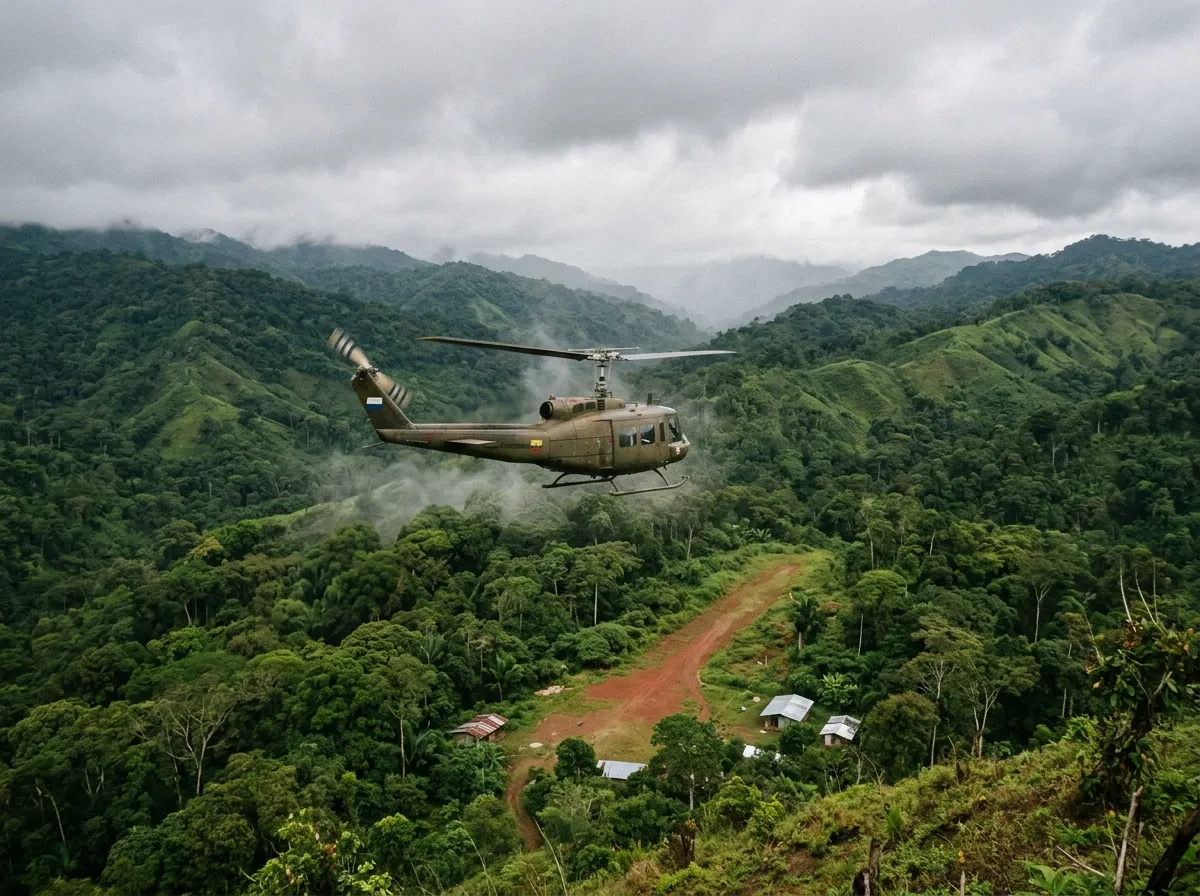
Three days later, on March 6, helicopters returned to San Martin. Village residents told the Times that the aircraft appeared to drop explosives on the farm's already-smoldering remains. That second strike produced the dramatic footage Hegseth would later share online, timed to coincide with a summit in Florida where President Trump was hosting conservative Latin American leaders. Pentagon officials released the explosion video as a showcase of their new military alliance's counter-narcotics muscle.
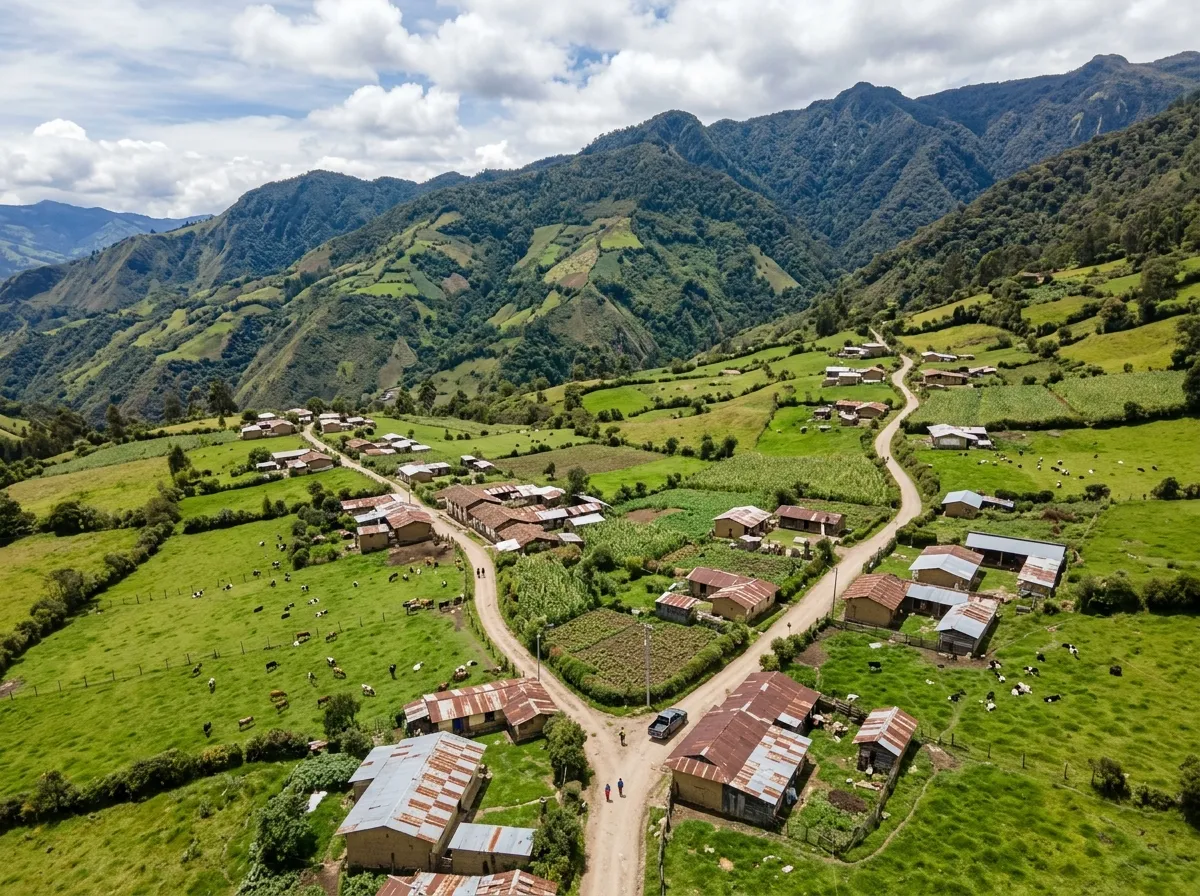
The broader operation also involved burning two nearby abandoned homes earlier that week, part of what Ecuadorian officials described as a sweep against Comandos de la Frontera, a criminal organization active along the northern border with Colombia.
What Officials Claimed vs. What Reporters Found
The gap between the official narrative and the evidence on the ground is wide. Ecuadorian authorities claimed the farm had been used to train "about 50 drug traffickers" and served as a resting place for a Comandos de la Frontera leader. Pentagon Press Secretary Kingsley Wilson confirmed the strike was "conducted jointly" with Ecuadorian forces but declined to discuss "specific tactics or targeting details," citing operations security. She added that the Pentagon remains focused on "combating cartels threatening hemispheric stability."
Every independent account contradicts those claims. AFP reporters who visited the site found "no sign of drug production or trafficking," only dead animals and charred trees. Miguel, the farm's owner, denied any connection to trafficking and provided property titles and photographs of the farm before its destruction. Village leaders refuted the allegations outright. Even a representative of the Comandos de la Frontera denied ever using the property.
One detail stands out to analysts familiar with Ecuador's military operations: the Ecuadorian armed forces did not release photographs of seized weapons or drug-processing equipment. After genuine raids on cartel infrastructure, such images are standard practice and a reliable way for the military to validate its claims. Their absence here is conspicuous.
Four people with direct knowledge of the operation, three of whom spoke anonymously to discuss a sensitive matter, also confirmed that U.S. troops had no direct involvement in the actual bombing. The American role, according to these sources, was limited to providing intelligence, deploying a helicopter to assist, and offering Special Forces guidance for related operations in the area.
The Workers Who Were Beaten
The human cost goes beyond property destruction. Three of the four farm workers requested anonymity when speaking to the Times, fearing government retaliation for contradicting the official story. They described soldiers choking them, shocking them with electrical devices, and striking them with weapons during the March 3 raid. Their accounts paint a picture of an interrogation that assumed guilt before asking questions.
Vicente Garrido, vice president of the local community, did not mince words. "They say it was some training camp, but it's becoming clear that they were just homes," he told the Times. The Alliance for Human Rights has since filed a 13-page complaint with both Ecuadorian authorities and the United Nations, characterizing the military actions as an attack on civilians.
Human rights lawyer Maria Espinosa pointed to the total absence of official follow-up as evidence of indifference. "There isn't a single public official who has come to verify what happened," she said. As of this writing, no Ecuadorian or American official has visited San Martin to assess the damage or interview residents. Miguel, the farm's owner, has received no compensation and no explanation for why his livelihood was destroyed. His cattle are dead, his structures are ash, and the $9,000 investment that was supposed to support his family is gone.
The Social Media War and Its Costs
This incident fits a pattern that extends well beyond a single farm in northern Ecuador. It is part of Operation Southern Spear, the expanding U.S. military campaign that has also included strikes against suspected drug boats in the Caribbean, killing over 150 people according to official Pentagon statements. The scale of operations is growing, and so is the administration's appetite for publicizing them.
What makes the Ecuador case instructive is not just the apparent intelligence failure but the speed at which unverified claims were laundered into political messaging. Hegseth's Pentagon has made social media a primary communication channel, posting operational footage with triumphal captions before the smoke has cleared. That approach generates impressive engagement metrics. It also creates a public record that becomes very difficult to walk back when the facts don't cooperate.
Military historians will recognize the dynamic. From Vietnam-era body counts to early Iraq War "mission accomplished" moments, the incentive to overstate results for domestic audiences has repeatedly undermined the credibility that sustained military partnerships require. Ecuador is genuinely struggling with drug violence, and criminal gangs have transformed the country into one of Latin America's most dangerous nations. President Daniel Noboa, who did not respond to the Times' questions, has staked his political future on a military crackdown. The need for effective counter-narcotics operations is real. But claiming a dairy farm as a cartel compound does not make anyone safer. It erodes trust between governments, alienates the rural communities whose cooperation is essential for intelligence gathering, and hands cartel propagandists a gift they did not have to earn.
What to Watch
The Alliance for Human Rights' complaint is now before both Ecuadorian authorities and the UN, but no investigation has been announced. Noboa's government has not publicly addressed the Times reporting. The Pentagon has not issued a correction or retraction of Hegseth's original social media claims, and the video remains online.
For the residents of San Martin and farming communities across the region, the stakes are personal and immediate. If the Pentagon can promote the destruction of a dairy farm as a counter-narcotics success and face no consequence for it, the question becomes unavoidable: what other claims from Operation Southern Spear deserve a second look?
Sources
- The US Said It Helped Bomb a Drug Camp. It Was a Dairy Farm. - GV Wire / New York Times
- Pentagon Pete's 'Drug Bombing' Run Gets Brutal Reality Check - Yahoo News
- Drug Camp That Pete Hegseth Said U.S. Bombed in Ecuador Was Actually Dairy Farm - Mediaite
- Pentagon Pete's 'Drug Bombing' Run Gets Brutal Reality Check - The Daily Beast