
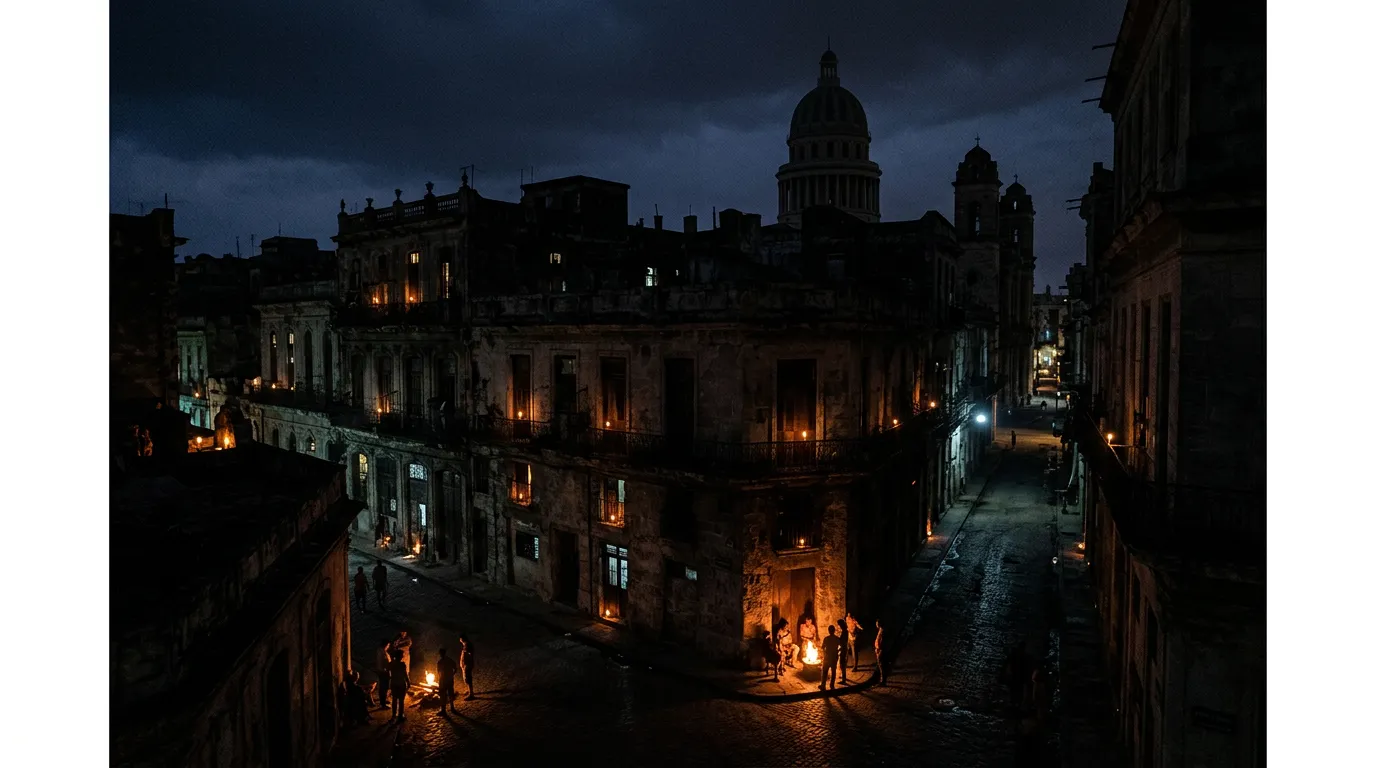
On Monday evening, Cuba's national power grid collapsed entirely, plunging 11 million people into darkness for the third time in four months. By nightfall, residents in several Havana neighborhoods had erected improvised barricades, set trash on fire near the Ministry of Energy, and resumed the cacerolazo protests (banging pots and pans) that have become the soundtrack of Cuban frustration since early March. In the central city of Moron, protesters had already torched a Communist Party office over the weekend. The government restored power to just 5% of Havana's residents, roughly 42,000 customers and several hospitals, by late Monday. For the rest of the island, the lights stayed off. Cuban President Miguel Diaz-Canel, who confirmed on March 13 that his government was engaged in talks with the United States, acknowledged the crisis but rejected what he called "vandalism." Meanwhile, President Trump told reporters he believed he would have "the honor of taking Cuba," describing the island as "a very weakened nation right now." The collision of a humanitarian emergency, growing civil unrest, and aggressive American rhetoric has produced the most dangerous moment for Cuba since the July 2021 uprising, and possibly since the missile crisis of 1962.
A Grid Running on Borrowed Time
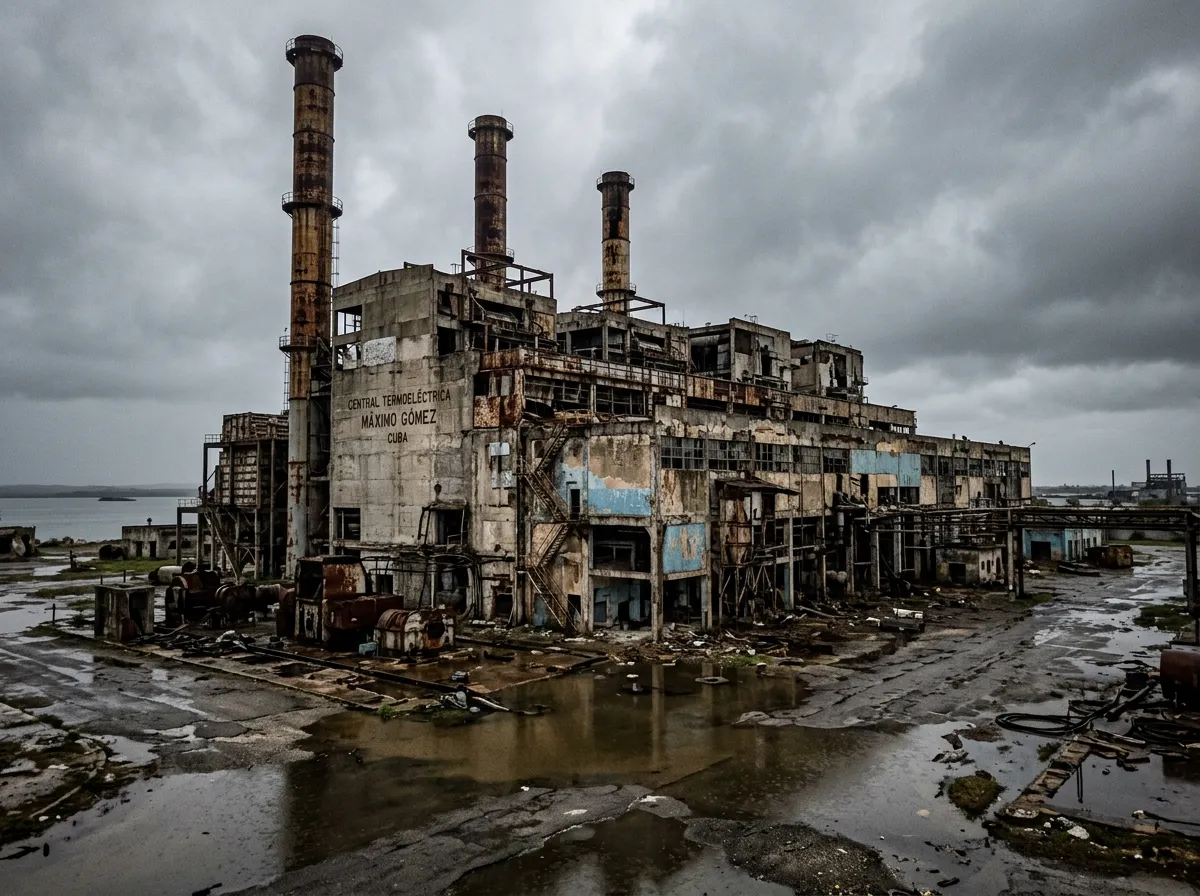
Cuba's electricity infrastructure has been deteriorating for decades. Most of the island's thermoelectric power plants date to the Soviet era, and decades of underinvestment, compounded by U.S. sanctions that restrict access to spare parts, have left the system fragile beyond what most outsiders understand. William LeoGrande, a professor at American University who specializes in Cuban affairs, described the infrastructure as "way past its normal useful life" and characterized the technicians keeping it running as "magicians." The heavy crude oil that these plants burn corrodes equipment at an accelerated rate, shortening the lifespan of generators that were already overdue for replacement.
The grid had already failed twice in recent months: once in early December 2025 across western Cuba, and again in the second week of March 2026 affecting western regions. Monday's collapse was total, the kind of cascading failure engineers call a "zero state," where every generating unit disconnects simultaneously. Lazaro Guerra, the Electricity Director at Cuba's Ministry of Energy and Mines, confirmed the complete shutdown without providing a specific cause. State media reported that crews were working to restore service, but the process is painstaking. Each generating unit must be brought back online individually, synchronized with the others, and gradually loaded, a sequence that can take days on a healthy grid, let alone one held together with improvised fixes.
The deeper problem is fuel. Cuban President Diaz-Canel admitted on Friday, March 13, that no oil shipments had reached the island in three months. Cuba produces roughly 40% of its petroleum domestically, but that domestic production consists of heavy, sulfur-rich crude that damages equipment and cannot efficiently power the full grid. The remaining 60%, historically supplied by Venezuela at deeply discounted rates, has vanished.
The Oil Blockade and Its Geopolitical Roots
The immediate cause of Cuba's fuel crisis traces back to January 2026 and the Trump administration's intervention in Venezuela. After U.S. forces seized Venezuelan President Nicolas Maduro in an extraordinary military operation in early January, Washington took effective control of Venezuela's oil industry. Venezuela had been providing Cuba with roughly 35,000 barrels of oil per day, approximately half the island's needs, under a barter agreement dating to 2000: Cuban doctors, teachers, and security advisors in exchange for discounted fuel.
That arrangement ended overnight. The Trump administration followed the Venezuela operation with an executive order threatening tariffs on any nation that sells or provides oil to Cuba. According to Reuters tracking data, only two small vessels carrying oil imports reached Cuba in all of 2026. The effect has been an undeclared blockade, one that connects directly to the broader U.S.-Iran confrontation that has reshaped global energy markets. Iran, itself a strategic partner of Cuba and a historical workaround supplier, is under sustained military pressure from the United States and Israel. Ships previously used to covertly transport oil between Venezuela and Iran have been seized or diverted. The G7's emergency oil reserve discussions focused primarily on stabilizing global prices after the Strait of Hormuz closure, but the cascading effect on Cuba illustrates how conflicts in the Persian Gulf ripple across the Caribbean.
Deputy Prime Minister Oscar Perez-Oliva Fraga announced new investment opportunities for Cuban exiles as part of the government's response, a move that would have been unthinkable even a year ago. The gesture signals how desperate Havana has become. Cuba's government, which nationalized private enterprise after the 1959 revolution and has spent six decades denouncing emigre capitalism, is now courting it.
Ten Days of Defiance
The protests that erupted across Cuba in early March are qualitatively different from anything the government has faced since July 11, 2021, when tens of thousands took to the streets in the largest demonstrations since the revolution. Jose Raul Gallego, a researcher at the Cuban legal organization Cubalex, documented a dramatic escalation: protests jumped from roughly 30 incidents in January to 130 by mid-March, a pace of acceleration that suggests the government's ability to contain dissent through intimidation is eroding.
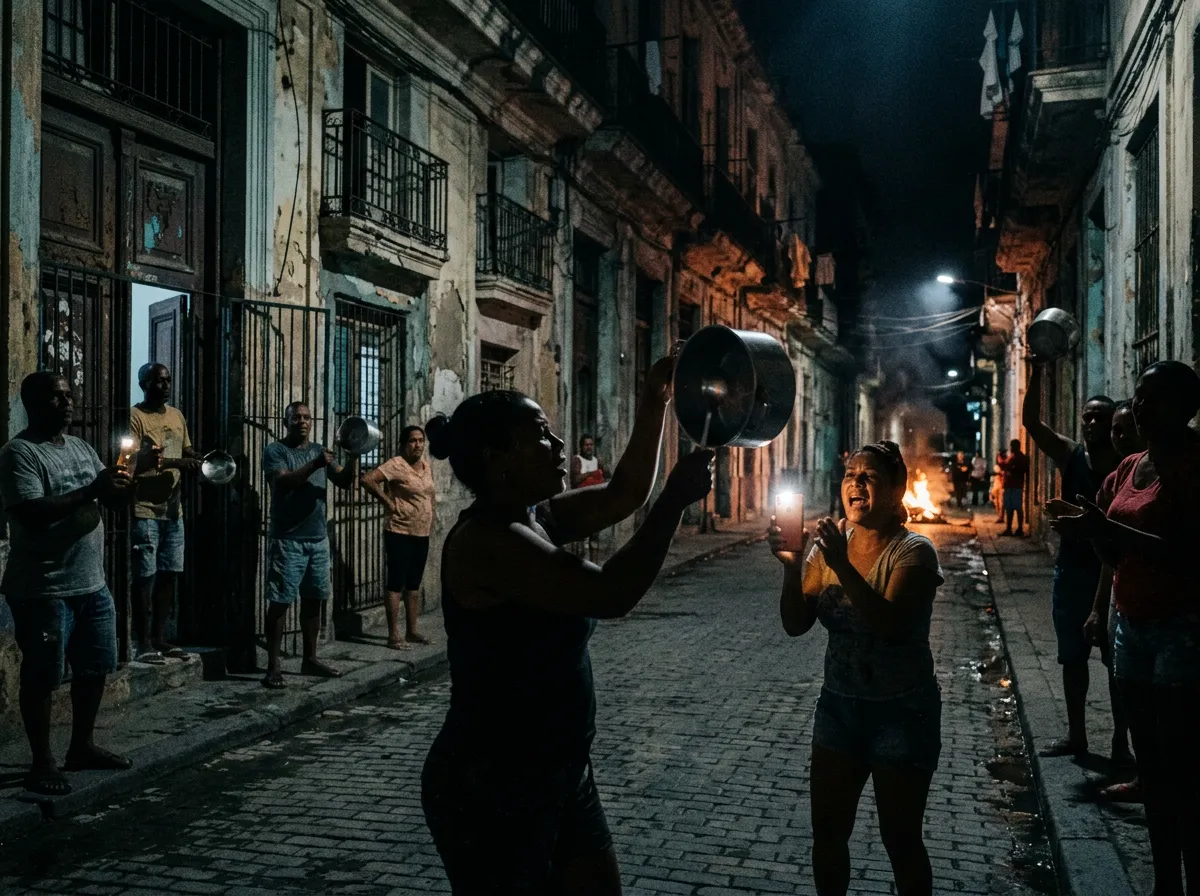
The cacerolazo, or pot-banging protest, started in Havana's Palatino neighborhood on March 7 after extended blackouts. Within days, it spread to El Vedado, Nuevo Vedado, Centro Habana, Alamar, Miramar, and Mantilla in the Arroyo Naranjo municipality. By the fourth and fifth consecutive nights, the nightly din of pots and pans had become a coordinated expression of collective anger. Residents in Mantilla went further, setting up street blockades. University of Havana students staged a sit-in after the government suspended in-person classes, citing energy constraints, a decision the students interpreted as an attempt to prevent campus organizing.
The most dramatic confrontation occurred in Moron, a city in the central Ciego de Avila province that was also a flashpoint during the 2021 protests. On the night of Friday, March 13, what began as a peaceful rally against power cuts and food shortages turned violent by early Saturday morning. Protesters stormed the Municipal Party Committee headquarters, breaking windows, removing documents and computers, and burning furniture in the street. Videos circulated on social media showed crowds hurling rocks and chanting "libertad" (liberty). Cuban state media reported five arrests for "vandalism acts" and denied that police had fired on the crowd, contradicting claims from some demonstrators who alleged gunfire without warning.
A Humanitarian Emergency in Slow Motion
The scale of human suffering unfolding in Cuba extends far beyond the inconvenience of blackouts. The fuel shortage has crippled the country's healthcare system, its food supply chain, and its water infrastructure simultaneously. Cuba's Health Minister has reported that 5 million people living with chronic illnesses face disrupted medications or treatments. That figure includes 16,000 cancer patients who require radiotherapy and 12,400 undergoing chemotherapy, treatments that depend on consistent electricity and refrigerated pharmaceuticals. Hospitals are operating in what Cuban health officials have described as "war-like conditions," with dark hallways, suspended surgeries, and patients unable to reach facilities because public transportation has ground to a halt.
The food crisis is equally severe. Cooking gas, which most Cuban households depend on, has become nearly impossible to find. Diesel shortages have prevented the harvesting of crops in rural provinces, undermining the government's already modest food sovereignty programs. Refrigeration failures mean that whatever food does exist spoils quickly. Tomas David Velazquez Felipe, a 61-year-old Havana resident, told NPR that "what little we have to eat spoils." Mercedes Velazquez, 71, described giving away part of a soup to neighbors "so as not to throw it out" before it went bad.
Residents describe a grim daily rhythm organized around unpredictable "bursts of electricity" lasting minutes to a few hours, during which families rush to cook whatever food remains, charge cell phones, and fill water containers. When the power cuts again, often for 15 to 20 hours at a stretch, life stops. The currency has devalued rapidly, inflation has soared, and the informal economy (already how most Cubans survive) has contracted as there is simply nothing left to trade.
UN Secretary-General Antonio Guterres stated in February that he was "extremely concerned" about the humanitarian situation, warning it would "worsen, or even collapse" if Cuba's oil needs went unmet. UN human rights experts have gone further, condemning the U.S. blockade as "a serious violation of international law and extreme unilateral economic coercion." Mexico has sent two ships of humanitarian aid and proposed a humanitarian "air bridge" allowing aircraft carrying supplies to refuel on Mexican territory. Canada has announced its own aid packages. Francisco Pichon, the UN Resident Coordinator in Cuba, acknowledged the agency is coordinating 23 organizations to support the island, but the scope of the crisis is outpacing the response.
Trump's "Taking Cuba" Gambit
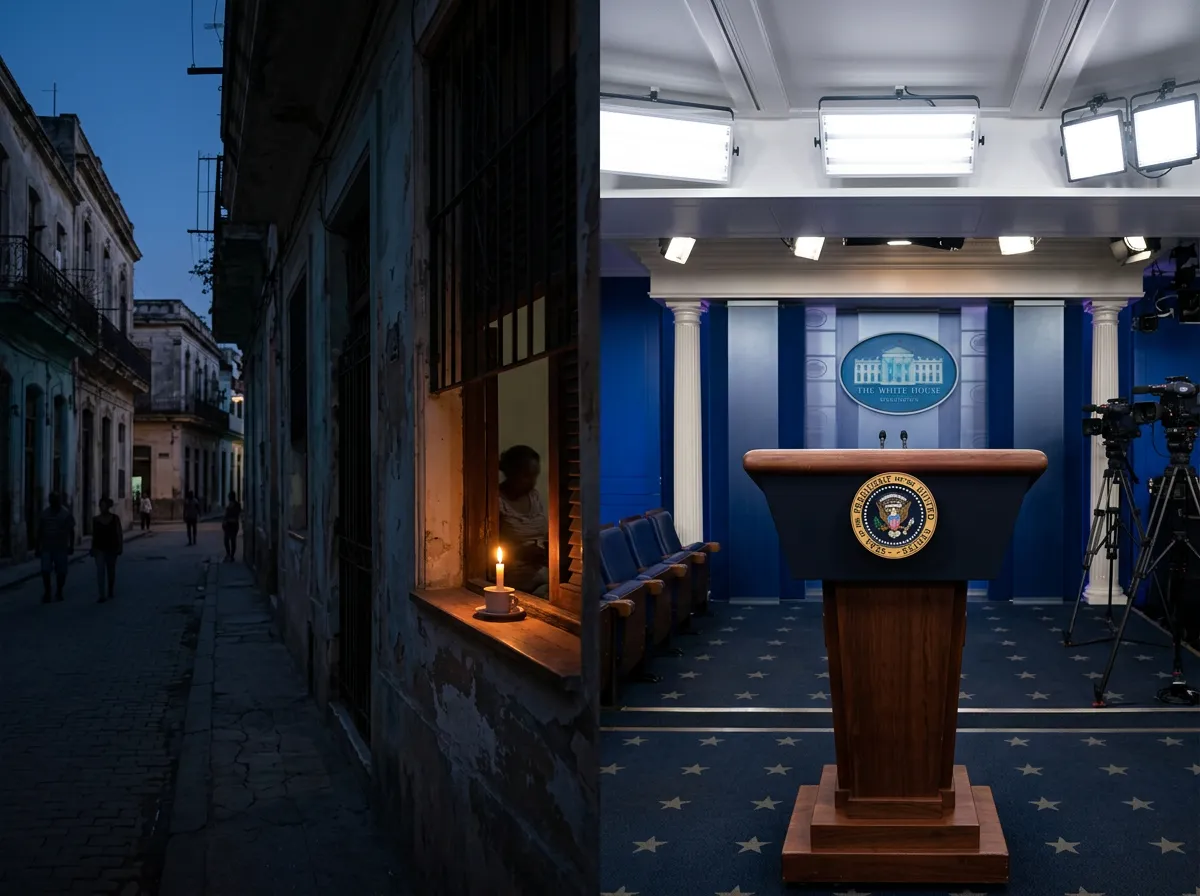
Against this backdrop, President Trump's comments on Monday carried extraordinary weight. Speaking to reporters after the grid collapse, Trump said: "You know, all my life I've been hearing about United States and Cuba, when will the United States having the honor of taking Cuba? That's a big honor." When asked to clarify, he added: "Taking Cuba in some form, yeah, taking Cuba. I mean, whether I free it, take it, I think I can do anything I want with it."
The remarks were not offhand. Reporting from the New York Times indicates that removing Diaz-Canel from office is a stated U.S. objective in the ongoing bilateral talks that Cuba publicly acknowledged on March 13. American negotiators have reportedly signaled to their Cuban counterparts that Diaz-Canel must go. The Save America Act currently moving through the Senate reflects the administration's broader willingness to use maximum pressure as a default posture, and Cuba, unlike Iran, lacks the military capability to resist.
The phrase "taking Cuba" drew immediate international condemnation. Democratic senators introduced a War Powers Resolution specifically aimed at preventing unilateral military action against Cuba, with one sponsor warning against "another disaster like Iran." Cuba's government, while engaged in unprecedented diplomatic talks, has not responded publicly to Trump's language. The silence itself is notable: Havana's traditional playbook involves fiery denunciations of American imperialism, and the absence of such rhetoric suggests the government is weighing how far it can push back against Washington while simultaneously asking for relief.
The Ghost of July 11 and What Comes Next
The comparison to Cuba's July 11, 2021 protests is instructive, but the differences may matter more than the similarities. In 2021, the trigger was a convergence of COVID-19 economic damage, reduced tourism, declining Venezuelan oil production, and currency reform that sparked inflation. Tens of thousands marched in what became the largest demonstrations since the revolution. The government responded with a combination of television appearances by Diaz-Canel (who told supporters "the streets belong to the revolutionaries"), mass arrests of over 1,400 people, and slow-drip repression that imprisoned more than 700 protesters, some serving sentences of up to 25 years.
The 2026 protests are building differently. Rather than a single day of eruption, the current unrest has unfolded over ten consecutive days, spreading from Havana outward through central provinces, escalating from pot-banging to barricades to the physical destruction of a Party headquarters. The government's capacity to repress has also diminished: police and security forces depend on fuel for vehicles and communications infrastructure that is now intermittent at best. The Cubalex data showing 30 protests in January rising to 130 by mid-March suggests not a spike but a trend, one that the blackout will almost certainly accelerate.
There is a historical parallel worth considering. Cuba's "Special Period" of the early 1990s, triggered by the collapse of the Soviet Union and the loss of Soviet subsidies, produced similar deprivation: rolling blackouts, food scarcity, and economic contraction of roughly 35%. The government survived that crisis through a combination of grudging economic reforms (legalizing the dollar, opening to tourism, permitting limited private enterprise) and the personal authority of Fidel Castro, who remained a genuinely popular figure for a significant portion of the population. Diaz-Canel, a civilian technocrat who took power in 2018, commands no such loyalty. The reforms his government is now offering, such as courting exile investment and entering talks with Washington, are more far-reaching than anything Castro conceded in the 1990s, yet they come from a position of far greater weakness.
The critical variable is time. If the oil blockade holds and Cuba receives no significant fuel shipments in the coming weeks, the grid will continue to fail, the protests will continue to grow, and the humanitarian crisis will deepen toward the "collapse" that the UN has warned about. The Trump administration appears to view this trajectory as leverage, a tool for extracting maximum concessions, including potentially Diaz-Canel's departure. Whether that strategy produces a negotiated transition, a chaotic collapse, or an outcome nobody in Washington has planned for depends on decisions being made right now in both capitals, under conditions of darkness, hunger, and mounting desperation.
Sources
- Cuba hit by island-wide blackout as energy crisis deepens - NPR
- Protesters in Cuba attack Communist Party office in rare riot over blackouts - NBC News
- The Crisis in Cuba, Explained - Time
- Cuba: UN warns of possible humanitarian 'collapse', as oil supplies dwindle - UN News
- Protests erupt in Cuba as US restrictions spark food, energy shortages - Al Jazeera