
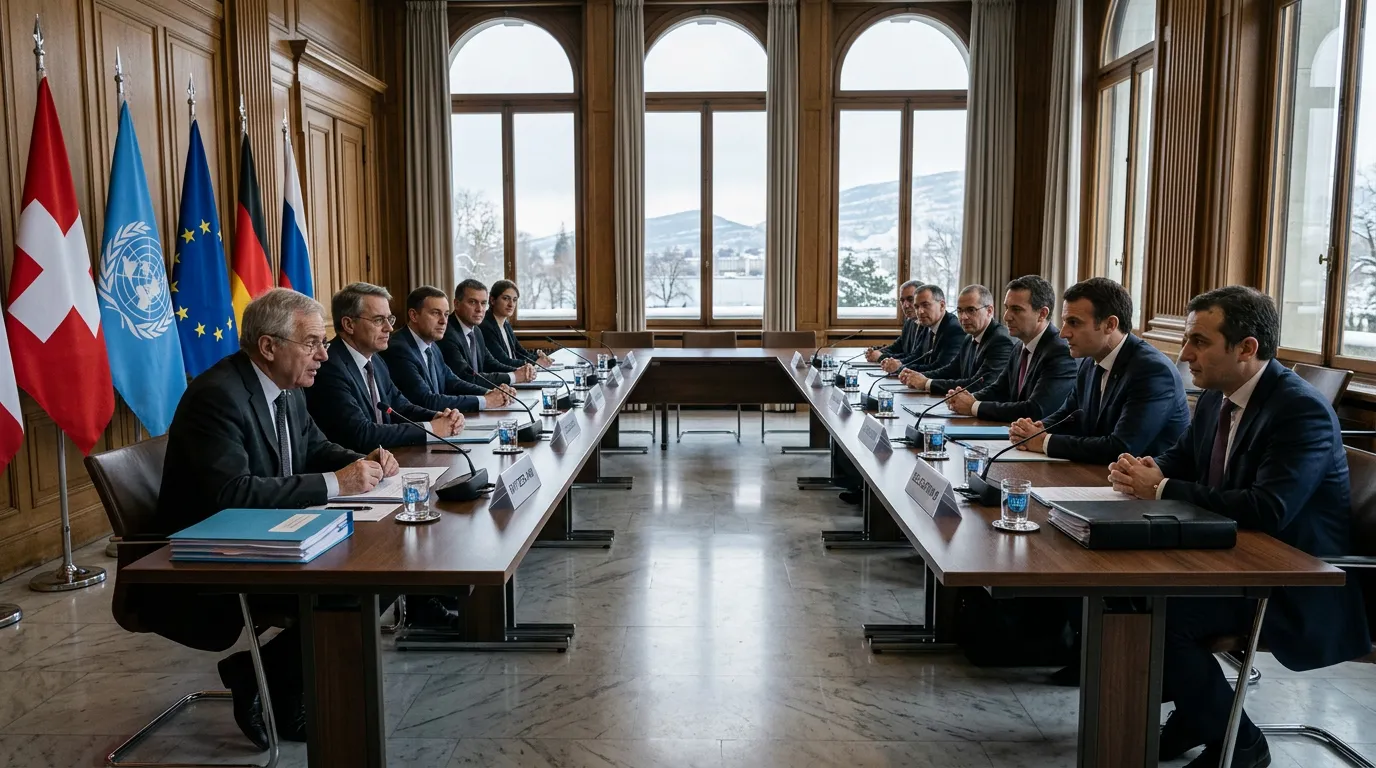
While US envoys Steve Witkoff and Jared Kushner sat across from Iranian Foreign Minister Abbas Araghchi in a Geneva conference room on Thursday, American warships and aircraft were positioning across the Persian Gulf. That contrast captures the essence of the third round of US-Iran nuclear talks: diplomacy is happening, but both sides want the other to know what happens if it fails.
The meeting lasted more than three hours, the longest face-to-face session since talks began in Oman on February 6. Araghchi described the discussions afterward as touching on "important" and "practical" proposals regarding Iran's nuclear program and the lifting of sanctions. The Americans were more guarded. Witkoff confirmed "constructive engagement" without specifying what, exactly, was constructed. And Oman, which has quietly brokered backchannel communication between Washington and Tehran for more than a decade, continued to play its familiar role as the go-between that neither side wants to acknowledge too loudly.
But underneath the diplomatic veneer, the math on this negotiation is straightforward and brutal. The US wants Iran to halt all uranium enrichment, dismantle its ballistic missile program, and cut off support for proxy forces across the Middle East. Iran wants sanctions lifted and insists the talks should cover nuclear issues only. Those two positions aren't close. And the clock on finding common ground is running shorter than either side admits publicly.
Three Rounds, Three Weeks, No Agreement
The pace of these talks has been unusual. The first round took place in Muscat, Oman, on February 6. The second moved to Geneva on February 17. Now a third round, again in Geneva, just nine days later. In nuclear diplomacy, where negotiations typically stretch over months or years, this compressed schedule signals one of two things: genuine momentum toward a deal, or a deliberate acceleration because one party believes the window for diplomacy is closing.
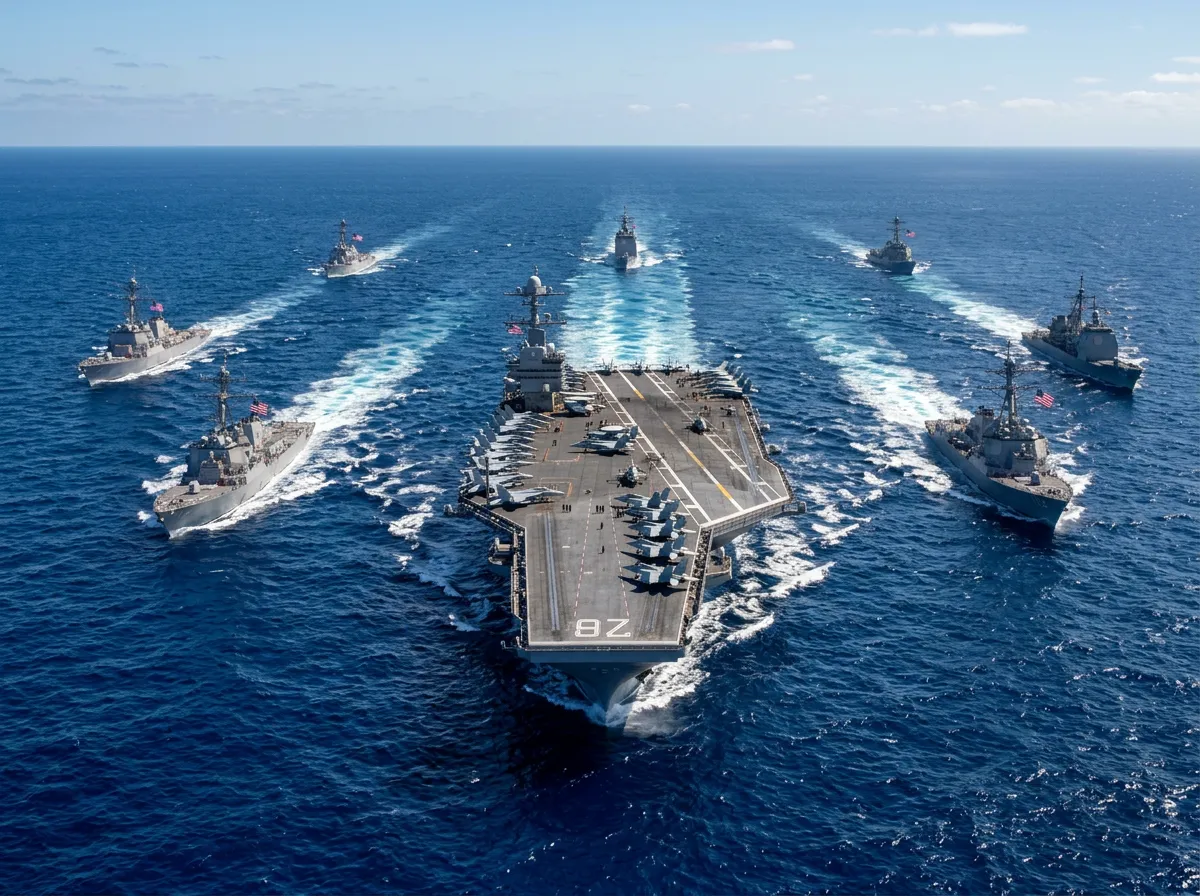
The Trump administration has made clear which interpretation it favors. The White House has consistently framed these talks as a last chance for Tehran to negotiate before the US considers military options. The deployment of additional aircraft carrier strike groups and bomber squadrons to the Middle East in recent weeks isn't subtle, and it isn't meant to be. Pentagon officials have confirmed the buildup without linking it directly to the talks, but the timing leaves little room for alternative explanations.
For Iran, the urgency is different but equally real. The regime is navigating domestic turmoil that's unlike anything it has faced in decades. The nationwide protests that erupted in late December killed thousands of Iranians and forced President Masoud Pezeshkian into an unprecedented public apology. Tehran needs sanctions relief to stabilize an economy that's fueling the very unrest threatening the regime's survival. Every week without a deal is another week of economic pressure that the government can't easily absorb.
What Each Side Actually Wants
The gap between Washington's demands and Tehran's offers is wide enough that it's worth spelling out clearly, because the framing you hear from each side is designed to obscure how far apart they really are.
The US position covers three distinct areas:
- Nuclear: Complete halt to uranium enrichment, full inspections by the International Atomic Energy Agency, and dismantlement of advanced centrifuges installed since 2018
- Missiles: Restrictions on Iran's ballistic missile program, particularly weapons capable of carrying nuclear warheads
- Regional proxies: An end to Iranian support for Hezbollah, Hamas, the Houthis, and Shia militias in Iraq and Syria
Iran's position rejects that framing entirely. Tehran insists the talks are about nuclear issues and sanctions, period. Araghchi has repeatedly stated that Iran's missile program and its regional alliances are sovereign matters that don't belong on the negotiating table. Iran's Foreign Ministry reinforced that position this week by calling Trump's recent State of the Union comments about Iran "big lies," the kind of public language that doesn't normally precede a breakthrough.
Trita Parsi, executive vice president of the Quincy Institute for Responsible Statecraft and a longtime analyst of US-Iran relations, has noted that "the fundamental challenge hasn't changed since 2015: the US wants to address everything at once, and Iran wants to compartmentalize." That structural disagreement sank the JCPOA renegotiation in 2022, and it's threatening to sink these talks too.
The Shadow of the JCPOA
You can't understand what's happening in Geneva without understanding what happened to the last nuclear deal, because the wreckage of the 2015 Joint Comprehensive Plan of Action still shapes every calculation both sides are making.
The JCPOA, negotiated during the Obama administration, limited Iran's enrichment to 3.67% purity and capped its stockpile of enriched uranium in exchange for sanctions relief. It wasn't a perfect deal. Critics on both sides had legitimate complaints. But it worked, at least in the narrow sense that Iran's breakout time (the period needed to produce enough weapons-grade material for a single bomb) stretched to roughly a year.
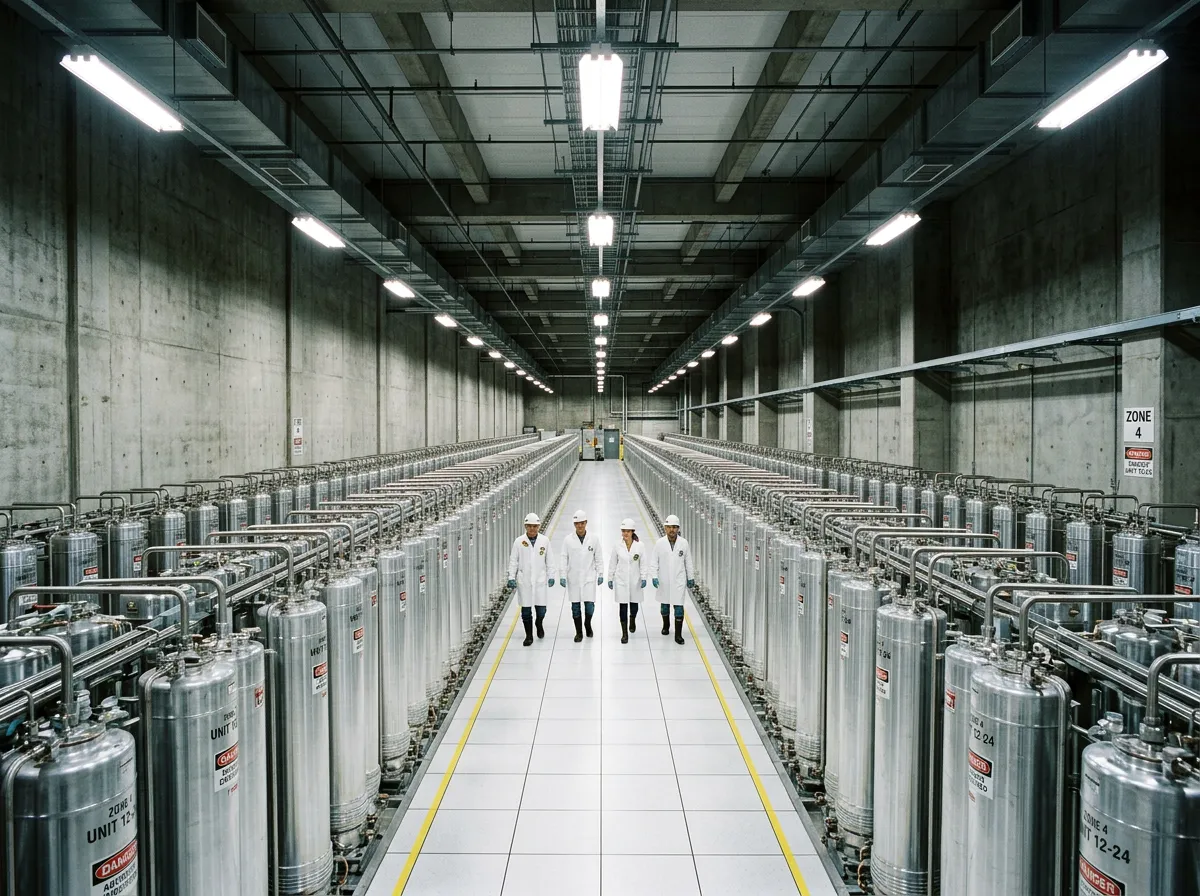
Then Trump pulled the US out of the agreement in 2018 during his first term, reimposing sanctions and triggering a cascade of consequences that brought both countries to this point. Iran responded by systematically exceeding every limit the JCPOA had imposed. By 2026, Iran has enriched uranium to 60% purity, far beyond civilian energy needs and close to the 90% threshold for weapons-grade material. Its stockpile of enriched uranium has grown from the JCPOA-mandated 300 kilograms to well over 5,000 kilograms. And its centrifuge capacity has expanded dramatically, with thousands of advanced IR-6 and IR-8 centrifuges now operating at facilities in Natanz and Fordow.
Mark Fitzpatrick, a former State Department nonproliferation official and associate fellow at the International Institute for Strategic Studies, has described the post-JCPOA situation bluntly: "The deal's opponents said it was too weak. What they got instead is Iran with ten times the enrichment capacity and uranium at near-weapons-grade purity. By every technical metric, the US is in a worse negotiating position than it was in 2015."
That assessment is difficult to dispute on the technical merits. Iran's nuclear infrastructure is larger, more dispersed, and more hardened than it was eight years ago. Some facilities, particularly the Fordow enrichment plant buried deep inside a mountain, would be extremely difficult to destroy with conventional military strikes. The leverage that the US had before Iran expanded its program simply doesn't exist in the same form anymore, which means any new agreement would likely require both sides to accept terms that look worse than what the JCPOA offered.
Oman's Quiet Role and Why It Matters
Oman's involvement in these talks isn't new, but it's worth understanding why this small Gulf state keeps showing up as the intermediary between two countries that don't trust each other.
Sultan Haitham bin Tariq, like his predecessor Sultan Qaboos, has maintained diplomatic relationships with both the US and Iran simultaneously, something few countries in the region can claim. Oman borders the Strait of Hormuz, the narrow waterway through which roughly 20% of the world's oil supply passes daily, giving it a direct interest in preventing a military conflict that would close the strait and send energy markets into chaos.
Omani diplomats facilitated the secret back-channel talks between the Obama administration and Iran that eventually led to the JCPOA. They helped arrange the initial contact for this current round in early February. And their physical presence at the negotiating table gives both sides something they badly need: a witness that neither party can dismiss as biased. In a negotiation where the US and Iran don't even have formal diplomatic relations, that kind of trusted intermediary is irreplaceable.
The choice of Geneva for rounds two and three is also significant. Switzerland has protected US interests in Iran since the 1979 hostage crisis (when Iran seized the American embassy in Tehran), and the Swiss government routinely provides logistical support for sensitive diplomatic encounters. Geneva's track record as a venue for nuclear negotiations, including the original JCPOA talks and the recent Ukraine-Russia peace discussions, gives the city a weight of precedent that both delegations understand.
The Domestic Pressures Squeezing Both Sides
What makes this round of talks different from previous US-Iran diplomatic encounters is the sheer volume of pressure bearing down on both governments from inside their own borders.
For Trump, the Iran file is wrapped up in a broader foreign policy bet. His administration has positioned itself as the dealmaker that can resolve conflicts his predecessors couldn't, from Ukraine to the Middle East. A nuclear agreement with Iran would be a major win. But a failed negotiation that leads to military action carries enormous risks, both strategically and politically. The midterm election cycle is already shaping decisions in Washington, and an unprovoked strike on Iran without clear evidence of an imminent nuclear weapon would divide even Trump's own party.
For Pezeshkian, the calculus is existential in a more literal sense. The December-January protest wave wasn't just about economic frustration. It reflected a deeper crisis of legitimacy for the Islamic Republic. The regime's credibility has been badly damaged by the crackdown, and Pezeshkian's public apology, while politically risky, was itself an acknowledgment that the government can't simply repress its way out of the current moment. Sanctions relief through a nuclear deal would give Tehran an economic lifeline that could ease some of the domestic pressure, at least temporarily.
This parallel squeeze creates a paradox. Both leaders need a deal, but neither can appear to be the one making concessions. Trump can't look like he's giving Iran a better offer than the JCPOA he tore up. Pezeshkian can't look like he's capitulating to American threats while his people's blood is still fresh on the streets. The result is a negotiation where both sides have strong incentives to reach an agreement but equally strong incentives to avoid being seen reaching for one.
What Happens Next
The honest assessment of where these talks stand is that both sides are still in the phase of testing each other's flexibility rather than negotiating specific terms. Three hours of discussion between Witkoff, Kushner, and Araghchi is significant by the standards of US-Iran engagement, where even acknowledging the other side exists has historically been controversial. But significant contact is not the same as significant progress.
The specific proposals that Araghchi described as "important" and "practical" haven't been disclosed publicly. Whether they represent genuine movement from Iran's previous positions or a repackaging of old offers will become clear in the coming days as both sides brief their principals and decide whether to schedule a fourth round.
What's worth watching closely are three concrete indicators:
- Enrichment levels: Any signal from Iran about reducing enrichment from 60% would suggest real flexibility. Without movement here, the rest of the negotiation is academic.
- Military positioning: If the US scales back its naval deployments, it signals confidence in the diplomatic track. If the buildup continues or accelerates, it signals the opposite.
- Proxy language: If Iran begins acknowledging regional issues even indirectly in its public statements about the talks, it would mark a departure from Tehran's insistence on nuclear-only discussions.
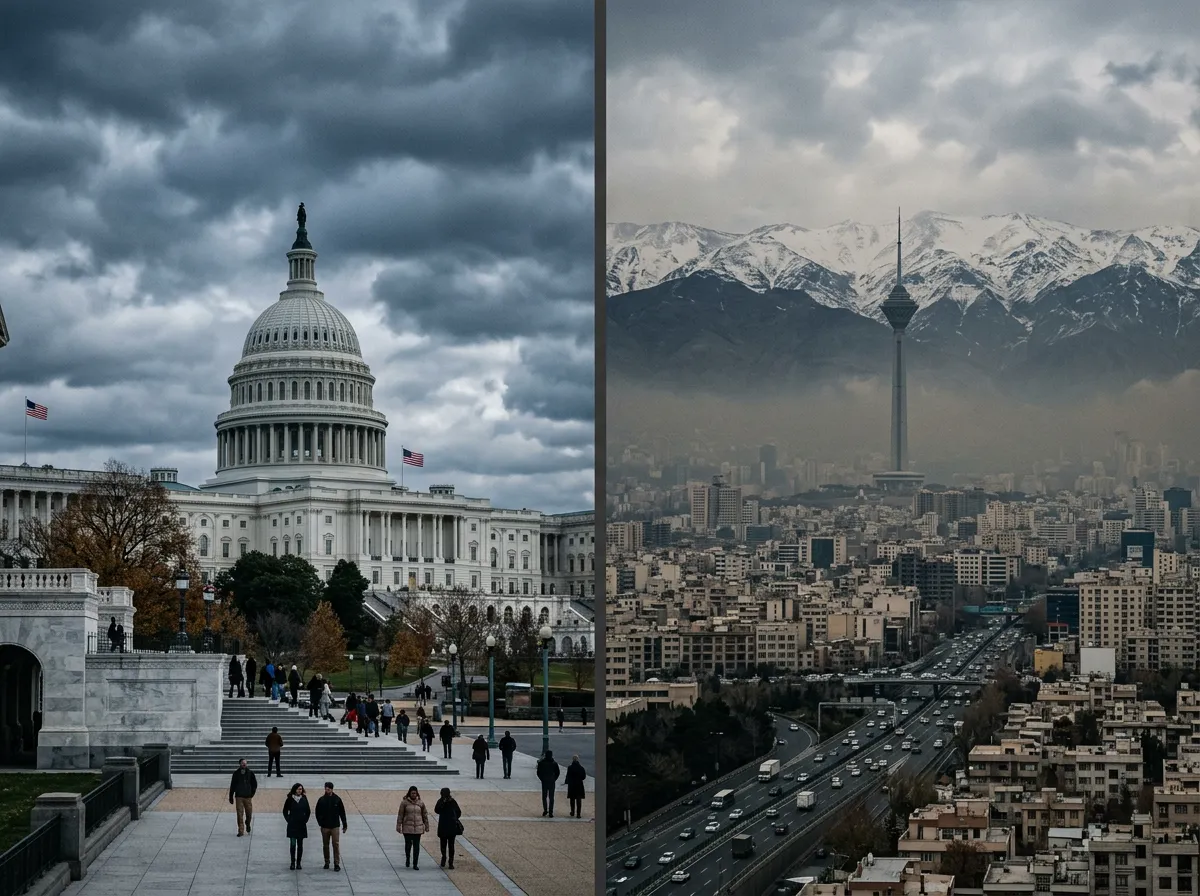
The Trump administration's patience for diplomacy has a limit, and that limit appears to be measured in weeks rather than months. Iran's economic situation is deteriorating fast enough that Tehran may not have the luxury of extended negotiations either. Both sides know what happened the last time a nuclear deal fell apart. The question now is whether that knowledge is enough to push them toward a new one, or whether the same disagreements that have defined this relationship for 47 years will win out once again.
Sources
- "US-Iran nuclear talks continue in Geneva with high-level envoys," Reuters, February 26, 2026
- "Iran says 'important' proposals discussed in third round of talks with US," Al Jazeera, February 26, 2026
- Mark Fitzpatrick, "Iran's Nuclear Program After the JCPOA," International Institute for Strategic Studies, 2025
- Trita Parsi, commentary on US-Iran negotiating dynamics, Quincy Institute for Responsible Statecraft
- "Pentagon confirms additional carrier deployments to Middle East," Associated Press, February 2026