
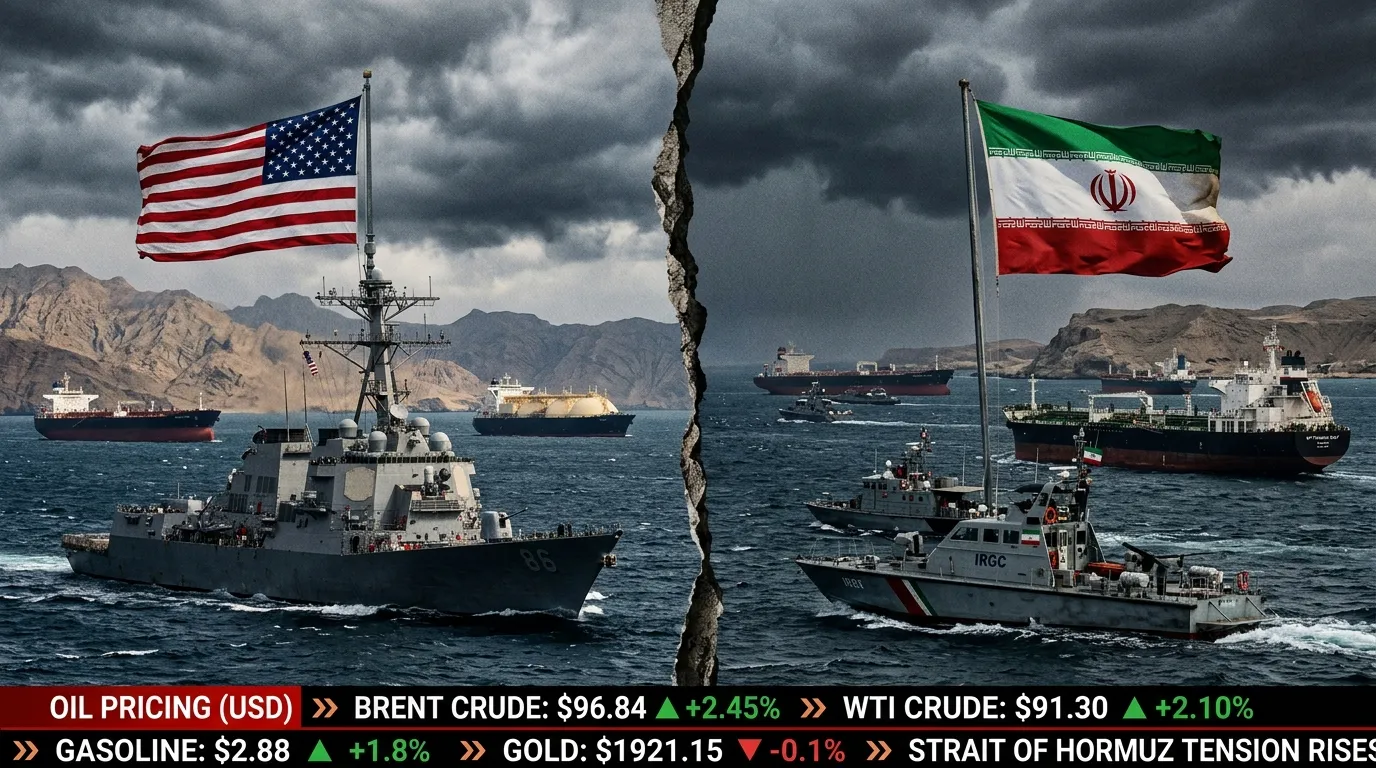
Two days after threatening to "obliterate" Iran's power plants, President Trump reversed course on Monday, announcing a five-day pause on military strikes and claiming the U.S. and Iran have been holding "very good and productive conversations." There's just one problem: Iran says none of that is true.
The whiplash announcement sent markets soaring and oil prices plunging, but the contradiction at the center of this story, a sitting president claiming diplomatic progress while the other side denies any contact, has left analysts, lawmakers, and allies scrambling to figure out what's actually happening.
What Trump Said
Trump posted on Truth Social Monday morning in his characteristic all-caps style, claiming the two nations have had "very good and productive conversations regarding a complete and total resolution of our hostilities in the Middle East" over the previous two days. He said he had "instructed the Department of War to postpone any and all military strikes against Iranian power plants and energy infrastructure for a five day period, subject to the success of the ongoing meetings and discussions."
Speaking to reporters afterward, Trump added: "We have had very, very strong talks. We'll see where they lead. We have major points of agreement, I would say, almost all points of agreement."
His stated conditions for ending hostilities included Iran halting uranium enrichment, the U.S. removing enriched uranium already in the country, and the Strait of Hormuz being managed "by mutual agreement." Middle East special envoy Steve Witkoff and Jared Kushner reportedly conducted talks Sunday evening. An Israeli official told Axios that the pair had been in touch with Iranian Parliament Speaker Mohammad Bagher Ghalibaf, though a source cautioned there did not appear to have been any direct talks yet.
Iran's Flat Denial
Tehran wasn't ambiguous about its position. Parliament Speaker Ghalibaf posted on X: "No negotiations have been held with the US." He called it "Fakenews" designed to "manipulate the financial and oil markets and escape the quagmire in which the US and Israel are trapped."
Foreign Ministry spokesman Esmaeil Baghaei confirmed that "messages have been received from some friendly countries regarding the US's request for negotiations to end the war," but denied any direct discussions. Iran's state-owned IRAN newspaper characterized Trump's remarks as "part of efforts to reduce energy prices and buy time to implement his military plans."
The denial created a fundamental credibility problem. If there are no talks, Trump's five-day window is meaningless.

Markets Surged, Then Flinched
Wall Street didn't wait for verification. The Dow Jones Industrial Average jumped 631 points (1.38%) to close at 46,208. The S&P 500 gained 1.15% and the Nasdaq Composite rose 1.38%. Before the market opened, futures had surged even higher, with Dow futures up 1,100 points and S&P 500 futures climbing 2.7%. Fortune reported Trump "added $1.7 trillion to stocks" within minutes of his post.
But those gains were trimmed as Iran's denials rolled in. All three indexes had been up more than 2% earlier in the session before pulling back.
The oil market reaction was even more dramatic. Brent crude fell from roughly $112 on Friday to as low as $92 intraday, a roughly 15% drop, before settling around $100 per barrel, below the $100 mark for the first time in almost two weeks. West Texas Intermediate dropped more than 10% to $88.13 per barrel, its lowest level since the war began in late February.
Financial Times columnist Robert Armstrong gave the phenomenon a name: "TACO," or "Trump Always Chickens Out," describing a recurring pattern where Trump makes catastrophic threats that crater markets, then reverses course. The pattern previously appeared with tariffs in 2025 and the Greenland standoff earlier this year.
Oil analyst Rory Johnston was skeptical the rally would last, noting that "10 to 15 million barrels per day stock draws" from the Hormuz closure would eventually catch up with rhetoric. You can't jawbone markets indefinitely when physical supply is actually missing.
The Crisis So Far
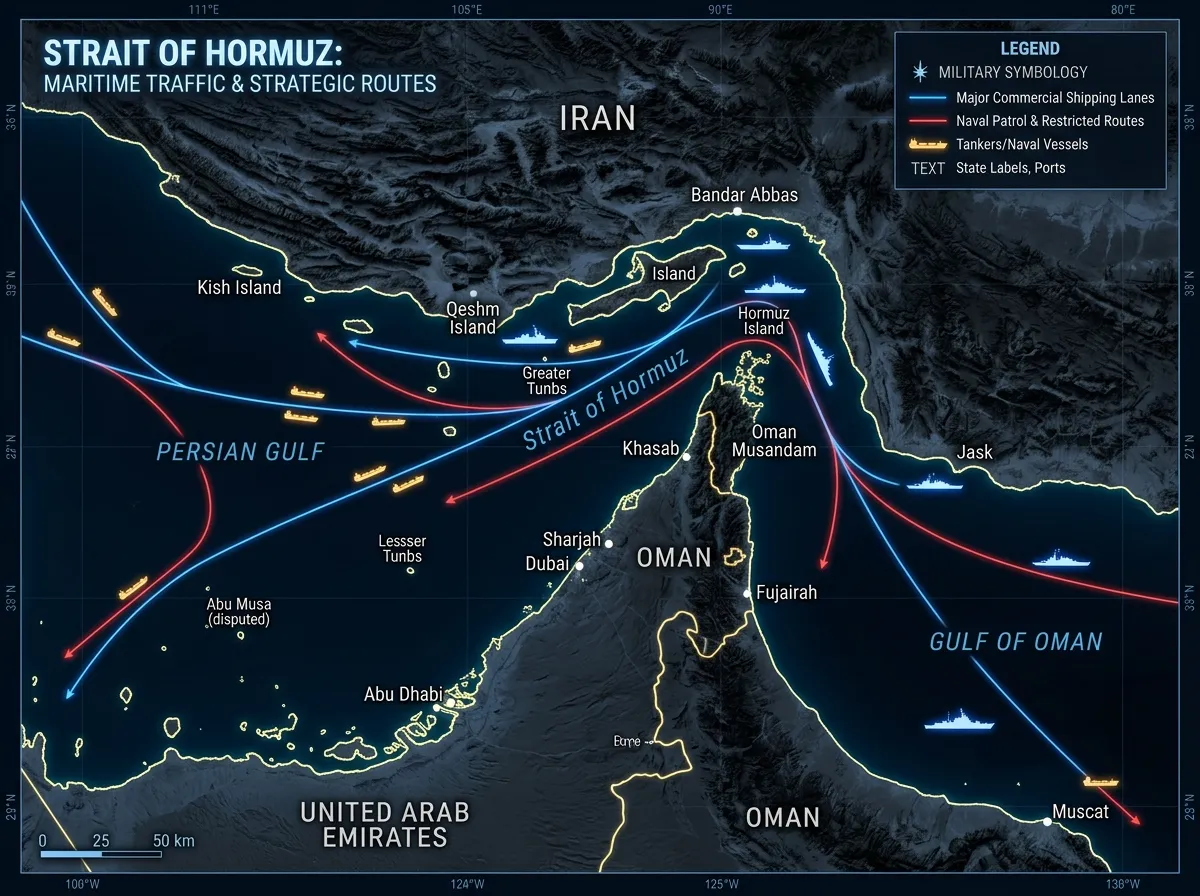
The timeline matters for understanding how volatile this situation is. The U.S. and Israel launched surprise airstrikes on Iranian sites on February 28, killing Supreme Leader Ali Khamenei. Iran responded with more than 500 ballistic missiles and nearly 2,000 drones. By March 4, Iran had declared the Strait of Hormuz closed. Brent crude surpassed $100 per barrel by March 8 and eventually peaked at $126, the highest price in years.
The economic fallout has been punishing. Americans are paying more than $3.80 per gallon at the pump. Mortgage rates have climbed as oil prices ripple through the housing market. Fatih Birol, head of the International Energy Agency, warned the global economy faces a "major, major threat" from the disruption, characterizing it as worse than the combined 1973 and 1979 oil crises. "No country will be immune to the effects of this crisis if it continues to go in this direction," he said.
On Saturday, March 21, Trump issued a 48-hour ultimatum: reopen the Strait of Hormuz or face strikes on Iranian power plants and energy infrastructure. Iran's response was not capitulation. The Islamic Republic's Defense Council warned that any attack on Iranian territory would lead to "the mining of all access routes in the Persian Gulf," a threat that would escalate the crisis far beyond the current Hormuz closure.
What Washington Is Saying
The political fault lines are sharp. Senate Minority Leader Chuck Schumer called the situation "truly unsatisfying" and warned of "mission creep," urging the Senate to "quickly return to session and reassert its constitutional duty by passing our resolution to enforce the War Powers Act."
Most Republicans rallied behind the president, but not all. Senator Rand Paul opposed the conflict on constitutional grounds, saying he was against another "Presidential war." Representative Lauren Boebert told leadership she was "a 'no' on any war supplementals," adding, "I am so tired of spending money elsewhere." The Pentagon has requested $200 billion in supplemental funding for the conflict, a figure drawing criticism from both parties.
A War Powers Resolution introduced by Representatives Ro Khanna and Thomas Massie failed narrowly, 212 to 219.
What to Watch
The five-day clock is the most immediate variable. Trump's pause expires around Friday, March 28. If no deal materializes, the threat to strike Iranian power plants returns. Given that Iran has explicitly warned it would respond by mining the entire Persian Gulf, the stakes of that deadline extend well beyond the current Hormuz closure.
Whether talks are genuinely happening is the central mystery. Iran's denials have been emphatic and multi-voiced, from the parliament speaker to the foreign ministry to state media. But indirect channels through Turkey, Oman, or Qatar may be the actual format, and those could exist without Iran publicly acknowledging them. Turkey's Foreign Minister Hakan Fidan has been in contact with Iran's Abbas Araghchi, and Ankara has positioned itself as a potential intermediary.
The oil market will likely remain volatile all week. If Iran confirms even indirect negotiations, prices could fall further. If the Friday deadline passes without progress, Brent crude could spike back above $110 or higher. Johnston's warning about physical supply constraints looms over any rally built on diplomatic optimism alone.
Admiral Brad Cooper of U.S. Central Command described the American campaign as "ahead or on plan" and claimed Iran's military capabilities are deteriorating. But the Strait of Hormuz remains functionally closed to Western shipping, and the economic damage accumulates daily regardless of military progress.
The pattern that Armstrong dubbed "TACO" raises a structural question about this administration's approach to foreign policy: if adversaries learn that maximum threats are routinely followed by retreats, the threats lose their coercive power. If the pattern holds, Friday may bring another off-ramp. If it doesn't, the consequences are severe.
Sources
- NPR: Trump says the U.S. is in talks with Iran to end the war, which Iran denies
- Al Jazeera: Trump postpones military strikes on Iranian power plants for five days
- PBS NewsHour: U.S. won't strike Iran's power plants for 5 days
- Fortune: Trump has TACO'd again, sparking a $1.7 trillion stock market rally
- TIME: Trump Postpones Strikes on Iranian Power Plants