
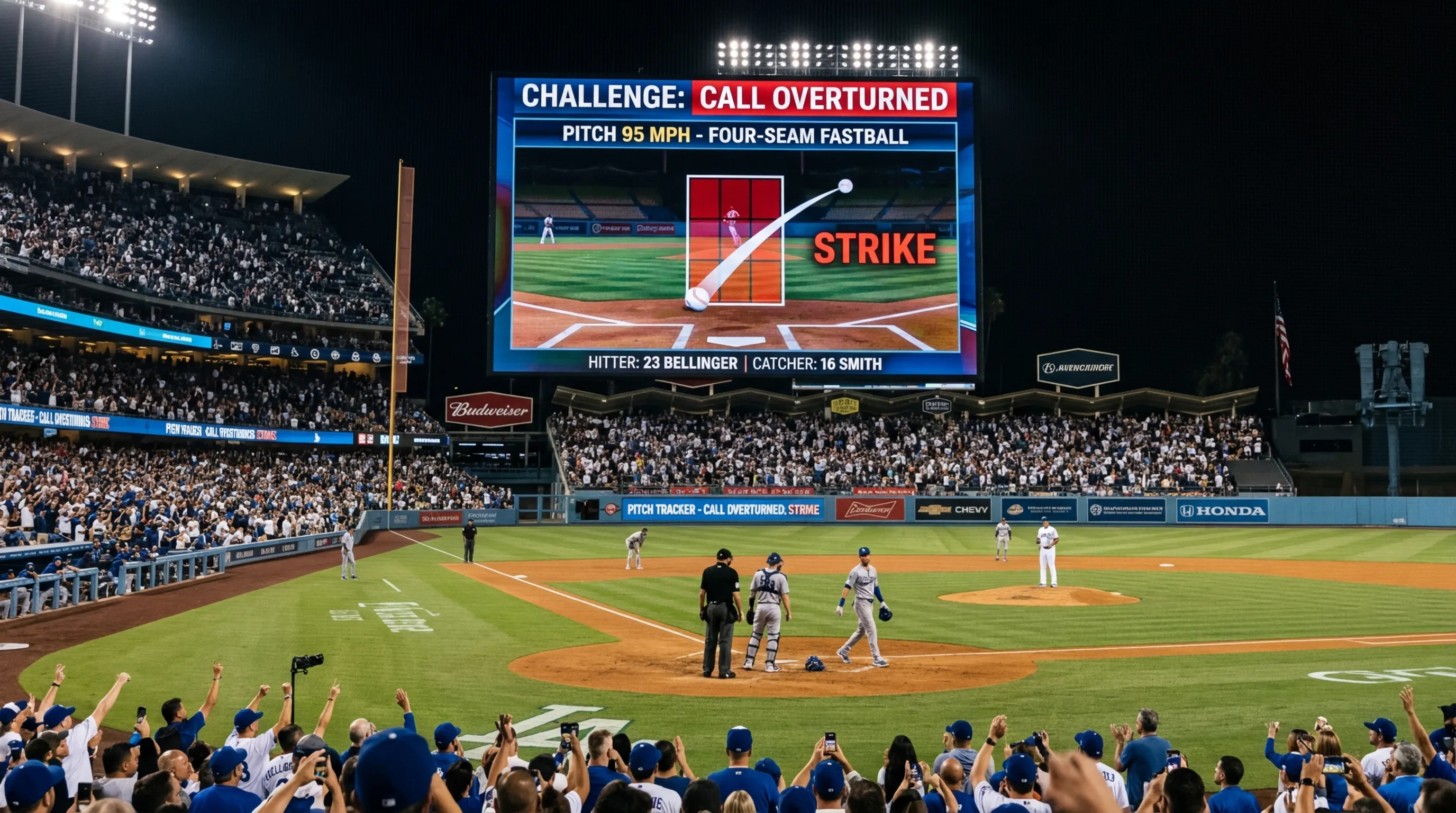
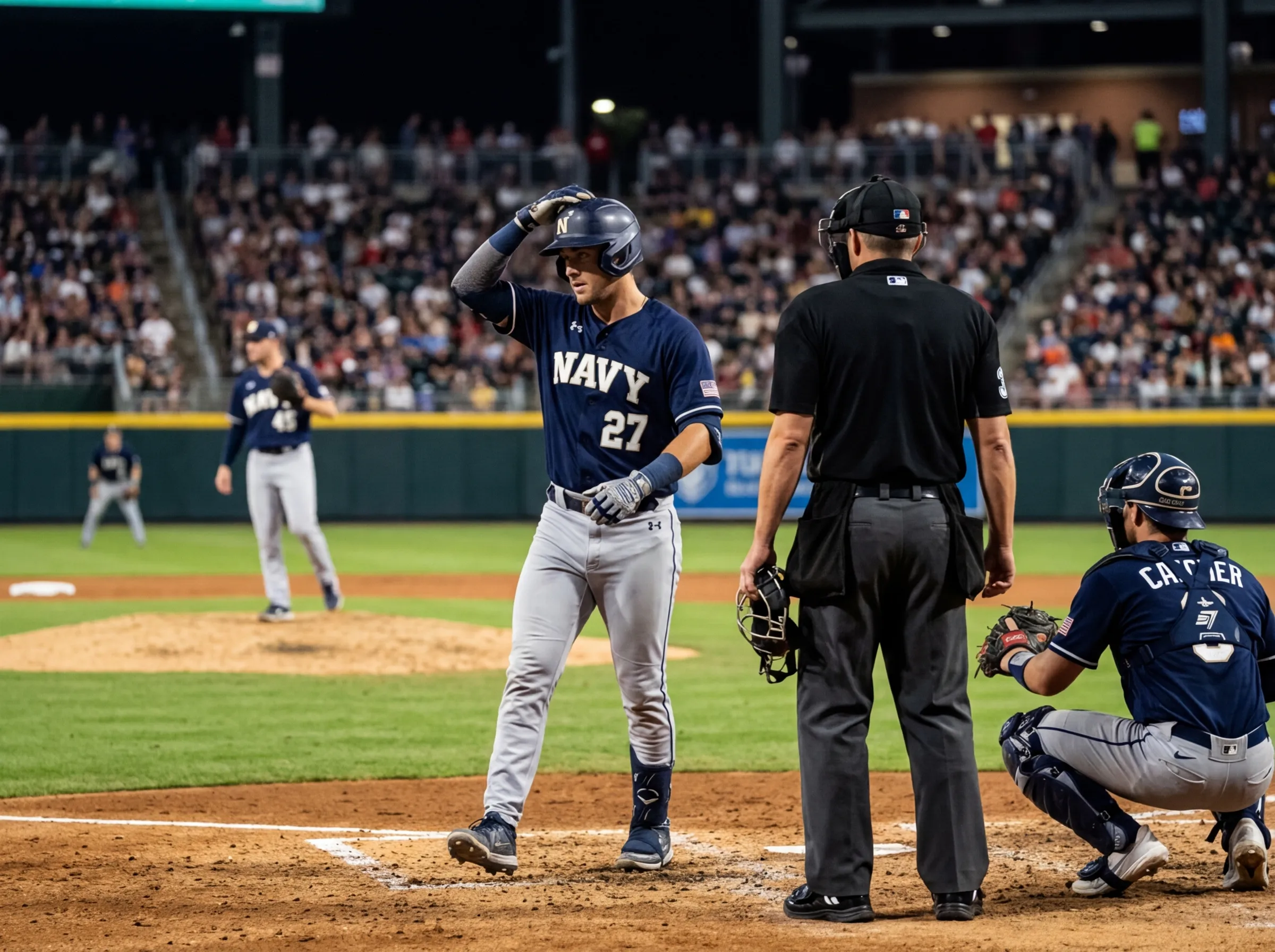
Jose Caballero tapped his helmet. It was the fourth inning of the 2026 season opener at Oracle Park, Yankees leading the Giants 5-0, and a 90.7-mph sinker from Logan Webb had just caught the upper inside corner. Home plate umpire Bill Miller called it a strike. Caballero, a 26-year-old shortstop playing in his first Opening Day, decided to make history: he initiated the first-ever Automated Ball-Strike challenge in Major League Baseball's 147-year existence. Twelve Hawk-Eye cameras triangulated the pitch's location to within one-sixth of an inch. The videoboard lit up. The call stood. Strike.
"Nope, I wanted to go for it," Caballero said afterward. "I think it's really good, keep everyone accountable. It gives us a chance to really see how good we are with the zone or not."
Just like that, baseball's most anticipated rule change in decades arrived, not with a bang but with a confirmed strikeout.
How the Challenge System Works
The ABS challenge system is deliberately not a full "robot umpire" takeover, a distinction Commissioner Rob Manfred has been careful to maintain. Human umpires still call every pitch. What has changed is that batters, pitchers, and catchers can now tap their helmet or cap to challenge a ball-strike call they disagree with. Teams start with two challenges per game. Win a challenge and you keep it. Lose and the count drops by one. Exhaust both and you are done, though teams entering extra innings get one challenge per frame.
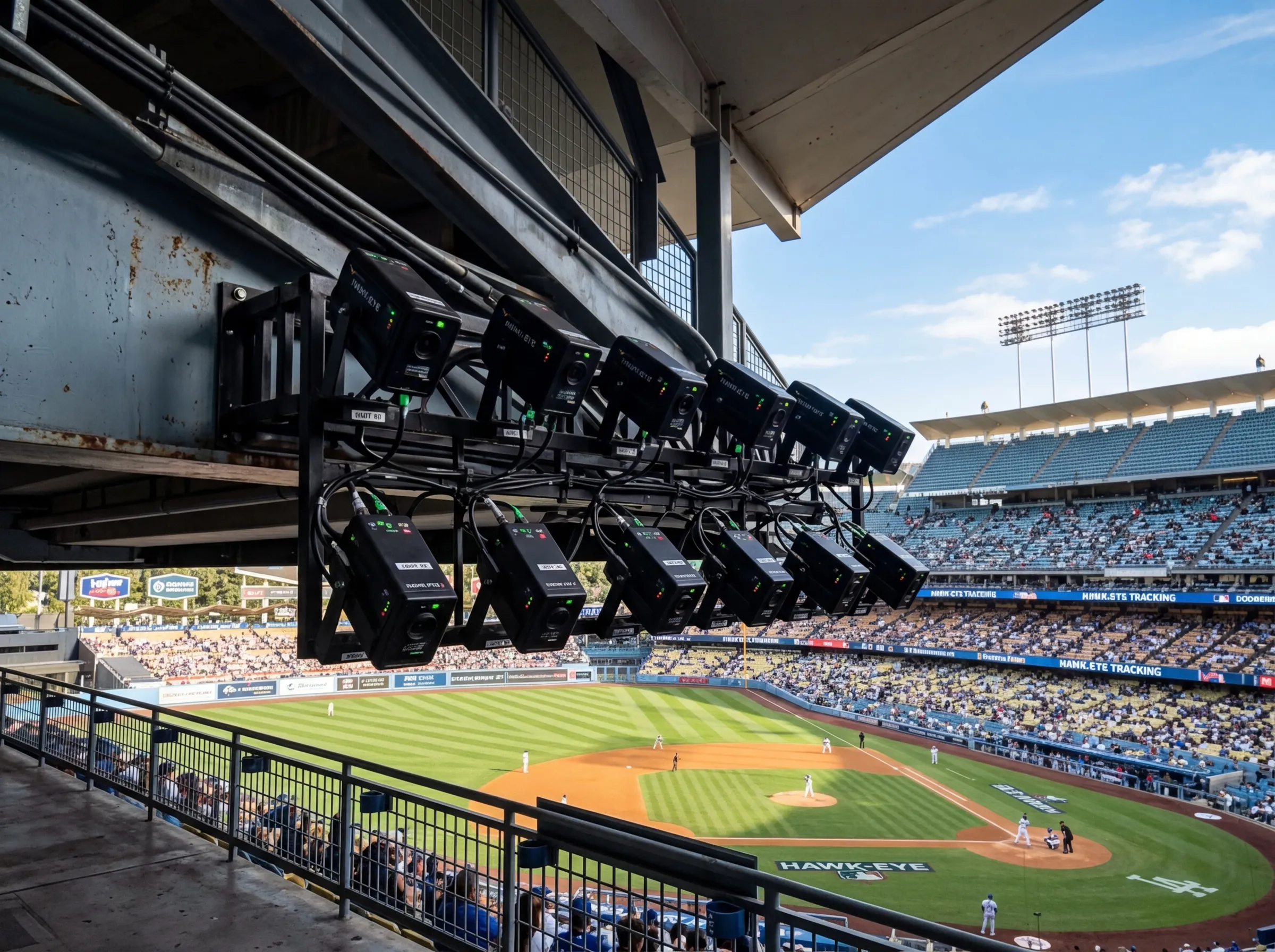
Only the players directly involved in the at-bat can initiate a challenge, not the manager, not the dugout. The window is roughly two seconds after the call. Twelve Hawk-Eye cameras installed in each of MLB's 29 U.S. stadiums capture the pitch, and the result transmits to the videoboard via T-Mobile's private 5G network. Average review time in spring training: 13.8 seconds. Total added time per game across 288 test games in 2025: 57 seconds.
The strike zone itself is calibrated to each batter. The top sits at 53.5% of the player's height, the bottom at 27%, measured with biomechanical analysis during pre-season registration. The zone is 17 inches wide, matching the plate, and extends 8.5 inches front to back. It is slightly smaller than the zone most umpires have traditionally called, which is part of the point.
The First Successful Challenge Changed a Game
The Opening Night debut at Oracle Park was a proof of concept. The real drama came two days later. On March 27, in the third inning of the Mets-Pirates game at Citi Field, Freddy Peralta threw a full-count pitch to Oneil Cruz. Umpire Adrian Johnson called it ball four. Mets catcher Francisco Alvarez immediately tapped his helmet.
The Hawk-Eye cameras showed the pitch clipped the outside corner. Call overturned. Strike three. Cruz became the first batter in MLB history to have ball four converted to a strikeout by technology. Brandon Lowe homered two pitches later. The Mets won 11-7.
"We're never 100 percent sure, but I think with the batter, it's a taller batter so you know that his zone is a little bigger," Alvarez said through an interpreter. "So with that one, I felt pretty confident about it."
Peralta, the pitcher, knew too. "I knew right away," he said. "I think that we were both on the same page."
Early Numbers Tell a Clear Story
Through the first 12 games of the 2026 season, players have challenged 31 calls. Nineteen were overturned, a 61.3% success rate, meaning nearly two out of every three challenges identified a missed call. That tracks closely with spring training data, where 53% of 1,844 challenges were successful over two years of testing. Catchers and pitchers have been slightly more accurate than hitters at identifying bad calls, with defensive challenges succeeding 54.4% of the time compared to 50% for batters.
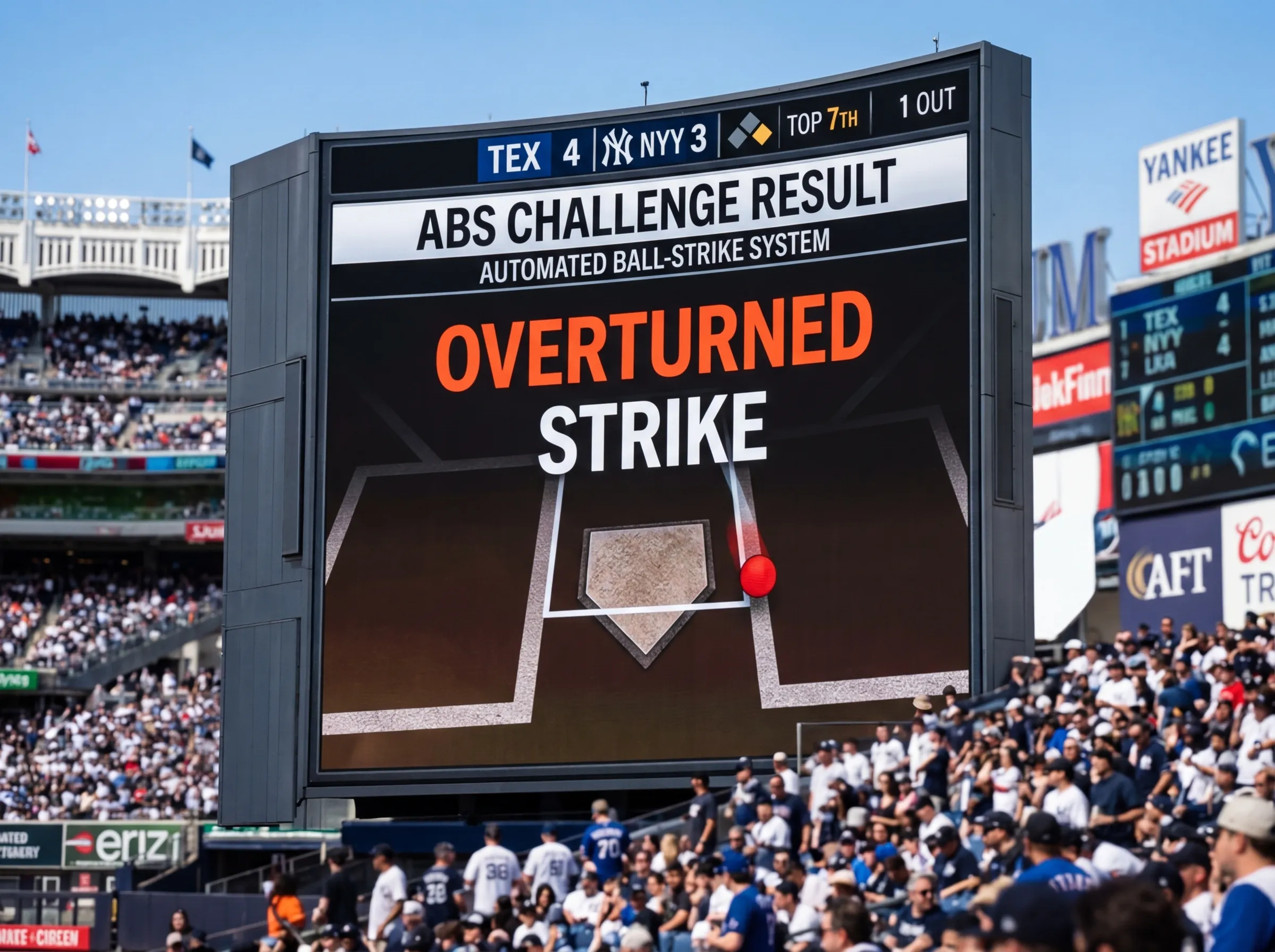
The numbers have already changed in-game behavior. In Detroit, Javier Baez extended an at-bat with a successful ABS challenge, then ripped a single on the next pitch. In Boston, Red Sox outfielder Roman Anthony had a ninth-inning strikeout overturned to a walk. "I knew it was a ball," Anthony said. "I was pretty confident." The walk loaded the bases, Trevor Story and Jarren Duran followed with RBI singles, and the Red Sox rallied.
The system is also generating new strategic questions. A survey of 19 teams found that only 5 allow their pitchers to challenge freely, 4 discourage it, and 10 prohibit it entirely. The reasoning: pitchers, pulled off-balance by violent delivery mechanics, are poor judges of where the ball actually crossed the plate. One anonymous team directive obtained by ESPN read: "Be much more selective with one challenge. Has to be late and close games. With two strikes only."
Seven Years From the Atlantic League to the Big Leagues
The technology did not arrive overnight. MLB first tested full automation in the independent Atlantic League in 2019, using TrackMan radar rather than Hawk-Eye cameras. Umpires received calls via earpiece and could override. The results were mixed: full automation increased walks and lengthened games, counteracting the pace-of-play gains from the pitch clock.
The breakthrough was the challenge format, first tested in the Florida State League in 2022. A 2023 survey of Triple-A players found 60% preferred the challenge system over both full automation and the traditional setup. By 2024, every Triple-A stadium was running it. The 2025 All-Star Game served as the system's highest-profile trial, with catcher Cal Raleigh making the inaugural All-Star challenge. The Competition Committee approved full implementation in September 2025, though the vote was not unanimous. Some of the four player representatives voted against, though they were outnumbered by MLB's six ownership-side seats.
The motivation was straightforward. Umpire accuracy sits at roughly 94%, but in 2018, MLB documented 34,294 incorrect ball-and-strike calls across the season, an average of 14 per game. On two-strike counts, the error rate nearly doubles to 29%. In 2025, 61.5% of all ejections involved balls-and-strikes disputes. As technology reshapes professional sports and every other industry, baseball's most fundamental judgment call was overdue for an accountability mechanism.
The Key Takeaway
Not everyone is convinced. Analyst Joe Sheehan called the system "a half-measure that won't have much effect." Ben Lindbergh at The Ringer argued the approach is inherently contradictory: if the technology works perfectly, fans will inevitably ask why MLB limits the number of correct calls through a finite challenge pool. He pointed to Wimbledon, which moved from a challenge system to fully automated line-calling, and suggested baseball would follow the same trajectory. "It's inevitable," he wrote.
He may be right. But for now, the challenge system threads a needle that full automation could not. It preserves pitch framing as a catcher's skill. It keeps the human umpire as the game's rhythm-setter. It adds 57 seconds per game, not five minutes. And most importantly, it gives players agency: the batter who knows the pitch was low, the catcher who felt the ball clip the corner, now have a mechanism to prove it, in under 14 seconds, with the whole stadium watching.
Red Sox manager Alex Cora captured the new reality after Opening Day. "It's a different ballgame now," he said. Then he added a warning that every team will have to reckon with: "At one point people are going to run out of challenges, sometimes early in the game. When you run out of challenges it'll be back to what we used to do."
The robot umpires are here. They are just polite enough to let the humans go first.
Sources
- ESPN: MLB Approves Robot Umpires for 2026 as Part of Challenge System - Competition Committee approval and system details
- ESPN: MLB Teams Mostly Positive on ABS System After First Games - Team reactions, strategy, and early results
- CBS News: MLB Robot Umpire Debut at Yankees-Giants Opener - Opening Night recap and first challenge
- MLB.com: Francisco Alvarez Records First Successful ABS Challenge - First overturned call in MLB history
- FOX Sports: ABS Robot Umps in the 2026 MLB Season - Early challenge statistics and success rates