
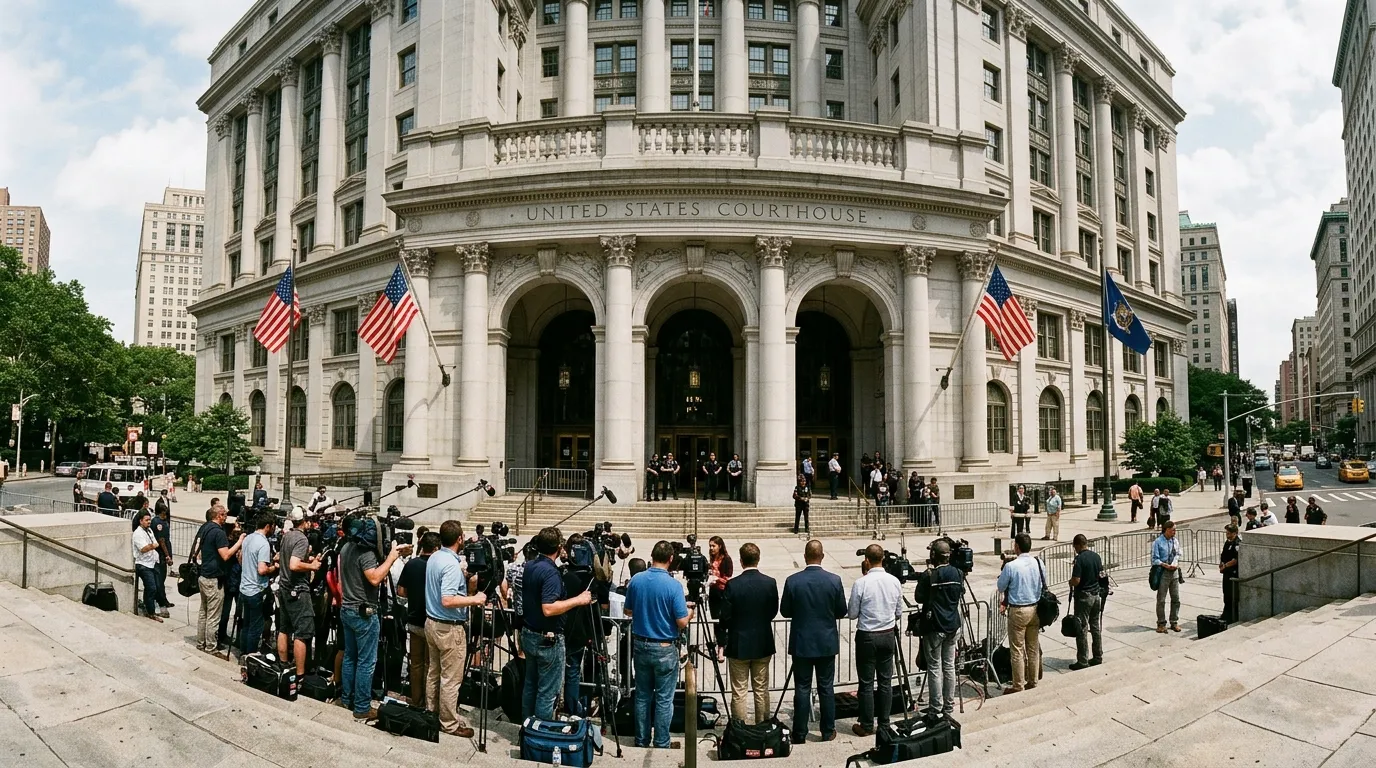
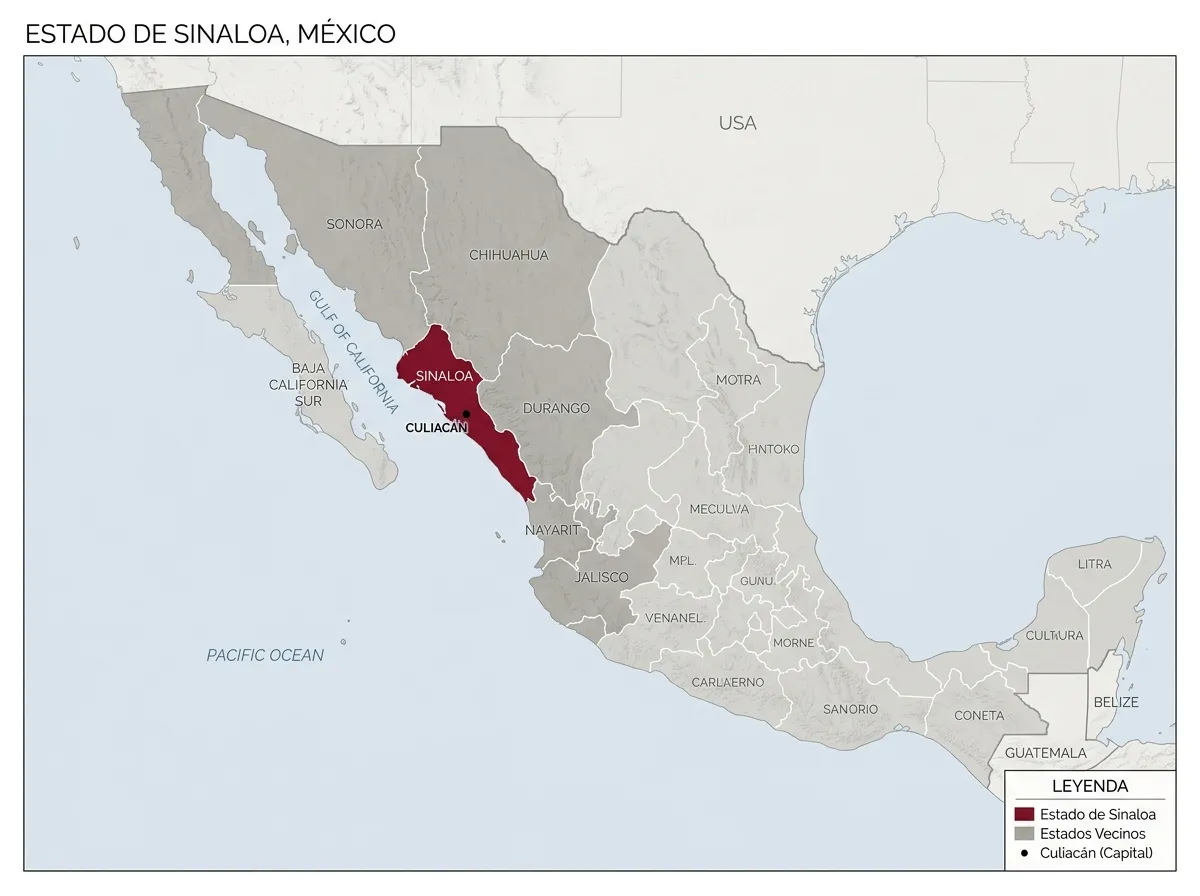
A federal grand jury in Manhattan has charged the sitting governor of Mexico's Sinaloa state and nine other current or former officials with running political cover for the Sinaloa Cartel, a case prosecutors say turned a Mexican statehouse into an operating arm of the Chapitos faction. The five-count indictment, unsealed Wednesday in the Southern District of New York, names Governor Rubén Rocha Moya, 76, alongside a sitting senator from President Claudia Sheinbaum's Morena party, the current deputy attorney general for the Sinaloa state prosecutor's office, and seven other officials and police commanders.
Prosecutors allege the network took millions of dollars in cartel bribes to flood the United States with fentanyl, heroin, cocaine, and methamphetamine, and that the conspiracy included rigging Rocha Moya's 2021 gubernatorial campaign through kidnappings and intimidation of his rivals. Most of the defendants face a mandatory minimum of 40 years to life if convicted. None are in U.S. custody.
Inside the Five-Count Indictment
The case, brought jointly by the U.S. Attorney's Office for the Southern District of New York and the Drug Enforcement Administration, charges all ten defendants with narcotics conspiracy and firearms offenses tied to drug trafficking. Beyond Rocha Moya, the indictment names Senator Enrique Inzunza Cazárez of Morena; Enrique Díaz Vega, who became Rocha Moya's secretary of administration and finance; Dámaso Castro Saavedra, the current deputy attorney general for Sinaloa's state prosecutor's office; Marco Antonio Almanza Avilés; Alberto Jorge Contreras Núñez (alias "Cholo"); Gerardo Mérida Sánchez; José Antonio Dionisio Hipólito (alias "Tornado"); Juan de Dios Gámez Mendívil; and Juan Valenzuela Millán (alias "Juanito").
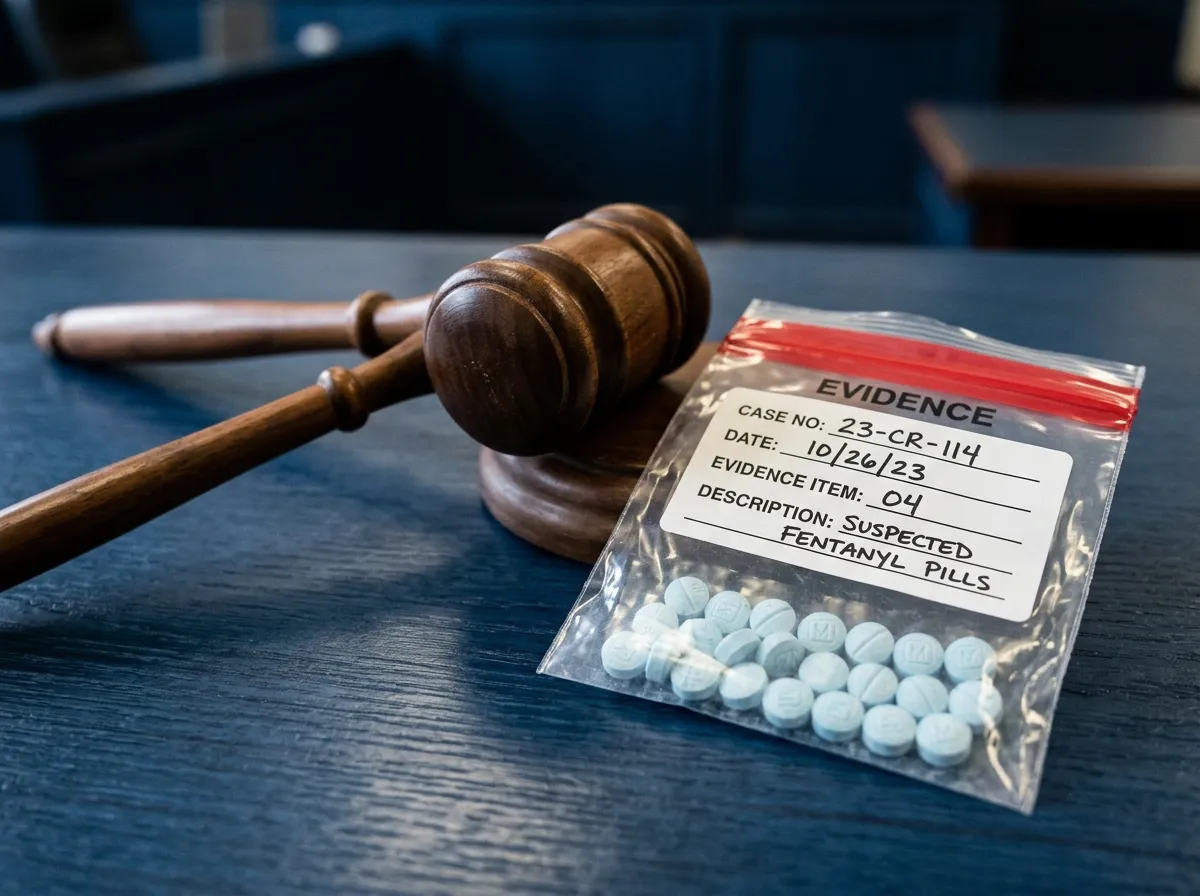
Prosecutors describe a sustained pattern of state-level capture rather than isolated bribery. According to the filing, officials supplied confidential security and military intelligence to cartel leaders, ordered state and municipal police to escort drug shipments staged for the U.S. border, and shielded cartel figures from arrest, prosecution, and even basic surveillance. The indictment quantifies one such shipment: in May 2022, the Chapitos faction allegedly attempted to move roughly 189,000 fentanyl pills, two kilograms of fentanyl powder, half a kilogram of cocaine, and fifteen pounds of methamphetamine into the United States with the protection the network is accused of providing.
Bribes flowed monthly, prosecutors say. Valenzuela Millán allegedly took about $41,000 a month to distribute among himself and more than forty officers on the Chapitos' payroll. Castro Saavedra is accused of pocketing roughly $11,000 a month in his own right. The indictment alleges Rocha Moya personally attended multiple meetings with cartel leadership both before and after his election in which he promised to let the trafficking organization "operate with impunity in Sinaloa."
How the 2021 Election Was Allegedly Rigged
The most politically explosive allegation reaches back five years, before Rocha Moya took office. The indictment alleges that members of the Chapitos faction, the wing of the Sinaloa Cartel led by the sons of Joaquín "El Chapo" Guzmán Loera, helped engineer his November 2021 victory by kidnapping and threatening rival candidates, stealing ballot papers cast for opponents, and pressuring others to drop out of the race.
Díaz Vega is accused of providing the cartel with a list of opponents' names and home addresses to facilitate that intimidation campaign, then collecting his reward in the form of one of Sinaloa's most powerful cabinet posts after the election. Prosecutors describe the arrangement as a quid pro quo in which the cartel delivered the statehouse, and Rocha Moya delivered the state's law enforcement and prosecutorial machinery in return.
If the allegation holds up, it implies something Mexican analysts have long suspected but rarely seen documented in a U.S. federal filing: that an entire gubernatorial election in a major state was decided by cartel violence and that the winner knew it. Rocha Moya, in a brief statement posted to X on Wednesday, denied everything. "I categorically and absolutely reject the accusations made against me by the Southern District of New York Federal Prosecutor's Office, as they lack any truth or foundation whatsoever," he wrote.
The Chapitos Connection
The indictment is the latest in a string of U.S. cases targeting the Chapitos, the faction that emerged after El Chapo's 2017 extradition and 2019 life sentence in a U.S. federal prison. Once a junior wing of the cartel, the Chapitos consolidated power as their father's empire fragmented, and U.S. prosecutors have spent the past three years building cases that treat the faction as the primary fentanyl pipeline into the United States.
That campaign has drawn in increasingly senior figures. Ovidio Guzmán López pleaded guilty in a Chicago federal court last year. His brother Joaquín Guzmán López is in U.S. custody after a dramatic 2024 surrender in Texas alongside cartel cofounder Ismael "El Mayo" Zambada. The new indictment effectively extends that prosecution upward into Mexican politics, charging that the Chapitos' rise on the U.S. street was underwritten by a sitting state government that the faction allegedly helped install.
Mexico's Political Earthquake
The indictment lands hardest on Morena, the governing coalition that swept President Sheinbaum into Los Pinos last year. Three of the ten defendants, including Rocha Moya and Senator Inzunza Cazárez, are members of her party. The Mexican federal government's initial public response, that "no evidence is attached to the documents" accompanying the U.S. extradition request, reads as the standard sovereignty pushback Mexico has made for years, but the political damage is harder to manage.
Sheinbaum has spent her first year in office trying to thread a narrow needle: cooperating with U.S. counter-narcotics demands enough to prevent further tariffs and troop posturing while insisting Mexican sovereignty has not been violated. The same pressure pattern is visible in the Trump administration's expanded sanctions architecture, which has steadily widened the definition of "material support" used to reach foreign officials and corporate facilitators. The indictment makes that triangulation harder. If Mexico fights extradition, it owns the perception that Morena protects accused traffickers. If it cooperates, it sends a sitting governor and a sitting senator from her party to a U.S. courtroom in the middle of an election season for state legislatures.
Constitutional questions complicate the choice further. Mexican law generally bars extradition of sitting officials, and impeachment of a governor requires action by the Sinaloa state congress, where Morena holds a working majority. The procedural runway for any actual handover to the United States is long, and most Mexican legal commentators expect the federal government to argue first that Rocha Moya should be tried domestically, if at all.
Why This Indictment Is Different
U.S. prosecutors have charged Mexican officials with cartel ties before. The 2020 case against former defense secretary Salvador Cienfuegos, withdrawn under intense Mexican pressure, still casts a long shadow over how Washington pursues these cases. What sets the Rocha Moya filing apart is the specificity of the political allegation and the breadth of the network charged, from a state senator down to municipal police commanders, all named in the same five-count document.
It also lands in a different policy environment. The Trump administration designated the Sinaloa Cartel as a Foreign Terrorist Organization in early 2025, expanding the legal toolkit available to prosecutors and giving the State Department new authority to sanction those who provide "material support." U.S. Attorney Jay Clayton framed Wednesday's indictment squarely in those terms. "The Sinaloa Cartel is a ruthless criminal organization that has flooded this community with dangerous drugs for decades," Clayton said in the announcement. "The Sinaloa Cartel, and other drug trafficking organizations like it, would not operate as freely or successfully without corrupt politicians and law enforcement officials on their payroll."
Clayton's closing line was the part most carefully read in Mexico City: "Let these charges send a clear message to all officials around the globe who work with narco-traffickers: no matter your title or position, we are committed to bringing you to justice." Read alongside Trump's repeated public threats of unilateral strikes on cartel infrastructure inside Mexico, including the March operation against an alleged drug camp in Ecuador that hit a working dairy farm, the indictment looks less like a one-off prosecution and more like a deliberate escalation, an effort to put names, charges, and prison exposure on individual Mexican politicians rather than on the cartel as an abstraction.
What Sheinbaum Faces Now
The indictment puts Sheinbaum in the position every Mexican president since Felipe Calderón has tried to avoid: forced to choose, in public, between defending a member of her own party and accepting a U.S. legal process that names sitting Mexican officials as cartel collaborators. She has not yet commented directly on Rocha Moya, and the federal government's only public response so far has come through low-ranking spokespeople. That silence will not last.
Practical questions stack quickly. Will Mexico open its own investigation into the alleged 2021 election rigging in Sinaloa, where the implication is that an entire gubernatorial race was stolen by force? Will Morena's leadership in the Senate strip Inzunza Cazárez of immunity, or fight to preserve it? Will Castro Saavedra, the current deputy attorney general for the Sinaloa state prosecutor's office, remain in his job while indicted in New York? Each answer reshapes the next phase of U.S.-Mexico relations on cartels, and each carries domestic political cost that Sheinbaum has so far been able to defer.
For Washington, the immediate test is whether the case can move at all. None of the ten defendants are in U.S. custody, and getting any of them into a Manhattan courtroom will require either Mexican cooperation that has historically been grudging or unilateral pressure that risks blowing up the broader bilateral relationship. The indictment is, for now, a public document with no handcuffs attached. What Washington does next, and what Mexico City lets it do, will determine whether the case ends up changing how cartels and state power overlap, or simply joins the long shelf of U.S. cases against Mexican officials that never reach a verdict.
Sources
- U.S. Attorney's Office, SDNY: Governor of Sinaloa and Nine Other Current and Former Mexican Officials Charged with Drug Trafficking and Firearms Offenses
- Al Jazeera: US indicts Sinaloa governor, 9 others over Mexican drug cartel links
- CNN: US charges governor of Mexico's Sinaloa state and 9 others with drug trafficking and weapons charges
- Bloomberg: Mexico's Sinaloa Governor Rocha Moya Is Indicted by US on Narcotics Charges
- DEA: Governor of Sinaloa and Nine Current and Former Mexican Officials Face Drug Trafficking and Weapons Charges