Americans bet $119 billion on sports in 2024. That’s more than the entire GDP of Kansas, wagered on whether the ball goes in the hoop or the quarterback gets sacked. When the Supreme Court struck down the federal betting ban in 2018, proponents promised regulated gambling would bring betting out of the shadows and generate tax revenue. Seven years later, they got what they wanted, but with consequences nobody wants to discuss.
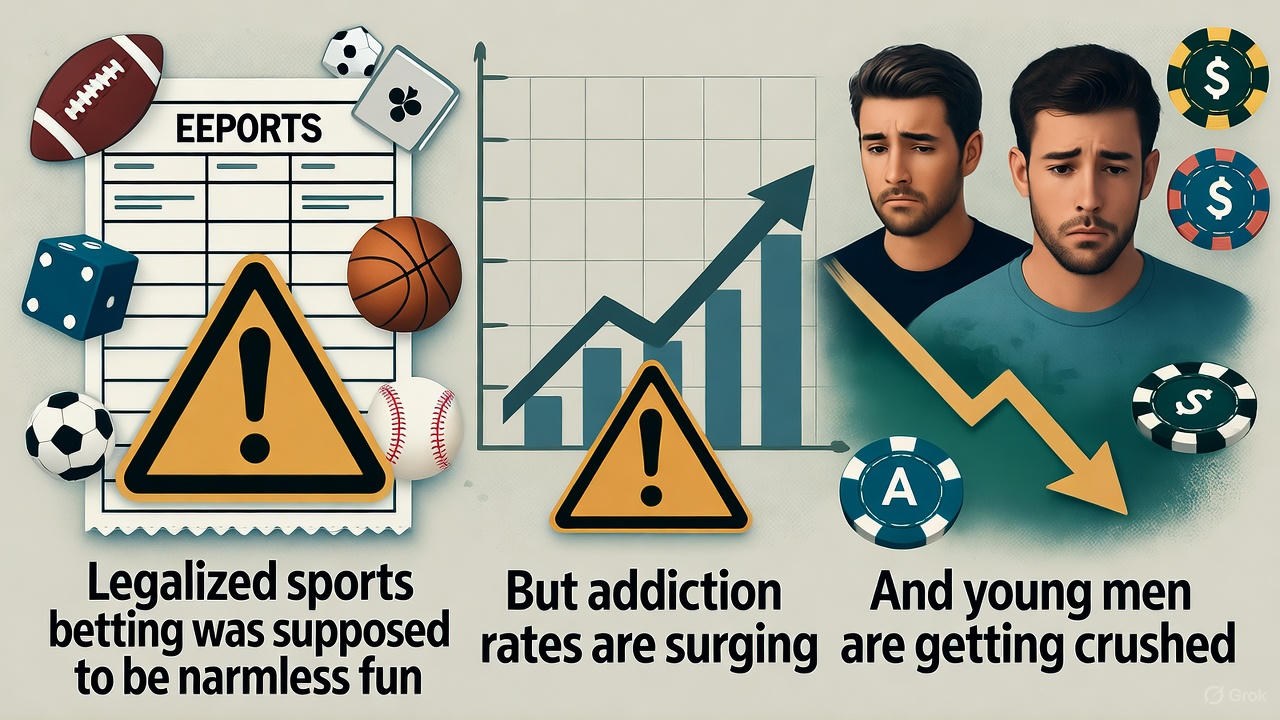
Problem gambling rates have doubled. Young men are developing addictions that destroy their finances and mental health. Bankruptcy attorneys report surges in cases tied directly to betting apps. The industry is making billions while users are losing everything, and the regulations meant to protect vulnerable people are barely functional.
The Growth No One Predicted
The numbers are staggering. Legal sports betting exploded from $13 billion wagered in 2019 to $119.7 billion in 2024. Currently, 38 states plus D.C. have legalized it, and 102 million Americans, roughly one-third of U.S. adults, placed at least one bet last year. The industry spent $11 billion on advertising alone, making gambling companies among the biggest spenders during sports broadcasts.
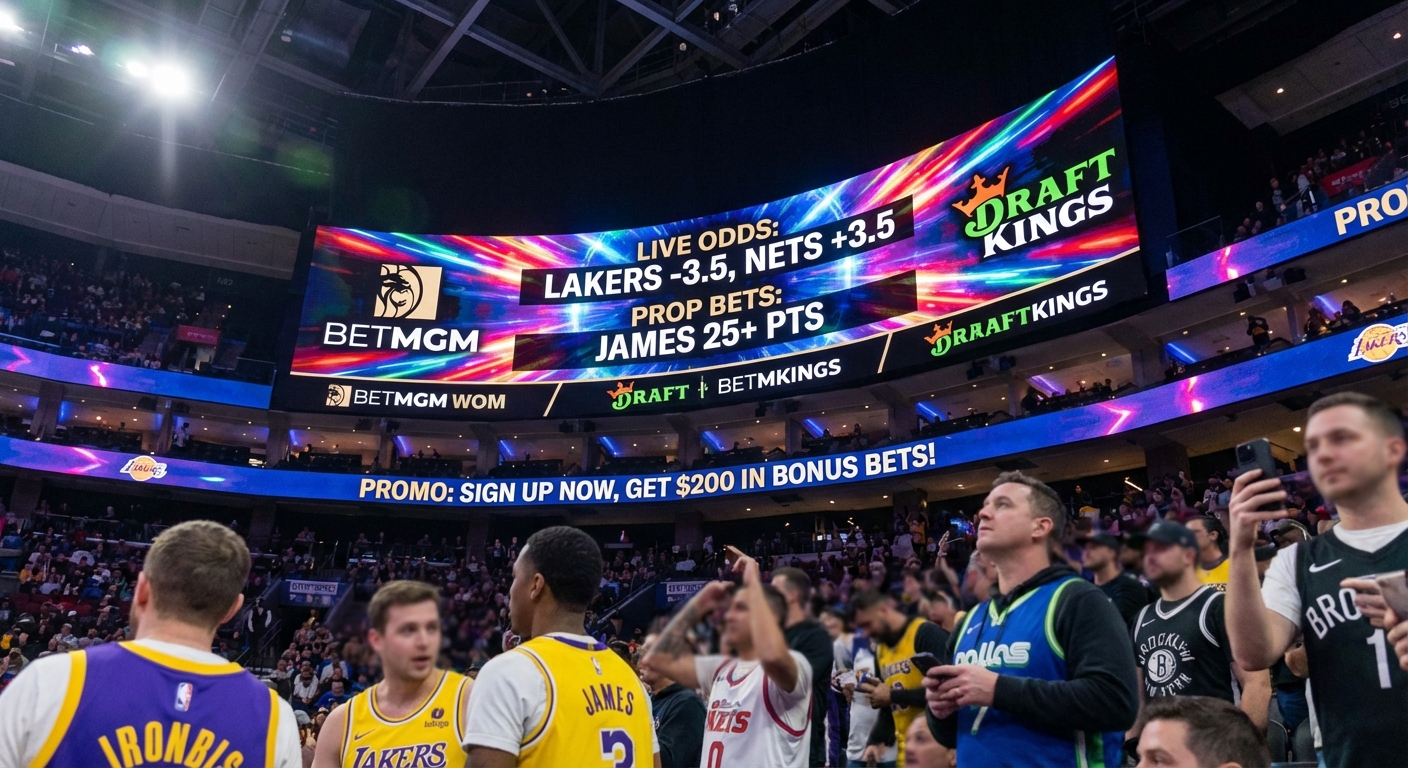
What makes this different from traditional casino gambling is how completely it’s integrated into watching sports. Live odds flash on your TV screen during games. Commentators casually reference spreads and over-unders as part of normal analysis. Athletes are sponsored by betting companies, and stadiums now feature in-venue betting lounges. For anyone trying to avoid gambling, the sport itself has become a minefield of triggers.
Apps Designed to Hook You
Here’s the uncomfortable truth: sports betting apps use the same psychological manipulation tactics as social media. They’re engineered to be addictive. Intermittent reinforcement, the mechanism that makes slot machines so compelling, releases dopamine more powerfully than predictable wins. Push notifications constantly alert users about games and odds, designed to trigger betting behavior rather than simply inform.
The friction is asymmetric by design. Deposits are instant and one-click easy. Withdrawals require forms and waiting periods. “Free” bets and bonuses get users invested before they spend real money. In-play betting allows wagers every few minutes during a game, creating constant action and dopamine hits. Former social media executives now work in gambling tech, bringing their expertise in maximizing user engagement to a new industry.
This design is crushing a specific demographic: young men ages 21-30. Research shows 9% of young male sports bettors meet clinical criteria for gambling disorder, compared to 2% in the general population. The consequences include financial devastation with average debts of $28,000, destroyed relationships, and elevated suicide risk. This group is particularly susceptible to the illusion of control, the belief that sports knowledge can beat the odds.
Where Regulation Failed
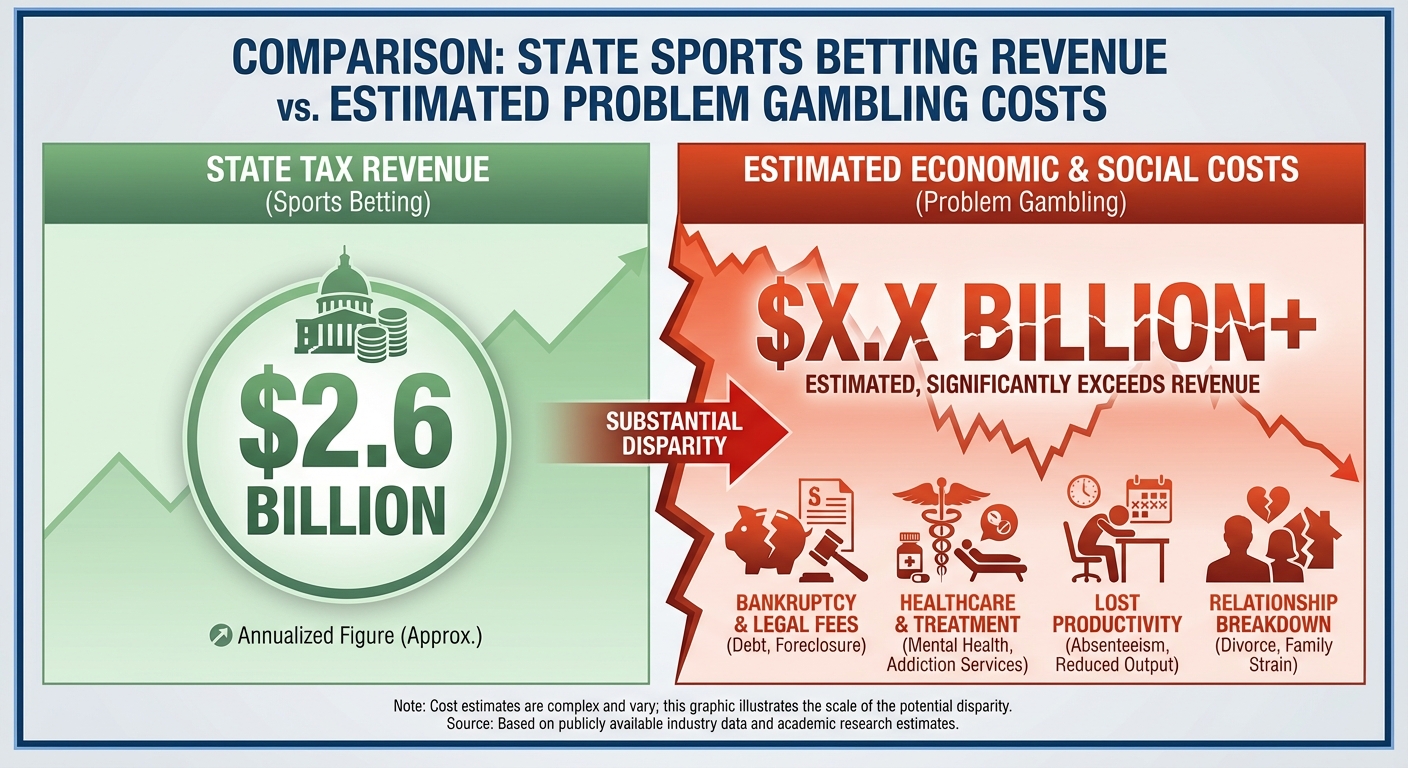
Legalization advocates promised tax revenue would fund education and problem gambling treatment. States collected $2.6 billion in sports betting taxes in 2024, just 0.14% of total state tax revenue. Meanwhile, the economic costs of problem gambling (bankruptcy, divorce, lost productivity, healthcare) likely exceed the revenue collected. We’re socializing the costs while privatizing the profits.
Consumer protections exist in theory but fail in practice. Self-exclusion programs are inconsistent across platforms. Deposit limits are voluntary and easy to override. Advertising restrictions go unenforced, allowing ads to target vulnerable populations. The fundamental problem is regulatory capture: state commissions rely on industry cooperation, and aggressive enforcement threatens the tax revenue states now depend on.
International comparisons offer warnings. Australia, with the highest gambling losses per capita globally, has minimal regulation and a public health crisis. The UK legalized online gambling in 2005, saw problem gambling rates spike, and eventually imposed stricter rules. Sweden implemented tight controls on bonuses and advertising, resulting in lower harm rates. The U.S. is following the Australian model of maximum industry freedom, with predictable results.
The Bottom Line
Sports betting isn’t going anywhere. It’s too profitable and generates too much tax revenue for states to reverse course. But the cost is real: thousands of people are developing gambling addictions every month, facing financial ruin and mental health crises. The industry will keep growing until regulation forces it to prioritize user welfare over revenue, and based on seven years of evidence, don’t expect that to happen voluntarily.
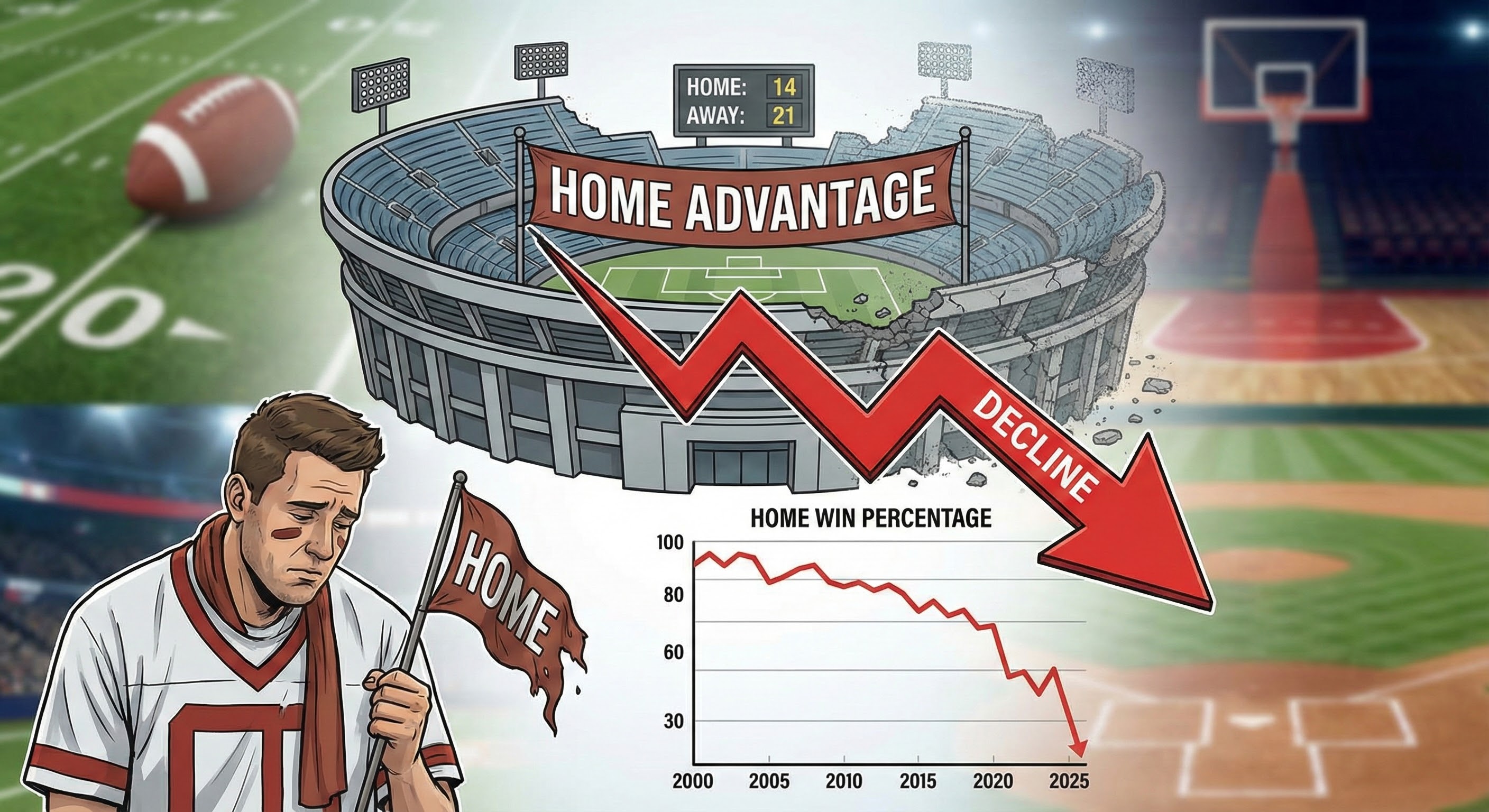
If you bet on sports, be honest with yourself about who’s in control. The house always wins, and in sports betting, the house is a billion-dollar industry with a vested interest in keeping you playing. For more on how professional sports is evolving, check out how home-field advantage is disappearing and the women’s sports revolution.
Sources: Sports betting industry statistics, state gaming commission reports, problem gambling research.