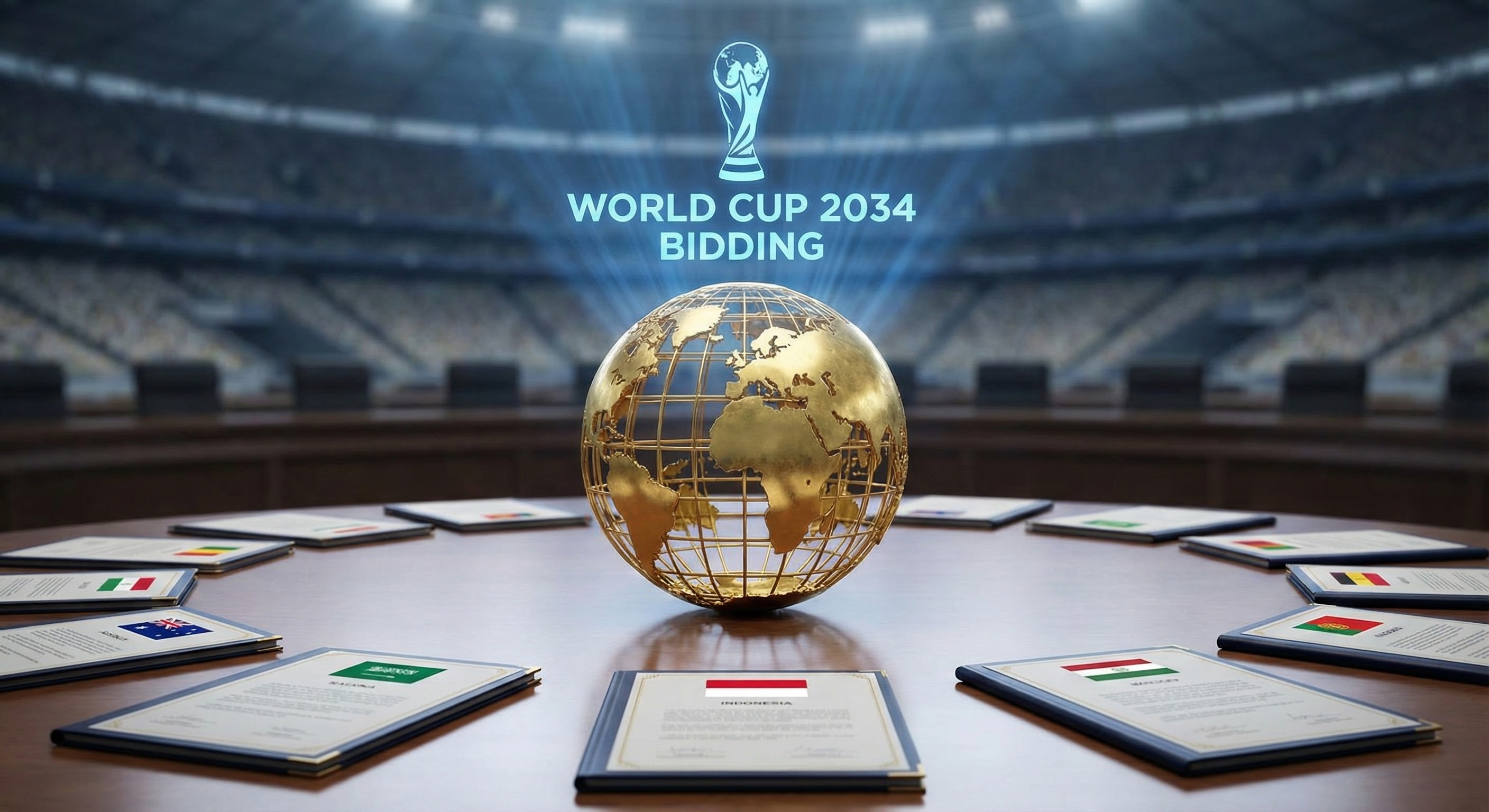
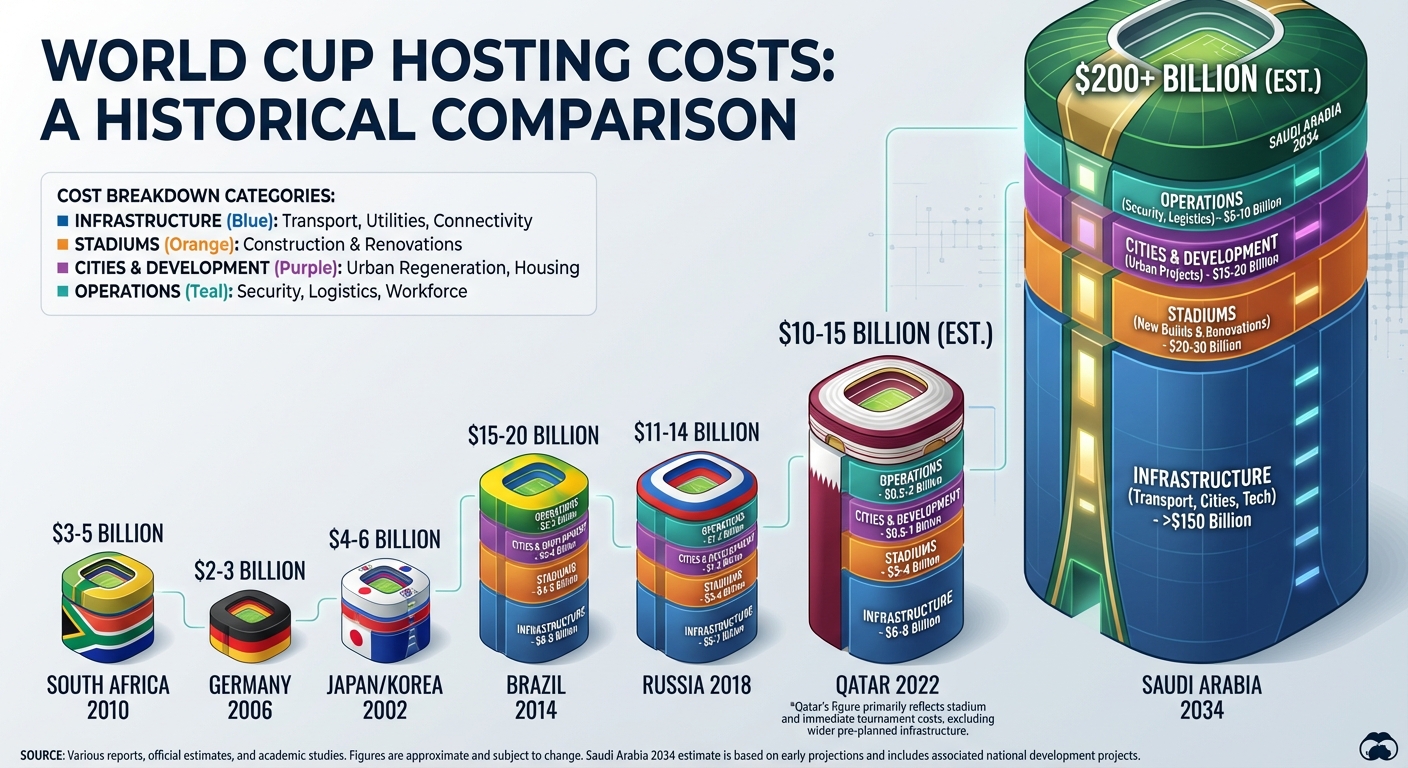
Saudi Arabia is the only remaining bid for the 2034 FIFA World Cup. Every other potential host withdrew or was pressured out. They’re planning to spend $200+ billion on stadiums, cities, and infrastructure. That’s 20 times what Qatar spent on the 2022 World Cup, which was already the most expensive in history. This is sportswashing at its most brazen and expensive, and FIFA is enthusiastically supportive.
Five new cities. Eleven climate-controlled stadiums. Complete infrastructure overhaul. A sporting event as economic development strategy at a scale never attempted. Whether you think it’s brilliant soft power or grotesque appropriation of sport for authoritarian PR depends on your perspective. But it’s definitely happening, and the global soccer community is mostly powerless to stop it.
A Process Rigged From the Start
FIFA’s bidding process for 2034 was orchestrated to ensure a Saudi victory before a single vote was cast. By announcing a surprisingly short window for bid submissions, FIFA excluded countries that would need time to build political consensus. By assigning the tournament specifically to the Asia/Oceania region, FIFA eliminated potential bids from Europe, Africa, and the Americas.
Australia, the only other serious contender, withdrew citing “lack of time to prepare,” a diplomatic way of acknowledging the fix was in. With FIFA President Gianni Infantino visiting Saudi Arabia multiple times during the bidding period, the outcome was never in doubt. The result: an uncontested bid, a guaranteed win, and a tournament awarded without meaningful competition.
The $200 Billion Vision
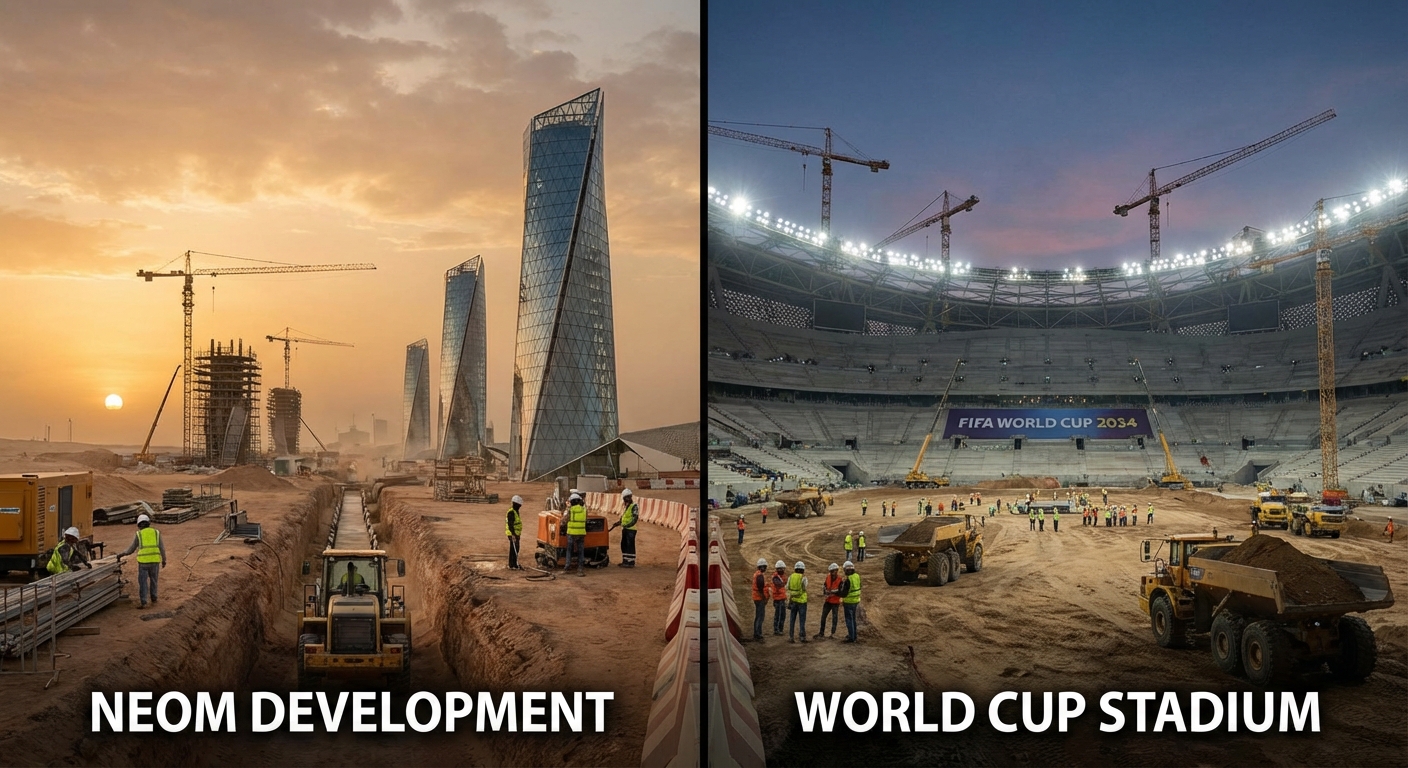
The scale is unprecedented in sports history. The plan includes 11 new stadiums, all climate-controlled to handle temperatures exceeding 110°F in summer. But stadiums are just the beginning. The bid proposes building five entirely new cities rather than upgrading existing ones. This tournament is effectively the marketing arm for Vision 2030, the kingdom’s economic transformation plan.
The centerpiece is integration with NEOM, the $500 billion mega-city project. The World Cup will serve as a global showcase for this futuristic development. The budget includes tens of thousands of new hotel rooms, high-speed rail networks, new airports, and massive power and water infrastructure upgrades to support 2 million visitors. This isn’t just hosting a tournament; it’s nation-building at a velocity only an absolute monarchy with unlimited oil wealth could attempt.
The Human Cost
Hosting the world’s biggest sporting event in the Saudi desert creates immediate contradictions. Critics point to the human cost of rapid construction, raising concerns about conditions for migrant workers who will build these cities and stadiums. Saudi Arabia, like Qatar before it, relies heavily on labor from South Asia, and rights groups have flagged potential for exploitation and dangerous working conditions in extreme heat.
The environmental absurdity is equally striking. Hosting a summer tournament where temperatures reach 120°F requires massive energy consumption to air-condition outdoor spaces. Combined with the carbon footprint of flying millions of fans to the Middle East, the tournament directly opposes FIFA’s stated sustainability goals. It’s a perfect contradiction: an event funded by oil, requiring massive energy to make the climate livable, all while the world grapples with climate crisis.
Why Spend $200 Billion on Soccer?
The motivation is clear: sportswashing. Saudi Arabia faces significant image problems regarding human rights, women’s rights, and the murder of journalist Jamal Khashoggi. Hosting the World Cup offers a chance to overwrite those narratives with images of modern infrastructure, passionate fans, and global celebration. It’s soft power designed to normalize Saudi Arabia as a premier international destination.
The strategy has precedents. Qatar’s 2022 World Cup brought criticism but succeeded in putting the nation on the global map. Saudi Arabia expects better results. The friction is real, though. LGBTQ+ fans and players face visiting a country where homosexuality is criminalized. Women’s rights remain restricted. Traditional World Cup culture of public drinking clashes with Saudi’s alcohol ban. FIFA’s response has been dismissive, noting concerns but allowing the bid to proceed.
The Bottom Line
Saudi Arabia is buying the 2034 World Cup for $200+ billion. The sportswashing is obvious. The human rights concerns are legitimate. And it’s happening anyway. This is what occurs when sports organizations value money over principles and when nations use sport as geopolitical tools. The tournament will be spectacular in scale, controversial in reality, and profitable for everyone except the workers building it and dissidents silenced by the regime.
For more on mega-sporting events and their impact, check out Messi’s transformation of American soccer and cricket’s global expansion.
Sources: FIFA official communications, international sports reporting, human rights organizations.