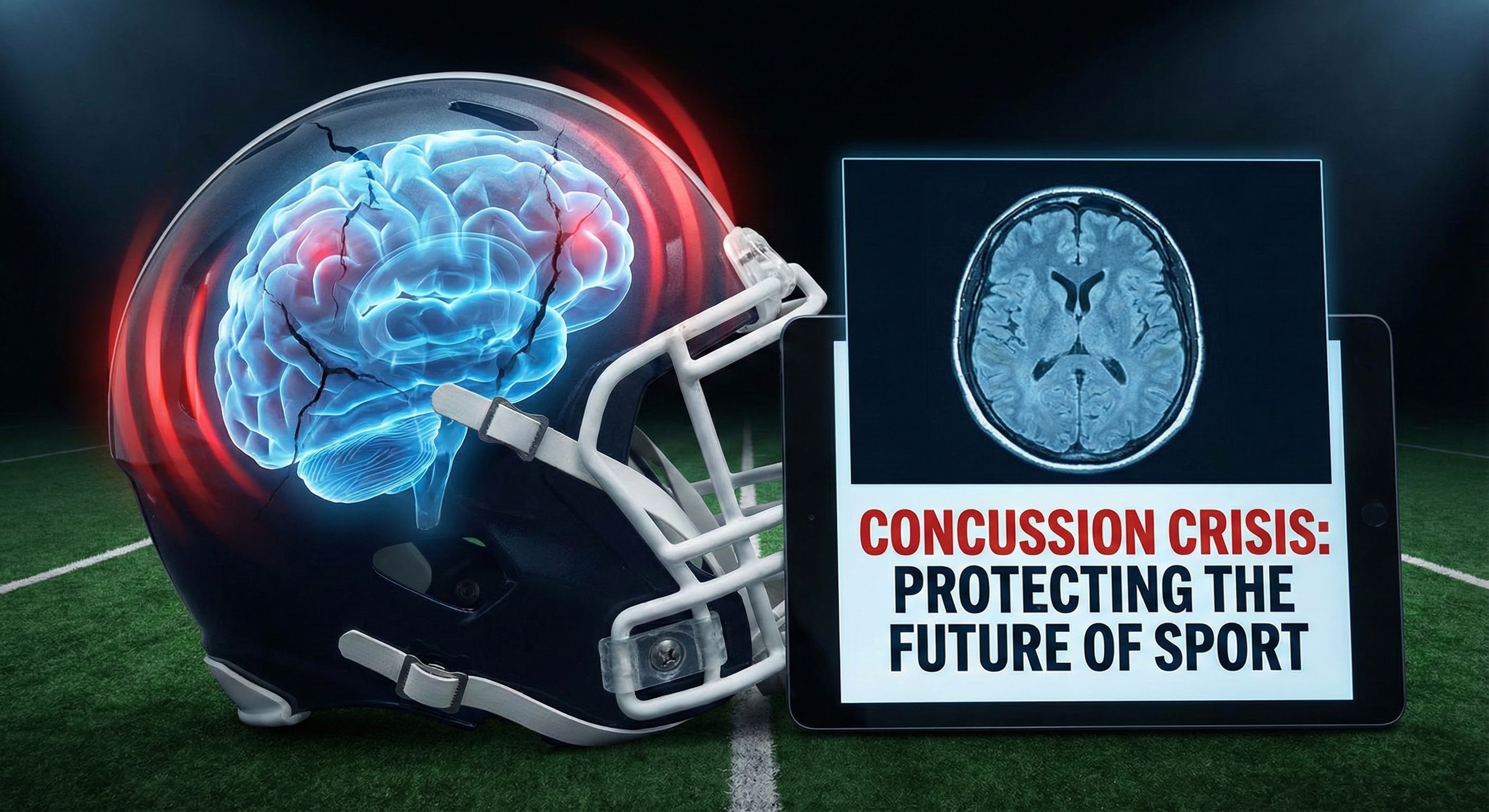
Youth tackle football participation has dropped 30% since 2015. Parents are saying no to the sport that was once an American rite of passage. High schools are struggling to field teams, with some switching to flag football or shutting down programs entirely. The reason is simple and terrifying: CTE.
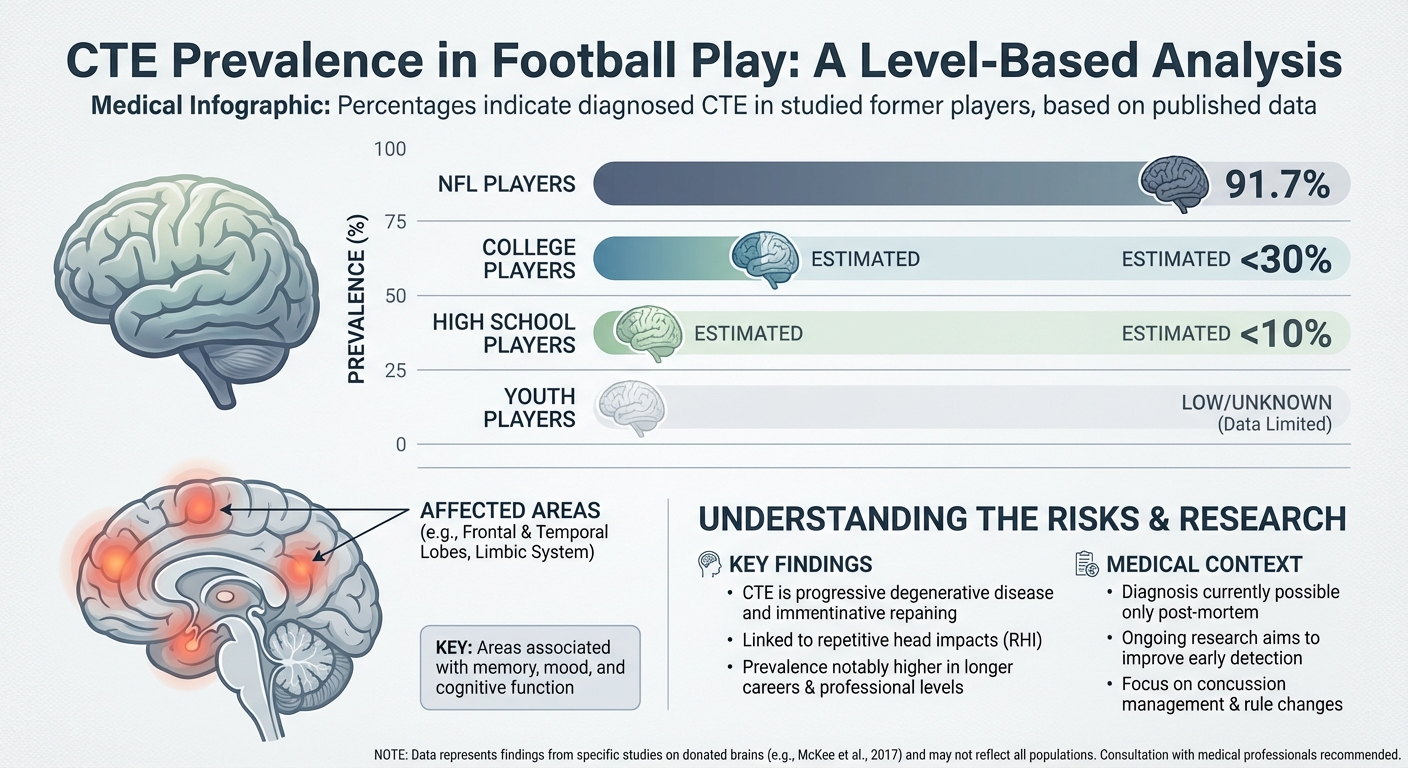
Chronic traumatic encephalopathy, the degenerative brain disease caused by repeated head impacts, is being found in the brains of deceased football players at alarming rates. A Boston University study examined 376 deceased NFL players and found CTE in 345 of them: 91.7%. That isn’t risk; that’s near certainty. It’s not just pros, either. High school and college players are showing CTE pathology, and even some youth players who never played beyond age 14 have shown early signs.
The Science Gets Worse
For years, the NFL denied any connection between football and brain damage. But the evidence has become a landslide. From Dr. Bennet Omalu’s first diagnosis in 2005 to the 2015 movie Concussion bringing it mainstream, the science has only gotten clearer. Recent research shows “subconcussive impacts,” the hits that happen on every play but don’t cause a concussion, are cumulative and dangerous.
CTE is progressive and neurodegenerative. Early symptoms include memory problems, impulse control issues, aggression, and depression. Late-stage symptoms resemble dementia. There’s no treatment, and it’s only diagnosed after death. Players showing these symptoms in their 40s often aren’t NFL stars; they’re former college or high school players whose brains took too many hits.
The Participation Collapse
The data on youth football is stark. Participation dropped from 1.2 million kids in 2015 to 840,000 in 2024. This decline is sharpest in educated, higher-income families who have access to research and alternative sports options. Lower-income and rural communities still participate at higher rates, creating a disturbing socioeconomic divide where privileged kids opt out while others continue to play.
This creates a shrinking pipeline. Fewer youth players mean fewer high school players, which eventually means a smaller talent pool for college and the NFL. Over 200 high schools have eliminated football programs since 2015 due to lack of players or uninsurable liability risks. Insurance costs for youth leagues have tripled, forcing many to close.
Better Helmets Can’t Fix Physics
The NFL claims football is safer than ever, citing rule changes like targeting penalties and kickoff restrictions. They tout new helmet technology that reduces skull fractures. But helmets can’t stop the brain from sloshing inside the skull during collision, meaning they can’t prevent the subconcussive damage that causes CTE.
Privately, the league knows its long-term viability depends on the youth pipeline. They’re funding youth programs and aggressively marketing flag football as a safe entry point. “Safer” tackling techniques and better gear are marginal improvements against the fundamental physics of the game.
Where the Kids Are Going
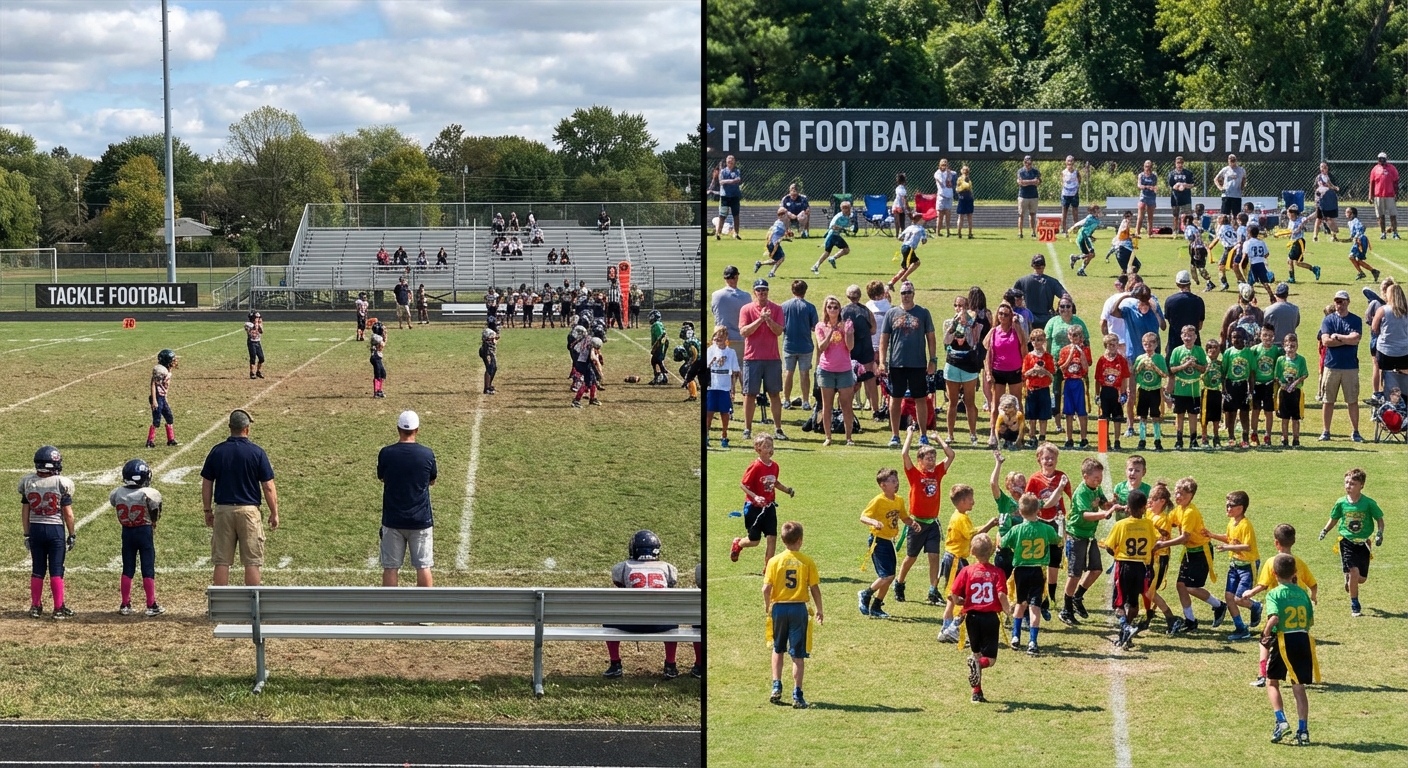
Soccer, lacrosse, and basketball are growing. But the biggest winner is flag football, the fastest-growing sport in the U.S. It offers football’s strategy and fun without the head impacts. The NFL is investing heavily here, hoping to maintain cultural relevance even if tackle football declines. Girls’ flag football is exploding, creating a new demographic for the sport.
The 20-year outlook is uncertain. Optimists believe technology and rules will save the game. Pessimists see football following boxing’s path, becoming a niche sport for the desperate or unaware, stripped of mainstream cultural dominance. Most likely, football becomes smaller and more regionalized, concentrated in areas where it’s a deep cultural institution, while the rest of the country moves on.
The Bottom Line
The concussion crisis is real, the science is clear, and parents are responding rationally by pulling kids from tackle football. The NFL can make changes at the margins, but it can’t eliminate the fundamental problem: football involves repeated head impacts, and those impacts cause brain damage. Football might survive this crisis, but it will be permanently changed. For more on how sports are evolving, check out cycle-based training for female athletes and the changing nature of home-field advantage.
Sources: Boston University CTE research, youth sports participation data, sports medicine research.