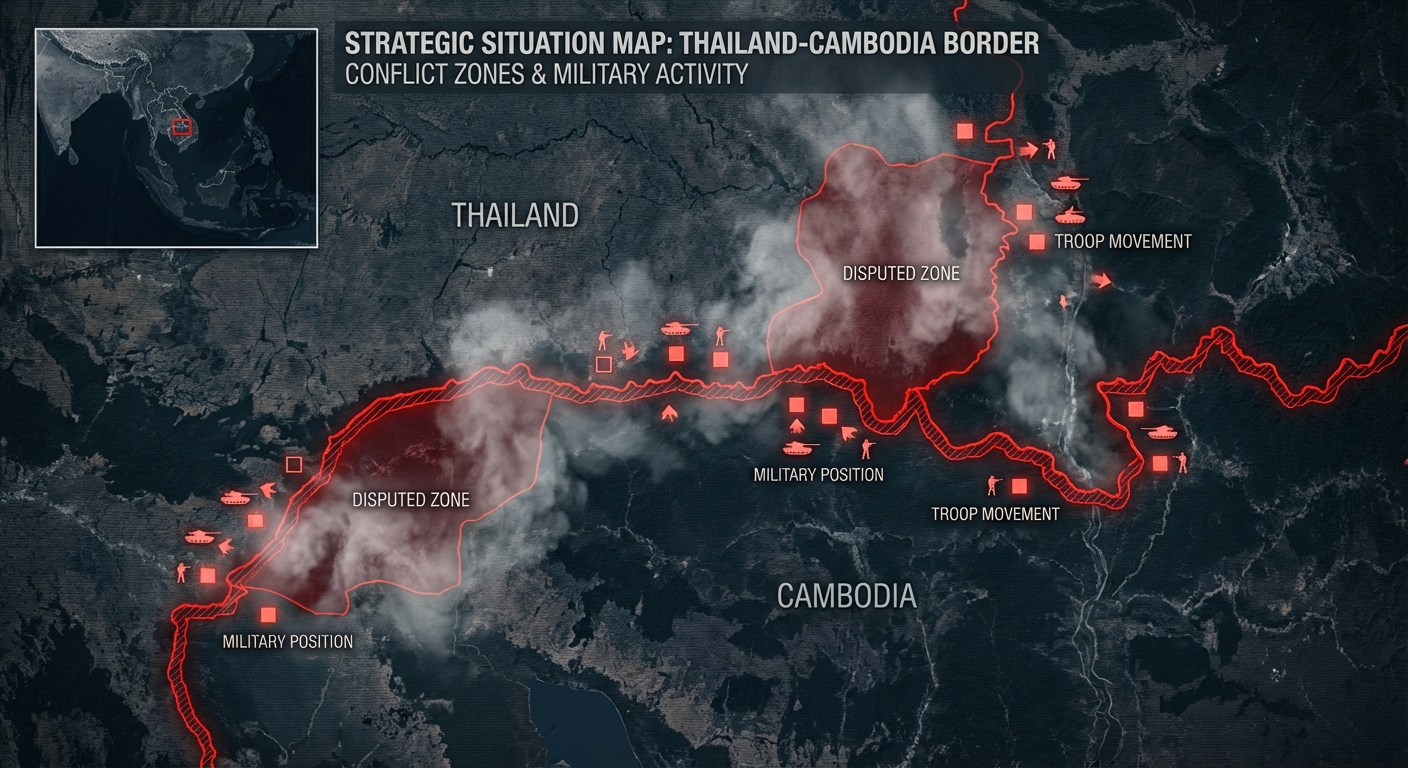
The Royal Thai Air Force conducted multiple airstrikes against Cambodian targets on December 11, killing at least nine civilians and wounding 20 more, according to reports from the conflict zone. Three Thai soldiers died and 29 were injured in ground clashes with Cambodian forces. In response, Cambodia withdrew its entire delegation from the SEA Games, citing security concerns arising from its escalating border conflict with the host nation Thailand. What began as a territorial dispute over ancient temple ruins has erupted into the most significant military confrontation in Southeast Asia in decades, and the international community is scrambling to prevent it from spiraling further out of control.
This isn’t the first time Thailand and Cambodia have traded fire over their contested border. But the scale and intensity of this week’s violence represents a dangerous escalation that threatens to destabilize an entire region. Understanding how two countries that share deep cultural and economic ties ended up exchanging airstrikes requires looking at a conflict that stretches back more than a century, and at the political pressures that have made compromise impossible for leaders on both sides.
The Deep Roots of a Territorial Dispute
The immediate trigger for the current crisis is the Preah Vihear temple complex, a UNESCO World Heritage site that sits atop a cliff on the Thai-Cambodian border. The temple itself was awarded to Cambodia by the International Court of Justice in 1962, but the status of a 4.6 square kilometer area surrounding the temple has remained contested ever since. Both countries claim the land, and both have stationed troops there, creating conditions for exactly the kind of confrontation that erupted this week.
But to understand why a territorial dispute over a few square kilometers of jungle can lead to airstrikes and casualties, you need to understand the role this conflict plays in domestic politics on both sides. In Thailand, nationalist movements have long used the Preah Vihear dispute to mobilize support and criticize governments seen as insufficiently protective of Thai sovereignty. In Cambodia, the temple represents a powerful symbol of Khmer cultural heritage and national identity, making any concession politically toxic for Cambodian leaders.
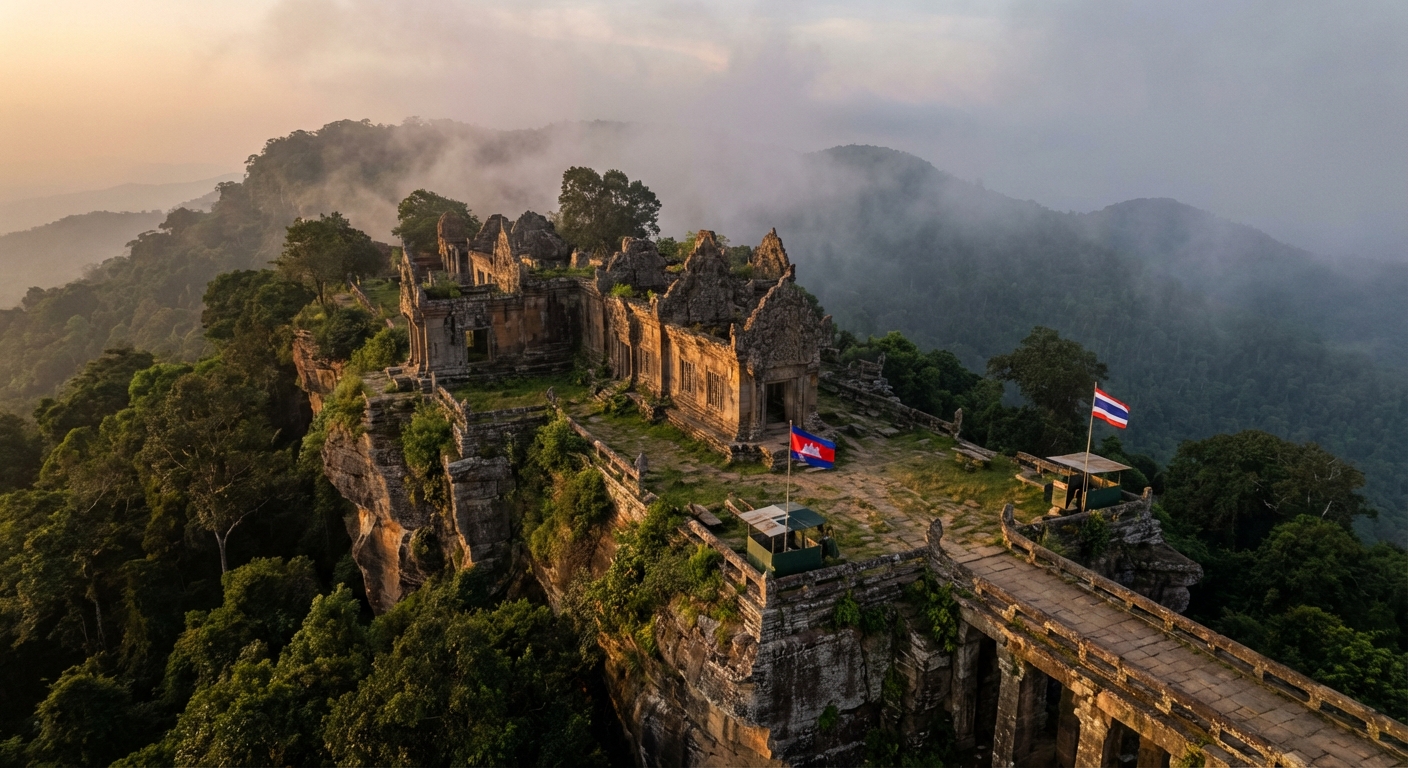
The 1962 ICJ ruling was supposed to resolve the matter, but it left enough ambiguity about the surrounding territory to ensure continued conflict. France, which had administered Cambodia as a colonial territory, had drawn maps in the early 20th century that placed the disputed area within Cambodia. Thailand contested these maps, arguing that the natural watershed line should determine the border, which would place the land on the Thai side. The ICJ sided with Cambodia on the temple itself but didn’t clearly resolve the status of the surrounding territory, creating a legal gray zone that has festered ever since.
This Week’s Escalation
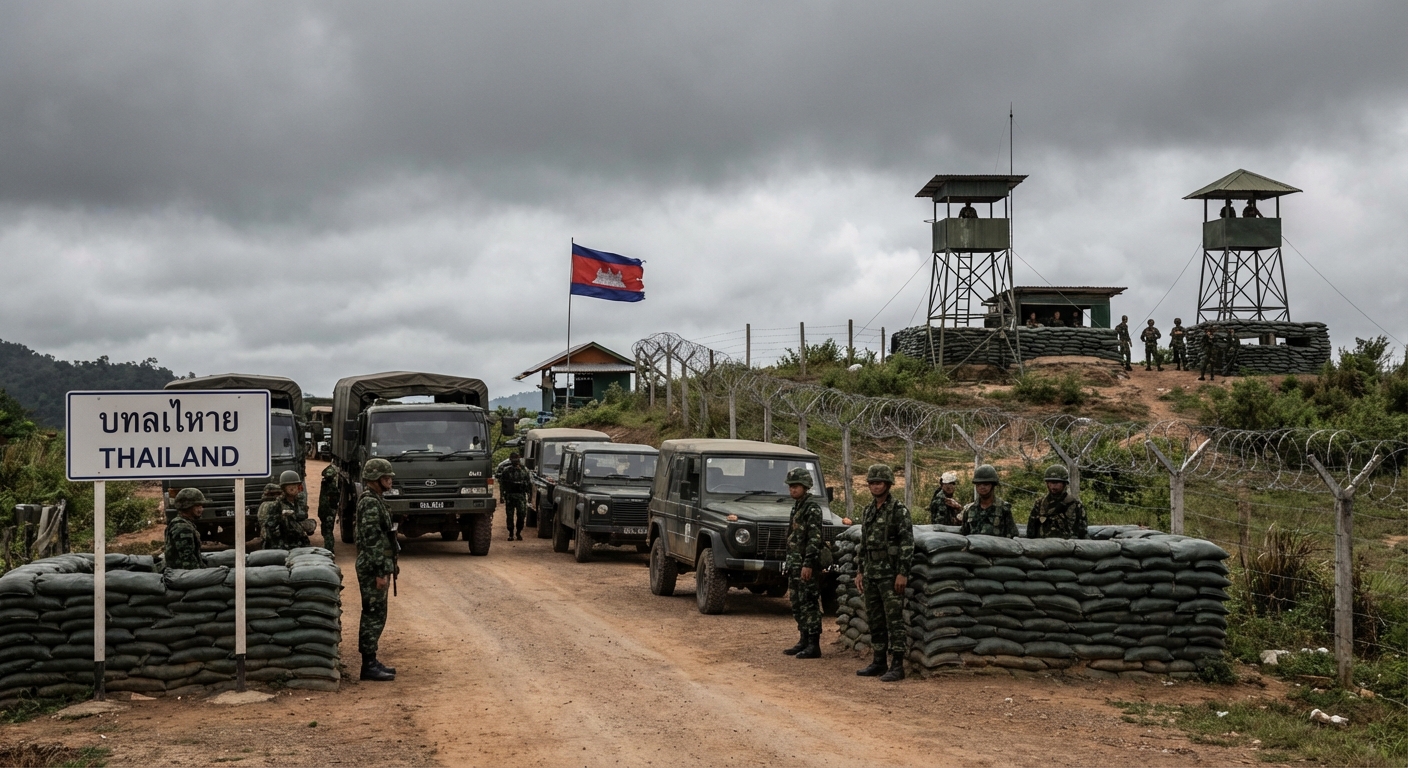
The immediate events leading to this week’s violence began several weeks ago when Thai nationalist groups organized protests near the border, demanding that the government take a harder line on territorial claims. In response, both countries began reinforcing their military positions in the disputed area. Shots were exchanged on December 8, and by December 10, what had been skirmishes escalated into full-scale combat.
The Thai airstrikes on December 11 marked a significant escalation. While the two countries have exchanged artillery fire and engaged in ground combat multiple times over the past 15 years, the use of air power represents a new and more dangerous phase of the conflict. The strikes targeted what Thai military officials described as Cambodian military positions, but civilian casualties in nearby villages have drawn international condemnation and raised fears of further escalation.
Cambodia’s response has been to appeal for international intervention while continuing to defend its positions. The withdrawal of Cambodia’s SEA Games delegation is a symbolic gesture, but it underscores how the conflict is now affecting all aspects of the bilateral relationship. The SEA Games, hosted by Thailand this year, were supposed to be a showcase of Southeast Asian cooperation. Instead, they’ve become a backdrop to regional warfare.
Regional and Global Implications
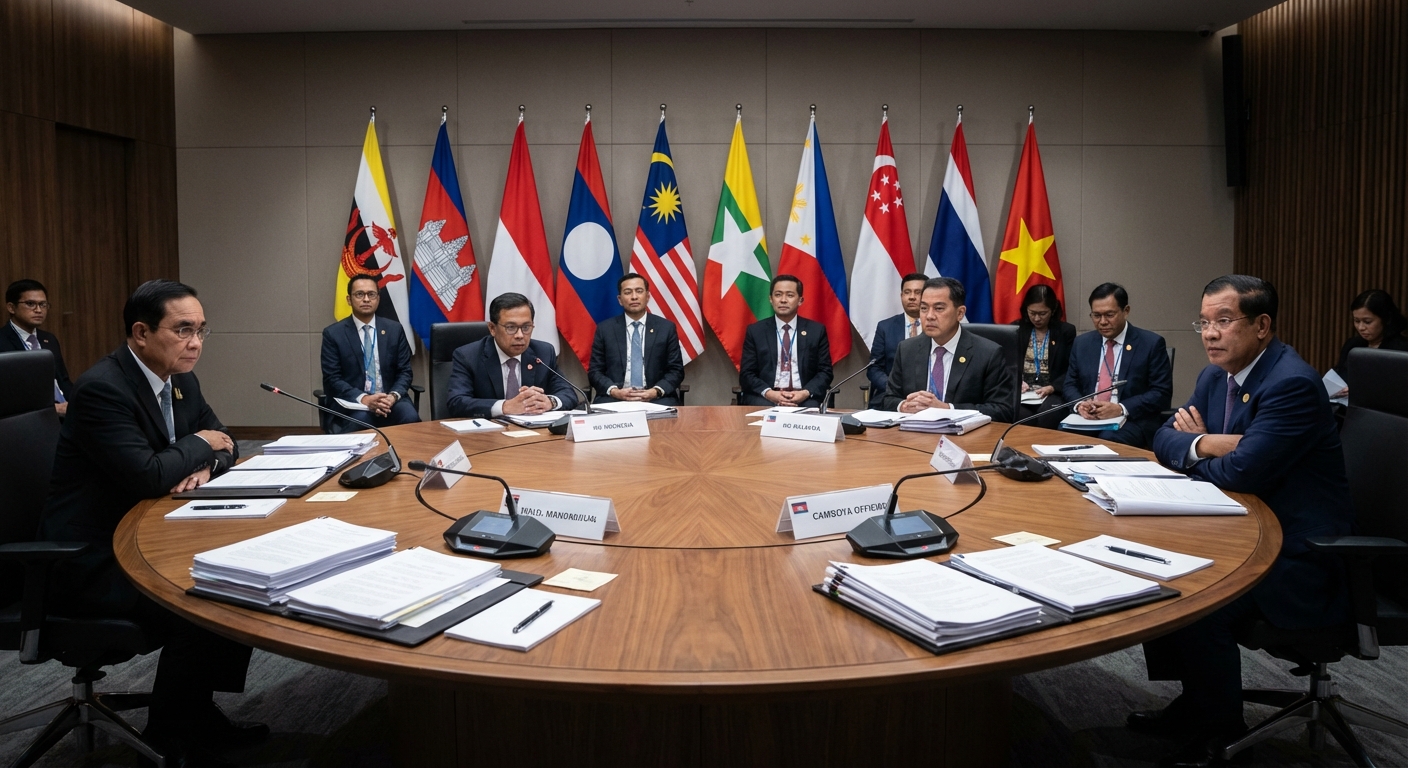
The escalation has put ASEAN, the Association of Southeast Asian Nations, in an extremely difficult position. The regional bloc’s foundational principle is non-interference in member states’ internal affairs, and it has historically avoided taking sides in bilateral disputes. But a shooting war between two member states cannot be ignored, and ASEAN’s credibility as a stabilizing force in the region is now being tested.
Initial statements from ASEAN have called for restraint and dialogue, but these generic appeals have done little to slow the violence. Indonesia, the bloc’s largest member, has offered to mediate, but neither Thailand nor Cambodia has accepted the offer. China, which has significant economic relationships with both countries, has called for de-escalation but has not taken concrete steps to pressure either side. The United States, traditionally a major player in Southeast Asian security, has expressed “concern” through State Department channels but has been preoccupied with other global crises, including ongoing developments in Syria and the Israel-Hamas ceasefire.
The economic implications are also significant. Thailand and Cambodia share a border that handles substantial cross-border trade, and the conflict has already disrupted commerce in the affected areas. More broadly, the perception of instability in Southeast Asia could affect foreign investment decisions throughout the region, particularly for businesses that rely on supply chains crossing multiple countries.
The Domestic Politics Driving the Conflict
Understanding why this conflict has proven so intractable requires understanding the domestic political dynamics in both countries. In Thailand, the military establishment has historically used nationalist causes to bolster its legitimacy and justify its continued influence over civilian politics. The Preah Vihear dispute has served this purpose effectively, with military leaders positioning themselves as defenders of Thai sovereignty against Cambodian encroachment.
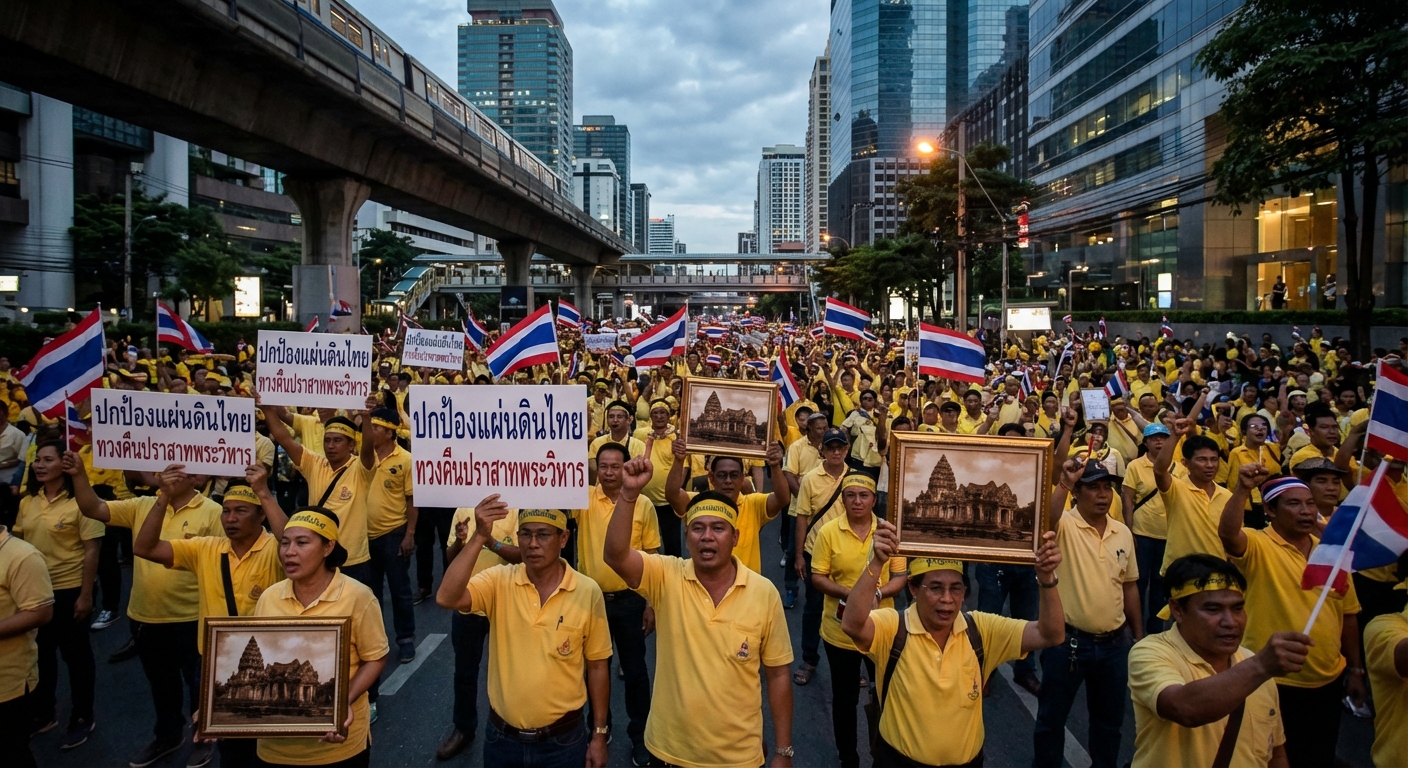
The current Thai government faces pressure from nationalist factions that view any accommodation with Cambodia as betrayal. Political parties associated with these movements have significant influence in parliament, and the government’s ability to pursue diplomatic solutions is constrained by the risk of being outflanked on the nationalist right. This creates a dynamic where escalation is politically safer than compromise.
Cambodia faces similar constraints. The ruling party has used the Preah Vihear dispute to demonstrate its commitment to national sovereignty and its willingness to stand up to Thailand, which is both larger and wealthier. Any government that appeared to be backing down in the face of Thai military pressure would face devastating criticism from opposition parties and could risk losing popular support. The result is that leaders on both sides find themselves trapped by political incentives that reward escalation and punish restraint.
What Happens Next
The immediate priority for the international community is preventing further escalation. The use of airstrikes has crossed a threshold that makes the conflict more dangerous and harder to contain. If either side believes it is “losing” the military confrontation, the temptation to escalate further, potentially including strikes on infrastructure or population centers away from the border, will grow.
Several scenarios are now possible. In the best case, the shock of civilian casualties and international pressure leads both governments to agree to a ceasefire and return to negotiations under international mediation. This would likely involve some form of face-saving arrangement that allows both sides to claim they defended their interests while stepping back from active combat.
A more concerning scenario is that the conflict becomes frozen at a low level of intensity, with periodic clashes and casualties but no resolution. This pattern characterized the dispute for much of the past two decades and could resume if neither side sees a path to either military victory or acceptable diplomatic settlement. The danger is that any such frozen conflict can suddenly escalate when political circumstances change or when a particular incident inflames public opinion.
The worst-case scenario, which military analysts consider unlikely but not impossible, is a broader regional war. This would require significant escalation beyond current levels and would likely only occur if one side or the other suffered a catastrophic military setback that demanded a dramatic response. Neither country has strong incentives to pursue total war, but conflicts have a way of developing their own momentum once they begin. The international community’s ability to manage multiple crises simultaneously is being tested, as recent events in Australia have also demonstrated.
The Bottom Line
The Thailand-Cambodia conflict is a reminder that territorial disputes, even over small pieces of land, can have enormous consequences when they become entangled with domestic politics and national identity. The Preah Vihear temple may seem like an unlikely cause for airstrikes and casualties, but it represents something much larger for both countries: sovereignty, historical grievance, and political legitimacy.
What happens in the coming days will depend on whether leaders in Bangkok and Phnom Penh can find ways to de-escalate without appearing weak to their domestic audiences. International pressure may help, but ultimately the conflict will only end when both sides decide that the costs of continued fighting outweigh the political benefits of confrontation. Based on this week’s events, that calculation hasn’t been made yet, and the people living along the Thai-Cambodian border will continue to pay the price until it is.
Sources: International Court of Justice, ASEAN, Reuters, Associated Press.